
With the NFL adding an extra game back five years ago, splitting the season into thirds become reasonable, and six weeks in, this marks a good point to draw some conclusions. To do so, I tried to come up with numbers that best summarize what we’ve seen play out.
Therefore, rather than just throwing out a bunch of hyper-specific statistics, I chose ten that I believe best represent the storylines that have defined the first one-and-a-half months, tried to give context for those, and then added a few more metrics to each paragraph, which back up what the tape shows.
Let’s get into them:
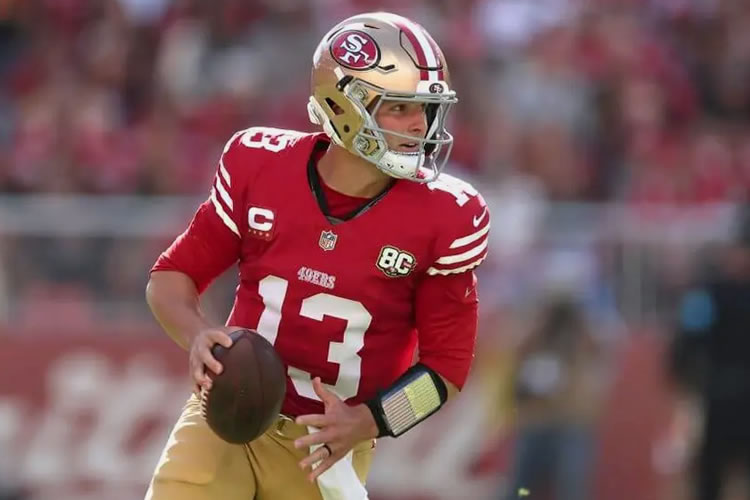
Brock Purdy – 55.1% dropback success rate
The Chiefs and Vikings both having had their bye week just now has the 49ers sitting alone atop the football world with a 6-0 record. However, I’d say that their quarterback is much more emblematic of San Francisco’s success than the guys leading those other franchises – and that includes Patrick Mahomes, who’s showing no signs of being slowed down by concerns around the knee he had surgery on this offseason. For a second straight year, you could easily make an argument for their coaching staff having done the best job of any out there, but it’s felt like Purdy has been telepathically connected to Kyle Shanahan all season, before cutting the cord when he’s needed to get into creation mode.
When you watch the Niners offense, what stands out the most are the subtle advantages Shanahan provides them with motion at the snap, either changing the numbers count for the defense or, most prevalent this season, giving his players a running start into blocks, often times creating new gaps. Next, for the pass game specifically, is how they space the field. The dropback concepts feel pristine in terms of how routes are distributed, how they seize control of green grass, and how often their guys catch the ball on the run. That’s absolutely an indication of the play-design itself, but it also requires a quarterback to be able to cycle through progressions quickly and deliver the ball on target consistently, which Purdy his tied for the fifth-lowest “bad throw percentage” (12.1%), according to pro-football-reference.
How he operates in that system has encouraged their staff to lean further into that five-out mindset, which puts a lot on the trigger man to find solutions. While San Francisco has gone more under center again this season, they’ve continued the trend of not being a heavy play-action offense. In fact, Purdy ranks 24th out of 38 quarterbacks in the rate of his dropbacks involving some run fake (24.5%). Right now, nobody’s better on these pure dropbacks, getting seven yards of depth, processing information and releasing passes on time, as his back foot hits. And he’s absolutely shredded defenses trying to blitz him, with a 131.4 passer rating for Brock on such plays.
Where he’s made the biggest difference however, is what Purdy has been able to add out of structure. His ability to manipulate rush angles, buy himself extra time with pump fakes, subtle feints and sudden re-sets, has also made him one of the most effective QBs outside the pocket. He wasn’t even sacked once over the first four weeks, and has posted second-lowest pressure-to-sack conversion rate of any qualified passer (8.5%), despite his time to throw being 0.3 seconds longer than the guy just ahead/below him (Dak Prescott at 2.75 seconds). And that number actually goes up by about 0.8 seconds when pressured, as he invites those opportunities to extend.
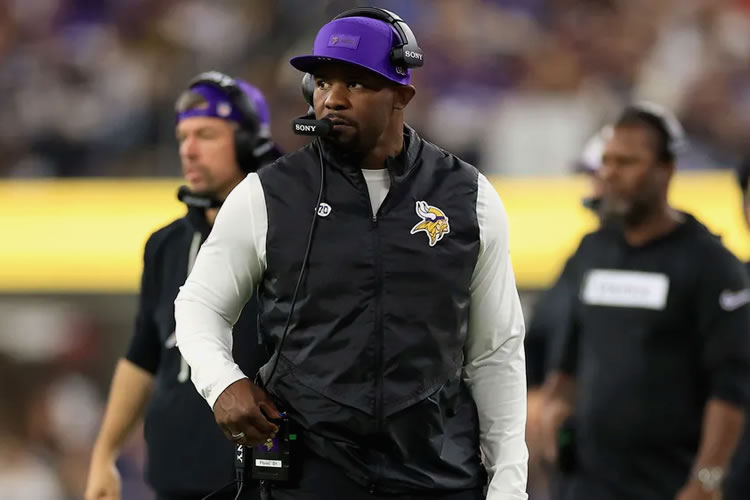
Minnesota Vikings – 67.0% defensive blitz rate
Since Brian Flores joined Minnesota as their defensive coordinator in 2023, the Vikes have led the NFL in blitz rate (on pass plays) every single year. However, that 48.8% bar he set in his first season with the team had been the high mark so far. To inflate that by nearly 20(!)% up to this point is psychopath behavior. However, you can’t really argue with the results. In a season where many perceived them as potential regression candidates on that side of the ball, Minnesota is largely in a league of their own statistically.
They’re currently number in points allowed per game (12.8 PPG), schedule-adjusted DVOA, success rate (32.0% overall, as well as against the run and pass individually), and they’re pretty much twice as good as any other unit in defensive EPA per play (-0.235). Having veteran safety Harrison Smith decide on the eve of the season that he was going to return for year 15 in the Twin Cities was a nice boost of morale, but he hasn’t even played half of their defensive snaps. He and first-round pick Caleb Banks actually are their two lowest-rated defenders, according to Pro Football Focus (31.5 and 32.5 respectively).
Dallas Turner making the leap in his third season (22.1% QB pressure rate, according to Next Gen Stats) has been a huge factor, but above all else, their play-caller dictating games has been the key to unlock everyone among this group. If you go back to their season-opener against the Packers, when starting quarterback Kyler Murray got knocked out on the second drive of the day with a concussion, you could really feel Flores and company take control, as they forced turnovers (including on downs) on all four drives in the final quarter, and Minnesota went on to score the final 29 points.
Unlike some other great defense, you might not classify everything they’re doing as “sound”. Yet, it’s the unpredictability of who’s coming in their mugged-up pressure looks, and the awareness of the guys dropping out into windows opposing quarterbacks want to attack, that makes them so tough to prepare for. Even if they don’t actually get home and the ball arrives at a target underneath, you feel like someone’s there immediately to secure the tackle. For reference, Flores’ disciple Daronte Jones has called blitz at the second-highest rate, but all the way down at 42.9% – and have allowed 28.7 points per game (30th in the NFL).
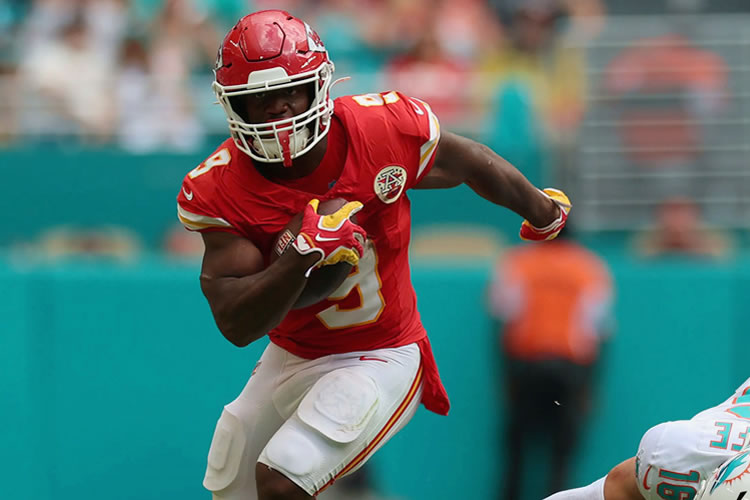
Kenneth Walker – 665 rushing yards
This is one of the few simple counting stats I wanted to use here, because Walker not only leads the NFL in yards on the ground, but he already has outproduced last year’s rushing leader for the Chiefs (Kareem Hunt – 611 yards on 163 carries) and is more than halfway towards their season total from the RB position (1247). It’s also the highest mark for any player in NFL history through his first five games with a (new) team. That’s pretty astounding, considering Saquon Barkley just set the all-time record for most rushing yards in a season two years ago, if you include the playoffs (2554), and helped Philadelphia win a Lombardi Trophy.
Kansas City has completely changed their offensive identity, in the wake of Patrick Mahomes coming off a torn ACL prior to signing the reigning Super Bowl MVP in free agency. The quarterback hasn’t looked for a second as if he was returning from major surgery, yet this new approach has served them extremely well, to the tune of averaging 28 points per game (5th-most in the NFL) and starting off 5-0 – one win away from last year’s tally.
They’ve gone under center a lot more than they ever have in the Mahomes-Andy Reid era, with 61.3% of KW3’s carries coming that way, and they’ve leaned heavy into gap/man concepts, which weaponize the ball-carrier when it comes to setting up blocks and manipulating second-level defenders. His patience behind double-teams, pressing the edges of his linemen to get defenders leveraged a certain way and then cutting tightly off their backside has routinely allowed him to find space. And then his ability to make tacklers miss, shrug off glancing shots and turn those into explosives has been second to none.
His 6.3 yards across 106 carries leads all players with 30+ attempts, and his 41 missed tackles forced are nine more than Jahmyr Gibbs in second (who has also had his team’s bye already). Last season, the Chiefs only had three total carries of 20+ yards. Walker individually has already racked up seven through just five games. And his team is number one in EPA per rush (+0.099). That’s pretty scary for a team with one of the great quarterback’s we’ve ever seen in high-leverage moments and a Steve Spagnuolo defense that looks reinvigorated. As I said in my week one takeaways already, this new-look group is “coming back for their crown”.
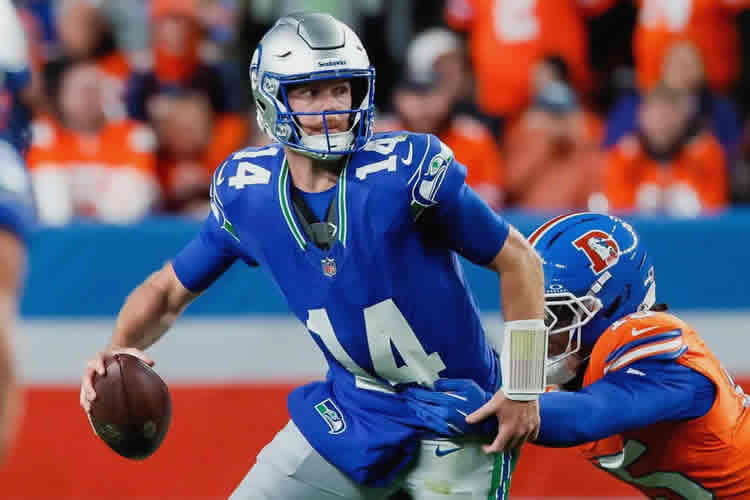
Seattle Seahawks – 12 giveaways vs. three plays of 40+ yards
On the other side of the coin that is the Kenneth Walker signing with Kansas City are the reigning Super Bowl champions. As they proved straight away in that week one rematch from early February against the Patriots, their defense was going to be elite yet again. They picked off Drake Maye three times and held New England to just ten points. And they’re actually allowing 0.6 yards less than even Vikings for the lowest average in the league (4.0 YPP). Unfortunately, the offensive formula that enabled them to make sure the NFC would have to go through Lumen Field, before kicking into even higher gear once the playoffs rolled around, simply hasn’t come through the same way.
When people think of what the Seahawks represented on that side of the ball last season, they often seem to ignore the fact that Sam Darnold and company were able to avoid turnovers entirely during that run to a Lombardi Trophy. That doesn’t mean that they always played clean football during the regular season. In fact, Sam led the NFL with 20 total giveaways. However, they tilted the scales in their favor with explosive plays. Looking at passes of 40+ yards specifically, the 12 they were able to cash in on were tied for the most in the entire league. When you only hit on three of those, but hand your opponents the ball 12 times (tied for third-most) through six weeks, that equilibrium is broken.
Part of this has been their lack of consistency from the ground game. Even if the efficiency started to increase over the latter half of last season, Seattle was still able to use the involvement of Kenneth Walker and Zach Charbonnet as an end to their means. Playing through their defense and run game, to the point that opponents needed to respect it, set up those opportunities to strike down the field, with the Offensive Player of the Year Jaxon Smith-Njigba being given extensive time on those heavy play-action, seven-man protections, to get open, and Darnold hit those throws frequently. First-round pick Jadarian Price didn’t even have time to get acclimated before heading to IR, while Emmanuel Wilson sucked up most of the volume, but without a single carry of 20+ yards. Those two and George Holani have each fumbled twice already, and the team’s averaging just 3.9 yards per carry.
More glaringly, the quarterback has simply been too loose with the football and made questionable decisions. After basically missing the first two weeks with injury, Darnold’s two of seven INTs against Washington came on a tipped pass and a great individual play by someone who shouldn’t have been in the window. Otherwise, it’s been a mixture of being late/careless on throws, misreading the leverage/positioning of defenders, and then just being way too aggressive on his most recent one, when he tried to threat the needle on a hole-shot against a specific cover-two rotation, after they had battled back to force overtime in Denver last Thursday Night. That combined with less cohesive play-sequencing from new OC Brian Fleury, and not getting the explosive from ancillary pieces to JSN has really held the Hawks back.
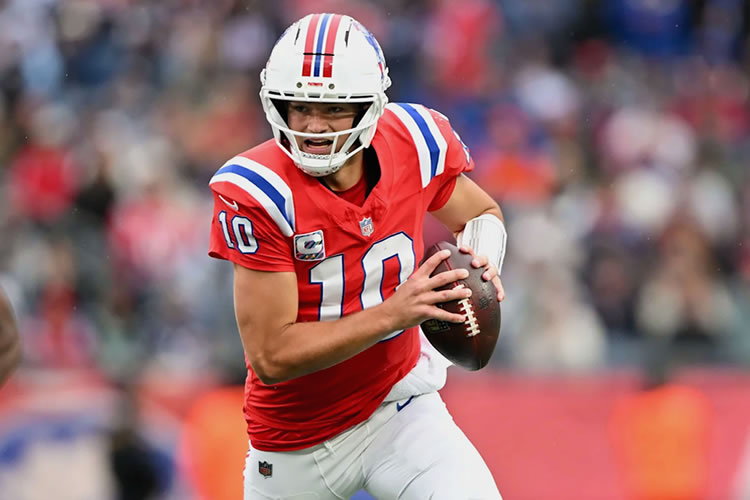
Drake Maye – EPA/dropback first (-0.070) vs. last three weeks (+0.485)
I’ll keep this one brief, since I just posted a video on Maye a week ago, analyzing his remarkable turnaround from a horrendous opening three games to looking like an MVP candidate again the following two – before tossing three more touchdowns without turning the ball over or taking a sack this past Sunday. He’s gone from 28th among 33 quarterbacks with 50+ dropbacks in EPA per, to number one, and more twice as high a mark as last season, if you include an underwhelming postseason run individually. Seeing him showcase a completely different level of confidence in the play-calling and himself, rather than continuing that concerning trend, paired with the fifth-ranked scoring defense (18.8) has made the Patriots look like a legitimate AFC contender once more.
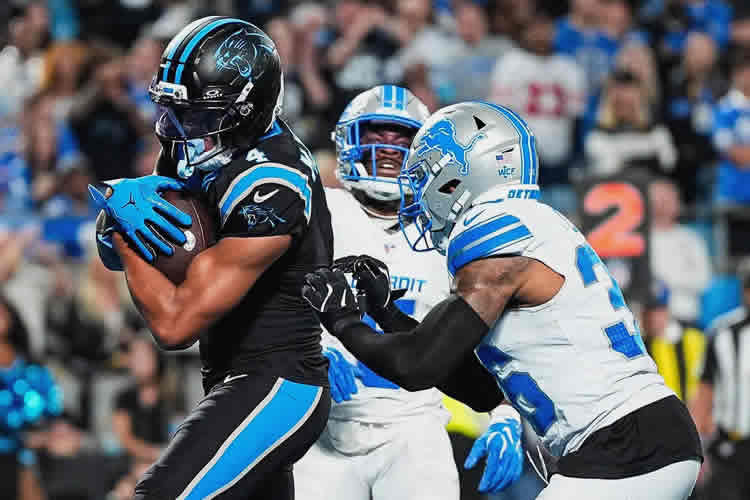
Detroit Lions – Allow +0.170 defensive EPA/play
Looking at betting odds, the Lions were favorites to win a rather muddy NFC North, in which they finished last a year ago despite owning a 9-8 record. The idea was that the offense showed more stability once head coach Dan Campbell took play-calling duties away from OC John Morton over the latter half of last season, and Kelvin Sheppard was entering year two as the man in charge of the defense, which showed promise early on in his debut campaign before injuries started to cripple them yet again. Jared Goff, Jahmyr Gibbs and company have delivered, with Drew Petzing now calling the shots, as they rank third in EPA per play (+0.176) and second in actual points scored (32.8 PPG). Yet, the other side of the ball has been equally bad.
For as bad as the Cowboys D has been once again – which I could’ve easily written a paragraph on as well, considering there was hope for a completely overhauled unit to at least be competent – that +0.170 mark for Detroit is actually slightly worse, due to ranking in the bottom-five both against the run and pass. The biggest reason for that has been the 28 plays of 20+ yards that they’ve surrendered – only one less than the Dallas, who have also been highly susceptible to explosives.
Comparing where their issues lie, cornerback play has certainly been problematic. Their top five guys at the position in terms of defensive snaps (all over 100) have an average passer rating against of 120.8 (all at least 96.7). For reference, that would be better than any quarterback this season with 50+ dropbacks. Opponents have routinely tested their heavy man coverage tendency. Yet, not having their Pro Bowl-level safety tandem from years past out there has been palpable as well, with poor communication leading to opponents catching the ball on the run. All-Pro linebacker Jack Campbell has also been uncharacteristically vulnerable in coverage. On the front-end, Aidan Hutchinson has been expectably productive, and Alim McNeill has had a nice bounce-back season. However, that second EDGE spot has delivered very little.
Naturally, their run defense must be better than dead-last in yards (1487) and touchdowns allowed (14). Nonetheless, they’ve been far from perfect in that facet too. Although they’ve been slightly above-average in terms of down-to-down success rate, they still rank 29th in EPA per rush (-0.039), despite Buffalo being the only offense they’ve faced above 14th in that metric – and they went for over 200 yards on the ground against them. They’ve actually been an excellent tackling unit, but their linebackers and safeties are regularly being put into run-pass conflict and ball-carrier are allowed to build up momentum into first contact. As one of my favorite podcasts – the Ringer Fantasy Football Show – has called these teams that invite highly favorable gamescripts for fantasy, they’re a “Mario Kart Rainbow Strip” team right now.
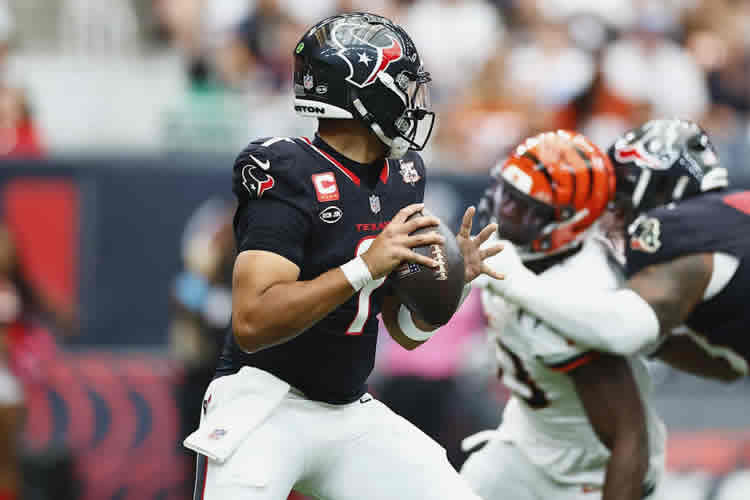
C.J. Stroud – 14 big-time throws vs. three turnover-worthy plays
If you had only shown me Stroud’s dropback reel through the first six weeks, I’m not sure if I could’ve envisioned a path for the Texans being 2-4 at this point. Things are looking up for the team as a whole, having now won two straight in-division, including on a walk-off field goal against the Jaguars in London last Sunday. However, considering how dominant their defense looked like for all of last season and the promise there was around the run game at least being competent, I certainly didn’t believe so much weight was going to be put on the shoulders of their quarterback.
This is especially true considering the general temperature around Stroud, coming off two bad showings in the previous playoffs. For the 2025 season as a whole, I’d rate what he did more so average, but his brain short-circuited in a few moments against the Steelers and Patriots, paired with showing compounding issues dealing with crumbling pockets. And yet, since Stroud got strip-sacked for a second time to seal their loss to the Bills in the opening, the end zone interception he threw late this past Sunday was his only other turnover committed – which was an unbelievable moment of recovery by a special talent in Travis Hunter.
That BTT-to-TWP rate of 14-to-3 is best in the league among qualified passers aside from Jared Goff’s 9-to-1, with one fewer game – who has the benefit of being able to hand or flip the ball to the NFL’s leader in average scrimmage yards and touchdowns, Jahmyr Gibbs. Stroud, on the other hand, is once again backed up by the 30th-ranked run game in terms of success rate (32.8%), and by far his most important pass-catcher – Nico Collins – has only been on the field for 47.4% of offensive snaps. For whatever you may believe about the talent they may still be able to ignite, the lack of proven receiver play is what encouraged the Texans to essentially trade a second-round pick to Arizona for former fourth overall pick Marvin Harrison Jr.
Houston’s offensive line has been closer to average in terms of pass-protection, thankfully, allowing C.J. to function the way he wants to. While he’s closer to average in overall play-action rate, there are plenty of token run fakes to get the running back working his assignments, and he’s bottom-five in screen rate (6.2%). Stroud has been in the shotgun on a staggering 82.3% of dropbacks, largely divorced from how they want to run the ball, as they’d rather go with this “spread and shred” approach, stressing the defense horizontally from 11 personnel and letting the quarterback attack space within zone coverage. Simultaneously, when they can tie down a safety and attack those isolated matchups on the perimeter, they’ll happily do so. That’s how Stroud is also tied with Josh Allen for an NFL-high 25 completions of 20+ yards.
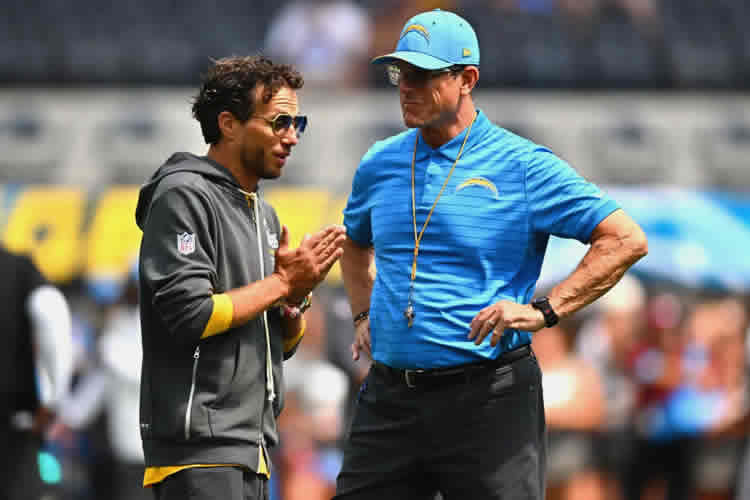
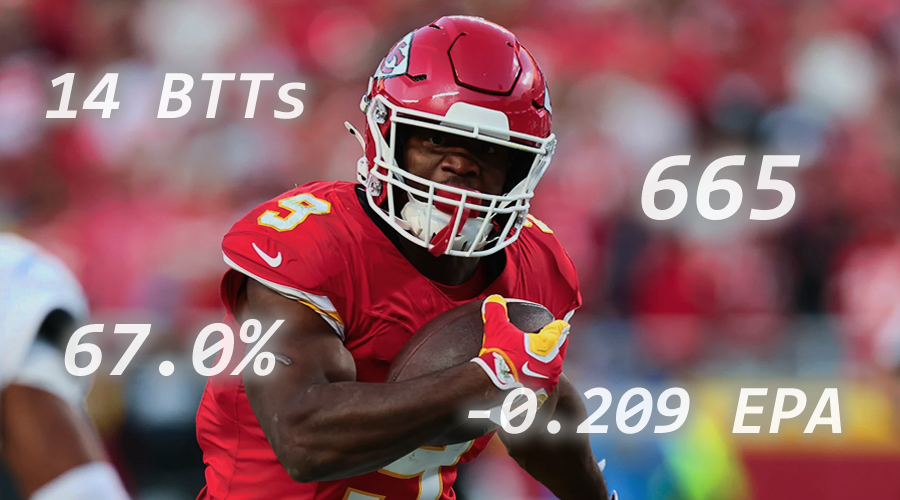
Los Angeles Chargers – 32nd in offensive EPA per play (-0.209)
Unlike most of these statistics presented here, this is the furthest thing possible from positive, and I’d go as far as to say that the Chargers offense has been the most disappointing piece of the entire 2026 season. You could easily talk about the team as a whole, considering they are winless through six weeks, and their CEO/commander-in-chief type head coach Jim Harbaugh appears to be overwhelming, without answers. L.A.’s defense has taken a significant step backwards with the switch at coordinator from Jesse Minter to Chris O’Leary as well, but the story many people told themselves – including me – was that with the same personnel on that side of the ball, a boost from the offense would more than just offset that.
It’s been quite the contrary however, as they’ve averaged just 15 points per game (30th in the NFL), and the pass game has been particularly disappointing, with an NFL-worst EPA per play mark in that regard (-0.191). That’s almost unfathomable considering the talent of Justin Herbert and Mike McDaniel’s track record as a play-caller in Miami. Previous iterations of this offense regularly seemed held back by unimaginative designs, in the dropback game specifically, and the quarterback would be asked to bail them out with tight-window throws. Meanwhile, the Dolphins were functioning at a high level for the most with an extremely limited player running the show in Tua Tagovailoa, who was propped up by how their designs put defenses into conflict and one of the premier WR duos in the league.
Herbert’s brain looks completely fried when you go through some of the decisions he’s made, his targets deflecting the ball for defenders to snag has contributed to those eight interceptions (tied for the lead), and the protection hasn’t been significantly better than a year ago (42.1% pressure rate). On top of that, the Chargers’ run game hasn’t offered any major relief either. The potential was certainly there, with both their offensive tackles back from injury and a second-year breakout candidate in Omarion Hampton now in a more wide zone-centric attack under McDaniel. He’s averaged a miniscule 3.6 yards per carry and lost a pair of fumbles, leading us to a full-on committee approach.
So, there’s plenty of blame to go around for this organization, and if things continue to disintegrate further, I wouldn’t rule out ownership cleaning house entirely. The only thing I don’t want to see is people trying to re-write history. Herbert did drag a bad Chargers offense outside of him to 11 wins just a year ago, and the Dolphins were flirting with the top five in offensive metrics under McDaniel, as long as he had his starting quarterback.
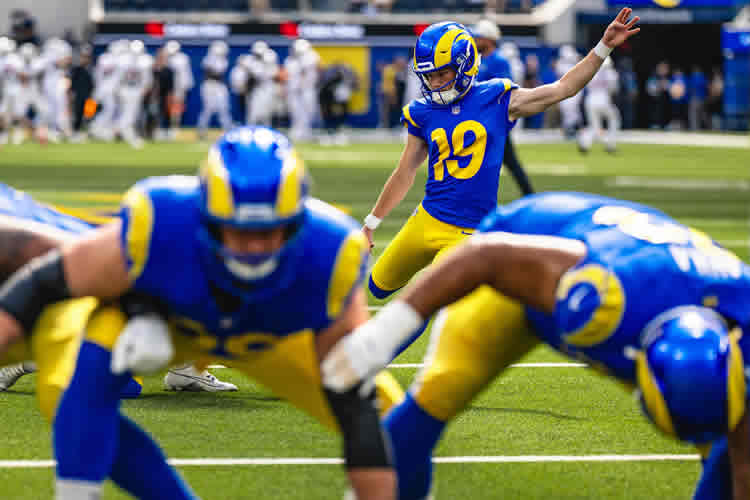
Los Angeles Rams – Negative -13.8% special teams DVOA
Now, for as tragic as the fall-off was for the other L.A. team, the hype around this Rams “super team” was on another level. They were the overwhelming favorites to win another Lombardi trophy at home, with the big game set at SoFi stadium. However, even if we want to give them a little bit of grace for not having all of their key contributors healthy at the same time, they’ve been underwhelming on all three sides of the ball – none more so than special teams.
Although they’ve still put a lot of emphasis on late-round draft selections, even if they were trigger-happy to ship off those higher-ranked assets for proven commodities, general manager Les Snead has very much followed a “stars and scrubs” approach to roster construction. Based on how they structure contracts, with a lot of void years added at the end, the actual cap hit percentage isn’t as glaring, but the top six names combine for 188.5 million dollars in average annual salary. This team narrowly lost a best-out-of-three series against the eventual champion Seahawks in the NFC title game, and then traded for a Pro Bowl corner in Trent McDuffie, swapped out Jared Verse for reigning Defensive Player of the Year Myles Garrett, and paired him with the most dominant player on that side of the ball during the previous decade, when they convinced Aaron Donald to come out of retirement.
That allocation of resources was already felt last season, when the Rams ranked 26th in special teams DVOA (-3.4%) and were crippled by some big moments through that avenue, such as a momentum-swinging punt return touchdown at Seattle during their latter regular season meeting. So what did they do to address those issues? They swapped out their special teams coordinator for Bubba Ventrone, who was a great player himself in that third phase, but had just led the Browns to finish 30th and 32nd in that metric the previous two years. Plus, they signed a key ST contributor for the Lions in Grant Stuard. Still, a second-round tight-end and sixth-round wide receiver were the only players they drafted who might contribute that way in that regard – and they had combined for just 83 special teams in college. The other three selections were a quarterback, an offensive and defensive lineman each.
The result? Their special teams DVOA of -15.3% last week was on pace for the worst mark in the FTN database, going back to 1977. Then their newly signed kicker Blake Grupe to a torn ACL, just days after cutting ties with Harrison Mevis after missing what would’ve been a game-winning field goal in overtime (five-of-eight overall). At the time of me putting these notes together, they haven’t officially signed anyone to replace him. Meanwhile, the Cardinals just beat them at home by banging in all six of their FG tries. Ethan Evans is 0.1 yards off the low mark in net yards per punt (38.1 NY/P), the Rams are bottom-ten in kick and punt return average, and their average drive starts 6.5 yards further back than where their opponents take over – those margins amass over time.
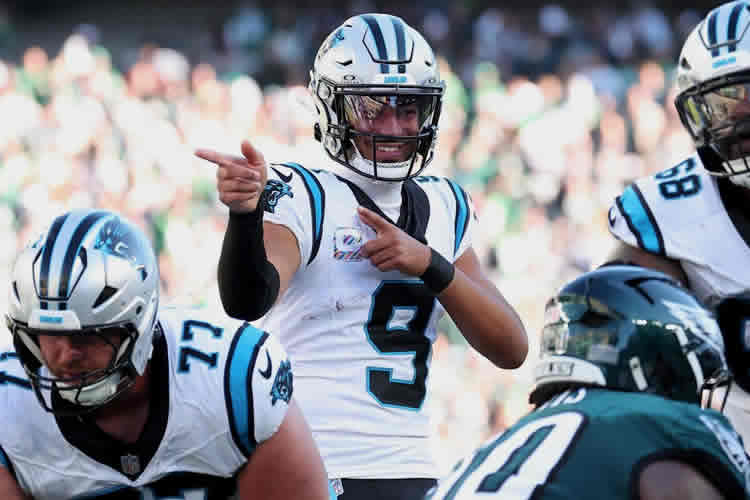
Bryce Young – 9.4 air yards per attempt
While they deserve credit for giving the Rams a run for their money in the Wildcard Round, after previously collecting an upset win over them, the 2025 Panthers were one of the less impressive divisions in recent memory, considering they lost to the Bucs in week 18 and needed a certain outcome between the other two NFC South foes. Entering 2026 a little banged up already tempered my excitement for them. Yet, the play of their quarterback has exceeded all expectations, and they’re sat alone on top of the division, despite having played one fewer game as their three rivals.
Carolina did exercise Young’s fifth-year option back in April, but didn’t fully commit to him with a long-term extension – just like with the guy who went right behind with the second overall pick in 2023, C.J. Stroud. Bryce had a highly forgettable rookie season, but required Andy Dalton having a car accident the year after to reverse him getting benched, and has since looked like a starting-caliber player under head coach Dave Canales. Even last season however, Carolina was largely built on the run game, with his highest season average being 188.2 passing yards per game. So far, he’s leading the league with 309.8 YPG, and has tossed 11 touchdowns compared to only two picks.
Among quarterbacks with 50+ dropbacks, that 9.4-yard average of how far the ball travels through the air is tied for the third-highest behind Malik Willis and Lamar Jackson currently – which the former has done so in service of a very all-or-nothing aerial attack. This is a quarterback who isn’t afraid to push the ball down the field, yet he’s rarely put it in harm’s way. According to PFF, he’s posted nine big-time throws compared to only two turnover-worthy plays, and only Tyler Shough has a narrowly lower screen rate (4.3 vs. 4.6%). So Canales and OC Brad Idzik are putting the ball in Bryce’s hands and letting him go to work. He can work those matchups with Tetairoa McMillan as his number one, but this group is really unlocked when they have Jalen Coker alongside him.
There’s another parallel between Young and Stroud as back-to-back selections in that 2023 class, as we’ve seen both coaching staffs entrust them with trying to outscore their opponents, considering Carolina has lost critical defensive pieces along the way already. The biggest difference here is that the Panthers have at least been an average rushing team, which has facilitated Bryce being seventh in play-action rate (31.7%) off that. For one of the smallest signal-callers in NFL history, you might not believe he’s as comfortable going under center, turning his back to the defense and then attacking the middle of the field. Yet, he’s posted a passer rating of 136.2 on throws between the numbers in the intermediate area (10-19 yards). Plus, he’s found that joy in his game again that we saw at Alabama, maneuvering through muddy pockets and delivering off-platform throws.

