
While the switch to a 17-game season five years ago made things a little more complicated in terms of records and adding that extra opponent for each team, which doesn’t follow the traditional model for figuring out who everyone’s facing, it actually creates a cleaner mid-point of the season after these first nine weeks. So this is the time to look back and hand out hypothetical awards, if we stopped playing games right now.
Of course, it still makes sense to use per-game statistics here, since about half the league has gone through their bye weeks already. In contrast to my full pre-season predictions – which one of them in particular has already gone up in flames – this doesn’t include the element of projection. Instead, I simply listed the top three candidates based on how I’d vote for each of these awards, along with naming first- and second-team All-Pro units.
Let’s get into it!
MVP:
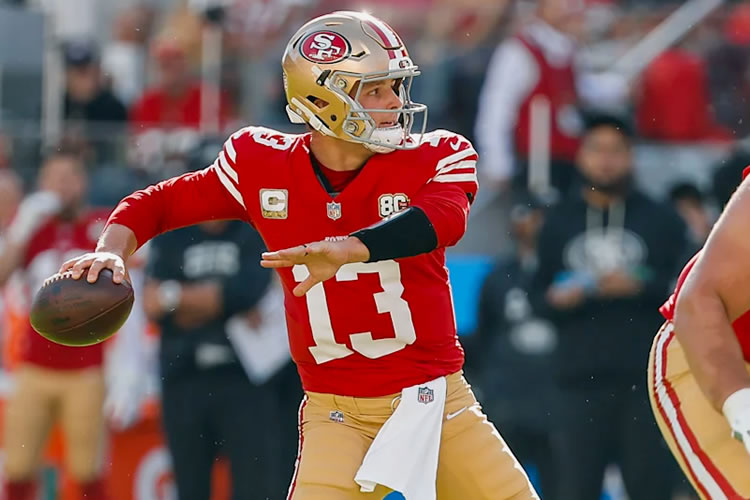
1. Brock Purdy
2. Josh Allen
T.-3. Joe Burrow & Trevor Lawrence
I remember vividly on Christmas Day three years ago, going to one of the earlier games personally, and then watching the highly anticipated 49ers-Ravens matchup as the night cap, when Purdy and Lamar Jackson were handled as the two front-runners for the MVP award. Back then, as much as I appreciated the former – and had studied him coming out of Iowa State already – I didn’t consider him as the caliber of talent that could actually win that highest individual honor – my perspective has changed, as he has continued to level up. As I said in a piece I wrote about defining statistics through the first six weeks, it truly feels like Brock is telepathically connected to Kyle Shanahan in how he cycles through progressions and gets to the correct answer, yet then he can rip the cord when it’s time to transition into out-of-structure play-making, where he’s become tremendous at extending and finding ways to create positive yardage anyway. For as good as the play-calling has been, Purdy deserves a ton of credit for doing this with an ever-changing cast of pass-catchers, as he ranks first in EPA per dropback (0.310) and DB success rate (56.6%).
Allen hasn’t been quite as clean on a down-to-down basis as Purdy, but he has one or two plays every week that maybe nobody else in the league could’ve – or even has ever – made, and he’s actually in average dropback EPA (0.285). Only seven quarterbacks have thrown more interceptions (six) than him this season, but he remains the ultimate offensive weapon in football. His 21 total touchdowns are only exceeded by Joe Burrow, in spite of being tied for 19th in total pass attempts (236), and his top three names in receiving yards being Dalton Kincaid, Khalil Shakir and Keon Coleman – who their owner openly talked about being a pick made by men not on the coaching staff anymore during the offseason. Buffalo has the most consistent ground game among the teams any of these candidates play for, but their defense also allowed at least 29 points in five of their first six games, asking Josh to put on the Superman cape yet again – and he’s delivered, with four game-winning drives.
I couldn’t quite decide on my third choice here, and felt like it was only right to make it a tie between two QBs who are at the pinnacle of their powers, after facing off in the National Championship game nearly seven years ago by now. Burrow obviously has the insane numbers to back up his case, leading the NFL in total touchdowns (26), completion rate (74.0% – by nearly 5%), passing yards per game (298.3) and passer rating (114.8). However, while this is in no way discrediting his work, he does have the benefit of throwing to by far the best wide receiver duo in the league right now, as Ja’Marr Chase and Tee Higgins have accounted for 47.3% of their total offensive yardage (1405). Meanwhile, Lawrence can’t quite rely on that level of individual play for his top targets (for as good as Parker Washington has been), but the design and sequencing of plays under Liam Coen has been excellent. Unlike Cincinnati, who heavily rely on putting their signal-caller in the shotgun and letting him go to work, they’re using a more balanced approach and spread the ball around. T-Law has executed at an extremely high level, trusting that his guys will be at a spot at a certain time and delivering the appropriate throw routinely. He’s number one in adjusted yards per pass attempt (9.4), while both their teams sit at 6-2 currently.
Honorable mention: Jordan Love
(Non-QB) Offensive Player of the Year:
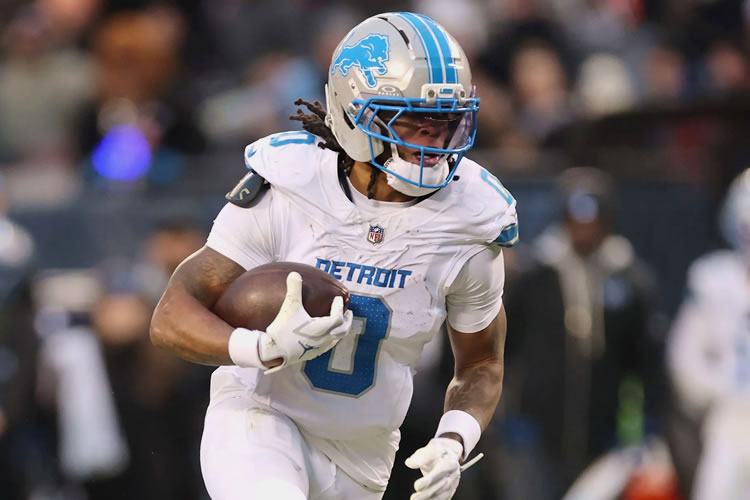
1. Jahmyr Gibbs
2. Jaxon Smith-Njigba
3. Kenneth Walker III
At the midway point of the 2026 season, this looks to have the chance to be one of the best OPOY races in recent memory. If you extrapolated the numbers for these top three names, any of them would have a really strong case to take home this trophy. However, I ultimately settled on the guy I picked before the year started and has pretty much remained atop the list when you look at betting odds. Gibbs has continuously taken on more of the load for Detroit’s backfield, and with veteran David Montgomery being shipped off to Houston in the offseason, he has become a true workhorse. Despite the Lions already having had their bye week, he *just* edges out Bijan Robinson (with an extra game) with his 1132 scrimmage yards, while being tied for the lead-league in total touchdowns (11) and having created 15(!) more first downs overall than any other player (68). The rate of explosive plays hasn’t carried over, but he routinely rips off solid chunks, grinds out tough yards and has been the central figure of OC Drew Petzing’s offensive scheme.
A certain level of negative regression was to be expected for the reigning Offensive Player of the Year, but JSN is on pace for an even bigger season. He’s averaging 13 more receiving yards per game (115.1 YPG) than any other player, which Puka Nacua being second, but on nearly 2.5 more targets on average. And his nine touchdowns through the air are also tops. Those two are clearly the most heavily relied upon guys as you look at target share, but while the Rams throw a bunch of screens to their top WR, Seattle has trusted multiple quarterbacks to throw the ball down the field, thanks to how consistently Jaxon is able to create separation. Leaving him one-on-one on the outside is a death sentence, with how meticulous he is at the break point, and the danger of what he can do on double-moves. Yet, if you put him into the slot, he’s also as good as anyone with his spatial awareness against zone coverage, and moving the chains. In fact, his 53 total first downs are tied for second league-wide, despite significantly more touches for the running backs.
Which brings us to the guy JSN is actually tied with in that last category, and arguably the most impactful free agency signing of this past cycle. This wasn’t a major surprise, considering he’s the reigning Super Bowl MVP, but Walker has been a revelation in Kansas City. Right off the bat, it became clear that he’d transform a Chiefs offense that had been so Patrick Mahomes-centric over the years, into being centered around the running back. More than ever, we’ve seen them condense formations and operate from under center, relying on the rusher to set up his blocking, manipulate bodies on the second level and create in the open field. Only Jahmyr Gibbs has forced more missed tackles with the ball in his hands (64 vs. 59), which those two being in their stratosphere, and K-Dawg has done it on 26 fewer touches. Those two are tied for an NFL-high 11 TDs, and unlike Gibbs, Walker has yet to put the ball on the ground (compared to two fumbles for Detroit’s superstar).
Honorable mentions: Bijan Robinson & Jaylen Warren
Defensive Player of the Year:
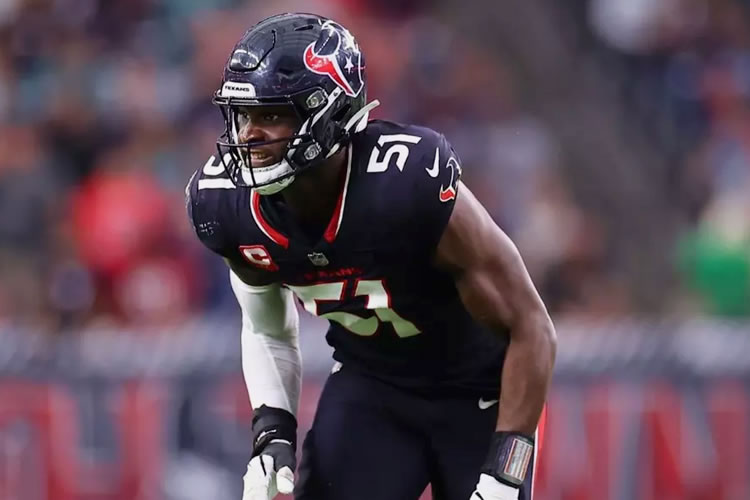
1. Will Anderson Jr.
2. Jeffrey Simmons
3. T.J. Watt
It’s a shame that the Texans defense has fallen off so drastically this season, because their ace player has performed at as high a level as ever – and he just finished second in Defensive Player of the Year voting most recently. He’s 1.5 sacks clear of the rest of the league (9.5) at this point, and while he’s “only” fourth in total QB pressures, he’d easily beat out two names just ahead of him if you adjust for overall pass-rush snaps. There was a moment last Sunday against the Chargers, where they ran play-action and legitimately asked a tight-end to block Will on the backside – the defender beat him instantly for a sack, as he should, when disrespected like that. He can win around the corner, convert to power, or jump inside of tackles, and he’s been deadly on stunts. Along with his prowess at getting after quarterbacks, Will is an elite run defender. His 26 total defensive stops (manifesting a positive tackle for the defense, based on down and distance) are number one among defensive linemen, while consistently setting a firm edge.
Seeing Simmons get his moment on national television immediately after getting traded from Tennessee days earlier, where he had quietly been one of the most dominant players in the league for years, was awesome. Now it’s time for people to realize *how* good he actually is. He has the counting stats to make his case, leading all interior D-linemen in sacks (six), batted passes (six), TFLs (nine) and defensive stops (25) – where he’s actually only one off the high mark even if you include edge defenders. More importantly, as you actually put your eyes on him watching the broadcast or the tape, you can clearly feel his presence. He’s strong enough to own the point of attack in the run game, whether he’s locking against solo blockers or anchoring against double-teams, he can arm-over opponents and track down plays from the backside, put guards on skates with the bull-rush, or blow up one side of the protection and open up lanes for his teammates on twists. If he helps Chicago bring home their first Lombardi Trophy in 40 years, he’ll be well worth those two first-round picks.
Count me as a skeptic of Watt coming into this season, considering his efficiency as a pass-rusher on a per-snap basis. After ranking 68th among 75 defenders with 200+ such snaps in PR productivity last year, he’s again fairly down the board, with exactly half of the QB pressures as the guys in first have collected (25). Having said that, you simply can’t deny that he’s one of the biggest play-makers and game-changers on that side of the ball. Along with being tied for third in sacks (7.5) and tackles for loss (nine), he’s forced and recovered a fumble each, deflected three passes and recorded a victory-sealing pick-six back in week one. He’s one of the smartest players we’ve ever seen on the edge, when you watch single-handedly shut down zone read plays, sniff out screen passes, etc.
Honorable mentions: Fred Warner, Greg Rousseau, Dexter Lawrence & Evan Williams
Offensive Rookie of the Year:
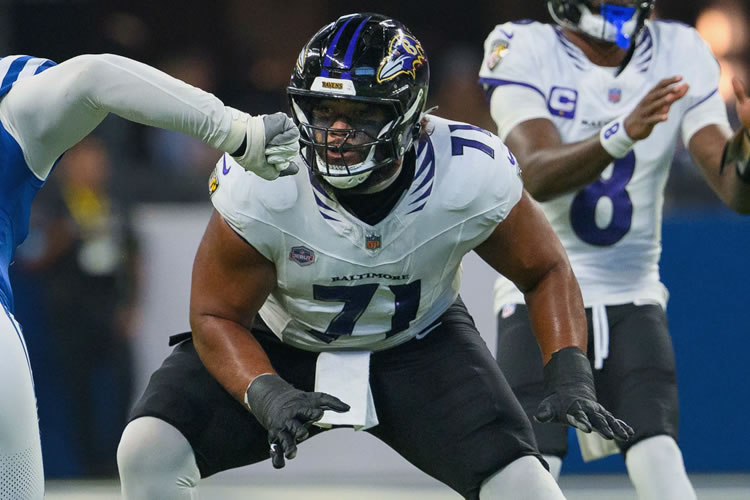
1. Vega Ioane
2. Denzel Boston & K.C. Concepcion
3. Carnell Tate
This is where I’d hope the AP voters would go a little deeper in how they make their decisions, because there are multiple offensive linemen with legitimate cases to win this award in the end, while the guys with the actual counting stats have been rather underwhelming. Ioane was the clear-cut number one interior prospect in this past draft cycle, and he’s fully living up to that billing. Among rookie linemen with 150+ run-blocking snaps, he’s earned the highest grade in that regard up to this point (70.9), while only allowing a quarterback pressure on 2.4% of his snaps in pass protection. Consistently, he’s been able to either scoop up or wash down interior defenders in the run game, while keeping the middle of the pocket firm. And he’s done so while logging over 200 snaps at both right guard and center, when Baltimore has needed him to jump in based on injury.
Solely talking about one Browns rookie receiver felt wrong at this point, although Boston would have the edge both production-wise and based on how I’d value their contributions. While he’s been lined up out wide on over 90% of snaps and handled a lot of the “big-boy routes”, where he’s locked up in a matchup on the backside of the formation, Concepcion has spent nearly two thirds of snaps in the slot, doing a lot more work underneath against zone coverage. That’s not taking away from what he’s done, as he’s tied for second in first downs gained (18 – behind only his teammate) and first in missed tackles forced (six; 6.4 average yards after the catch). Meanwhile, Boston has only dropped one of 60 targets he’s gotten his hands on, and he’s dealt with a bunch of high-difficulty opportunities, as his 20 contested targets are twice(!) as high as any other rookie (and he’s secured nine of those). Both of them hauled in underthrown deep balls by Shedeur Sanders last Sunday and turned them into explosive plays.
It was a slow start to Tate’s pro career, but he’s now firmly established himself as the top target in Tennessee’s – admittedly lackluster – pass game. With them already having had their bye week and the player missing another game individually, the two guys for Cleveland, are ahead of him now, but Carnell’s 59 receiving yards per contest lead all rookies currently. He was never a big run-after-catch specialist at Ohio State either (only two missed tackles forced across 34 catches), and that’ll ultimately limit his ceiling in the NFL, but he’s a refined route-runner and nobody’s been better at the catch point, hauling in all but one of his nine contested targets so far. The two factors hurting him in this race – a 10.5% drop rate and two fumbles lost already.
Honorable mentions: Spencer Fano, Emmett Johnson & Jonah Coleman
Defensive Rookie of the Year:
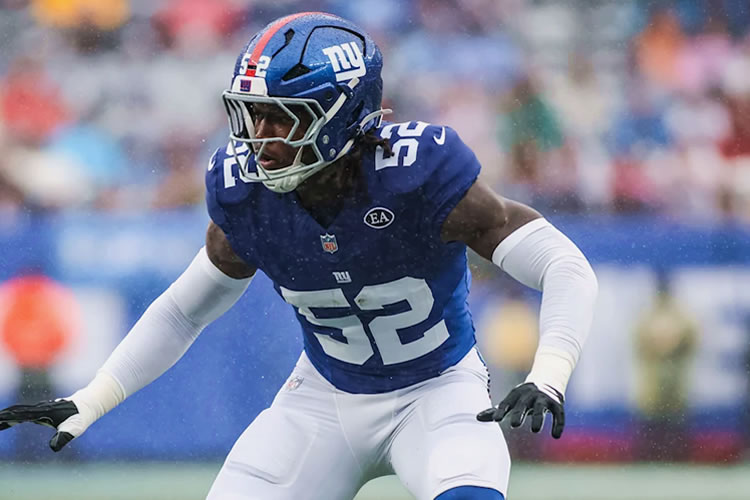
1. Arvell Reese
2. David Bailey
3. Sonny Styles
When I put together my preliminary version of this last a week ago already, this was a close race. Racking up three (of his 4.5 total) sacks in a divisional win over the Eagles pushed Reese over the top. He’s been heavily involved in Dennard Wilson’s pressure looks, thanks to burst and flexibility, to either knife through gaps or muddy up underneath passing windows. One of those sacks on Sunday was gifted to him, coming off the edge unblocked, but it was also a great showcase of his hitting power, as he separated QB Joe Milton from the football. You see that constantly, as a hammer in the run game at the point of attack, with the pop in his hands to keep blockers away from his frame. Yet, his speed also makes him a problem scraping over the top of run calls from the backside, and when he’s pursuing passes as they leave the quarterback’s hand. He also picked off a batted pass against the Cardinals.
Admittedly, I wasn’t as big of a fan of Bailey in the pre-draft process, and didn’t view him as worthy of the number one overall pick. However, for a team that desperately needed help getting after quarterbacks, he’s been the most productive guy in that area through half of this season. He ranks months among all defenders in sacks (7.5), his 31 QB pressures are five more than any other rookie defender, and only one other name among those has forced multiple fumbles – Bailey has five(!) already. He pairs an excellent two-handed swipe move or rip to capture the edge with speed. Yet I’ve seen a little more from him converting to power than I might’ve anticipated based on his college evaluation. Additionally, while I had some concerns about his ability to stack-and-shed blocks in a traditional sense as a run-defender, his activity to work off contact and get his hands on the ball-carrier has resulted in 20 defensive stops – most among all non-linebackers in this class so far.
Thirdly, I chose the guy who lined up next to Arvell Reese at Ohio State last year, and took on a more traditional inside LB role for them. Similarly to the type of leader he became for the Buckeyes’ dominant defense, Styles came to Washington and immediately earned the green dot, as the communicator of that unit. While he hasn’t been as involved as his former teammate as a pass-rusher in the pros, he’s actually been more effective on his opportunities (eight pressures on 54 PR snaps), and otherwise their numbers are basically identical – both with one interception, one forced fumble, four PBUs and Styles with one fewer tackle (67). He’s never been quite as violent on contact as Reese, but his eyes and anticipation are more advanced on this stage, as displayed when you see him have a beat on screen passes and other longer-developing plays, paired with the range to beat blockers to a spot.
Honorable mentions: Gabe Jacas & Jacob Rodriguez
Protector of the Year:
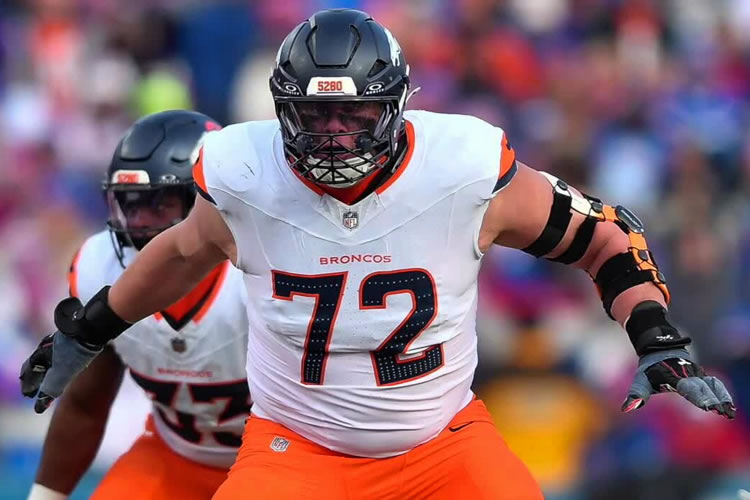
1. Garett Bolles
2. Penei Sewell
3. Creed Humphrey
I didn’t include this category in my full-season predictions prior to kickoff, because I don’t believe it makes sense to try projecting what voters might do, especially when it comes to positions for which there are no traditional counting stats. However, now it’s time to give some big boys their credit. At the top of the list for me is the blindside stalwart of the Broncos, who has exceeded the already very high standard that he has set for himself through his first eight games. Across 342 pass-blocking snaps, Bolles has yet to give up a sack, only one hit on his quarterback and four more hurries. And yet, his run-blocking grade is ever so slightly better, according to Pro Football Focus (81.0). He plays under such great control, rarely allowing the width of his feet to alter substantially, and is highly active with his hands, including a firm inside to keep the B-gap clean.
Challenged for the title of best left tackle in the game, both Sewell and Trent Williams remain as tough competition, after vying for All-Pro nominations for years at this point. The Lions standout has actually received the highest overall PFF grade among all NFL linemen through eight games (92.0). Flipping over from the right side, it basically took Sewell two weeks to reach his elite status again. That second game is when he surrendered his only sack and half of his pressure total (four), but it came against Greg Rousseau (who leads the league in that category) and company. Over the last six weeks, he’s averaged half a pressure allowed despite logging over 30 pass-blocking snaps in each. That’s along with being one of the premier athletes up front, who regularly is being weaponized pulling across the formation or out to the corner, in order to pave the way for the Offensive Player of the Year favorite.
At the three spot, Humphrey represents a Chiefs unit that has kind of gone through a metamorphosis when it comes to their run-blocking ability, again setting up lanes for one of the superstar running backs in the game, with Kenneth Walker III. For how they want to operate, you can make a strong argument that the center position is the most important one, and that’s especially true as you think about all the checks he makes to protect a quarterback coming off a torn ACL. In fact, Humphrey has been the best player at his position almost since the day he entered the NFL when you look at his efficiency in pass pro metric-wise, and considering the minuscule amount of missed assignments on film. Among quarterbacks with 8+ starts, only Brock Purdy has been sacked fewer times than Patrick Mahomes (11). Humphrey has zero sacks or QB hits to his name, and only three hurries, while being penalized just once all year long.
Honorable mentions: Trent William & Chris Lindstrom
Comeback Player of the Year:
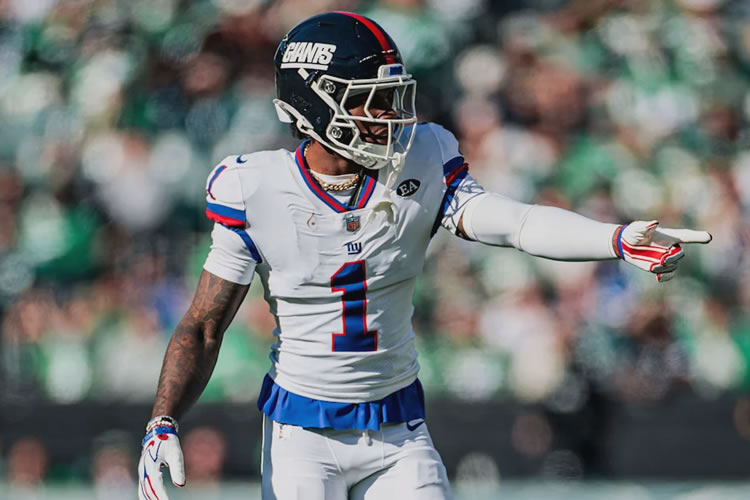
1. Malik Nabers
2. Patrick Mahomes
3. George Kittle
As I’ve said many times, this is a pretty silly award, to me. While the criteria has seemingly changed over the years, some voters end up ignoring the fact that some type of injury/medical concern is required to be eligible. Therefore, I won’t discuss this extensively, but I will give credit to the three names listed here. Nabers ranks just inside the top ten in receiving yards per game (81.0 YPG), with high marks in contested-catch and missed-tackle rates, despite catching passes from three different quarterbacks. With Mahomes, we seem to forget that he’s coming off that torn ACL, since it’s never actually shown up on gameday, as we watch him navigating the pass-rush or take off for key scrambles. He and Brock Purdy are the only two QBs with passer ratings above 100 and pressure-to-sack conversion rates below 11%. And Kittle even more miraculously seems to be running away from defenders with no issues, despite tearing his Achilles exactly ten months ago. He’s delivered chunk plays on deep crossers and attacking the middle of the field with consistency, as we consider all the wide receiver injuries for San Francisco, ranking third in yards (483) and tied for fourth in TDs (five) among tight-ends.
Coach of the Year:
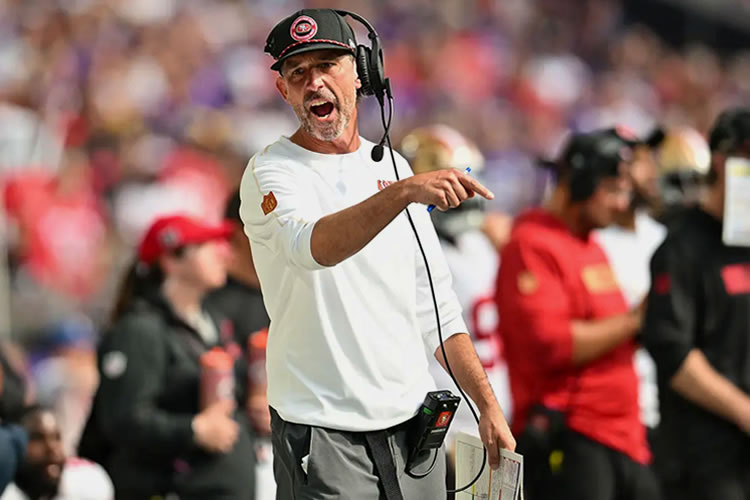
1. Kyle Shanahan
2. Ben Johnson
3. John Harbaugh
As we transition to the two coaching categories, trying to understand what the responsibilities of these men are, and how well they do their exact jobs becomes very important. Rarely does a team have both the MVP and Coach of the Year at their disposal, because typically one cancels out the other to a certain degree, because of how credit is distributed between them. The Niners are one of those situations where both guys are very deserving. For as machine-like as Brock Purdy has been executing Shanahan’s offense, his ability to put defenders in conflict and create spacing issues for opposing units has allowed them to overcome a myriad of injuries to their receiving corp. As I’ve called it before, nobody’s better right now at “seizing control of green grass”, and their coaching points to distribute routes in such a way has been pristine. San Francisco is first league-wide in EPA per play (0.163) and success rate (53.5%), but they’re also top four in all those categories if you split them into passing and rushing, despite lacking blue-chip pieces on the O-line outside of left tackles, starting WRs who weren’t even on the roster by week one, and Christian McCaffrey getting banged up at times.
If there’s one man who can challenge Shanahan for the title as best play-caller in the NFL and have his team perform at a high level on a weekly basis, Ben Johnson is making a strong case in his first one-and-a-half seasons in Chicago. Looking at the only two of nine games in which they’ve failed to score 23 points, they lost Caleb Williams in one (which was also in a thunderstorm against the league’s top-ranked defense) and benched their second quarterback in the other (also against a top-ten unit by pretty much any metric). They’re not quite up the ranks numbers-wise, largely based on Caleb’s availability, but they constantly feel in control of matchups, with the way they can extend drives, and also get opponents off the field more frequently, as the year has gone along. They’ve nearly possessed the ball two minutes longer than any other team in the league on average (34:31 minutes). The way he creates advantageous angles in the run game, sticks with it throughout contests, but then also is able to sneak someone past the coverage on crucial downs stands out.
Lastly, I went with a non-play-calling coach, who was considered to be someone who can alter the way the wind is blowing for one of the flagship franchises, as more of the overseer/CEO type. Time had simply run out for Harbaugh in Baltimore, but he’s put together a highly impressive track record in the NFL. Now in year seven, he ranks in the top 20 all-time when it comes to win-loss percentage for his career, with at least that level of experience. Now with his Giants at 5-2-1, they sit clear atop the NFC East, where everyone else has logged at least five losses already. That’s in spite of having three different quarterbacks start multiple games, one of which wasn’t even on the roster until a month ago. None of their three units have produced at a top ten level by most metrics, but they appear well-prepared every week and find ways to win games. That’s a credit to the man running the show.
Honorable mentions: Liam Coen & Joe Brady
Assistant Coach of the Year:
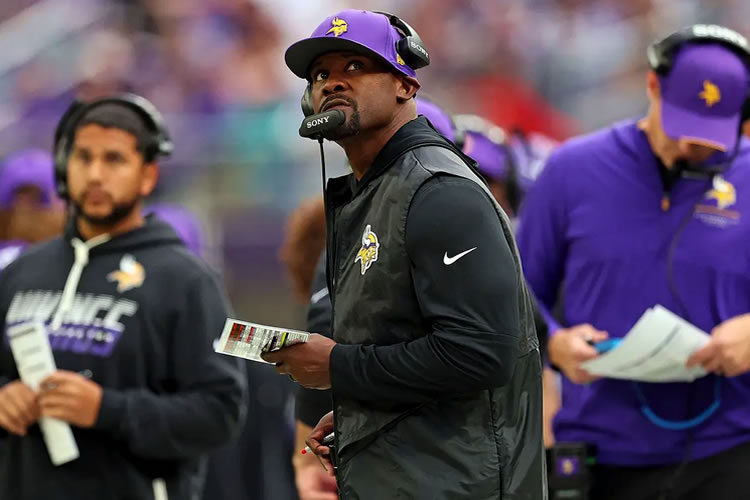
1. Brian Flores
2. Jonathan Gannon
3. Drew Petzing
There’s no other category where the cliff between the top candidate and everyone else is as vast as it is for Flores, as one of the key figures of this season. Saying anyone is “re-inventing” how defensive football is being played would be taking it a step too far, but he’s truly in a league of his own with how he’s dictating terms to opponents on that side of the ball. “Only” blitzing Josh Allen on 68.6% of his dropbacks on Monday Night – the highest percentage he’s ever faced in the pros – actually brought their overall rate down to a still staggering 72.5%, nearly 30% higher than anyone else in the league. However, he’s not simply bringing heat, but the pressure packages he utilizes and how the zone defenders behind him are being distributed look different every week, and put opposing quarterbacks in hell. They’ve number one in EPA per play (-0.166) and success rate (36.8%) all year long, and it’d be a shame if their efforts were somewhat wasted with such unstable offensive contributions.
Now, while there absolutely is a cliff between Flores and everyone else currently, I have to give credit to Gannon here for proving me wrong. If you had told me that the Packers would rank fifth in defensive DVOA through nine weeks while not having Micah Parsons as the one true ace in their disposal, I wouldn’t have believed you. They don’t have one true difference-maker up front in the pass-rush department and their returning leader in tackles, Edgerrin Cooper, was lost for the year just a month in. Yet, they’re tied for fourth in sacks (26) and are third in total tackles for loss (51). Gannon has done a lot with slanting his front to overcome some talent deficiencies personnel-wise. And then, of course, he’s adopted similar ways of spinning their safeties and changing the picture for quarterbacks by rotating the coverage, where it may look crazy in those obvious dropback settings, but even if the pass is completed, they typically have someone in position to set the tackle. Only the Jaguars have a lower difference between opponents’ drives that have resulted in points (30.8%) compared to turnovers (18.3%).
For the one offensive coordinator on this podium, I went with another man who had fallen out of favor to a certain degree, but has now done an excellent job in year one at a new stop. Petzing became a popular name among the “film nerds” a couple of seasons ago, when the Cardinals surprisingly became one of the best rushing teams in the NFL. He has carried that over to Detroit, and taken things to a new level, with how he’s turned Jahmyr Gibbs into a workhorse for that unit, as I’ve already discussed. Only Buffalo has created more first downs per game (23.5) than the Lions so far – and that’s by one total. They rank third in overall success rate (48.9%), as well as if you look at the run and pass game separately. They play a very clean brand of football, with Jared Goff not throwing an interception until two weeks ago, who’s executing at a very high level himself, and they manage to feature their top four guys well, as all of them average over 50 scrimmage yards per game.
Honorable mentions: Anthony Campanile, Kris Kocurek (49ers DL) & James Campen (Steelers OL)
Mid-season NFL All-Pro teams:
First team:
QB Brock Purdy
RB Jahmyr Gibbs
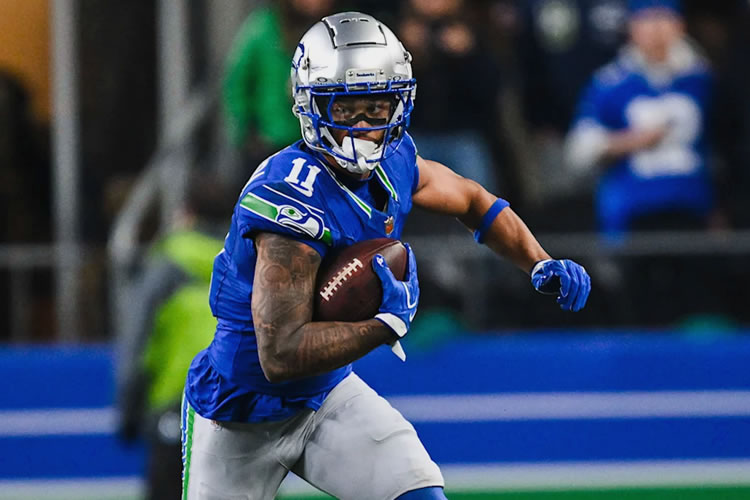
WR Jaxon Smith-Njigba
WR Ceedee Lamb
WR Puka Nacua
TE Brock Bowers
LT Garett Bolles
LG Quenton Nelson
C Creed Humphrey
RG Chris Lindstrom
RT Penei Sewell
EDGE Will Anderson Jr.
IDL Jeffrey Simmons
IDL Dexter Lawrence
EDGE T.J. Watt
LB Fred Warner
LB Blake Cashman
CB Denzel Ward
CB Devon Witherspoon
NB Kyle Hamilton
SAF Evan Williams
SAF Jessie Bates III
Second team:
QB Josh Allen
RB Kenneth Walker III
WR Tee Higgins
WR Christian Watson
WR Matthew Golden
TE Trey McBride
LT Trent Williams
LG Quinn Meinerz
C Erik McCoy
RG Tyler Booker
RT Amarius Mims
EDGE Greg Rousseau
IDL Zach Allen
IDL Quinnen Williams
EDGE Aidan Hutchinson
LB Zack Baun
LB Ventrell Miller
CB Trent McDuffie
CB Jacob Parrish
NB Byron Murphy Jr.
SAF Jevon Holland
SAF Xavier McKinney

