
About a week-and-a-half away from the actual draft, I went back to one of my favorite exercises of the year, highlighting ten names who weren’t among the 257 that actually got a call over the course of those three days, but could be meaningful players in the NFL.
These aren’t necessarily the guys I had ranked highest in my individual rankings, but rather considering the landing spots and how these names within the depth chart potentially, who I believe have a real path to playing snaps this season. Expecting any of them to start at any point as rookies would be unrealistic, but recently nearly two UDFAs made it through final roster cuts for all 32 teams (57 each these last two years).
Here are a few I believe could be next:
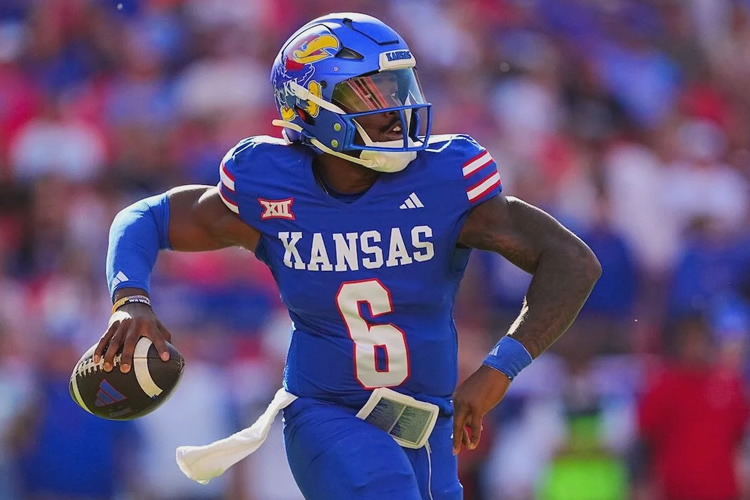
QB Jalon Daniels, Kansas – Tampa Bay Buccaneers
No matter how you twist it, this was a bad quarterback class. Indiana’s Fernando Mendoza was a lock for the first overall pick the whole way, and Alabama’s Ty Simpson was a surprise selection by the Rams at pick 13, but was generally considered the clear QB2. However, over nearly 100 following spots, only two other signal-callers heard their names called, and three of ten total came in the seventh round. Daniels wasn’t among those, and it wasn’t shocking, considering he was a fringe-top-300 prospect on consensus boards, but I personally had him as my QB9, ahead of Penn State’s Drew Allar, who was picked 76th overall by the Steelers, and was at least equally as much of a project, I thought. The difference, of course, is that the Kansas football program hasn’t received a lot of attention, and their quarterback has sort of become a forgotten name.
You can read up more extensively on Daniels as part of my quarterback rankings, but even though he’s on the shorter end at 6’1”, there are some exciting tools to work with. You see the arm strength to deliver vertical shots 50+ yards from the launch-point to the far sideline, despite how those college hashes are. I called it a “whippy arm”, looking at his ability to create plenty of velocity without necessitating a lot of room, and he can pin the ball onto his targets in the RPO game without much fat. Daniels has flashed a capacity to read the entire field, with the peripheral vision to identify open targets on Air Raid-style concepts, and deliver the ball to a point with touch for his guys to run underneath. In particular, I love seeing him rip those honey-hole shots in cover-two, when he feels like the corner in the flats and the clouding safety offer him too much air space. Where I’m really encouraged has been his growth and comfort inside the pocket, instead of bailing on the designed play early. Having said that, he is dynamic at extending plays by making rushers miss, having those instincts for secondary plays, and then he has a combination of slipperiness, balance and acceleration to rip off chunks with his legs.
Now, there are clearly things he needs to clean up in order to stick around the league. Tightening up his throwing motions to some degree in order to eliminate some of the sprays that are still prevalent, and adopting more subtle pocket movement, would qualify as such. The biggest deal however is taking better care of the football, with 19 interceptions and 18 fumbles over the last two years combined. Not trying to put on the cape when things break down, swinging the ball around wildly and forcing throws on the scramble drill have been deadly at times. Nonetheless, he is kind of reminiscent of a more athletic Baker Mayfield, even if he of course doesn’t have nearly the same experience processing post-snap rotations at the NFL level and making quality decisions. Jake Browning has started ten games and jumped in for a few others in Cincinnati. Yet, if the Bucs carry three quarterbacks, Daniels simply has to beat out a UDFA from a year ago in Connor Bazelak.
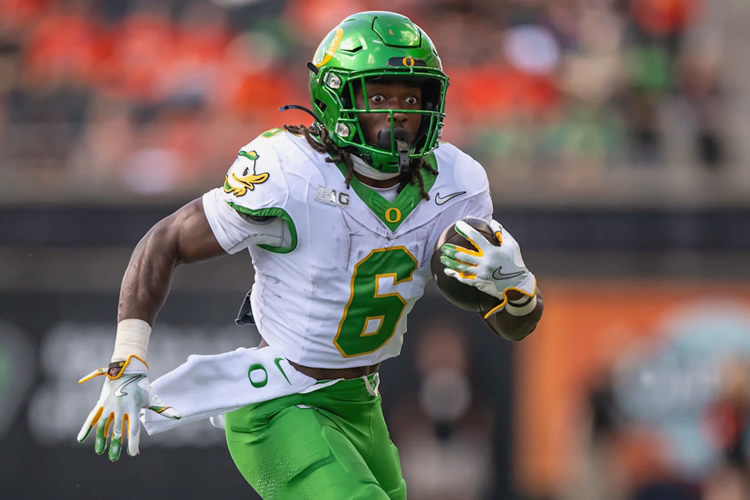
RB Noah Whittington, Oregon – Houston Texans
The final two names of my top ten running backs list – UTSA’s Robert Henry Jr. and Texas A&M’s Le’Veon Moss – both went undrafted, but landed in spots where they’re likely starting out as RB4s at best, if they manage to make those rosters at all. That in part was due to the quality of the class, similar to the quarterbacks. After Jeremiyah Love went third overall and his former Notre Dame teammate Jadarian Price closed out night one, we only had one running back selected on day two, and ten more on Saturday. One of those I expected to at least come off the board late was Whittington, who led the Ducks in rushing last season, went over 900 scrimmage yards twice and scored at least six times in three of four years at Eugene (of which he missed all but a month in one of the other two). Turning 25 years old late in his rookie season and having missed time in two of the last three years, combined with not having a particularly impressive physical profile anyway, probably hurt him. Still, that doesn’t mean he can’t be a useful piece in Houston’s rotation.
This is an instinctive runner, who naturally alters his stride length and hits downhill with an attitude once it’s time. He keeps his pads square and moves laterally with ease as he sets up man-blocking schemes, with a nice jump cut to elude trash at his feet. On plays involving multiple pullers, he tightly hugs his blocker, and he can sort of hide behind those bigger bodies before popping out to daylight. And he’s mature beyond his years, not trying to bounce plays unnecessarily and plowing forward as lanes close down, but he can gain positive yardage. Generally, Whittington minimizes the surface area of his 5’8” body, rarely allows defenders to get a straight shot at him and constantly churns out tough yardage. He has that bowling ball quality, where he gets twisted sideways and caught in awkward positions, yet finds a way to keep his downhill momentum alive, forcing 52 missed tackles on 247 combined rushing attempts these past two seasons. Why I feel good about coaches buying into him is how reliable he is in three areas – he’s only fumbled twice across four years as a Duck (481 combined touches), he has a career drop rate of just 5.4%, plus he steps up and strikes with a purpose in pass-protection.
With all that being said, he does lack the quick burst to consistently beat scraping linebackers out to the sideline, or the top gear to rip off 40+ yard runs even when things are set up optimally. And he did have the benefit of running behind an excellent offensive line, where he could just hit the designed rushing lane at full throttle. The Texans traded a fourth-round pick this and a seventh next year, packages with center Juice Scruggs, to Detroit for David Montgomery, to pair with last year’s fourth-rounder Woody Marks, who got banged up in several games. I believe that RB3 spot is definitely up for grabs though, with Jawhar Jordan as the only legitimate competition, having only seen action in the final four games of last season (79 snaps) after being a pick outside the top 200 the year prior.
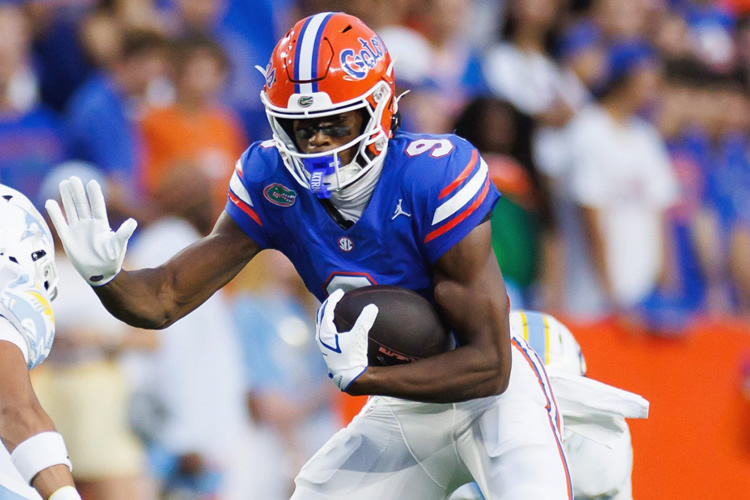
WR J. Michael Sturdivant, Florida – Green Bay Packers
Some people thought the Packers might target wide receiver fairly early in this draft, even without that first-round pick due to the Micah Parsons trade, considering their new-found belief in investing high draft capital into the position. However, after trading Dontayvion Wicks to Philadelphia for a fifth-round selection this and sixth next year, the only offensive player they drafted altogether was Kentuck center Jager Burton in round five. Yet, despite tying the all-time record for a single draft (2020) with 36 WRs selected altogether, Sturdivant surprisingly wasn’t one of them. He landed just outside my top 20 for the position personally, and I understand why teams might’ve not loved his profile, in a year where there was a lot of variance in how individual boards stacked up, and plenty of guys were probably favored based on what they offered in the return game. A top-200 recruit for Cal in 2021, this guy had slightly more receiving yards (755) and touchdowns (seven) in his second season with the Golden Bears than in the latter of two years at UCLA and this past one at Florida combined. That doesn’t take away from the skills he brings to the table individually though, considering the inconsistent quarterback play he was dealing with over that latter stretch.
Sturdivant is experienced running a solid route tree from every single receiver spot. He beats the drums and uses foot-fire to keep corners off balance, create softer edges for himself with well-timed wipe-downs, and then he has 4.4 flat speed to blow by those guys on fade and post routes. This is an efficient mover, who gets to where he needs to be on time and glides through speed cuts, yet understands when to patient in his set-ups on the backside of the concept or if the design is supposed to clear out space for him. Sturdivant eliminated those early-career drop concerns, and in particular, his focus to track the deep ball, even if he has to crank his neck around in awkward ways, stood out to me several times. He doesn’t shy away from going over the middle of the field, dive for passes, and finished his career hauling in exactly half of his contested targets (62.5% rate in 2025). Once the catch is secured, he instantly turns upfield and tightly wraps around the ball as defenders are converging on him, plus I thought he understood and took care of his blocking assignments in the run game consistently.
We can’t solely blame his quarterbacks for the lack of steady increase of his production however, finishing his career with 1.4 yards per route run. You don’t see Sturdivant stick his foot in the ground in dynamic fashion and run away from his man on slants, or actually make a lot of people miss after the catch. Still, considering beyond Green Bay’s starting three in 11 personnel, you’re looking at last year’s third-rounder Savion Williams as more of a gadget player/part-time running back, and two fringe roster candidates in Skyy Moore and Bo Melton, I legitimately believe there’s a path for Sturdivant to replace that WR4 role Wicks previously commanded, as a quality route-runner who they can rotate in, and actually brings more dependable hands.
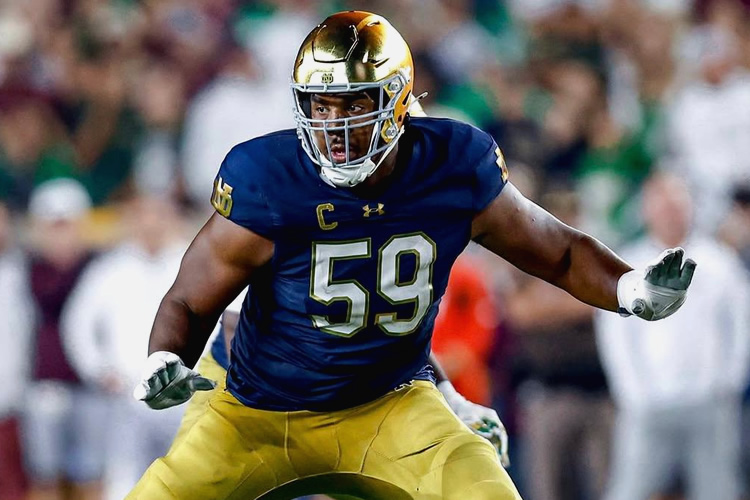
OT Aamil Wagner, Notre Dame – Tennessee Titans
Far more quality defenders slipped through the cracks, but I did want to include one offensive lineman here. This was another case, where I assumed Tennessee would address tackle at some point, since there are questions beyond their two starters, but they didn’t actually spend a draft pick on the position. Part of that may have been based on how the OT class came together, as the top seven to me were all worthy of going in the first round, before we saw a steep drop down like three more names for day two, and beyond that everyone else has significant questions in their scouting reports. However, even considering there were at least a couple of transition candidates announced as guard/center, there were 21 tackles taken overall. I certainly didn’t expect for a 6’6” behemoth with 34.5-inch arms, that won’t turn 23 years old until a month into his rookie season, was voted a team captain, and after his infamous showing against the two monsters off the edge for Miami in their season-opener, only surrendered three QB pressures the rest of the way (on over 300 pass-blocking snaps), to not be one of those.
Wagner is measured in his approach as he deciphers post-snap information, but then provides excellent leg drive in the run game. He understands when to up the urgency to overtake 2i-techniques on the backside of concepts, and delivers a solid bump to the hip of defensive tackles while staying track for the linebacker on quick combos. Even if he doesn’t “win” the initial interaction, Wagner is capable of extending his triceps and steering defenders off their landmarks for the most part. Pairing that long first kick with his large wingspan, you’re facing a wide track trying to get around this guy. He patiently reads the hips of opponents and shows a propensity for individual hand usage, trapping their wrists as they enter close combat. You see him stun opposing rushers by punching with that outside mitt, yet even if opponents are able to gain the inside position, he’s pretty skilled not allowing them to convert speed-to-power and slip around him. Against cross-face moves, Wagner can open his hips and utilize that long reach to guide opponents off course just enough to keep his quarterback clean. My favorite thing following his path to the pros however is how battle-tested he is in terms of the edge rushers he’s faced these last two years (Abdul Carter, the two Miami EDGEs, Cashius Howell, etc.), yet has only been penalized four times in his career (on over 1700 snaps).
By no means is Wagner is perfect player at this point, obviously. I initially thought he looked for like a power forward with that high-cut, lighter build (around 305 pounds). He’s not particularly explosive into his run fits and plays over his toes a lot, to where savvy defensive linemen are able to pull him off balance, and his hands often slide up trying to actually secure linebackers. As a pass-protector, he excessively lifts his post foot and pulls his elbows back, which makes his chest available for power-based rushers and then triggers him to lean into contact, opening up push-pull opportunities. Nevertheless, understanding how catastrophic Austin Deculus looked like when finally receiving starting opportunities in his fourth season, and Brandon Crenshaw-Dickson played 19 total snaps as a UDFA this past year, at worst I think the Titans will *very closely* track Wagner’s progress on the practice squad.
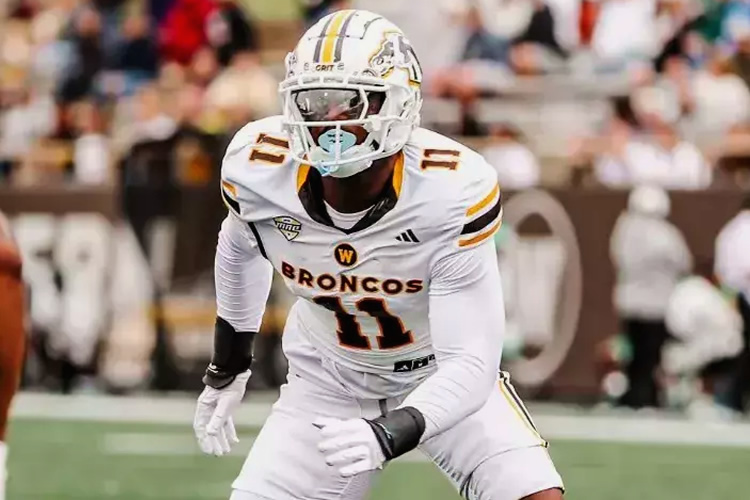
EDGE Nadame Tucker, Western Michigan – Los Angeles Chargers
Transitioning to the defensive side, Tucker was my top-rated “EDGE” in a class that was about as deep as we’ve see in several years, of which there were 26-28 selected overall, depending on how you count a pair of them. I personally had him ranked 18th among that group, and he was only a couple of spots lower on consensus boards, well inside the top 200 overall. Tucker was a three-star JUCO recruit for Houston in 2022, but never earned a significant role in three years for Cougars (161 defensive snaps and zero sacks). For his final year of eligibility, he transferred to WMU and just exploded onto the scene, leading the MAC in TFLs (21) and sacks (14.5), along with forcing four fumbles, making him an easy choice for the conference’s Player of the Year. Being a little undersized (6’2”, 247 pounds) and turning 26 shortly after his rookie season ends probably dropped him down a few extra spots on team’s boards, but I think the Chargers could benefit significantly from it.
Although that smaller frame has its downsides, Tucker regularly wins the leverage battle with good jolt in his hands and stands his ground against drive-blocks at the point of attack. He’s slippery with working off contact, and is able to contort his upper body to create penetration as he slants across the face of offensive linemen. Plus, he displays the speed and ankle flexion to flatten and chase down plays as an unblocked defender off the backside. In passing situations, he’s wound up out of his false-foot forward two-point stance to stress the upfield shoulder of tackles. Off that you see ghost moves and dip-and-rips to play under their reach, showcasing impressive bend to get around the arc with his feet clearly outside the center of his frame. Tucker has the strength in his lower half to corner his rush through contact, and then slightly circle back as he’s about to go just past the quarterback, to tomahawk at the ball. He recognizes when tackles overset on him, and is very fluid – and instinctive – in the way can work inside-out euro-step style moves. I regularly saw him swipe away the hands and wiggle past blockers in the secondary phase of the rush, and show impressive contact balance at sub-250 pounds to not allow chips/punches to take him off course (significantly) on stunts.
The fact that Tucker couldn’t carve out a significant role across three seasons at Houston is concerning. He needs to play with better extension and hand placement, to keep his outside arm free and be able to de-construct blocks in the run game, considering he only has those 31.5-inch levers. While as a pass-rusher, if he can’t establish those half-man relationships as a pass-rusher, he simply lacks the raw power to condense the pocket typically, and will need to work overtime against those long tackles, with more reliable counters. Regardless, considering how productive he was when given a chance last year and some of the flashes he showed during Senior Bowl week, I think he could be that fun fourth guy, after the Bolts paired first-rounder Akheem Mesidor with Tuli Tuipulotu as these guys with inside-out versatility (plus Khalil Mack being back for one more year), who they can just allow to fly off the edge a handful of times per game in pure dropback settings.
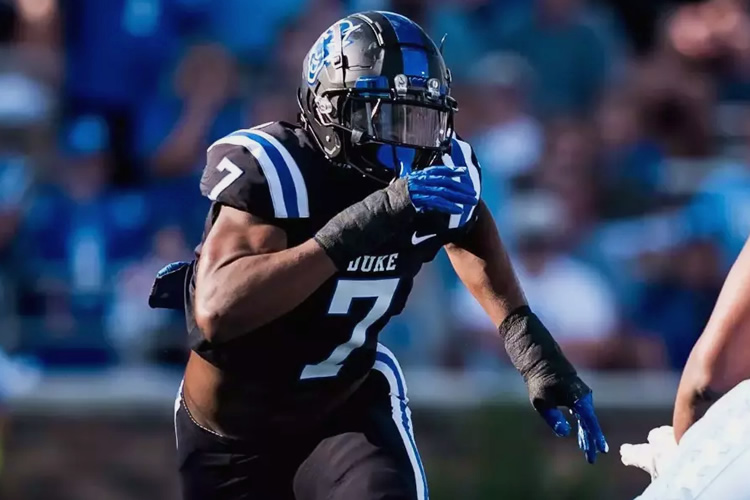
EDGE Vincent Anthony Jr., Duke – Kansas City Chiefs
When I first saw a post on all the names Kansas City had signed after the conclusion of the actual draft, I thought they had put together a UDFA all-star class. So I struggled even trying to settle one name to highlight here, but ultimately favored Anthony over Oklahoma running back Jaydn Ott and Iowa safety Xavier Nwankpa, who I believe could both easily see the field for them this season, even if they start on the practice squad. Although they’re different styles of players, I had Anthony back-to-back with his teammate Wesley Williams in my EDGE rankings, who was selected early on day three by for Jacksonville (119th overall). I highlighted him as one of my early draft risers after the first month of the college season, on the heels of a three-sack game against Duke. Things tapered off a little bit from that point onwards, but Anthony was still a key cog for the Blue Devil defense, which surprising took home an ACC Championship.
First and foremost, Anthony presents a quite different physical profile than the one we just discussed. He’s 6’6”, 260+ pounds with arms over 34 inches. Routinely you see him out-reaches tackles with that inside arm extended as he takes on base blocks. He simply refuses to allow blockers to get to his play-side shoulder on wide zone concepts, but also tracks down the running back if left unblocked on the backside with those elongated strides. He’s dependable with staying home on bootlegs and potential misdirection, before using his quick acceleration and wide reach to get involved on tackles way off his original landmarks. His snap anticipation and how he gets out of his stance frequently gave Anthony a small head start as pass-rusher. He’s not as bendy as some other guys that primarily want to work the “high shoulder”, but he runs that hoop with tenacity, and just like a tackle would bait him into committing to his move, you see him flash his hand before dipping his near-shoulder under their reach. This past year, I thought he improved his ability to angle his rush through the chest of upright tackles or dig under their pads with the long-arm to condense the edge. I like how he sets up twists, and he can create problems on those long loops, where it’s like throwing through a forest as he gets those long vines up closing in on the QB.
As I already hinted at, that higher-cut build does limit Anthony’s ability to reduce his tall frame and turn tight corners. Therefore, you see inside moves cut off more easily, and him struggling to work against pressure as tackles guide him off track. And he tends to turn his base or get too far upfield when he should be setting a firm edge against the run. With that being said, while he may not be suited particularly well to take on extensive coverage duties, I thought he had a handful of nice moments peeling off the edge and finding the next-closest target, when Chiefs DC Steve Spagnuolo wants to drop people off the line. They just selected Oklahoma’s R Mason Thomas as more of a designated pass-rush specialist in the top 50, but other than George Karlaftis, last year’s third-round pick Ashton Gillotte I thought played as much as he did out of necessity, and former first-round pick Felix Anudike-Uzomah didn’t establish himself as any part of the rotation over his first two seasons before missing all of 2025 with a hamstring injury.
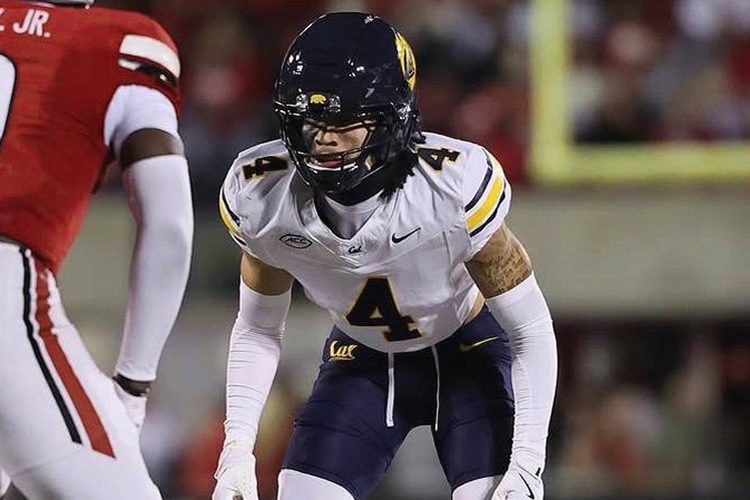
CB Brent Austin, California – Denver Broncos
Moving along to the secondary, I want to talk about my top-ranked corner that didn’t hear his name called, despite being firmly inside my top 150 prospects heading in. I knew that I valued Austin significantly higher than consensus, since I actually placed him just above his running mate Hezekiah Masses, who was selected at the end of the fifth round, after snatching up five interceptions last season. Austin didn’t collect any in 2025 (three previously), but posted 25 PBUs over the past two years combined, where they switched sides, both lined up in press or off, and handled various assignments. And although he’s about an inch-and-a-half shorter (5’11”), they’re both right around 180 pounds and basically had identical times in the 40-yard dash (4.45 at his pro day for Austin).
Now, while their measurables were very similar, I thought Austin provided a different level of physicality. Even when receivers were off the line, he wanted to re-route them and be a pest. Routinely he tilted guys with one-handed stabs, yet if he didn’t put his hands on them, his ability to mirror and stick to the hip pocket was impressive. He had several textbook reps against fade routes, where he puts his backside onto his man to where he became the receiver and even forced his opponent to drag him down for an offensive pass interference that I saw. I thought Austin provided outstanding route squeeze in quarters assignments to close down momentary openings on hitches/curls and swipe down through the mitts of the intended target to erase completions. He showed excellent awareness for where the sticks are on third downs, and routinely found work late in the pattern rather than covering grass in zone assignments. For being a little smaller in stature, Austin owns his space pretty well to deny back-shoulder or box-out opportunities, and altogether allowed just 43.3% of passes his way to be completed for 5.65 yards per target as the primary defender. I also though he was feisty with pushing receivers into the action, trying to shield him in the run game, he just had his best season as a tackler (10.9% miss rate), and had a pair of nice punch-outs.
On the negative side, only having a 74.5-inch wingspan does limit his ability to wrap around and dislodge passes even when he’s right on the hip of the target, such as on slants, and he definitely challenges the catch-point on the fringes of what’s legal, which may draw more flags at the next level. I also thought he allowed himself to get drawn too far off his landmarks instead of mid-pointing vertical routes in deep third responsibility, allowing catches on seam or rail routes. Still, I think his experience at Cal especially prepared him pretty well for this exotic Vance Joseph defensive scheme. Counting starting nickel Ja’Quan McMillian as part of the group, Denver has five corners who pretty much have roster spots secured based on the investments made into them, with one of the game’s best Patrick Surtain, last year’s first-round pick Jahdae Barron, and third-round picks from the two previous drafts respectively. However, I would clearly favor Austin over a couple of fringe roster candidates and a few other UDFAs, if they decide to carry a sixth one.
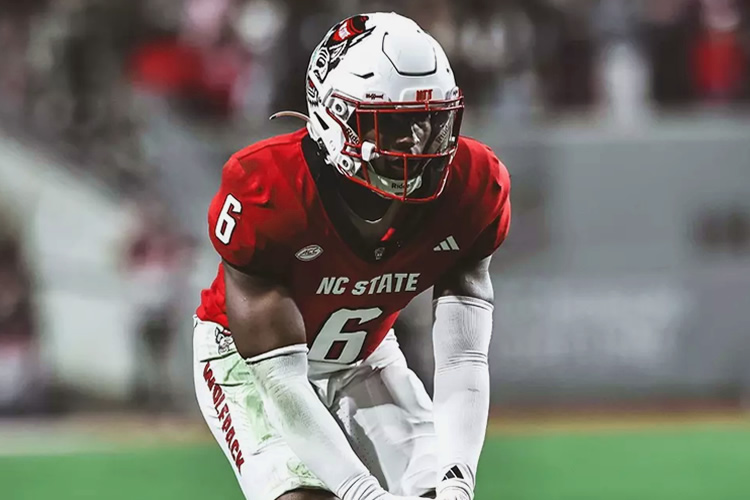
CB Devon Marshall, N.C. State – Jacksonville Jaguars
For the other corner I decided to highlight here, it’s a somewhat similar story, looking at the physical profile for Marshall, only being 5’10”, a little higher (190+ pounds), but the killer for him was the 4.64 he ran at his pro day. At what’s often labelled a “stopwatch position”, that simply doesn’t hit the bench mark most NFL teams set for draftable CBs, and you’d have to bring some special skills to the table to overcome it. I do believe Marshall may just qualify as such a prospect. In 2025, he led the ACC with 16(!) pass break-ups, to go with back-to-back seasons that he hauled in a pair of interceptions. Both of those came in his marquee performance against Florida State, where he primarily matched up with an early-round selection Duce Robinson, who he erased for most of the day, outside of one great over-the-shoulder grab, where the corner actually was right there in perfect position.
This dude is super sticky with receivers from the line of scrimmage throughout the rep. He displays the patience to not get heavy onto one foot or turn early against extensive releases, routinely challenged bigger-bodied wideouts, and shows impressive deceleration after turning and running, to keep openings at a minimum. If he doesn’t feel like he needs to respect the speed of the guy across from him, he may step in front of curls/comebacks as he plants-and-drives out of his pedal. Marshall has excellent awareness for his landmarks, offensive formations and how he can play with his eyes locked in on the passer in zone coverage. He identifies the midpoint between routes that are supposed to create a two-on-one against him in order to not provide easy answers, and regularly picks up work behind him if a tight-end as the lone eligible to his side stays locked into protection. Where he may be as good as any defender I scouted in his draft cycle is that ability to rip through the hands of the target with his back to the football, taking numerous would-be completions off the board, yet somehow only drawing one flag all year. This past season, Marshall earned coverage, run defense and tackling grades all above 83 from PFF, coming upfield with the adequate level of urgency and battling blockers to create angles to the runner for himself.
Along with the questionable timed speed, I thought his quick-twitch reactive athleticism to squeeze down on routes in off-man/match coverage was more so average, and for as good as he was last year at breaking up passes, there would’ve been a handful of opportunities to actually turn his head and try to come down with them himself. Plus, he has sub-optimal length to keep blockers away from his frame. Nonetheless, this was one of the top corners in football, and unless you ask him to survive on an island regularly, I’m not too worried about his game translating to the next level. With how much zone coverage as Anthony Campanile wants to run in Jacksonville, someone like this, who makes offenses earn every completion, should fit in just fine. Now that Travis Hunter will be more of a full-time CB and they re-signed Montaric Brown at a solid number, to go with Jourdan Lewis at nickel, Marshall isn’t cracking that starting three, but considering a couple of other locks for the roster are best deployed in the slot, I see the rookie competing for a backup spot on the outside.
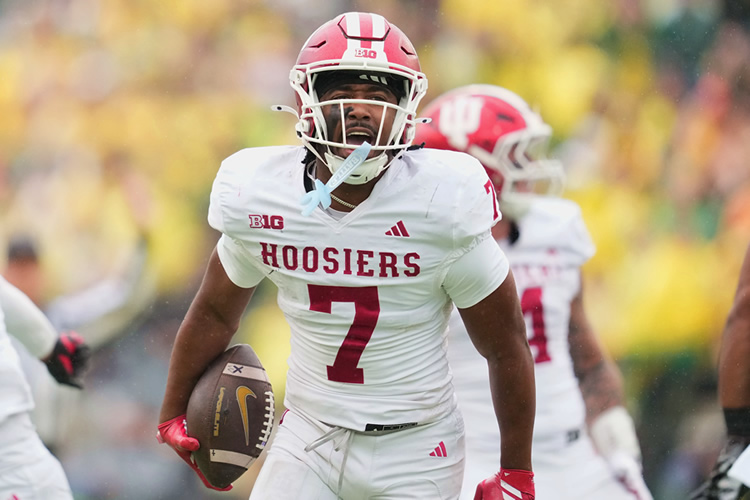
SAF Louis Moore, Indiana – Miami Dolphins
Slated to pick at 11th overall in the draft, Miami was in prime position to select the top safety, and my number one overall prospect, Ohio State’s Caleb Downs. However, they decided to move down one spot with the Cowboys, in exchange for a pair of fifth-round picks, and instead went with Alabama’s massive offensive tackle Kadyn Proctor. Considering the state of that position for them though, it was surprising that the only true safety they targeted was Texas’ Michael Taaffe in the round five. I actually preferred Moore straight-up over that guy, although I knew the NFL likely wasn’t to agree with me, considering he’s a seventh-year senior, just short of six feet, around 190 pounds, with only 29.5-inch arms, and ran a 4.63 at his pro day. Nonetheless, his story is pretty cool, not receiving any FBS offers coming out of high school, spending three years at junior college, becoming a starter in his second season with Indiana, and after a year at Ole Miss, returning to the Hoosiers, to become a second-team All-American and being a key figure in bringing an undefeated national championship back home to Bloomington.
Right off the bat, I wouldn’t say there’s anything “flashy” about Moore as a player, but he fits the definition of a *safe*ty. He does very well to decipher concepts and position himself accordingly in run support from split-safety looks, while keeping his shoulders parallel. You see him sort through the convoy aptly when the offense gets multiple blockers out to the corner, and he has a nose for finding entry points as a tackler inside the box. Where he really shines are his football IQ and awareness in zone coverage. Moore constantly calls out signals, stays deeper than the deepest as a center fielder and doesn’t blindly void his landmarks. He positions himself really well in accordance with how the pattern develops, he’s smooth in his transitions with fluid hips, and you better occupy him when trying to hit these digs, skinny posts, etc. if you don’t want him to step in front of those throws in quarters. Indiana regularly deployed him as a robber/middle-of-the-field defender in three-safety looks, where he keeps his head on a swivel, and you saw his ball-hawking skills manifest themselves in six picks last season. When asked to cap over slot receivers, he displays quality route anticipation and response to how they tilt their stem. Plus, he closes on throws in front of him with efficient footwork, to either wrap around for PBUs or cuts the legs from underneath guys just after securing passes regularly.
What I’ll say here about Moore is that he’s the ultimate jack of all trades, master of none type of “boring” safety without any athletic traits that get you excited. Those shorter arms may lead to some struggles dealing with tight-ends in the run, he’s not a big hitter, and for as well as he positions himself in zone assignments, he doesn’t have the wheels to stick with many NFL receivers. Despite that, I can envision him fitting in really well with what Jeff Hafley expects from their safeties, fitting the run from depth to stay in those soft box counts, how he can put a roof on the defense, and his spatial awareness with how much zone coverage we saw in Green Bay. Taaffe will compete for a starting spot, and late fourth-rounder Kyle Louis (Pitt) will probably be their primary “big nickel”, but I’m not ruling out that this UDFA beats out Dante Trader or Lonnie Johnson Jr. for the SAF3 job.
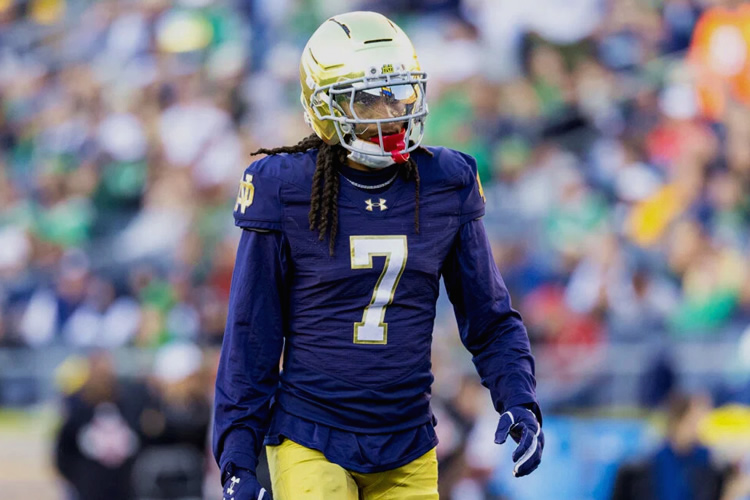
SAF Jalen Stroman, Notre Dame – San Francisco 49ers
For our final player, I went with another safety that felt like he was on the ascent heading into 2024, but we only got to see his best football this past season. In his case, Stroman had steadily been earning more playing time through three years at Virginia Tech, before a clavicle injury cost him basically all of his original senior campaign. After redshirting the year, he transferred to Notre Dame, where he was a part-time starter, but I thought made his presence felt when out there. Still, he isn’t someone I was shocked to see go undrafted, considering he logged just 13 starts in his five-year career and had minimal ball-production (one pick and seven PBUs), along with running a 4.7 at his pro day. And yet, considering the Niners didn’t really address safety at all this offseason, I can see a path for him making the roster.
Stroman attacks the line of scrimmage with aggression. He’s sudden in his lateral movements as he identifies bodies pulling out to the corner, to make sure he funnels the ball-carrier back inside. When brought down to the box, he’s a reliably contain player, and you see some attitude against tight-end and receivers inserting, as he punches into their chest. This is a violent finisher, who makes sure to end the play as he joins the pile. At both VT and especially with the Irish, he showed that he’s capable of handling various late coverage rotations, which I expect to some more of in San Francisco with Raheem Morris taking over that unit. Stroman understands zone distributions and how urgent he should be with widening or squeezing in on deep half assignments. I like him watching step down as a robber/hook-defender with alert eyes and how he changes up if he lassoes or chops down opponents. I thought Stroman moved well laterally to match the route stem when capped over receivers and he was able to impede the progress of tight-ends when walked down, without getting grabby (zero flags in 2025). Yet, my favorite play of his last season actually was more so a display of his intelligence, when they were disguised coverage, showing pre-snap and then closing on number three in trips running a hitch with perfect timing, to undercut and pick-six it.
During Senior Bowl week, Stroman had some nice one-on-one battles with tight-ends, but you also saw him put in trail position and guess quite a bit. Having that higher center or gravity, opponents can give him a little nod and shake him off pretty badly occasionally, and the top speed to run with slot receivers vertically to an extensive capacity doesn’t seem to be there. Considering San Francisco didn’t prioritize bringing back Jason Pinnock or seek outside, they seem content with the Ji’Ayir Brown-Malik Mustapha tandem. I also like last year’s fifth-round pick Marques Sigle, who should battle Upton Stout for slot snaps, and veteran Hobbs features into that as well. Otherwise, you’re probably asking who’s the best remaining guy that can also contribute on special teams – and Stroman does have some experience across all four phases. If he’s going to play more extensively in the box, he does need to diagnose the action a little quicker and not run himself out of position though.
Other notable UDFA signings:
Arizona Cardinals – Harrison Wallace III, WR, Ole Miss
Atlanta Falcons – James Brockermeyer, IOL, Miami
Baltimore Ravens – Diego Pounds, OT, Ole Miss
Buffalo Bills – Desmond Reid, RB, Pittsburgh
Carolina Panthers – Aaron Hall, IDL, Duke
Chicago Bears – Skyler Thomas, SAF, Oregon State
Cincinnati Bengals – Ceyair Wright, CB, Nebraska
Cleveland Browns – Tyreak Sapp, EDGE, Florida
Dallas Cowboys – Michael Trigg, TE, Baylor
Denver Broncos – Taurean York, LB, Texas A&M
Detroit Lions – Anthony Lucas, EDGE, USC / Erick Hunter, LB, Morgan State
Green Bay Packers – Dillon Wade, IOL, Auburn
Houston Texans – Collin Wright, CB, Stanford
Indianapolis Colts – Nolan Rucci, OT, Penn State
Jacksonville Jaguars – Joey Aguilar, QB, Tennessee
Kansas City Chiefs – Xavier Nwankpa, SAF, Iowa / Jaydn Ott, RB, Oklahoma
Las Vegas Raiders – Chase Roberts, WR, BYU
Los Angeles Chargers – Isaiah World, OT, Oregon
Los Angeles Rams – Dean Connors, RB, Houston
Miami Dolphins – Mason Reiger, EDGE, Wisconsin / Rene Konga, IDL, Louisville
Minnesota Vikings – Tristan Leigh, OT, Clemson
New England Patriots – David Blay Jr., IDL, Miami
New Orleans Saints – C.J. Donaldson, RB, Ohio State
New York Giants – Thaddeus Dixon, CB, North Carolina
New York Jets – Chip Trayanum, RB, Toledo
Philadelphia Eagles – Deontae Lawson, LB, Alabama
Pittsburgh Steelers – Lake McRee, TE, USC
San Francisco 49ers – Mikail Kamara, EDGE, Indiana
Seattle Seahawks – Aiden Hubbard, EDGE, Northwestern
Tampa Bay Buccaneers – Eric Rivers, WR, Georgia Tech
Tennessee Titans – Bishop Fitzgerald, SAF, USC
Washington Commanders – Robert Henry Jr., RB, UTSA

