
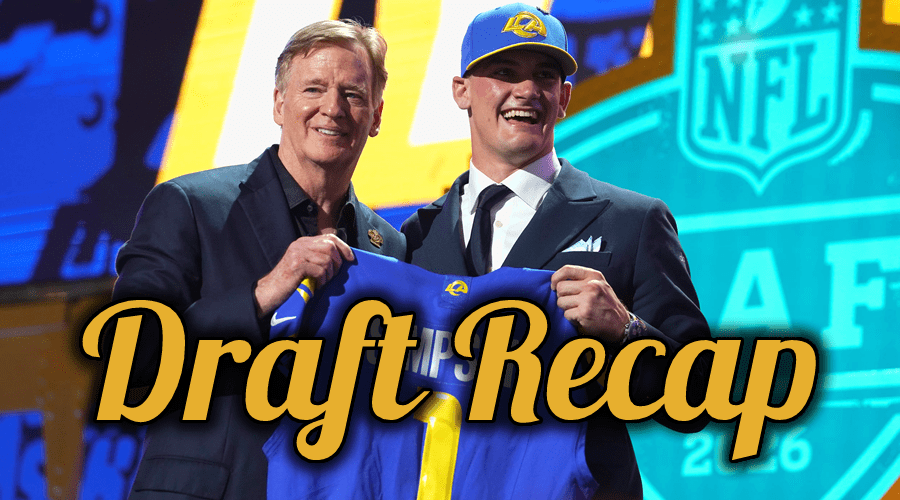
The 2026 NFL Draft is in the books, and it’s time review everything that happened. We all knew Fernando Mendoza would be the first name off the board, but then we had multiple surprise picks over the first half of night one especially. Day two was marked by a couple of head-scratching tight-end selections and only one running back hearing his name called (and certainly not the one we expected). And thankfully, it only took for the first selection of Saturday for the slide of potential top-ten pick Tennessee cornerback Jermod McCoy to finally come to end, due to his uncertain medical situation, before LSU’s Garrett Nussmeier only just got drafted at the very end, as the tenth quarterback off the board, in a weak class otherwise.
As always, I will recap the action with four categories – the biggest winners and losers, steals and reaches of the draft. These opinions are based on my personal evaluations, in combination with consensus boards, analyzing roster construction and the situations of veteran players, who may be significantly affected by the picks that were made. Players who reportedly fell largely due to injury concerns may only be limited as honorable mentions in the “steals” category.
Let’s dive in:
Winners:
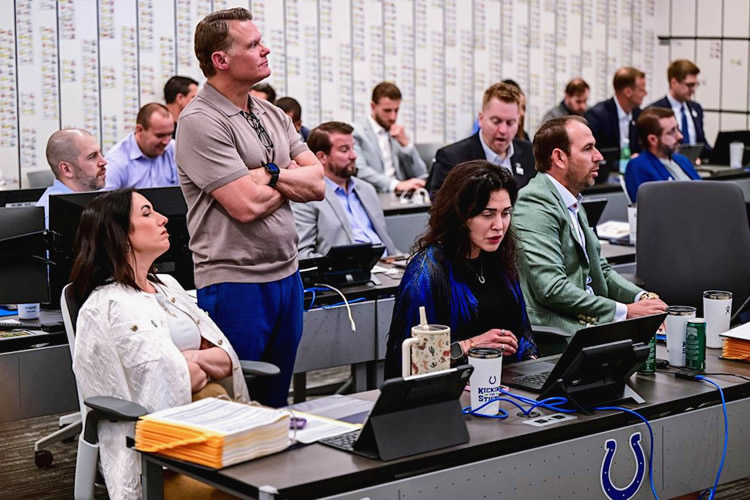
Indianapolis Colts
For the purpose of this exercise, when evaluating what teams did over draft weekend, I won’t take anything that affected draft capital previously into account. Although, of course, we look at all these moves holistically in terms of what everyone was trying to accomplish. So I might’ve not been 100% on board with Indy going all-in on last season, when they were off to a 7-2 start, and decided to trade first-round picks in each of the ensuing two drafts (plus Adonai Mitchell) for cornerback Sauce Gardner – which looked a lot worse when they ultimately ended up missing the playoffs altogether, largely due to injuries – but I thought they handled themselves very well despite not being slated to make their first selection until pick 47.
They actually pushed that start back by six spots, in return for pick 135, plus a swap of seventh-rounders (that had them moving up 12 spots). With 53 and 135, they selected two of my top ten linebackers in the draft. Georgia’s C.J. Allen was my 20th overall prospect, as someone who by all indications from that coaching, was “running the show” for Kirby Smart’s defense, and is a big-time thumper in the run game as well as being heavily involved in their pressure packages. Meanwhile, Oregon’s Bryce Boettcher has that psycho mindset himself to chase sideline-to-sideline, but started his career at Oregon primarily playing baseball, and he excels with his movements in space as a coverage player, to complement Allen.
It goes far beyond that however. LSU safety A. J. Haulcy (78th overall) gives them that “down safety” for how much single-high coverage I expect them to run next season with their investments at corner, equally capable of punishing receivers over the middle of the field as a robber as undercutting throws with the ball-skills to produce interceptions (eight since 2024). Putting Kentucky’s Jalen Farmer (113th overall) on the right side immediately should give Indy one of the most bad-ass guard tandems in combination with Quenton Nelson, where both can de-cleat defenders as a puller. Florida’s George Gumbs Jr. (156th overall) is a fun edge rusher, who is still refining a pretty broad arsenal of moves as a former tight-end convert, while Ohio State’s Caden Curry (214th overall) is more of a dirty-work early-down player, who would’ve gone earlier if he didn’t have extremely short arms. I didn’t think the explosive testing quite ever showed up on tape for Kentucky RB Seth McGowan (237th overall), but there are certainly redeeming qualities for a seventh-rounder. And then I’m still waiting on reports on why Oklahoma WR Deion Burks (254th overall), because I viewed him as a top-100 prospect and will discuss further in the “steals” category.
So up and down the board, the Colts acquired excellent value based on my and consensus boards, potentially finding a new starting duo of linebackers (at least by 2027, if Boettcher continued to develop), a starter at safety, right guard and maybe even a WR3 at the very end of the draft. And maybe above everything else, they didn’t get hung up on the concept of simply targeting RAS darling, as they’ve done in previous years.
Tyler Shough
The Saints came into this draft ammoed with five of the first 136 picks, starting at eighth overall. They could’ve conceivably targeted edge defender, linebacker, cornerback or safety to kick of things, depending on how the board well. And yet, they instead selected who I viewed as the number one wide receiver in Arizona State’s Jordyn Tyson, who suddenly became a hot name at the very end of the process, after it was all about his extensive medical history, nonsensical statements about him being “soft”, etc. – This guy moves like a number one receiver, he’s able to deceive defenders with his body-language, make sudden cuts, he basically fully eliminated focus drops this past seasons, plays above his height in contested situation, and shows great field vision after the catch.
However, New Orleans didn’t nearly stop there. After spending pick 42 on Georgia D-tackle Christen Miller, to give them a sturdy presence along a previously shallow interior of their defense, they went back to the offense for their next three selections. Georgia’s Oscar Delp (73rd overall) is a highly athletic tight-end, whose shorter arms due bring certain limitations, but is a tenacious, versatile blocker, and never dropped more than one pass in a season, even if he was never significantly involved as a receiver. Auburn’s Jeremiah Wright (132nd overall) is a massive guard, who wants to put defenders into the ground as a run-blocker and was clamping down on the best interior D-linemen throughout Senior Bowl week in pass-pro, even if he’s more of a phonebooth player. And then North Dakota’s Bryce Lance (136th) I expected to hear his name called on day two, for having an RAS of 9.94 and all the big plays he produced as a vertical and double-move threat, even if his route tree was pretty limited with the Bison.
So now, Shough heading into year two, went from Chris Olave, Juwan Johnson and the rest of WRs and TEs they’re bringing back having combined for less than 600 receiving yards, to adding those four guys plus sixth-rounder Barion Brown, who led that LSU receiving corp in yards last season, and at least offers big-time speed. That was after signing a quality starter at left guard in David Edwards for Buffalo and a running back in Travis Etienne in free agency, who just posted 1400 yards and 13 touchdowns from scrimmage this past season in Jacksonville. I believe you can make a strong case that Shough was the best rookie quarterback last year, especially considering what he had around him, and now this could legitimately be a quality supporting cast, with a much higher ceiling than previously.
Old-school fans of the New York Football Giants
I’m sure there are still quite a few people out there who are sad that All-Pro nose tackle Dexter Lawrence was shipped off to Cincinnati, but they should feel a lot better after seeing how they utilized those two top-ten picks in the draft. For as many mock drafts as there were out there, I think there were very few out there that still had Ohio State’s Arvell Reese available at pick number five. Considering they have Brian Burns coming off a 16-sack season, Kayvon Thibodeaux is on the final season of his rookie deal as their fifth overall selection four years ago, and they just picked Abdul Carter third overall a year ago, “EDGE” by no means was the biggest need for this team. However, not only would Reese simply be to good to pass up in that spot, I could easily envision them still trading KT for meaningful draft capital in 2027, and today, off-ball linebacker is his best position anyway. I like the idea of pairing him on the second level with yet another freaky physical profile in Tremaine Edmunds, who is more of a clean-up player, to what Reese brings as a hammer downhill. Plus, then he makes their pressure packages that much more lethal, as he’s still developing his rush arsenal, but can drop off the line as a mugged-up player, or be a tremendous QB spy thanks to his closing burst.
Then, Big Blue comes back at pick ten, and could’ve easily paired Reese up with his former Buckeye teammate Caleb Downs at safety again (who was the betting favorite to go fifth overall), but instead invested into the trenches on the other side of the ball. Francis Mauigoa started all 42 games at right tackle for Miami after coming from the American Samoa, and showed massive strides this pasts season. As a run-blocker, too often he dips his head into account and doesn’t always accelerate his feet sufficiently into contact, but he has that super dense frame to cover up first-level defenders and shows impressive agility for his build. He still needs to do a better job of protecting the edges of his frame and not lunge at times, but he’s already showed a propensity for changing up his hand strikes, and arguably the best anchor in this entire class. Assuming Andrew Thomas is back healthy at left tackle, by re-signing Jermaine Eluemunor, they probably start out the rookie at guard, but could easily get out after the second of his three-year deal on Eluemunor, and kick Mauigoa back out to tackle.
From that point onwards, they added a physical press-man corner in Tennessee’s Colton Hood (37th overall), a big-bodied receiver in Notre Dame’s Malachi Fields (74th overall) who can be a ball-winner outside or power slot, a 49-game starter at tackle in Illinois’ J.C. Davis (192nd overall) who has shown steady improvement and brings some nasty to the field, and a linebacker in BYU’s Jack Kelly a pick later, who has old-school size but new-school athleticism, who just wants to fly around and hit people. I didn’t individually evaluate Auburn’s Bobby Jamison-Travis, but to my point – he’s a 335-pound nose tackle. John Harbaugh is already leaving his imprint on this Giants roster, and even though they basically started by trading away a 340-pound monster in the middle of their D-line, they ended up looking more physical on paper a week later.
Dan Orlovsky and the Ty Simpson believers
For about 80% of the pre-draft cycle, everyone considered this a one-quarterback class with Fernando Mendoza head-and-shoulders above the rest of the group, even if he was barely even discussed, due to being locked into the first overall pick of the Raiders the whole way. About a month away from the actual draft, ESPN’s Dan Orlovsky stated on live TV that Alabama’s Ty Simpson was actually his QB1. That started a bunch of discourse, and even though I obviously disagreed with him at the time, and he’s thrown out some “First Take”-ish statements before, I do believe that he came to that conclusion by evaluating both players. The crux with all of that however was the fact that Danny O and Simpson are both clients of CAA, and people could perceive there to be an ulterior motive to hype up someone who’s part of that agency, along with adding some more spice to a draft that ESPN covers, but may have been lacking to a certain degree, compared to previous years that were heavily based on the game’s most important position.
No matter what you believe about the intent or the player himself, Orlovsky had to feel vindicated when he saw the L.A. Rams select Ty Simpson 13th overall. Whether you look at what some of the biggest voices in the space said still a day before the draft or what betting odds suggested, where his Over/Under sat at pick 29.5, the common belief was that if the Alabama signal-caller was going to get a call on Thursday, it would be towards the end of the night. The Ringer’s Todd McShay is another analyst who shared some of the optimism around Simpson, suggesting that based on the first half of their 2025 seasons, you could’ve made a case for how he was operating that offense being more impressive than what Mendoza was doing, before the former was dealing with gastritis and just didn’t look like himself. And I think that’s a fair conclusion.
Comparing what they were asked to do in college, even if Ty only started 15 career games, it’s a lot more than translatable than Mendoza, for example. His processing speed to cycle through pure progressions, which Kalen DeBoer and Ryan Grubb believe in so much for the Crimson Tide, I thought was pretty remarkable. The anticipation and how rapidly he could get his cleats in the ground to rip throws based on the picture changing post-snap really stood out. However, for as tough as he may be, he’s simply smaller and his arm strength isn’t in the same stratosphere as Stafford’s, as we project forward what he could be for the Rams. I can envision a world in which he adapts some of the manipulation of zone defenders with his eyes that makes Matt so special, but then he simply lacks the RPMs on the ball to actually fit it into those small windows the same way. Plus, he still has to learn how to get rid of the ball late in the down more consistently, to avoid negative plays. You do see him read concepts towards the field and then come back to dig routes from the opposite side, and he certainly gives you more elusiveness at this stage, even if he’s still mastering those subtle movements within the pocket.
We’ll have to see how this whole situation plays out, but if this proves anything, it’s that you shouldn’t be afraid to let your opinions be heard – without wanting to inspire any hot take artists.
Cleveland Browns
Before we talk about their 2026 class, I do want to note that the Browns had that extra first-rounder (24th overall) thanks to a smart trade with the Jaguars a year ago, who were targeting two-star Heisman Trophy winner Travis Hunter, which also netted them an early second-round pick that they used on running back Quinshon Judkins (who finished third among rookies in rushing yards), while still getting D-tackle Mason Graham three picks later (who had 12 more “defensive stops” than any other rookie at his position). Meanwhile, they sent pick 141 this year to Houston for former first-rounder Tytus Howard, as a guy who’s been a solid starter at multiple spots on the O-line.
That’s where Cleveland actually went with their top selection, with another versatile player in Utah’s Spencer Fano, but not before moving down three spots yet again (to ninth overall), in exchange for picks 74 and 148 from Kansas City. They didn’t stop there, as they acquired an early fifth-rounder this year and a fourth next year, to move down 31 spots from pick 74, they added another fourth-rounder next year for pick 148, and slid back 18 more spots in round five in exchange for an extra sixth-rounder, which they turned into the most physically gifted quarterback in this draft, and maybe ever, in Arkansas’ Taylen Green. I love that in particular, because he may start as QB4, but a team that’ll most likely address the position very early a year from now, that’s at least a swing worth taking.
However, GM Andrew Berry didn’t solely trade back for extra picks, but rather they identified high-upside prospects worth moving back up for, as they stopped the slide of Toledo safety Emmanuel McNeil-Warren Toledo towards the end of round two (58th overall), moving up 12 spots in return for sliding back 45 slots from the top of day three. Plus, they jumped back up from an extra selection they had acquired in that range to pick 86 for what I looked at as the top offensive tackle (Florida’s Austin Barber) after a massive drop-off from the seven guys that had gone on night one, in exchange for a late fourth- and a sixth-rounder. Now, Fano offering the flexibility to probably start at any of the five spots along the O-line, Barber being a developmental player who I could see starting at left tackle by year, and also getting what I perceived as the most underrated prospect in the entire draft, Alabama center Brailsford, combined with a couple of veteran additions, I feel *a lot* better about that group.
I was a little lower personally on the wide receiver they targeted 24th overall in Texas A&M’s K.C. Concepcion (24th overall), but in combination with the other guy they picked next at the same position in Washington’s Denzel Boston (39th), considering how well they complement each other, I feel much better about it. Alabama’s Justin Jefferson is a really fun splash player at the end of the top-150, who could rotate in as a third linebacker, and I even like the pair of tight-ends (Cincinnati’s Joe Royer and BYU’s Carsen Ryan) they selected in the fifth and seventh round respectively, who bring quite different skill-sets to the table.
Other drafts I liked:
Baltimore Ravens
Carolina Panthers
Las Vegas Raiders
Tampa Bay Buccaneers
Washington Commanders
Losers:
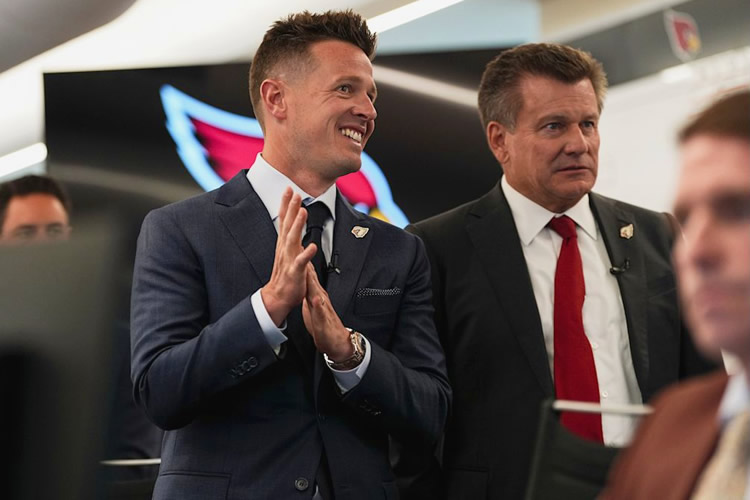
Arizona Cardinals
Even though the draft did kind of start at pick two, it was largely assumed that whoever the Jets weren’t going to select between Texas Tech’s David Bailey and Ohio State’s Arvell Reese, was going to hear his name called next, even if it may ultimately have been a different team to do so. Instead, some of the late noise around owner Michael Bidwell getting involved and wanting Notre Dame running back Jeremiyah Love materialized itself. And don’t get me wrong – this was the third overall prospect on my big board. He’s a dynamic ball-carrier with lightning-quick feet, the long speed to bang his head on the goal post, but also the balance to get out of awkward positions, engaged with tacklers, and willing to churn out tough yards. He can also be a legit extra receiver on the field, with his ease as a route-runner and pass-catcher. So this by no means is about Love, but rather about how the organization sees itself. There are some intriguing pieces to the roster, but GM Monti Ossenfort probably easily got on board with a player who can probably help produce offense and put fans in the stands right away, but simply isn’t a smart investment, considering they’re now basically paying more than double the guaranteed money on running backs other than one NFL team (Saints) at over 60 million dollars. They don’t have the O-line to fully maximize his impact on a rookie contract, and their only proven quarterback (Jacoby Brissett) is seeking a contract extension for attending offseason activities.
At the top of day two, they did at least insure their top draft investment with Texas A&M guard Chase Bisontis (34th overall), who did start at right tackle his freshman season. He’s a perfect fit for the wide zone principles new head coach Mike LaFleur has his roots in, and even though he has to eliminate some bad tendencies over extending in pass-protection, his recovery skills are highly impressive. When round three rolled around, I had a pretty strong feeling that their focus now would shift towards the defense, but instead they made Miami’s Carson Beck (65th overall) the third quarterback off the board. I’m worried about how the UCL surgery he had last offseason could affect him long-term and what he might look like in NFL pockets, considering how his poise routinely evaporated against pressure. I do like what an effortless thrower he is, how well he generally operates on time, and his willing to push the ball down the field when given opportunities. Yet, I don’t love the idea of him potentially starting games as a rookie, and more importantly, it’s about a misjudgment of the class overall, as Beck and Penn State’s Drew Allar – who we’ll get to still later – were the only guys selected between picks 13 and 110.
I’m a big fan of Southeastern Louisiana D-tackle Kaleb Proctor (104th), who projects as a penetrating three-technique with legit juice. However, his skill-set largely overlaps with last year’s first-round pick Walter Nolen III, who had some big-time flashes in an injury-riddled rookie season, and I’d think they view Darius Robinson, who they spent that extra late first-rounder in 2024 on, as more of that 4i-/5-technique in their 3-4 base. And then, I didn’t love any of the other day three selections they made. Texas Tech wide receiver Reggie Virgil (143rd overall) is a sudden route-runner who wins aerial battles for the football at a solid rate, but he was also the slowest WR at this year’s combine (4.57) and his excessive footwork can throw off timing. Iowa linebacker Karson Sharar (183rd overall) is a thumper in the run game with extensive special teams experience, but has shorter arms and is really tight in lower half for any type of man-coverage assignments. And Ole Miss offensive tackle Jayden Williams (217th) brings his hips as a run-blocker and is highly alert for various ways the defense bring pressure, but he has a narrow frame, small hands, consistently loses the leverage battle, and his feet operate independently in pass-protection.
Sean McVay and Matthew Stafford
There was no bigger story coming out of night one than the Rams selecting Alabama quarterback Ty Simpson 13th overall, just three months away from Matthew Stafford winning league MVP honors and announcing right there, that he was going to back for 2026. The discussions only got more intense after seeing Sean McVay looking as if he was trying to control himself in the following press conference, since he seemed to be boiling inside, talking about how Ty was going to “compete with Stetson [Bennett]” for the backup quarterback job. I never saw this coming personally, after having a rare opportunity to select in the top half of round one thanks to a savvy trade with the Falcons a year previously, after making it to the final four of NFL teams, and being the biggest challenger to the eventual Super Bowl champion Seahawks. Especially after they had already used their original first-rounder (29th overall) in another all-in-style trade for Chiefs All-Pro cornerback. Most importantly however, this was the first move in their tenure together than McVay and GM Les Snead seemed to not be aligned on in their working relationship.
I already touched some on Simpson’s fit within a McVay-coached offense early, and considering Jimmy Garoppolo will likely retire, he will be an upgrade over “Stetson” as their backup QB, for a quarterback that has dealt with back problems heading into year 18, when it wasn’t sure if he’d be ready to go week one last season. Will the head coach even be there a year from now though, or will leave alongside his MVP signal-caller, who might retire? What we certainly know is that they didn’t use that selection on another “toy” to play with for those guys like Oregon tight-end Kenyon Sadiq or USC wide receiver Makai Lemon, or potentially upgrade one of those offensive tackle spots, where we also saw three others come off the board over the next eight picks.
That selection at the top of the draft becomes that much more meaningful considering L.A. only added four other players the rest of the way. Now, three of those were on the offensive side, with Ohio State tight-end Max Klare (61st overall), who I thought was right at value as my personal TE2, Missouri offensive lineman Keagen Trost (93rd overall), who offers guard/tackle flexibility but is a seventh-year senior with athletic and length limitations, and Miami wide receiver C.J. Daniels (197th overall), who was one of the best guys in college football last season at finishing catches through contact but in large part due to his struggles at actually separating in his routes. Even with that last one, I question the process, of moving up ten spots in the sixth round in exchange for a pair of seventh-rounders. And the Rams are different than other teams when it comes to roster spots that may actually be up for grabs for dart throws, but considering pick 232 Tim Keenan III from Alabama could see real usage as a rotational early-down run-plugger, that argument loses some weight.
The 2026 safety class
It always takes a while until you can get a full grasp of the strengths and weaknesses of draft classes at different positions. Safety was one of those that really grew on me the more names I went through, with Ohio State’s Caleb Downs never moving off my number one overall spot, the other two projected first-rounders firmly being in that range for me, but ten guys making it inside my top-100 and several others at least bringing qualities as role players. Clearly, the NFL didn’t value them as highly as I did, but also the depth of the group may have hurt them altogether, as teams decided to wait on guys.
On that point – all four safeties drafted on day three were ranked higher in my rankings, and the fifth round truly was the sweet spot for teams to target the position, with six names coming off the board in that range. So, altogether, we had one more safety selected (19) than last year – based on how they were classified by the league – when one guy barely snuck into the first round and we only had three inside the top 80 picks. Nonetheless, pretty much all the way down the board, there were names announced significantly later than I anticipated, which isn’t *new* by any means, but still a bit surprising considering how central a figure Nick Emmanwori was for the Super Bowl champion Seahawks, as their big nickel, with how many prospects this time around projected well into such a role. And that’s going to also be reflected in my “steals” segment.
It started with Downs of course, who was the betting favorite for the Giants at pick number five on draft day, but slipped out of the top ten, before Dallas moved up one spot with the Dolphins to secure what I believe is a culture changer for a unit that really needed one. Oregon’s Dillon Thieneman was actually a common fit for them at 12th overall at points, but then he basically never made it past the Vikings/Panthers stretch (18th and 19th) in mock drafts. Toledo’s Emmanuel McNeil Warren was favored to go night one, but lasted until late in round to (58th overall to Cleveland). Arizona’s Treydan Stukes is the one guy who continued to rise in this process as primarily a slot corner and did go early on day two (38th to Las Vegas). Yet, his former teammate Genesis Smith (131st to Chargers), Penn State’s Zakee Wheatley (151st to Panthers), South Carolina’s Jalon Kilgore (167th to Bills), and Kansas State’s V.J. Payne (228th to Jets) all went significantly later than I thought they’ve should, as top 100 prospects on my board.
The one single player who fell the furthest based on where I expected him to get selected was LSU quarterback Garrett Nussmeier. He was the clear QB3 by consensus rankings, after Alabama’s Ty Simpson going to Rams at pick 13 was the shocker of night one, yet was one of the final ten picks of the event (249th to Chiefs). I still want to wait for more information to come out about that however.
Jacksonville Jaguars
First of all, the Jags were entering this draft without a first-round pick, due to moving up three spots a year ago to select Heisman Trophy-winning WR/CB Travis Hunter second overall, along with the 36th pick in last year’s draft, essentially. Even though I already outlined that I don’t want to count those decisions twice – since it’s a pretty narrow path at this point already that the trade ends up benefitting them more than the Browns – it does put that much more weight on the selections they end up making beyond that point. Making Texas A&M Nate Boerkircher the second tight-end off the board at pick 56 would qualify as a head-scratcher to me. This guy operates with good pad-level, active feet and plus effort as a run-blocker, while showing some nice wiggle and acceleration out of his breaks, along with confidently plucking the ball away from his frame with those massive 10.5-inch hands. However, on the surface, this is a former walk-on at Nebraska, who will turn 25 years old right as his rookie season starts, only ran a 4.78 at the combine and caught just 38 passes in his college career. And while I anticipate Liam Coen wants to run more 12 personnel this year, I do like their starting “Y” Brenton Strange when they put three wide receivers on the field.
Jacksonville had a trio of third-round picks to still strengthen a roster that was in pretty good shape, after they went 13-4 last season, but two of those players were selected quite a bit earlier than expected, and I can’t give them full credit for the one great value pick on paper. Oregon guard Emmanuel Pregnon (88th) to me was worthy of going late in the first round and not too far lower on consensus boards, as a mauling run-blocker and a wall in protection. Yet, even if he may turn 25 already a month into his rookie season, I have to assume some medical concern caused his fall. Meanwhile, Texas A&M’s Albert Regis (81st) comes off the ball with low pads to control the line of scrimmage in the run game, but offers very little in terms of threatening the edges of pass-protectors, illustrated like less than a QB pressure per 20 opportunities. And I actually liked Maryland safety Jalen Huskey (100th) better than consensus, showing a nose for the ball coming downhill, tracks it downfield like you’d expect from a former wide receiver, and is a reliable open-field tackler. However, he can overzealous with his angles from depth and his straight-line speed is limited.
Funnily enough, I basically had an identical grade on Boerkircher as I did for the tight-end the selected more than 100 spots later in Houston’s Tanner Koziol (164th overall), even though he presents a very different profile, as more of an “F” with loose movement skills as a detached receiver, and combat catch monster, but offers very little as an in-line blocker. Duke’s Wesley Williams (119th overall) is a well-built D-end who hustles after the ball and brings some good burst off the ball, but too gets hung up on blocks on passing downs. Baylor’s Josh Cameron (191st) is a unique wide receiver, who struggles to consistently create separation, but wins a ton of contested-catch opportunities, and at 220 pounds, averaged 14 yards per punt return, as a highly competitive ball-carrier. And then, I did evaluate 320+ prospects this year, but I wasn’t even aware of the three guys they selected past the top-200. Overall, I don’t mind teams having conviction in players they want to bring into the building, but regularly straying this far off consensus boards has proven to lead to poor results in the long run.
Garrett Bradbury
I typically like to include one veteran player here, who was most affected by a selection his team made. Typically, that entails a first-round pick at the same position. However, looking at the context of Iowa’s Logan Jones being the call at 57th overall, I think it’s a pretty big deal. The fact the center spots for Chicago was even up for grabs in the first place was due to the surprise retirement of Drew Dalman at age 27, after signing a three-year, 42-million-dollar contract last offseason, after establishing himself as one of the better players at the position.
Credit the Bears organization for quickly acting on that unexpected hole in the middle of their offense, trading a 2027 fifth-round pick to New England for Bradbury, who had one season left on his deal at 3.7 million dollars. Rather than having a rookie to his left last season in Jared Wilson, who had plenty of missed assignments against defensive games, and being best suited to move back to the pivot himself, the veteran was now slated to drop in between two even more experienced starters in Joe Thuney and Jonah Jackson, as one of the steadiest guard tandems in the NFL.
However, I believe Bradbury is now in a battle for that starting gig, which I would pretty clearly favor the rookie in. Just in terms of draft capital invested, Jones was the first true center selected, in a class that had multiple guys in the fifth round, who I believe have legit starting qualities. Maybe six edge defenders coming off the board to start day two until Chicago was on the clock helped sway the organization towards the Rimington Trophy winner and unanimous All-American, but clearly they loved his skill-set. Jones is a perfect fit for this outside zone-centric run scheme under Ben Johnson, where he’s consistently able to reach-block 1-/2i-techniques, and showcases excellent awareness for when to climb off combos and secure second-level targets. Plus, while he’s right on those 300-pound fringe, you can really see his wrestling background, paired with that hand activity, to mitigate size disadvantages in pass-protection.
Another name that came to mind here was the Texans’ Ed Ingram, since they traded up a couple of spots for Georgia Tech’s Keylan Rutledge (26th overall), who they’ve said might play center for them, and Oklahoma’s Febechi Nwaiwu at the very top of day three, but Ingram at least signed a three-year, 37.5-million-dollar deal, after trading a sixth-rounder for him a year earlier. Bradbury on the other hand will be a free agent a year from now, and even though Tyler Linderbaum just completely re-set the center market by signing with the Raiders, he’ll be 32, and in one calendar year, two teams without a clear solution at the pivot had already moved on from him.
Other questionable drafts:
Detroit Lions
Houston Texans
Los Angeles Rams
Minnesota Vikings
San Francisco 49ers
Steals:
25th overall – Dillon Thieneman (SAF, Oregon) to the Bears
As I already outlined, the 2026 safety class slid further collectively than they should have based on my and consensus rankings. However, that didn’t keep me from listing Thieneman as a steal, considering I predicted the Bears to select Toledo’s Emmanuel McNeil-Warren (see here shortly) at pick 25 in my ultimate mock draft, yet they somehow ended up with my 14th overall prospect. Finding a player with this late of range, fluidity and ball-skills to be a legit center-fielding post safety is rare already. For him to be an All-American at Oregon in a very different role as he was in at Purdue, where he’s a mid-read player in Tampa-2, constantly eliminates yards-after-catch opportunities, drops down to the box late to take away cutback lanes, and just posted a career-best missed-tackle rate of just 8.3%, that’s someone who should not be available for a team that were a walk-off field goal in overtime away making it to the NFC Championship game.
53rd overall – C.J. Allen (LB, Georgia) to the Colts
Indianapolis sent their 2026 first-round pick to the Jets in the Sauce Gardner trade at the deadline, as I already mentioned earlier. New York selected Oregon tight-end Kenyon Sadiq with that 16th overall pick. C.J. Allen was two spots lower on my personal big board (as my 20th-ranked player), and he was expected to be a fringe first-rounder. I understand that his physical profile isn’t as impressive as the two Ohio State guys in the top ten, and that’s why I clearly put him one tier lower than them, but nobody played the position at a higher level or had more responsibilities for his defense in the country last season than C.J. under Kirby Smart. His ability to identify pre-snap tells and decipher information post-snap are second to none. Along with, he has excellent contact balance to bang between the tackles, shows great vision in zone coverage, and showed a combination of finesse and power that allowed him to put on quarterbacks on a variety of blitzes. Missouri’s Josiah Trotter and Cincinnati’s Jake Golday are different styles of linebackers, but I have a hard time making an argument for both to go ahead Allen, and the Colts should benefit majorly from it.
58th overall – Emmanuel McNeil-Warren (SAF, Toledo) to the Browns
Despite being favored to go round one for pretty much the entire process, even if the betting markets had it closer to even odds closer to night one, EMW slid down all the way to the end of the second. Cleveland did finally trade up for the player that was 21st in my rankings and, as I just mentioned, who I had projected to go to Chicago at pick 25 in my final mock draft. This guy takes excellent angles from split-field alignments to track down runs to the perimeter, but for Cleveland’s purposes, he can step down into the box, locate entry points and stop the momentum of running back in impressive fashion. I did see some deep crosser come into behind him, but generally he displays excellent feel pattern development and has the come down with errant throws. I’m optimistic about his physicality to match up extensively with tight-ends, and he’s a peanut-punch specialist, with eight forced fumbles across his final 35 games. We have yet to see what exactly this Mike Rutenberg defense looks like, since he watched Jeff Ulbrich evolve when he followed him to Atlanta, but McNeil-Warren can wear a bunch of different hats for that unit.
116th overall – Keionte Scott (CB, Miami) to the Buccaneers
Unlike the previous three names, who all came out as true juniors, it’s more understandable why some teams would be a little turned off my Scott’s profile. He’ll turn 25 years old a month before his rookie season, his play time gradually declined previously at Auburn, I’m sure many viewed him as a nickel only, and even last year he had a missed-tackle rate just over 20%. Having said that, I don’t know how you can watch him this past season as a key cog for the Hurricanes defense, that powered them to a national title game, and say this is where he should’ve gone. This was the 55th on my big board and less than ten spots lower by consensus. Scott plays with his hair on fire, showing no fear when it comes to attacking pulling linemen and is a ferocious blitzer off the edge. He’s able to play fast because he’s confident in the rules of zone coverages, brings quality range to contest passing lanes, is excellent at re-routing receivers and has 4.33 speed. Jacob Parrish was excellent in the slot for the Bucs last season as a rookie, but he primarily lined up on the perimeter at Kansas State and will compete for those spots, to where Scott could very well earn the starting gig inside by some point this year.
138th overall – Kyle Louis (LB, Pittsburgh) to the Dolphins
When it comes why Louis may have dropped nearly two rounds where than where I personally and consensus rankings put him (74th overall for me), I think the case against him would sound as follows – this is a 220-pound linebacker who doesn’t quite reach six feet in height, can get eaten up by size inside the box and occasionally even is occupied by slot receiver when flexed out with them. My response of course would be that Louis recorded six interceptions and ten sacks over the last years combined, playing that overhang position for Pat Narduzzi’s Pitt defense, which in a copycat, the reigning champion Seahawks and many of the top defense are structured around that big nickel defender. He does have functional length to keep separation from blockers, the range to run down plays from the backside, he’s slippery as a blitzer who can pull off impressive cross-face moves, has excellent change-of-direction skills to make it tough for defenses to make him the conflict defender on RPOs, and his Senior Bowl week footage of covering backs and tight-ends one-on-one was as good as you’re going to find.
144th overall – Sam Hecht (IOL, Kansas State) to the Panthers
Although I really acquired a taste for the interior O-line class this year the more names I cycled through, center specifically was one of those positions that it was really tough to figure out how the NFL collectively might stack them up – and by all accounts, there was a lot of variance between teams. With that in mind, I thought there was a solid chance to Hecht was going to be the first one selected. Florida’s Jake Slaughter was my highest-graded one, and I had Iowa’s Logan Jones right in that same tier as the K-State standout. For there to be an 80/90-point gap between those two and Hecht however, I certainly couldn’t have imagined, and after grading out as an early third-rounder to me, he lasted until the top of the fifth. He’s not going to dig shades out of the A-gap necessarily, and long, strong nose tackle may give him a hard days of work, but this is a nimble player, who is capable of scooping up D-linemen, take on a variety of pulling assignments his mirror skills and ankle mobility to get all cleats into the ground to stall the bull-rush were on full display during Senior Bowl week, after not giving a single sack or QB hit in his two seasons as a starter.
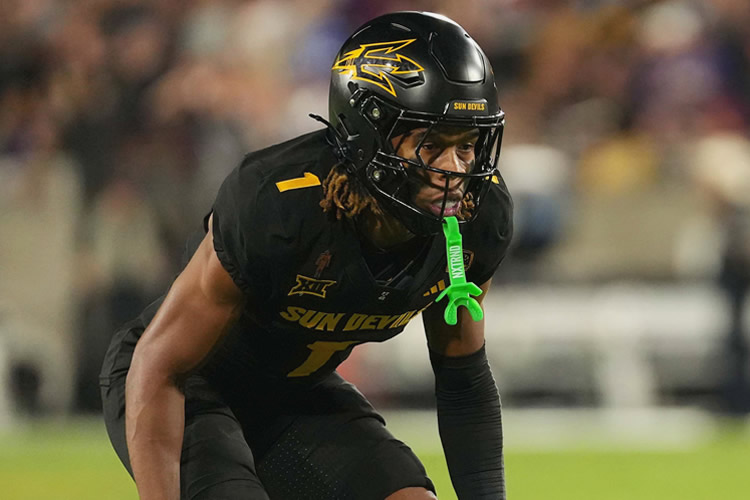
157th overall – Keith Abney II (CB, Arizona State) to the Lions
When this pick was made right in the middle of the fifth round, I called this the biggest steal of the draft at that point. Abney was the last player inside my personal top 50 to be selected as a true junior, and although I was aware that I was more optimistic about him, this was nearly 100 spots later than where he was on consensus board. Unless there’s some kind of medical red flag that I’m not aware of, since he did test at the ASU pro day and the only one of 27 possible starts over the last two seasons he missed was him opting out of their final bowl game, I have to assume he just kind of slipped through the cracks. Abney may only be 5’10”, but this is a twitchy, instinctive mover with oily hips. He provides great route squeeze in off-zone assignments, he doesn’t back down from any man-to-man matchup, being able to de- and re-accelerate his feet in a hurry. He does not to work on timing up his arrival to the ball (penalized 13 times since 2024), but this is a play-maker and he only missed 4.3% of his attempted tackles last season. Detroit has a solid trio of corners currently penciled in, but I think Abney at least competes for a starting spot right away and may make one of them expendable by 2027.
167th overall – Jalon Kilgore (SAF, South Carolina) to the Bills
That brings us to the final name from what I’ve described as an undervalued safety class. Kilgore’s name was nearly 100 spots higher on my and consensus rankings than where he was actually selected, and he’s another case where I don’t really understand the hold-up for NFL teams. This young man won’t even turn 22 years old until his rookie season is already over. He started all three years for the Gamecocks, being named a Freshman All-American, then leading the SEC in interceptions (five) and defending 12 passes this past year as a team captain. He easily carries 210+ pounds, has 33-inch arms, ran 4.4 flat at the combine, and by no means is just a great athlete out there on the field. He played that “STAR” role for most of his college career – rather than Nick Emmanwori, who he was teammates with until last year – where he’s fundamentally sound at taking on and getting around blockers, he understands his assignments in zone coverage, while already baiting quarterbacks into some throws, and although some foot-fire at the line left him in quicksand sporadically, he has far more outstanding reps of staying phase way down the field with speedy slot receivers.
221st overall – Jack Endries (TE, Texas) to the Bengals
This is a player I knew I was higher on than consensus. However, while snuck inside my top 100 as TE5, I could’ve never imagined him that in a year where eight tight-ends were selected over the first two days, Endries would be the 16th name off the board. This guy was the leading receiver (56 catches for 623 yards) for Fernando Mendoza at Cal two years ago, and while his numbers were nearly cut in half this past season at Texas, due to amount of WR talent around him, the tape as a pass-catcher was equally impressive, and he actually showed improvements as a blocker, I thought. He’s not going to run away from the defense, but he really understands how to tempo his routes, only dropped one of 90 catchable passes and had a contested-catch rate just above 70% over the last two seasons. So as crazy as it sounds for a guy picked at the start of the seventh round, I could see him end up as a starter in 12 personnel by the end of his rookie year.
254th overall – Deion Burks (WR, Oklahoma) to the Colts
Finally, let’s talk about a prospect I highlighted as one of “my guys” about a month ago already. Unlike some other guys I listed as “value selections” below, I have yet to hear anything about Burks from a medical or off-field perspective that would lead to him nearly going undrafted. The number of his actual draft slot was nearly three times as high as where I listed him on my big board (87th overall), but he was generally considered a fringe-top-100 pick and some of the more respected voices in the draft space mentioned him as someone they like better than where he was typically listed as well. I acknowledge that some people may see him as a slot receiver only at 5’10”, 180 pounds, he has a tendency of drifting in some of his routes and his arms don’t reach 30 inches, but he makes up for it with a 42.5-inch vertical jump and has really improved his ability to finishing through contact, as well consistently framing the football by eliminate moments where he’s clapping at it. He displays high football IQ for altering routes on the fly, is consistently friendly to his quarterback, and although he was deployed a whole lot vertically, you see that 4.3 speed show up when the ball is I his hands, where he becomes a running back suddenly. The Colts may have found their long-term WR3 with only the final selections overall.
Other value selections:
11th overall – Caleb Downs (SAF, Ohio State) to the Cowboys
15th overall – Rueben Bain Jr. (EDGE, Miami) to the Buccaneers
48th overall – Avieon Terrell (CB, Clemson) to the Falcons
83rd overall – Chris Brazzell II (WR, Tennessee) to the Panthers
88th overall – Emmanuel Pregnon (IOL, Oregon) to the Jaguars
108th overall – Jonah Coleman (RB, Washington) to the Broncos
107th overall – Gracen Halton (IDL, Oklahoma) to the 49ers
131st overall – Genesis Smith (SAF, Arizona) to the Chargers
146th overall – Parker Brailsford (IOL, Alabama) to the Browns
147th overall – Joshua Josephs (EDGE, Tennessee) to the Commanders
162nd overall – Chandler Rivers (CB, Duke) to the Ravens
178th overall – Cole Payton (QB, North Dakota State) to the Eagles
187th overall – Kaytron Allen (RB, Penn State) to the Commanders
192nd overall – J.C. Davis (OT, Illinois) to the Giants
209th overall – Matt Gulbin (IOL, Michigan State) to the Commanders
226th overall – Landon Robinson (IDL, Navy) to the Bengals
228th overall – V.J. Payne (SAF, Kansas State) to the Jets
249th overall – Garrett Nussmeier (QB, LSU) to the Chiefs
250th overall – Rayshaun Benny (IDL, Michigan) to the Ravens
257th overall – Red Murdock (LB, Buffalo) to the Broncos
Reaches:
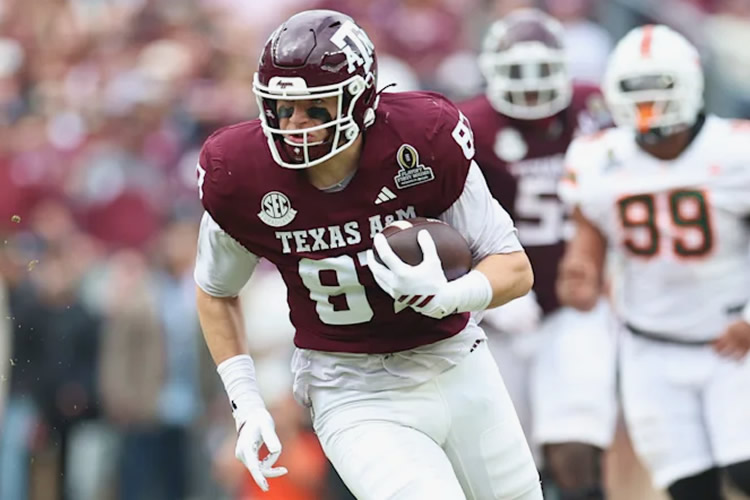
2nd overall – David Bailey (EDGE, Texas Tech) to the Jets
Bailey definitively was a first-round pick and the name at second overall for pretty much all the big national draft analysts in their final mock drafts. So this wasn’t a shocking selection by any means, and there’s plenty to get excited about, but I – and plenty of the voices in this space, who I respect – simply didn’t see him as a player in that tier. He was my 16th overall prospect, because while I acknowledge the incredible speed up the field and the improvements he showed at taking advantage of opportunities to convert to power as a pass-rusher, I also see limited bend around the arc, a spin move that isn’t regularly delivered effectively, and an inconsistent run-defender, who could struggle to set a firm edge in the pros. I simply can’t justify taking him over a less-developed but significantly more violent and talented player in Arvell Reese (Ohio State), simply because they may perceive him to be “more ready to contribute” at that position, for a head coach that just swapped out basically his entire staff and may only be left because ownership didn’t want to pay for him *not* to work.
12th overall – Kadyn Proctor (OT, Alabama) to the Dolphins
This was one of the more divisive prospects discussed in the first round, and there continued to be more noise around Proctor going earlier than originally expected over the previous couple of weeks, but this was still as early as anyone saw him potentially coming off the board. I will give Miami some credit for at least adding a couple of late fifth-rounders from Dallas to move back one spot here, but there are just too many questions about the player to select him 12th overall. Personally, I had him as the 30th overall prospect. When his hands and feet are connected, he can really get those 350-380 pounds (which he was reportedly playing at last season for Alabama) moving to displace defenders, but he also gets top-heavy regularly in the run game. And while he can quickly end reps in pass-pro if he latches those mitts into rushers, he doesn’t protect his frame sufficiently and tends to lean into guys, making him susceptible to inside counters. If they simply stuck there and picked Ohio State’s Caleb Downs themselves, considering their completely unproven safety room, they would’ve instead been in the “steals” category for me.
23rd overall – Malachi Lawrence (EDGE, UCF) to the Cowboys
This is another player that I simply was a lot lower on personally than where the hype train had taken him, as Lawrence was clearly favored to go on night one, and Dallas was a common landing spot. I was much closer to where he was typically ranked before putting together a great combine showing, as an intriguing target late on day two (91st overall for me). So I don’t fault the Cowboys for falling in love with the player, since there were clearly people out there whose ten-yard split at the combine (1.59) was only one hundredth of a second off second level overall David Bailey (for the Jets), with long levers affording him more room for error in his hand combats, and how relentless he is in his pursuit of quarterbacks. Now, while he left a mark on me during East-West Shrine Week, I also saw some limitations in-line with what the tape showed. His higher-cut frame doesn’t do him any favors in winning leverage in the run game, too often he’d allow pass-protectors to get under his chest, he lacks a certain fluidity to transition to a secondary move, and he had a 26% missed-tackle rate over the last two years.
33rd overall – De’Zhaun Stribling (WR, Ole Miss) to the 49ers
Similarly to Lawrence, Stribling was a rapidly ascending name the closer we got to the draft, who I looked as a potential day two pick after I watched him pretty early in the process. And I thought the Niners got good value in moving up 48 spots to 90th overall, and adding a late fifth-rounder, for sliding back six spots from their allotted first, but I just can’t get on board with this being the top player selected on day two. He can really provide that vertical push with 4.36 speed, he has good ankle mobility to carry it through those long strides as he bends his path and he attacks the ball with strong hands off his frame (only dropped one of 56 passes he got his hands on last season). However, there’s no real deception or change of tempo in his routes at this point, the acceleration out of his breaks doesn’t match his top speed, and he’s still learning to maximize that 6’1”, 210-pound in contested situations. The reason Kyle Shanahan of course loves him are his competitiveness after the catch and as a blocker.
56th overall – Nate Boerkircher (TE, Texas A&M) to the Jaguars
If you had given me ten guesses on who the second tight-end drafted would end up being, Boerkircher wouldn’t have one of the names I was going to throw out there. I think you can make a case for him being anywhere from 11th to 15th at the position. You can scroll back up the Jaguars paragraph in the “losers” sections for a quick scouting report, but in the end, I just don’t believe that’s a profile you should invest into with your top draft pick when you were just tied for the best record in the AFC, only to follow the trend of more multi-TE personnel groupings, as their GM James Gladstone mentioned at his ensuing press conference. You could toss in Michigan’s Marlin Klein going to Houston three picks later here, but with him, I think you can at least talk yourself into the upside of a guy who didn’t even speak fluent English until he came to a US high school and has shown impressive development since.
62nd overall – Davison Igbinosun (CB, Ohio State) to the Bills
I generally liked what Buffalo did in this draft quite a bit, sliding back three times in night one, from 26 down to 35 and collectively accruing picks 69, 125, 167, a pick-swap in the third round, and basically moving up by a couple of rounds on day three. So they literally were my first team that didn’t get a shoutout among the “other drafts I liked”, and the reason I crossed them off was their later second-rounder. And this is another player who I’m aware of that I was significantly lower on personally, as he didn’t make the cut for my top 150, but even by consensus boards, this was about 20 spots early. There are certainly redeeming qualities with Igbinosun. He’s a long, feisty outside corner, who’s highly competitive at the catch-point and in run support. Nonetheless, he was a walking, talking flag in 2024, and should’ve drawn cloth regularly this past season as well, I thought. He plays way too upright in all areas, which gets him off-balance in zone coverage, he catches a lot of receivers, grants them access to his chest as blockers, and depending on how much more press-alignment we see from these CBs under new DC Jim Leonard, I didn’t think his hands and feet were connected well at all when playing close up.
75th overall – Caleb Douglas (WR, Texas Tech) to the Dolphins
I don’t like being negative about players, whose game I appreciate, but Douglas was kind of the wide receiver equivalent to Texas A&M tight-end Nate Boerkircher going 19 spots earlier. He really gets his pads over his knees during the drive phase of the route, fights through holds, consistently works back towards the football, and immediately transitions up the field once the catch is secured. Having said that, he struggles to elude contact off the line, maintain space towards the sideline on outside release and stack the corner on go routes to create entry points for the ball. There are also too many rounded breaks that tip off DBs in off-coverage, drops where he took his eyes off the ball early, and he only hauled in a third of his contested targets over the past two seasons, with only a 31.5-inch vertical. Notre Dame’s Malachi Fields literally was selected one spot earlier, who I viewed as a superior prospect in all areas. So even if I’m sure that coaching staff bought into his commitment to blocking in the run game, that doesn’t justify making him WR11 off the board. Douglas was exactly 31st in wide receiver rankings for me and in “The Beast” by Dane Brugler.
76th overall – Drew Allar (QB, Penn State) to the Steelers
I’m happy to provide my full scouting report of Allar in the comments, but let’s just say this – it’s not pretty. Casual college football fans I’m sure were familiar with his name, as someone who was viewed as a potential first-round pick a year ago, but I personally never viewed him in that light, and he’s only provided more questions rather than answers since that point. This is a guy with prototype size and arm strength for a pocket passer, has flashed a capacity to read through full-field progressions, generally good feel for space around him and can put plenty of mustard on the ball on off-platform throws. Still, I see major issues with Allar’s mechanics and wouldn’t label him as a natural thrower. He doesn’t see the full picture in terms of coverages, Penn State routinely struggled to move the ball against top-tier defenses during his tenure, and he’s a below-average athlete for today’s NFL. In a quarterback class that was generally considered lesser, Allar didn’t even crack my top ten, of which the final name lasted until the seventh round. This felt like another Steelers pick of a nearby college product, and less Aaron Rodgers comes back for one more year a QB room of him, Mason Rudolph and Will Howard inspires *very* little confidence in me.
89th overall – Zavion Thomas (WR, LSU) to the Bears
I started with Oregon safety Dillon Thieneman at pick 25 as the biggest steal of the first round, going to Chicago. And I’ve generally been on board with a lot of the things GM Ryan Poles and company have down in the draft over the last few years, but there seems to always be that one mid-round pick that they “burn”. The selling points for Thomas are pretty obvious. He ran a 4.28 at the combine, he’s pretty reliable with securing passes even if he has to go airborne or dive for them, and you see that speed show up when he’s burning angles after the catch or in the return game. Yet, for someone with those wheels, only three of his 64 catches at LSU went for 20+ air yards, his routes lack more change of pace and refinement overall at this point, and he needs to do a better job of using his body to protect the football. I evaluated 42 wide receivers in this draft cycle – Thomas ranked 37th among those. Even if they just wanted to add some dynamism to their special teams, Iowa’s Kaden Wetjen went a full round later as one of the most decorated return specialists in FBS history.
123rd overall – Wade Woodaz (LB, Clemson) to the Texans
Finally, I won’t claim to know more about linebacker play than Houston’s head coach DeMeco Ryans, who was one of the best at his position basically for a decade, before he moved to the sidelines. However, this was one of the selections that really had me scratching my head. Considering the sheer amount eligible draft prospects, you have to make some cuts in terms of names you actually get around to doing full evaluations on. Woodaz wasn’t one of those, who on my initial watch I thought require finishing a scouting report on, despite doing so for 28 other linebackers. I didn’t see anything notable in terms of the athlete, his instincts in coverage seemed to be lacking, and his arms barely measured in over 30 inches. He does seem to track the ball pretty well, was a two-year starter and team captain for the Clemson program, and logged nearly 700 snaps on special teams. If that’s what they see his purely though, I don’t know if it’s worth investing a fourth-round pick into. I actually prefer Indiana’s Aiden Fisher, who they selected 243rd overall, straight-up over Woodaz, as a very similar player that was in the middle of the Hoosiers’ national title defense.
Other questionable selections:
26th overall – Keylan Rutledge (IOL, Georgia Tech) to the Texans
29th overall – Peter Woods (IDL, Clemson) to the Chiefs
66th overall – Tyler Onyedim (IDL, Texas A&M) to the Broncos
72nd overall – Tacario Davis (CB, Washington) to the Bengals
77th overall – Chris McClellan (IDL, Missouri) to the Packers
80th overall – Ja’Kobi Lane (WR, USC) to the Ravens
110th overall – Cade Klubnik (QB, Clemson) to the Jets
130th overall – Trey Moore (EDGE, Texas) to the Dolphins
134th overall – Kendal Daniels (LB/SAF, Oklahoma) to the Falcons
159th overall – Max Bredeson (FB, Michigan) to the Vikings

