
Back for the second half of this annual series. With us being in the true dead period of the NFL offseason, with training camps set to start partially about a week from now, we’re talking about young breakout defenders across the league. Yet again, we’ll be looking at seven different players on the other side of the ball.
Defining the term “breakout” can be somewhat volatile, so here are the guidelines I typically set for the defensive players – no front-seven defenders who recorded double-digit sacks or tackles for loss, players who intercepted 4+ passes, earned a Pro Bowl/All-Pro nomination, or are just generally considered one of the better performers at their respective positions. Moreover, I typically stay away from guys who have barely seen action in the pros up to this point. This, for example, makes names like cornerback Travis Hunter (Jaguars) and defensive tackle Walter Nolen (Cardinals) ineligible.
Among last year’s group, Laiatu Latu finished top 20 in total QB pressures with the Colts, Payton Wilson made some key plays as one of the starting linebackers for the Steelers to help them make the playoffs, and Browns safety Ronnie Hickman was credited with only one touchdown allowed on well over 1000 defensive snaps, compared to his nine passes defensed. Here’s who made the list this time around:
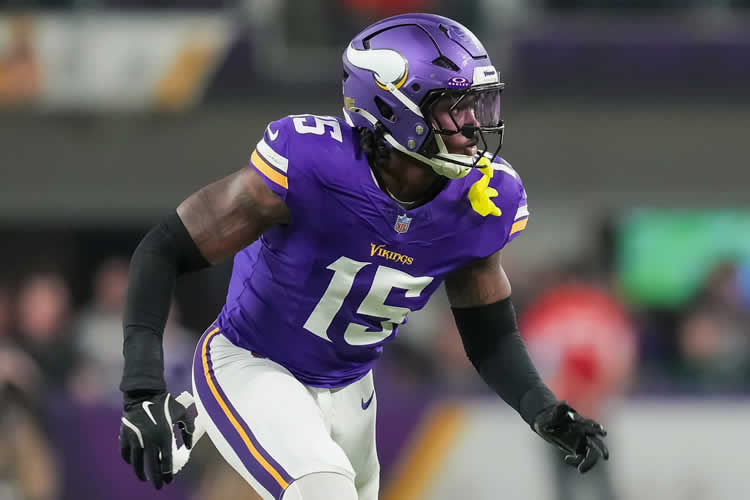
Edge defender – Dallas Turner, Vikings
The number one edge defender and top-10 overall recruit in 2021, Turner earned Freshman All-America accolades and was nearly a full-time starter by his second season. Year three is when he really broke out, taking the mantle as the number one up front for Alabama for an all-time player of the program in Will Anderson Jr. He became a first-team All-American himself, posting career-highs across the board – 53 tackles, 14.5 TFLs, ten sacks and two forced fumbles. He backed up his explosive traits at the combine, when he led all front-seven defenders with a 40.5-inch vertical jump, along with the second-best mark in the 40 (4.46), and looked better than the majority of (off-ball) linebackers in the transitional coverage drills. Surprisingly, he still lasted until pick 17 in the offense-centric 2024 draft, right behind Colts edge defender Laiatu Latu, who made the list a year ago, and Seahawks D-tackle Byron Murphy II, who appeared almost too obvious to make him more than an honorable mention. Through his first two years as a pro, Turner has only missed one out of 34 possible games, but went from 300 to 700 snaps respectively (zero to ten starts). Although he did collect an interception against the Seahawks on an underthrown pass as he dropped out to the flats, he was limited to 20 tackles and three sacks otherwise. In his sophomore campaign, he basically tripled his traditional production (66 tackles, 11 for loss, eight sacks), the underlying numbers saw a significant jump, and he added four(!) forced fumbles. By trading a Pro Bowl-level edge defender in Jonathan Greenard to Philadelphia and not really addressing the position at all otherwise, the Vikes are betting on this guy taking another jump in year three.
Turner has always been a little undersized for a full-time edge role, coming into the league as a 6’3”, 245-pound junior, who had only turned 21 years a couple of months earlier. However, watching him go up against SEC tackles, who often had already logged multiple extra seasons, this guy regularly made their heads snap backwards due to the shock in his hands on first contact. Working against tight-ends, Turner typically buries one hand into their middle of their chest and his outside arm free, to maintain vision on the ball, and be able to disengage once the ball-carrier is in range. When they try to seal him on the backside, he typically rides those guys into the action and clogs up cutback lanes. Rarely are they able to reach or seal him inside and keep this guy from running down fly sweeps. Overall, Turner meets blockers with an early punch and is actively looking to work off contact to get involved on stops. You regularly see this dude launch himself into pulling guards to create traffic in the opposing backfield, and unafraid to get his nose dirty, as multiple bodies are moving his direction. That may involve him shoving guys around until the refs blow the whistle a second time. Minnesota stopped doing so after week five last season, because they needed him in a more traditional edge role with Greenard missing time, but the young OLB was asked to move out over the slot, and his quick burst allowed him to shut down perimeter screens, not allowing receivers or tight-ends to stalk-block him whatsoever. Turner makes sure to stay home when the play is going away from him, but then he offers excellent speed and effort in pursuit once he’s made sure he takes care of his contain responsibility, or he has to turn and try to run ball-carriers down from behind. Overall, he logged 29 defensive stops, which captures tackles resulting in positive outcomes for the defense, based on down and distance.
Tremendous ankle mobility to corner his rush, to where he’ll tightly bend the edge if left unblocked or the tackle steps inside initially. If the tackle does opt for more of a shallow set or there’s a tight-end fanning out his way, Turner packs a sudden dip of the shoulder to under their reach. Even when they do manage to hook him or try to land a strike to push him onto a wider track, he’s often able to wipe away those hands or rip through the contact and heat up the passer. Having said that, Turner loves to work off the long-arm. Where he’s angling through the outside pec of tackle, countering that guy’s hands trying to recover, or slipping inside if they open their too far against the outside rush, he can create issues in multiple ways once he’s gained the upper hand that way. Just taking advantage of being springier than opponents, going power-to-speed, as he makes those guys stop their feet as he stutters or puts his on the momentarily, makes it tough to keep up with him. Additionally, while he’s still refining how he actually sets it up/delivers it, he packs a tornado-like spin move that he unleashes occasionally. At times, Minnesota would line Turner up as an apex defender initially and then walk him down towards the line during the quarterback’s cadence to give him a head-start blitzing off the slot. Whether he’s involved in different stunts/games or standing up over interior linemen, Turner shows the instincts and elusiveness to slither through open lanes developing, and then also get his hips pointed at the quarterback. And generally, when asked to slant towards the B-gap, Turner brings enough force to go through the inside half of tackles and flash up the quarterback’s face. This past season, he increased from 12 pressures on 151 pass-rush snaps to 42 across 288 opportunities. Part of that was improving the timing of his get-off to when the ball was being snapped, and putting blockers in catch-up mode.
Most of the negatives I noted going through Turner’s sophomore tape can be explained by needing more live reps. He could definitely get a little quicker to shed blocks when the ball is coming his way. Going after passers, stacking moves on top of each other in a cohesive fashion, will only make him more dangerous going forward. When he goes for more of a straight-up bull-rush, it can run out of steam after that initial jolt into contact. And for as much as Brian Flores likes to bring pressure and subtracts numbers on the back-end with all their fire zone calls, Turner could realize more opportunities to get his hands up into passing lanes. On the stat sheet, he did have three PBUs, but only one was logged as an actual batted pass. That does bring us to the third layer of his game, which is often underrated for outside linebackers in more of these hybrid fronts. Turner makes moving backwards look so easy, and he wants to make his presence felt in coverage, by jacking up targets trying to get through his area in zone assignments. He’s able to cloud underneath passing windows and create problems for spacing concepts. If quarterbacks do manage to sort those out and hit someone with a chance to run, Turner’s instant acceleration allows him to quickly shut down the potential for big yardage after the catch. And he rapidly sticks his foot in the turf and drives up on quick throws to the flats. I’m sure Minnesota has high hopes for what this young man can grow into, entering year three under Flores, learning the ins and outs of that scheme, but also watching his deployment continue to diversify. With Greenard out of the picture, I’d expect Turner to be a fixture on the field for 80+% of snaps, looking at past shares for the guys in those spots. And although those rookies will still have a ways to go, the Vikes should have a much younger and more dynamic interior D-line with the duo of Caleb Banks (Florida) and Domonique Orange (Iowa State), to go with a couple of rotational players who emerged for them this past year.
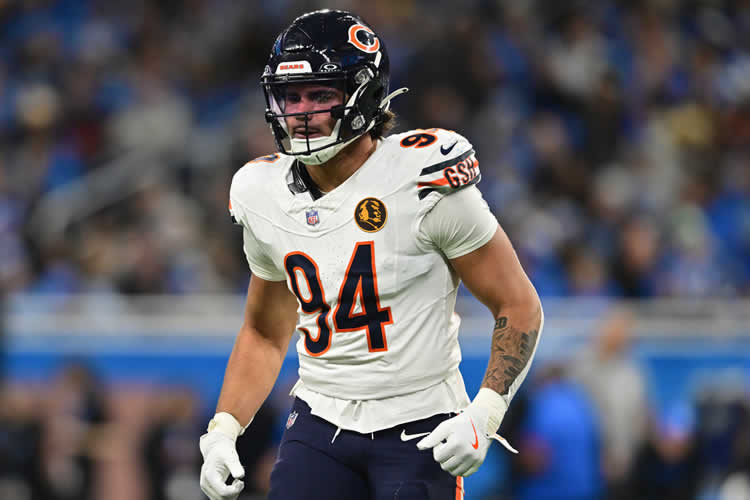
Edge defender – Austin Booker, Bears
Certainly not as lauded a rise in the college ranks as the aforementioned Dallas Turner, Booker redshirted his first year at Minnesota and saw very limited action the following season, before transferring to Kansas ahead of 2023. That move quickly paid off, as he made first-team All-Big 12 and was named the conference’s Defensive Newcomer of the Year, thanks to 56 tackles, 12 of those for loss, eight sacks and two forced fumbles. Entering the ensuing draft as just a redshirt sophomore may not have been the smartest decision, as he lasted until the fifth round. However, the Bears clearly viewed him as somewhat of a hidden gem, who really only had one year of actual tape, as they traded a fourth-rounder the following year to jump back into a draft that they had already run out of picks in. Along with the limited sample size to evaluate him by, therefore the lack of experience, his lanky build and rather unorthodox style of play were probably question marks for teams, as he offered an array of pass-rush moves, but hadn’t come close to mastering any of them. Looking at his first two years in Chicago, he only played 283 defensive snaps as a rookie, collecting 21 tackles and 1.5 sacks. Despite missing seven games in his second season, his snap share (80%) and sack tally (4.5) tripled. You can certainly argue that this was aided by free agency addition Dayo Odeyingbo tearing his Achilles right around the same time as Booker’s return, and he hasn’t yet proven himself as a Robin to Montez Sweat, who isn’t a true Batman either. Yet, with Chicago deciding not to address the position whatsoever this offseason, the opportunity to prove himself should be there.
When I evaluated Booker in his one year at Kansas, he often acted as a play-maker in run defense, swiping away the hands of blockers and efficiently navigating around them to initiate first contact on the ball-carrier. Having more of a lanky build at 6’5”, 245 pounds, and still developing that grown-man strength was part of that. I highlighted him as a standout performer during the preseason. Unfortunately, he ended up following the first seven weeks of regular action, but showed a lot of the things that caught my eye when he got back onto the field. Rather than stacking-and-shedding drive blocks at the point of attack, Booker will regularly swat down the outside arm of tackles, get his cleats in the ground, and step around in a way that forces running backs to cut those up prematurely. Or, he punches and pulls guys off with that inside arm. Booker typically doesn’t allow combo blocks to develop against him, as he knocks away the reach of the tackle and turns his body sideways to split that crease to the tight-end, and not enable the edge to be widened on something like outside zone. He’s generally at an advantage when soloed up against those extra in-line blockers, where you see some impressive moments push-pulling those guys to the turf, or banging through the inside shoulder and tracking down runs from behind, when he’s supposed to be sealed on the backside. Overall, I’ve continued to appreciate how he uses his hands as weapons to fight off blocks and create angles to the ball for himself. When left unblocked away from the action, he’ll pick up his feet and cover plenty of ground with those long strides, flattening down the line. He’s typically alert for reverses and doesn’t surrender contain responsibility against misdirection stuff, while his ability to stop and redirect, including against bootlegs, is definitely impressive. Plus, Booker is a highly forceful tackler, who wraps and drives ball-carriers into the ground. Despite more than doubling his snap total compared to 2024, he only had one additional missed tackle in year two (six).
You can see Booker rush the passer with neither, one or both hands in the dirt, from different widths. He has really improved his ability to flatten his rush as he lands his hand-combats, to actually have his body aimed at the quarterback. Yet, I really like seeing him bury his inside hand into the sternum of tackles sitting back for him and push those guys up the field, to slide inside for some quick pressures, or just ride them into the quarterback’s lap as he angles that way. Although, what makes Booker really tough for offensive linemen to square up, is how sudden and somewhat unpredictable a mover as he is. That ability to alter his stride length, dip around contact, or stop his feet and jump towards the B-gap with great lateral agility, when opponents open too far towards him, creates a unique challenge for pass-protectors. He showcases impressive suddenness for that longer build and can contort his upper half to work around bodies. In college, you could watch him pull off a handful of ghost moves, where he nearly went untouched, despite his height. Plus, even though he should speed up the process of actually creating paths to the quarterback, he’ll happily engage in extensive hand fights. Facing play-action, that transition from run defense to defeating the block – in part due to how he generally isn’t looking to take them on all the time – has really been sped up for him. He’ll often punch-and-release, pulling the rip all the way through to circle around opponents and free himself. Booker went from 10 pressures on 154 pass-rush snaps in 2024 to 35 QBPs on 411 opportunities this past year, if you include the playoffs. When he feels like space is clogged up for him, stunting inside or after mirroring zone flow, Chicago’s young edge defender will track the quarterback’s eyes and jump up to try knocking down passes – he posted three batted balls last season.
Booker’s awareness for different blocking schemes remains a work in progress. He’s frequently taken off his feet by cut-blocks, particularly when there’s a tight-end sifting back his way, and he appears completely oblivious to pin-downs, where he should immediately start to work over the top and try to scrape out to the corner. Overall, there’s more spinning and losing track of the football with Booker than you’d like to see at this point. That also shows up with him in passing situations, going off feel rather than using a cohesive rush plan, with counters he can quickly access. Right now, there’s a lot of herky jerky movement and him losing time when involved in different games. That’s along with frequently being too tall on initial contact with tackles against dropbacks or after getting chipped initially, and finding himself in stalemates. Being so unorthodox in his approach is something he’ll need to continue figuring out how to weaponize it. Towards the end of 2025, we saw him flash a cross-chop, and overall, I believe he has the potential to alter his rush tracks in dangerous ways, where he can threaten taking a more direct path in order to grease edges for himself and work in-and-out style moves with more deceptive footwork, to complement his body language. Listening to head coach Ben Johnson following the draft, having not invested any real resources into that position, it’s clear that they intend on helping their fairly expensive D-line by setting up one-on-ones and adopting more post-snap movement. Dennis Allen will likely dial up the rate of stunts and twists, since they ranked below-average and near the bottom league-wide respectively in those categories previously. Booker’s lateral range should make him a benefactor from that saw, after we sparingly saw him work almost all the way across the formation. Maybe dropping him off the line to flood underneath passing lanes a couple of times per game could be another result of this, since he only logged 14 total snaps in coverage, but showcased pretty loose movement skills in space at Kansas.
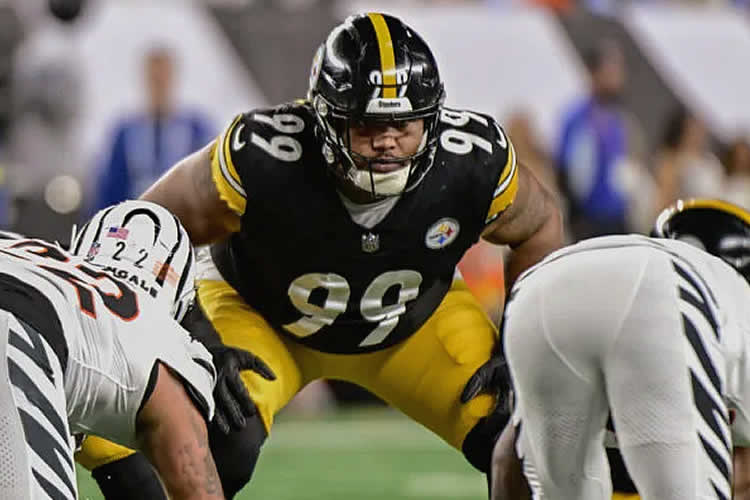
Interior D-line – Derrick Harmon, Steelers
It was another rather slow down for Harmon during his college career. He started out as one of the 1000 top recruits in the nation for Michigan State in 2021, but only played in four games as a true freshman to preserve his redshirt, and wasn’t a household name either as he developed into a full-time starter at nose tackle over the next two years. When he decided to transfer to Oregon for the 2024 season, he transformed his body and game quite substantially, becoming a second-team All-American, with 45 tackles, 10.5 TFLs, five sacks, four passes batted down the down, a pair of fumbles forced and recovered each. After running a 4.95 in the 40 at 6’5”, 313 pounds, and putting together one of the top field workouts among the interior D-line at the combine, to me, he was simply one of the cleanest prospects in that class. With multiple analysts comparing him to Cam Heyward, it wasn’t shocking to see the Steelers add that guy’s eventual discipline with the 21st overall pick. Unfortunately, Harmon suffered an MCL in the preseason, which cost him a month and made him less effective when he did get back onto the field. Pittsburgh made it a priority to rotate its D-linemen through, as the rookie only played 53.7% of defensive snaps in the games he was available for. Across those, he logged 27 tackles and three sacks, along with a fumble recovery. For people studying their defense throughout the year though, you could tell the impact Harmon had down the stretch, helping the Steelers win the AFC North title, and then posting a season-high six tackles and one more sack in the Wildcard Round against the Texans.
Known for their physical defensive identity, the Steelers defense finished the 2024 season ranked 23rd in rushing success rate allowed (42.0%), if you include their 300-yard bashing at the hands of their division rival Ravens in the Wildcard Round. That was a big reason they decided to target Harmon in the first round. If you look at that from week three onwards (when the rookie returned from injury), they were just 0.1% off the top ten in that category for the year (39.3%). Although the slate of opponents faced has to be taken into account, the raw yardage surrendered on the ground is even more glaring, jumping from 91.2 to 165.6 rushing yards per game when he wasn’t on the field. This is such a broadly built player with a tremendous natural strength profile. You see the capacity to two-gap at times from head-up alignments, or peak-and-shed as a shade, grab cloth and yank aside offensive linemen when the ball-carrier tries to cut off that guy’s backside. Harmon shows good feel for owning his space versus angled blocks, yet recognizes when he can hit lunging linemen with a tight arm-over and sit at the line of scrimmage. He instinctively drops his knee to anchor against pressure on an angle when being doubled. If he has leverage against zone runs by alignment, you’re simply not going to keep him from tracking down the play, or at least spill the running back really wide. Yet, even when offensive linemen step away from him as a 2i/4i, Harmon brings the force to still typically be able to crash through their play-side shoulder when asked to slant. Near the point of attack on those, you occasionally see him put one hand on either blocker against combination blocks and sort of split those, or at least he usually forces those guys to stay thick and allows his linebackers to run freely behind it. The traditional statistics weren’t overly impressive for the rookie, and it took a while for him to settle in. Yet, 16 of his (28) tackles constituted as “defensive stops”, according to PFF. And he only missed three attempts.
Unsurprisingly, a lot of what Harmon does rushing the passer is also built on the vigor he brings. He likes to utilize the long arm as a shaded rusher, or use that technique to push through the opposite pec. When he feels opponents leaning too far his way, he’ll slide across, if not bench-press and then pull those guys off himself. You can observe him either use the rip or almost like a Reggie White hump move to corner his rush through the outside shoulder of a guard, including when he’s tagged as the set-up man on T-E twists, not allowing the blockers to that side pass those off. And he’s capable of caving in one side of the O-line, taking away space inside the pocket on different games and opening up a track for a teammate to loop over the top. Harmon possesses enough twitch to go from being in a stationary position trying to control his space against run fakes to suddenly hitting the opponent with that sudden swim move and getting around to put heat on the quarterback. Across just over 300 pass-rush snaps, Harmon logged 23 QB pressures as a rookie. The context needed here is that he regularly started from a conservative four-point stance and ended up as a contain rusher, which didn’t lend itself to posting big production. Overall, his impact on the rush getting home can’t truly be measured by sacks, but rather the way he erases space for quarterbacks to step up, allowing his teammates off the edge to stay on their initial tracks and crumble pockets. That’s not excusing the fact that he still has to improve significantly in order to become equally impactful in passing situations and take advantage of the opportunities he does get.
First and foremost, in that discussion is that his hand-combats need more purpose and precision, rather than just throwing them at guys. Too often, he ends up doing so early and allows guards to pull back, then land their punch into his chest, and significantly disrupt him. Overall, for as much as Pittsburgh has asked their guys to push those pass-protectors on the inside backwards, Harmon would benefit from more intently attacking the edge of their frame. Having full confidence in his knee again plays a part in this, but I want to see him start to disengage his upper and lower half and reduce his surface area, in order to wiggle past blockers or through creases between them. At Oregon, there were flashes of it, after shedding some weight. When analyzing where he can grow in run defense, he’ll need to continue to speed up reaction time and how he translates that information to his lower body, deconstructing blocks with appropriate hand usage and football. A certain stiffness in that regard was noteworthy for me as well, as Harmon kept that square base and then stayed a step behind the ball rather than being willing to cross his feet, scrape and angle out wide for the runner. The only addition of note the Steelers made this offseason was former Ram and Charger Sebastian Joseph-Day, who has largely lined up between the guards in his career, and should only provide more fresh snaps at the nose. I recently talked about how recently hired defensive coordinator Patrick Graham wants to operate on the back-end, after relying on a wide rolodex of coverages previously in Las Vegas. If they dial up the rate of man-coverage again and disrupt routes early, providing interior pressure would be crucial, where Harmon and Heyward can create that vertical displacement against guards and get their hands up to contest passing lanes. New D-line coach Domata Peko, who was a reliable starter in Cincinnati for a decade, before making a few other shorter stops, when discussing Harmon’s ceiling in the NFL, said that “Big Harm is specimen […]; A big dude, but moves around like a linebacker”. I could see him becoming a nightmare to block on an every-down basis.
Linebacker – Cedric Gray, Titans
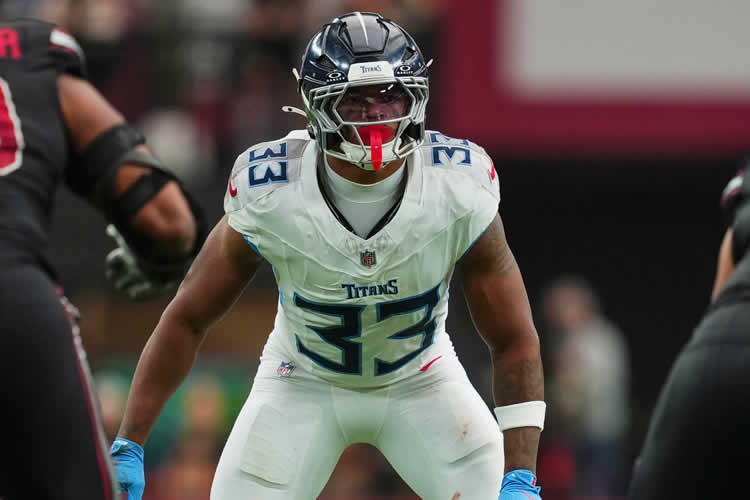
Originally a three-star recruit for North Carolina in 2020, after only logging three tackles that year, Gray started the latter 37 of 39 games he was available for the following three seasons, combining for 365 tackles, 29 of those for loss, 8.5 sacks, five fumbles forced and recovered each, five passes intercepted and 13 more broken up. He made first-team All-ACC in 2022 and ’23. In a fairly weak off-ball linebacker class two years ago, which only saw one selected through the first two rounds, Gray lasted until the top of day three, joining a depth chart that didn’t really inspire anyone at the time. As a rookie with Tennessee, he was largely limited to special teams (only 48 total defensive snaps), before playing and starting in 16 games this past season. He ultimately racked up the fourth-most combined tackles of any player in the league (164), with seven of those for loss, two fumbled forced and four PBUs. For a team that had just picked first overall, they went on to only win three games for a second straight time, and Gray heavy action came in service of a defense that showed some interesting things early in the season under defensive coordinator Dennard Wilson, but ended up finishing 28th in points allowed per game (28.1 PPG). Now, with Robert Saleh getting his second shot at a head coaching gig, and bringing over veteran Gus Bradley, who has his roots in that same Seattle Legion of Boom rise of the early 2010s, we’ll see how much they can accentuate the strengths of their third-year LB, with multiple big-money additions around him via free agency.
I thought Gray was one of the more fun linebackers to watch because everything he did was fast. And watching him operate this past season, I believe you can make a case of falling into the bucket of already being a really good player, who shouldn’t be eligible for this list. At the same time, I don’t think many people are actually aware of it yet. This is not someone you can leave unblocked initially when running away from him, such as slower-developing zone calls, where the O-line tries to secure the down-lineman first, because he’ll just shoot the gap and create stuffs. And when he sees a toss play going away from him, his burst to scrape over and suddenly elude bodies in his path is highly impressive. Gray excels at locating entry points as a tackler, contorting his upper body in order to slice through creases, and overall moves very efficiently through congested areas. He’s definitely gotten stouter, dealing with bigger bodies around the point of attacking, taking on and either pulling off or pushing down lunging offensive linemen. You especially feel that when offenses have a guard climbing up to him (almost) directly, yet he’s able to impede zone flow on the front-side and force the running back to seek cutback opportunities. Gray will blast a shoulder into a tight-end trying to lead up or sift back for him. When he has a runway into those interactions, he can just bully those guys a couple of yards into the offensive backfield and completely blow up the play. On top of that, he showcases uncanny balance, as he’s sort of being hooked or pushed on an angle, yet stay on his feet and pursue the football. He’s become a drastically more authoritative wrap-up tackler, who would get low and just explode his hips through contact to halt the momentum of opponents. However, even when he arrives on the angle, his ability to grind opponents into the ground stood out to me, rather than resorting to dragging them down. Gray finished his first season as a starter with a missed-tackle rate of just 7.6%, and posted the second-most “defensive stops”, according to Pro Football Focus, behind only Detroit’s Jack Campbell. PFF also credited him with a 92.7 run defense grade.
In coverage, Gray has the giddy-up to not get outflanked to the flats, including when having to make sure he doesn’t get caught up by receivers that might otherwise be in his path. He does well to identify boot action and fall back, in order to not open up easy YAC opportunities with someone working across that zone flow to the flats or crossing behind him. And overall, he’s light on his feet when forced to more dramatically redirect course. He’s highly patient picking up RBs out of the backfield, yet when they hook up in that underneath space, Gray takes it away/eats it up almost instantly. As a hook dropper, the young backer makes sure to keep his pads square for as long as possible, as he’s adjusting his width/depth. That includes him bailing out of mugged up looks initially, and even if he bites on run fakes, getting back to his landmarks and re-assuming that “neutral” posture. He also makes sure opponents remember him when they next catch the ball in his vicinity, by dropping his pads in to finish gang-tackles. If someone seems to be pulling away, Gray comes up with some pivotal tackles to negate explosives, with his quick acceleration and long reach, tripping guys up. On top of what he does in his general coverage duties, he excels at corralling scrambling quarterbacks and forcing them to slide or step out of bounds regularly. You have to absolutely love what Gray provides as a greendog blitzer, if the back he’s responsible for is locked in protection, finding that vacated rush lane and being in the quarterback’s face before that guy can even hitch up into the pocket. You see him bounce off bodies when used as a pressure player, and be able to chase after quarterbacks with his quick burst to shut down scrambles. That includes after acting as the pick-man on crossing action. Overall, his timing as a rush player is pretty good, but he has a ways to go to win with finesse and technique, finishing last season with 10 QB pressures on 60 opportunities.
The biggest area of improvement for Gray lies in further developing his instincts in coverage, floating within the edges of his landmarks in accordance to how concepts play out, and drifting into passing windows, to discourage quarterbacks from trying to get the ball past/over his head. We can argue about how these numbers are tracked, as they’re simply charged to the defender closest to the eventual recipient, even if he took care of his job, but Gray was charged with an 89.4% completion rate and a passer rating when targeted of 111.2 in year one as a starter. Additionally, he could also do a better job of fully utilizing his arm length when dealing with offensive linemen. He does well with it against moving blocks, to not lose leverage on the play-side gap, but when he’s more so forced to anchor, he can get his eyes trapped inside them occasionally. Gray also gets in trouble with where he puts his hands, with three facemasks and a horse collar tackle (plus a defensive hold) last season. Nevertheless, now being paired up with a true run-and-chase WILL in Anthony Hill Jr., as their late second-round pick from Texas, which was the role Gray was largely in, I believe those two could form a formidable young duo on the second level of that defense. Cody Barton was a pretty solid starter next to Gray last year, but if the veteran was the one asked to finish plays as the unblocked defender, it would often end up with the ball-carrier being dragged down, while I can see the rookie light that guy up for no yardage a few more times. Playing behind arguably the most physically dominant defensive tackle in the game today, in Jeffery Simmons, and learning under Saleh, who has coached some of the smartest and best overall linebackers in the league, I expect he’ll start to receive the attention he deserves.
Cornerback – Maxwell Hairston, Bills
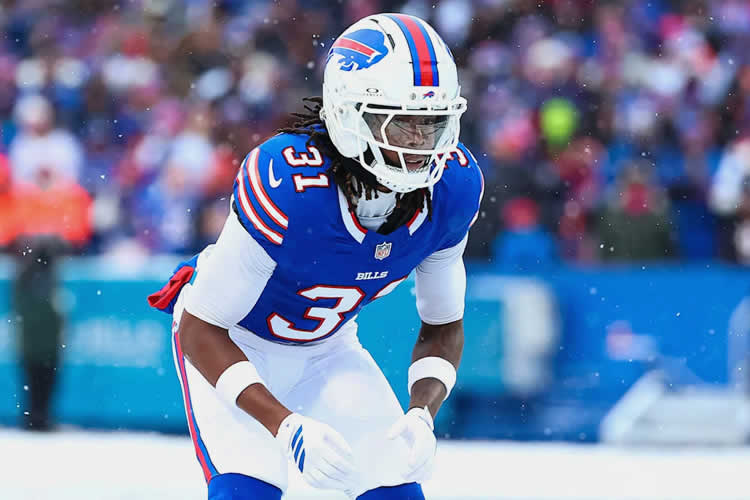
As a three-star recruit coming to Kentucky, Hairston initially took a redshirt and then only played 24 snaps the following season. In 2023, he started all 13 games, collecting six pass break-ups and an SEC-best five interceptions along the way, of which he took two back to the house, which earned him second-team all-conference honors. The following season, he was limited to only seven games and one INT (which he returned for a TD), but added a couple of forced fumbles. After being the star of the show among cornerbacks at the ensuing combine – with a blazing 4.28 in the 40, top-three finishes in both the humps and great fluidity being showcased in the on-field drills – the Bills went back to the CB well, after failing to get any real returns on Kaiir Elam three years prior, when they selected him towards the end of night one (30th overall this time around). Unfortunately, before he could even make his case for a starting spot, Hairston suffered a right LCL sprain in mid-July, which limited him to 11 games played as a rookie. He officially was locked into the lineup for only three of those, but logged a 55.6% snap share, intercepted two passes and broke up another five. And yet, his debut campaign ended on another sour note, as he exited that week 18 matchup early due to an ankle injury, which kept him out of Buffalo’s two playoff contests. Hopefully, now with a full offseason, working under new DC Jim Leonhard, he will get his chance to show off his play-making skills, and potentially influence what they’ll do on the back-end.
At Kentucky, Hairston played a lot of soft press coverage, where his patience and the supreme confidence in his speed stood out, not worrying about guys getting on top of him. Buffalo started to adapt more of that, as well as increasing the overall rate of man-coverage once Hairston became more of a fixture in the lineup, finishing the season 1% above the NFL’s team average (31.6%). You regularly see Hairston connect with the near-shoulder of receivers taking the outside release, forcing them to widen their stem to some degree, and take away opportunities to throw to the back-shoulder typically, since he doesn’t feel like he needs to stack over top of the route. Part of that is because he trusts himself to, if that guy he’s tangled up is able to get off contact and gain a step, to make it back up and be there with the arrival of the ball. Along with that, Hairston can easily de- and re-accelerate his feet, where he shows that ability to stop on a dime with wideouts as they snap off curls and comebacks after really selling the take-off. Even when it appears as if he’s about to fly by, he finds a way to collect himself and stay in the picture. Overall, he’s very handsy at the break-point, but doesn’t actually tug the opponent’s jersey to where it draws the attention of refs. And he feels things develop well, even if he’s seemingly caught chasing a little bit, including when isolated against tight-ends occasionally. Opponents went 15-of-25 for 203 yards and three touchdowns targeting Hairston, compared to his two picks (92.2 passer rating). That’s while only getting only penalized once on nearly 200 snaps spent in coverage, and only 26 of those yards have been surrendered post-catch.
Although the Bills finished this past year with one of the lower rates of cover-three for them in the Sean McDermott era, overall they relied on middle-of-the-field-closed structures at the second-highest rate league-wide (54.3%), and even when they were in zone coverage, they chose tighter alignments for their corners. You can find several perfect reps across his college and limited pro tape of Hairston bailing to a deep third, arm-barring the wideout to put himself in full control of fade routes, and then looking back for the ball to potentially make a play on it, if the quarterback actually dares to test him. When playing cover-two to his side, Hairston does well to land a punch and funnel wideouts towards his teammates before settling out in the flats. If forced to sink initially in that side-saddle technique with vision inside, because there’s vertical push from the slot receiver, he features a dynamic click-and-close against quick-breaking routes from the wideout or a back flanking out that way. Generally, he makes good use of his help inside in two-high structures, maintaining leverage towards the sideline and carrying guys to the post, while packing enough long speed to hang in isolated situations, if that safety has to step down in quarters principles. This also allows him to wall off corner and deep out routes. Overall, something I noted as a definitive positive coming out of college, Hairston’s mental fortitude to ID route patterns, key the quarterback’s eyes, and jump routes was pretty advanced for such an inexperienced player. And while we rarely got to see it at Kentucky, along with freakish testing at the combine, I thought he showed the ability to locate and play the ball in the air with a certain level of comfort in the ensuing workout. That was backed up with a pair of INTs as a rookie, as he clearly has the ball-skills to come up with errant throws.
Now, there clearly were negatives with Hairston’s evaluation, largely revolving around his size and style of play. If you ask him to legit head-up press man, he simply lacks some violence in his hands to actually disrupt receivers at the line. His light build (right around six feet, 185 pounds) can be taken advantage of by physical receivers, who push off on him at the top of the route. And generally, he lacks a certain force when he’s trying to play through the hands of the intended target. Maybe more importantly, he has quite to prove he can be a reliable contributor if opponents try to attack him on the ground. Pro Football Focus credited Hairston with a run defense grade of just 43.3, and a 15.8% missed-tackle rate. Having said that, he does make sure to keep his outside arm free, and, in principle, he has long enough arms to keep blockers at bay and sling ball-carriers to the turf on an angle. Also, for someone that people critiqued for a lack of appetite to get his nose dirty, I did see fight in him to work off contact when offenses pulled offensive line out towards him or had a tight-end trying to seal him inside. You’d simply want him to actually disengage quicker and force the issue, rather than simply being in good position. My curiosity now lies in how much change we see fundamentally under their new defensive coordinator. I recently discussed how the presence of these stand-up edge defenders, who have experience dropping into coverage, and Leonard’s experience in college and the pros, could lend itself to more odd front structures, the types of pressures they might bring, and how they marry that to the back-end. The likelihood is that we see their rate of single-high structures go down a little bit on base downs, allowing Hairston as the field-side corner to play with vision on the quarterback more regularly. Plus, if he can further advance his route anticipation/recognition, maybe he’ll be allowed to be more of an aggressor, jumping the initial break, as they bring heat and surrender an extra body in coverage, creating more quasi one-on-ones. I clearly view him as the better player right now, but I will note here that Hairston will have to beat out former Ohio State CB Davison Igbinosun first, who they picked at the end of round two of this most recent draft.
Safety – Andrew Mukuba, Eagles
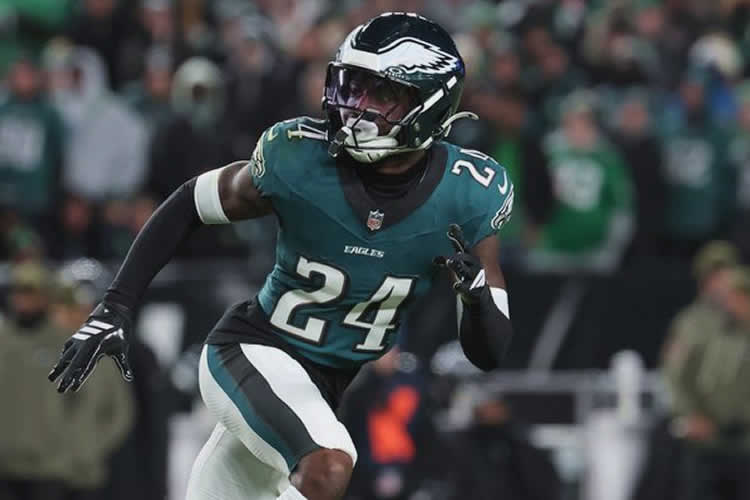
For as highly recruited as Mukuba was coming out of high school in 2021 (as a top 200 overall recruit), it was still pretty surprising to see him become the first true freshman defensive back to start week one for Clemson since 1973 and go on to win ACC Defensive Rookie of the Year. After his play took a slight dip before rising back up the next two seasons, he transferred to Texas, where he helped the Longhorns reach the College Football Playoff semifinal as a skeleton key to their dominant defense. Across his four seasons in college, he racked up 212 total tackles, 8.5 TFLs, 23 pass break-ups, and six interceptions – with all but one of those in his final campaign. Other than being on the smaller end for the position (6’0”, 185 pounds), considering his kamikaze style of play, there was a lot to like about his profile. That’s how he ultimately became the final selection of last year’s second round, and immediately established himself as a fixture in the lineup for Vic Fangio’s defense, coming off a dominant showing in the Super Bowl. Unfortunately, a promising rookie season was cut short for Mukuba, as he fractured his ankle in week 11. However, up to that point, he had started all but one of 11 games played, recording 46 tackles, two passes intercepted and three more broken up. Even though there clearly were some issues behind the scenes with the Eagles, it’s interesting that their fall from grace was pretty much right in line with the loss of their first-year safety. Now the hope is that he can be a key figure in them returning to glory, particularly after trading Sydney Brown to Atlanta, and waiting until round seven of the draft to address that position.
After being in a highly varied role across his time at Clemson, Mukuba’s usage in his one year as a Longhorn was very similar to how he was deployed as a rookie with the Eagles – as he combined for close to 200 snaps between the slot and box, to go with nearly 500 as a deep safety. While he’s certainly capable of wearing multiple hats, what I really appreciate about him playing from depth in split-field structures is how he trusts his eyes and attacks plays in front of him with conviction. Mukuba is a quality third level of the run fit, where he can strafe and then angle out to the sideline to limit runners bouncing wide to small gains. He tracks the ball-carrier well through the convoy and then meets him before he can really spring out of there on fly sweeps and similar plays, not shying away from car-crash collisions along the sideline. Whether off motion or simply rotating down into the box late, Mukuba meets inserting receivers with a purpose, not allowing those big creases to develop on the second level for the running back to accelerate through. He may occasionally get tunnel vision and can get off guard by those, but when he can peak at the wideout cracking back on him, this guy will drop a shoulder and jack that guy up at times. And overall, there’s just no fear in battling with bigger bodies, who obstruct his path to the football. You can argue that the soon-to-be second-year player can resort to going for the ankles of ball-carriers and slinging them to the turf somehow, but with how he attacks their hips, it allows him to stall their momentum and create stops against bigger opponents. In his debut campaign with Philly, he earned an 81.0 PFF run defense grade and posted a solid 12.8% missed-tackle rate.
Transitioning to Mukuba’s play in coverage, he consistently stays deeper than the deepest when tasked with high post duties. In those spots, he doesn’t get antsy about someone crossing his face, feeling like he can keep up with a slot receiver being near top speed. The Eagles quietly were just 0.1% off the highest rate of any defense in their usage of cover-one behind Cleveland (35.5%) last season, relying on the rookie to put a roof over the top and identify the biggest threat. When asked to cover a half, Mukuba rarely commits early, to where the quarterback could manipulate and take advantage of which routes he opens up with his positioning. At the same time, if he’s forced to widen as a clouding safety, he stays ready to fall back inside for someone working deep across the field, such as a corner route with a post behind it. Overall, this guy does an excellent job seeing through route combinations, altering pace at which he’s navigating across those, and positions himself for his ultimate assignment. He displays great peripheral to pick up crossing routes his way after stepping down into the hook or as a robber. And you frequently see him give a “push call” to the other safety, communicating for him to continue sinking, when he anticipates or starts to see someone over the middle throttle down, and he needs to sit with that route settling. Moreover, when he’s in control of the route he relates to, Mukuba identifies opportunities to peel off and put a shoulder on the shoulder as a nearby target extends for it. Plus, he has the hand-eye coordination to collect tipped passes. He got his first career INT that way, off the hands of Travis Kelce at their goal-line.
Now, I will say that he was responsible for a couple of other explosive RAC opportunities though, where he missed diving tackling attempts at the sideline. His smaller size certainly shows up at times when he’s in closer combat with tight-ends or even offensive linemen occasionally, and he doesn’t have that runway into contact. If lined up over a tight-end or the slot, when he’s the aggressor, striking into the chest of the blockers at the line of scrimmage, he can take charge of those interactions, but only having 30-inch arms hurts him in that regard. Otherwise, when the routes to his side break short or work across the field, Mukuba ends up covering grass quite a bit, particularly as a deep half safety. He didn’t log many true man-coverage snaps, but he did have a handful of excellent ones, where he was matching up against number three in trips with outside leverage, squeezing the receiver up into the help and refusing to allow that guy to get out to the sideline. Across 432 total coverage snaps, opposing quarterbacks went 16-of-21 for 308 yards and three TDs vs. two INTs targeting the rookie last season. However, going through the tape, that included a 77-yard TD charged to him, where he understandably started to move up against a bootleg, where the quarterback threw the ball over the defense’s collective head, as the receiver took the route vertically, and both safeties converging missed the ball by about a hand’s length. And on another 42-yard score to his name, he got levelled by a tackle flying out for him on a tunnel screen. Clearly, Philadelphia was comfortable relying heavily on Mukuba as a starting safety for them going forward, allowing Reed Blankenship to walk in free agency and trading Sydney Brown to Atlanta for peanuts basically. Now entering year two in Vic Fangio’s system, familiarizing himself with all the little wrinkles in how their coverages actually play out and how to eliminate air within those, I could see him having a big follow-up campaign.
Safety – Cole Bishop, Bills
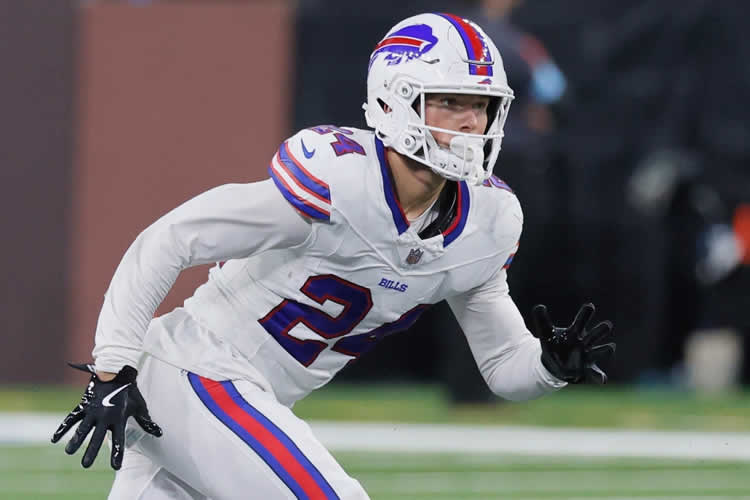
We finish up with another member of Buffalo’s secondary, who already has an extra year as a pro in the books. Despite the programs offering being more known for their standout academics than football programs, Bishop managed to make a name for himself straight away as a three-star recruit for Utah in 2021. He continued to fill the stat sheet in a major way across his three seasons in Salt Lake City, coming up two tackles short of the 200 mark, with 21.5 TFLs, 7.5 sacks, four forced fumbles, three passes intercepted and ten more broken up. He became one of my favorite prospects to watch leading up to the 2024 draft, but it wasn’t until the combine that he really started to rise up boards seemingly. Showing up at 206 pounds and maybe not immediately looking like a crazy athlete, Bishop ran a 4.45 in the 40, posted a 39-inch vertical, and put together an outstanding positional workout, where he showcased loose hips, easy change-of-direction and ball-skills. The Bills ended up picking him at the end of the second round later in April, yet he only played about a third of their defensive snaps, sitting behind some veterans initially. This past season, he became a fixture in the lineup for all 17 contests, leading the team in total tackles (85) and finishing second in passes deflected (seven). He actually came very close to still being eligible here, as he also led the group in interceptions, but didn’t reach his fourth one until the playoffs rolled around. However, I do believe this will act as an extension of the improvement he’s already started to make as that season went along, and that he’ll now put together a complete strong year, now under a new defensive coaching staff, with Jim Leonhard coming in to call the shots.
I posted what I believe to be one of my best videos around midway through last season, detailing the issues with Buffalo’s run defense, which revolved around how they’ve constructed their roster, rules/principles that opponents could take advantage of, but also just execution errors by their personnel. The angles and tackling of their safeties were key ingredients in that, and Bishop was equally at fault up to that point. Yet, somehow, that was about the point that he started to turn things around, which I expected to be the case based on his college evaluation, in which I noted his urgency to fill the alley and the lateral agility to position himself accordingly as definitive positives. Bishop became much better at calculating the path of runners, adjusting on the fly, and using the sideline as his friend as they break wide. There’s no delay with him redirecting forward after moving backwards initially, as he T-steps and supports the run. Even just squaring up running backs, coming to balance, wrapping and finishing those challenging one-on-one situations, including as a single-high safety, were things the Bills could rely upon from Bishop down the latter half of 2025. When operating from the slot or taking on blocks against perimeter plays, he’ll make sure to force the ball back into pursuit, while pushing off and sliding inside to get involved himself. In the box, he attacks tight-ends or receivers in condensed splits with an impactful strike. Yet, there are also moments where he recognizes openings he can slice through and lasso down the ball-carrier, particularly when rotating down late. Bishop fights hard and is skilled with his hands to not get pinned inside, if down low. In more wide-open space, it’s automatic how he wipes down the arms of opponents right as they try to reach out for him. Prior to their Divisional Round loss at Denver, when he was put in some tough spots against runs breaking free through the second level, Bishop went 12 straight games without missing more than one tackle, with 40+ defensive snaps played in all but one of those.
Watching him move around in zone coverage, Bishop has the range to get over and high-point the ball beautifully when playing between seam routes as a deep post defender. In two-deep coverages, you see those greasy hips to flip around after opening one way initially stands out, with that kind of “eyes in the back of his head” quality, when he recognizes his services aren’t required with overlapping, instead relating to a route developing behind him. Bishop understands when he can poach towards the opposite side of the field as routes have distributed and he should still find work. He’s fully aware of where the defense is vulnerable structurally, has the gas to get to that spot before the ball, but also brings the wherewithal to not run over the receiver now settling down or transitioning to a secondary route, instead gathering and plastering that guy. Something you’re not going to hear a lot of analysts talk about or really ever see on a highlight reel, but is critical in match-style coverages function is how Bishop identifies route paths and positions himself to cone or bracket those receivers with a teammate. As a shallow zone defender, his read-and-response to lock in on the quarterback’s eyes and close on nearby routes, is tremendous. Along with the mental processing skills required, him being low and wound up in his space to spring out, allows him to arrive there on time, before perfectly wrapping around the target for PBUs. Watching last year’s Chiefs game, Bishop just continued to show up and erase potential completions. That’s along with dropping down at the snap and basically just walling off opponents, who are now forced to maneuver around him and throw off the timing/spacing of what the offense wants to do. If the ball isn’t coming his way, he’ll immediately close on nearby receivers and limit any potential for yards after the catch. Across 579 coverage snaps and 36 targets as the next-closest defender last season, including the playoffs, Bishop was responsible for just 279 yards and zero touchdowns, with those four picks himself.
Purely evaluating from that point onwards, what he’s doing in zone coverage only requires some cleaning up around the edges. Bishop can be a little too quick to commit his hips as a deep zone defender, who’s being stretched multiple directions, and he tends to “over-leverage” himself when he feels like he knows how offenses want to attack them. I’m curious as to how much more man-coverage their new DC leans into. Their young safety takes calculated gambles of when to squat or aggressively break on routes, if isolated. He recognizes when to up the urgency trailing motion and to avoid getting “picked off”, as well as finding angles to efficiently work around traffic. That included an insane one-handed interception against the Saints, undercutting a receiver working out to the flats at the goal-line after following that guy across the field. This past year, he was asked to drop down and cover tight-ends a lot more regularly, where he packed a heavy punch to just throw those guys off as they try to get out into the pattern. Plus, he’s highly competitive at elevating for jump balls. Yet, he’s only been penalized four times across nearly 1500 defensive snaps. I believe Bishop’s mental fortitude and how versatile he is to handle late coverage rotations, acting as a band-aid to mitigate where they might be vulnerable, and his ability to punish missed reads by quarterbacks, could set up a big year under Leonard. Buffalo not constantly allowing runners to get through the second level cleanly and asking their safeties to save them will be a necessity, however.
Others on my radar:
EDGE Nic Scourton, Panthers
EDGE Jalon Walker, Falcons
EDGE/IDL Barryn Sorrell, Packers
IDL Darius Alexander, Giants
IDL Alfred Collins, 49ers
LB Ventrell Miller, Jaguars*
LB Trevin Wallace, Panthers
LB Teddye Buchanan, Ravens
CB Myles Harden, Browns
CB Trey Amos, Commanders
CB Marcus Harris, Titans
SAF Craig Woodson, Patriots
SAF Malaki Starks, Ravens

