
It’s that time of the year. We’re in the depths of the offseason, with NFL training camps starting off in a couple of weeks. We’ve spent a lot of time discussing the movement of players and construction of rosters, before examining burning questions for all 32 teams at this stage. So now, let’s bring back my annual two-part series on young breakout players across the league. Once again, we’ll be looking at seven different players on offense and defense each.
To avoid questions around what constitutes a “breakout”, here are the guidelines I set for myself – no 1000-yard rushers or receivers, players that have scored double-digit touchdowns, earned a Pro Bowl/All-Pro nomination, or are just generally considered one of the better performers at their respective positions already. That’s why you won’t see someone like Bears tight-end Colston Loveland show up here. Also, I typically try not to include such players who have barely seen the field as pros, although I did make one exception here.
Drake Maye ended up as the runner-up for league MVP, Rome Odunze and Ricky Pearsall showed promising flashes when healthy, and Tanor Bortolini established himself as a quality starter at center for the Colts, as guys who made the list a year ago. Let’s get to the 2026 version:
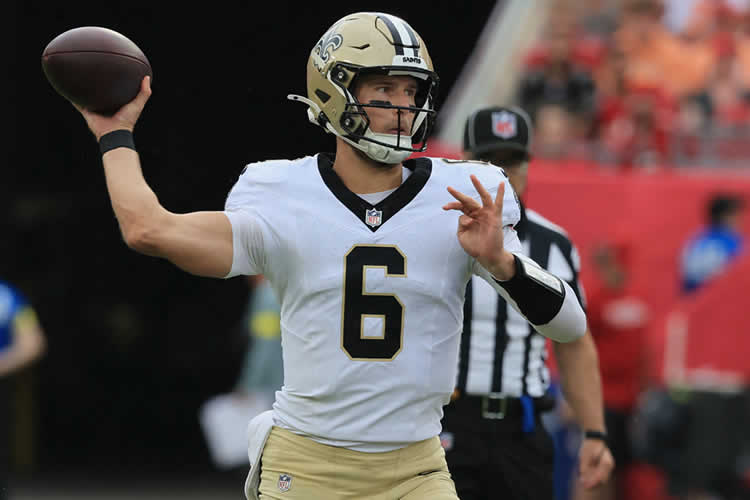
Quarterback – Tyler Shough, Saints
For as much as Shough ascended in the pre-draft process of 2025, many people were worried about his profile. This was a seventh-year senior coming out, who started his collegiate career backing up Justin Herbert at Oregon, after starting all seven games of the COVID-shortened 2020 season for the Ducks, he spent three years at Texas Tech, which were all ended prematurely by requiring surgery to his collarbone (twice) and a broken leg (once) – 13 combined starts, before finishing up with a season at Louisville, where he was finally available for all 12 weeks. In that one full campaign, he threw for 3200 yards and 26 touchdowns compared to only six interceptions. After being the most impressive quarterback during Senior Bowl week and reportedly impressing NFL teams in meetings, he ended up as the third quarterback off the board at the 40th overall selection. That was after Cam Ward as the locked-in first overall pick, and the Giants trading back up into late night one for Jaxson Dart. Expectations remained fairly low, as he lost the battle for the starting job to Spencer Rattler, as a fifth-round pick the year prior. After going 1-6 and being down by 20 late in the third quarter the following week, he was benched for the rookie. In Shough’s nine official starts, he completed 69.2% of his passes for 250.7 yards per game, and ten TDs vs. six INTs, to go with an average of another 19.3 yards and three extra scores on the ground. New Orleans went 5-4 over that stretch, and now surrounded their young signal-caller with heavy weaponry, as he’s collecting all these first-team reps this offseason.
As I said in my scouting report of Shough coming out of Louisville, there’s no fat to his drops or wasted movement in his throwing motion, and there’s some pop behind the ball as it leaves his hand. Whether he’s releasing as his back foot hits the ground at the top of his drop or it requires an extra hitch, he consistently lets the ball go before receivers come out of their breaks on timing-based routes, with the required zip to not force them to wait on curls/comebacks to the perimeter. The Saints ran a ton of quick game last season, and along with having the lowest play-action rate (16.4%) among all 45 quarterbacks in the NFL with 100+ dropbacks, even when the setup did involve some kind of token run fake or RPO element, their young QB getting the ball out in a hurry, attacking leverage or space provided by the defense. That included blitzes from slot, which he immediately recognized and replaced the defender typically, or took advantage of a safety capping over the top with extensive cushion. To go with that, Kellen Moore and Doug Nussmeier made it a priority to present him with these isolated vertical shots on the outside, where I thought the ball placement was better than what he showed in college, for the most part. He was particularly effective along the right sideline. Shough is consistently on the money on out-breaking routes, so it doesn’t muddy up the catch-point, and forces his targets to flatten their angle in case of the potential of someone undercutting the path of the ball. Plus, he actively slows down his targets and puts the ball below the numbers working towards a defender over the middle of the field, such as on double slants, where they’re isolating that apex defender.
So while we didn’t get to see him take many of these deep drops and really let things play out, his body language reading high-lows and his anticipation for windows against zone coverage were definitely positives I noted. Shough rapidly gets to his checkdown when the picture isn’t clear and/or the defense has good leverage on those. That means getting the ball there before the defense has a chance to close down that space, including as match rules play out a little slower off play-action, and the second level prioritizes still gaining depth. There’s also a little more creativity to Shough than you might anticipate, as you watch him drop the arm angle moving outside, or flip the ball to someone running up into the pocket. From a sense of how he generally navigates that space, I appreciate how he seems to lure rushers off the edge into these high angles and then steps up under those at the right moment, in order to neutralize those. I’d also say that he maneuvers pretty well against twists, and when he’s forced to suddenly move off the spot, he can also re-find a platform abruptly, or take off and eat up good ground when given an open lane.
Now, as we transition to some of the things he needs to work on, he tends to get wide when the pocket is pushed into him, and presents fairly easy angles to get tracked down – which being a lot faster downhill than going sideways, plays into. That contributed to a pressure-to-sack conversion rate of 25.0%, which Brady Cook and Geno Smith were the only quarterbacks with 100+ dropbacks last season to post higher numbers than that. When he does take off as a runner, there’s a little wiggle to him, but often times he’s actually already going down as he’s approaching an awaiting tackler, in part probably being mindful of his medical history, with eight missed tackles forced across 45 total carries as a rookie. In structure, we haven’t yet seen him work through more complex structures, where he’s getting to solutions after watching post-snap coverage play out. And he kind of pre-determines some vertical shots, even if he has to wait them out a little bit, as his receivers are trying to gain stack positioning, and ends up releasing off his back foot. So some of the things that happen when the bullets are flying, and most of the decision-making is tied to pre-snap reads, we’ll still have to figure out.
Having said that, the offensive operation did put quite a bit on the rookie already, with how many true dropbacks he was put in, not throwing many screens (6.1% rate), or being provided a lot of easy yardage after the catch (4.8 YAC average). The Saints ran fairly simplistic route patterns, where he’s not always given the opportunities to look off a safety following along one way and then flip his eyes over to another. He did flash the mental processing skills, enough twitch to re-set pretty suddenly, and the arm strength to fit the ball in. And what’s always encouraging for me as I look at passing maps, in half a season as a starter in the pro, Shough posted a 128.9 passer rating in the 10-19 yard range between the numbers – which is where you have to win in the league for the most part. By drafting who I regarded as the most talented wide receiver, ignoring the injury history, in Arizona State’s Jordyn Tyson eighth overall, adding more of a traditional “Y” tight-end in Georgia’s Oscar Delp, who is also a more impressive athlete than his college production would indicate, and throwing in North Dakota State’s Bryce Lance as a speedster on the outside, who ate on double-moves with the Bison, suddenly the ceiling of his aerial attack feels lifted significantly.
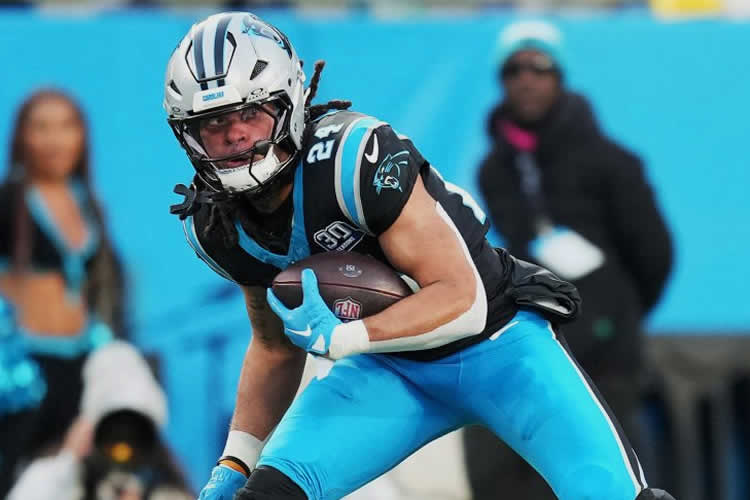
Running back – Jonathon Brooks, Panthers
Despite bringing in five-star recruit C.J. Baxter once program legend Bijan Robinson was drafted in the top ten by the Falcons in 2023, Brooks took the reins of this offense when given the chance. After turning just 54 touches (including three catches) into 389 yards and seven touchdowns across his first two seasons in Austin, he became the driving force of their attack that year. Brooks carried the ball 187 times and caught another 25 balls for over 1400 yards and 11 TDs combined. Towards the end of his redshirt sophomore season with the Longhorns, he tore his right ACL, but decided to enter the draft anyway, and ultimately was the first running back off the board, at pick 46, in a class without any clear front-runners at the position otherwise. Unfortunately, his first experience in the pros didn’t last long, as he re-tore the same ligament in just his third NFL game in December of 2024. Up to that point, he had handled just nine carries and three receptions (on as many targets) for a combined 45 yards and no touchdowns as a rookie. Since that point, when it felt like the Panthers originally committed to a future with Brooks as their RB of the future, they rewarded Chuba Hubbard with a four-year, 33.2-million-dollar extension, coming off a breakout season, then watched Rico Dowdle become undeniable this past year, with multiple monster performances, before fizzling out down the stretch again. So with the latter moving on in free agency, I absolutely believe there’s an opening for a talent like this former second-round pick to carve out a substantial role for himself.
What I’ve been saying about Brooks since his college evaluation is that his top speed may be capped, but his 10-to-20 acceleration to split the defense led to several chunk runs with the Longhorns. So with other running backs, I might be more worried about the back-to-back knee injuries, if their game is built around that instant explosion. Yet, Brooks is at his best by patiently setting up run concepts, manipulating defenders in the box with his body language, and then being decisive when the lane has been set up. I wouldn’t call his change of direction particularly dynamic, but rather smooth, to where he’s not losing time as he’s taking counter handoffs or cuts back zone calls. I also think he does an excellent job of hugging and guiding pullers to their landmarks and allowing them to connect, before committing to his ultimate path. Paired with that is how well he maneuvers congested areas, with micro movements and body leans, in order to not get held up by nearby defenders and arms reaching out for him. Yet, when contact is unavoidable, he accelerates through it and/over slides over the top of bodies for additional yardage regularly. He displays an innate feel for body parts in his vicinity, where he’s stepping over the outstretched arms of defenders or pulling out of their grasp, to where you rarely ever saw him get his ankles clipped, including when he’s weaving around blockers and almost using them as a shield.
For as efficient as Brooks’ transitions towards the defensive backfield are, where it’s about being low and well-coordinated in his cuts, how loose his hips are to bend his track without cutting down his stride length once he’s getting into the open field are equally impressive. I wouldn’t call him a physically imposing runner, but he adds plenty of tough yardage at the ends of plays. Whether he’s slicing through one half of a would-be tackler or how he contorts his body and buries a shoulder into the chest of someone in traffic, in order to drive forward through contact. Paired with that, he showcases excellent ball-security fundamentals, maintaining three points of contact as he’s navigating through and around defenders, with only one fumble since he committed to UT in 2021 (278 combined touches). Back in 2024, the Panthers offensive line may have included the same names on paper, but they hadn’t quite come together as the unit we saw last season, which paved the way for an above-average finish in rushing success rate (41.5%). That’s illustrated by the fact that Brooks actually had more yards AFTER contact (25) than his overall output (22) on the ground. Plus, he forced two missed tackles on just three receptions.
The main area of improvement for Brooks when he was with the Longhorns was that he still needed to broaden his peripheral vision and alertness for cutback opportunities, showing a certain tunnel vision on gap plays. And again, he’s not necessarily someone who’ll just truck a linebacker in the hole or drag bodies on his back. Which questioning how he approaches those situations after spending so much time in the training room over these last two-and-a-half calendar years is definitely fair. Where I’m actually most worried about having consecutive surgeries on his right ACL is in pass-protection. Brooks was the top back in the 2024 class when it came to closing down the space to blitzing linebackers, delivering a well-timed punch with his cleats firmly in the ground, yet remaining agile enough to guide them off track as they try to work around him. If there’s any hesitation going forward when it comes to those interactions, that would limit how effective he is in that area. Having said that, I’m a lot more optimistic about his production catching passes increasing. At Texas, a lot of Brooks’ receiving production came with him sneaking/fanning out for screen passes, which he nicely operated. However, he also offers good acceleration into his routes, he naturally adjusts for the ball, and then one of the best things he does actually is when he puts on the brakes and kind of plays with a defender closing on him in the flats, de- and re-accelerating his feet or cutting inside of that guy. It is important to note that he was never asked to show much nuance as a route-runner though, with a bunch of leak-outs at Texas.
So altogether, this is a player that presents a broad array of skills to get excited about. There’s always a chance that these early-career injuries will continue to haunt someone like Brooks, but as I’ve already outlined, as long as he can stay healthy, I don’t believe they will change what running back he can be, as long as he has full confidence in that knee. At the start of 2026, I think the assumption has to be that it’s going to be a pretty even one-two punch with veteran Chuba Hubbard, because he’s provided steady play, and in large part also because of the money they’ve committed towards him. However, as long as they figure out the center spot and receive quality play from either free agent Rasheed Walker or first-round pick Monroe Freeling (Georgia) at left tackle, they should be one of the more effective teams on the ground again, and Brooks offers a little more individually, when he’s provided that space, to convert those opportunities into chunk plays.
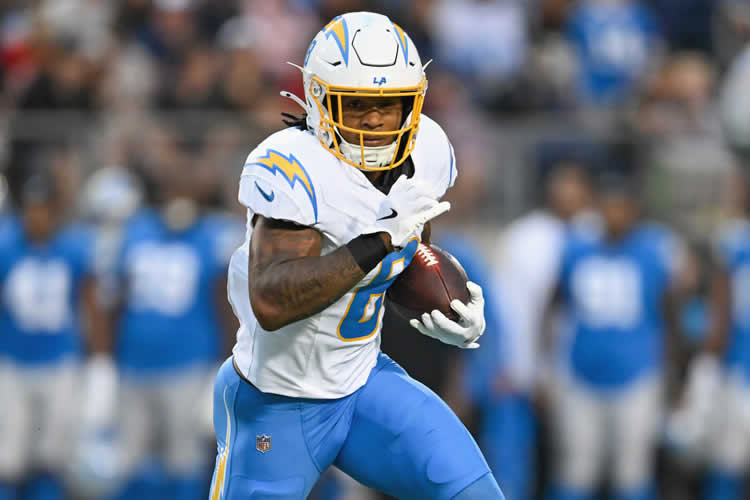
Running back – Omarion Hampton, Chargers
A four-star recruit in 2022, Hampton paired up with Drake Maye at North Carolina, to create one of the most dynamic offensive backfields in college football. Over his two seasons as the workhorse for the Tarheels, he carried the ball 600 times for 3161 yards, and caught 67 passes for nearly another 600 yards, to go with 33 total touchdowns. Although future sixth overall pick for the Raiders, Ashton Jeanty, was the headliner of that class, Hampton was generally considered to have multiple potential suitors in the latter half of that first round, and Jim Harbaugh pulled the trigger with the Chargers at pick 22, for a team that wanted to heavily rely on the run game. Even though injuries and overall shaky play on their O-line didn’t allow them to operate that way, and a lot was put back on the shoulders of quarterback Justin Herbert yet again, the rookie RB was pretty effective when available. Across nine games, with a fractured ankle putting him on injured reserve about a month in, he carried the ball 124 times for 545 yards (4.4 YPC) and caught 32 passes (on 34, targets) for another 192 yards, with five total touchdowns. That foot seemed to bother him down the stretch unfortunately again, and he only played two offensive snaps in their Wildcard Round defeat, losing one yard on his lone carry. Although they did sign for Raven Keaton Mitchell as more of a splash player, who can rip off explosives on limited opportunities, with Najee Harris tearing his Achilles last season and not being brought back, it should be Hampton and Kimani Vidal battling for the vast majority of snaps.
Coming out of UNC, this young man already looked like an NFL running back, watching him run 4.46 in the 40 with his 221-pound combine weight, yet displaying shockingly light feet during the positional workout. I thought he showed an excellent feel as an inside zone runner in college, to allow things to develop, but hits creases with a purpose when they would open up. He’ll hit the hole at full throttle when given the opportunity, but you also see him keep his pads square and reduce his stride length as he’s setting up pulling linemen on gap concepts. Along with that, for a power runner, Hampton can get pretty skinny through creases and pull his feet over trash, so he doesn’t need to really slow down. And then pops out of there, ready to take on opponents trying to wrestle him to the ground. He can use his speed to get wide when contain isn’t firm, yet then slide inside of scraping linebackers trying to beat him to a spot, and he routinely curves his path and turns his body away from arms reaching out for him as he’s trying to clear the second level. I love seeing him get to the alley on toss plays and how he owns that space, forcing defenders to squeeze in to just get in the way and try to slow him down.
When he does get to the open field, you regularly see defenders bounce or slip off Hampton, and even though he did battle some nicks and bruises as a rookie, he does get up from some big extra hits as he’s still fighting for yardage. When he has the angle towards the sideline, he’ll make sure he maximizes what he can get back on his path there, by throwing straight-arms at pursuing defenders, and in more condensed spaces, he’ll put his pads down to give tacklers little room to cleanly wrap him up. He runs over plenty of safeties, who often end up meeting Hampton’s thigh pads before he falls over the top, or they let go entirely, and then the running back’s re-acceleration after being held up momentarily is what really stood out to me ever since he started to come onto the scene in college. In his final season with the Tarheels, 73.6% of his production came after contact, with 2300 such yards over the latter two combined. His rookie numbers with L.A. weren’t as stratospheric, but he still averaged 3.34 YAV and just over a missed tackle forced on every fourth carry (32 MTFs on 125 carries), which was right in line with his two seasons as “the guy” at UNC. His only fumble last year also immediately pounced out of bounds as he took on a Broncos safety at the sideline.
Now, I will say that there’s a good amount of wasted movement and stuttering his feet when the picture isn’t clear at this point for Hampton. He can overstride as he’s approaching a blocker out to the corner, or get his eyes “lost” in the pile at times. And he doesn’t have a lot of shake to him as he’s meeting a linebacker in the hole, or is trying to create an angle for himself to get around someone breaking down for him in the open field with creativity. In terms of his receiving chops, there’s some small clapping at the ball, but he consistently attacks it away from his frame as a receiver, and can deal with sub-optimal placement, catching 32 of 34 targets, with no drops, in 2025. Throwing him these swing or flat routes makes him a problem for corners, who simply don’t want to tackle him. Yet, while his dense build allows him to shake off contact, his breaks as a route-runner are more curved, and he performed horribly when asked to block as a rookie, earning a minuscule 16.3 PFF pass-blocking grade, with seven pressures allowed across 41 such snaps. I do like the aggression into contact, including when he has to work across his alignment from the shotgun in order to pick up a mugged-up backer, but he tends to lead with his pads and/or helmet, he doesn’t punch and settle his feet, and there are some moments where he’s simply missing what defenses are doing on three-man games and cross-dog blitzes, since his responsibilities were very basic in college, with all these half-line slide protections. The best he does in that regard is to just lend a heavy shoulder on chips.
Nonetheless, while I’d expect Kimani Vidal to be their primary third-down back, Hampton can offer that physical presence on the ground and is reliable enough to be a viable option out in the pattern. Plus, you already saw him flash that ability to finish explosive runs in the paint. As I’ve said in my divisional draft & roster review series, I don’t feel a whole lot better about this interior offensive line automatically, just because they swapped out all three guys. However, getting their excellent starting tackle tandem back is huge, and with Mike McDaniel coming over from Miami, we should see them being accentuated with their focus on outside zone concepts. Hampton is an excellent fit, because he has the burst to capture the corner, to go with the strength to run through half the man on the edge, if they initially try to stay square against those key blocks out there and then angle for the tackle. Adding a quality in-line tight-end like Charlie Kolar and fullback Alec Ingold, to slightly change up those angles, should be helpful as well.
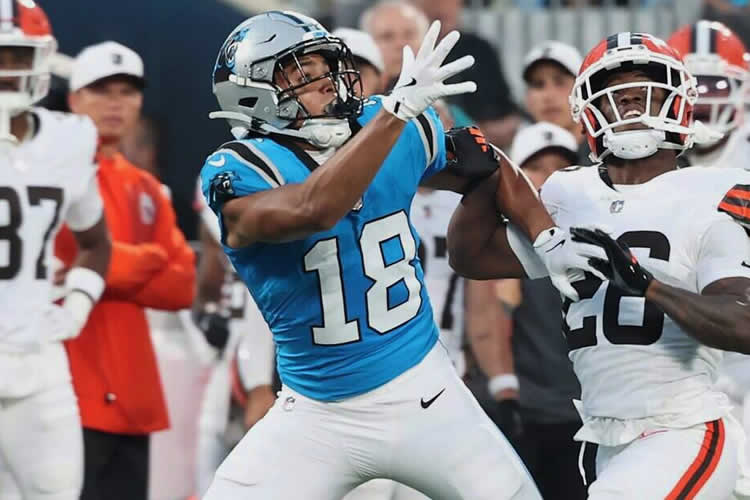
Wide receiver – Jalen Coker, Panthers
Coming out of the same draft class as now-teammate Jonathon Brooks, who we discussed earlier, Coker actually didn’t receive a call and ended up hitting the Wild West that is the UDFA market, coming out of Holy Cross. Unranked by the recruiting services coming out of high school, he got onto the field very sparingly during the COVID-shortened 2020 season, before gradually seeing his production rise over the next three years, going for 1040 receiving yards and an FCS-leading 15 touchdowns on just 59 catches as a redshirt junior. Typically, if you don’t use your full eligibility at a lesser-known program – or potentially even transfer – players have intel that they’ll get drafted. Yet, despite starting off towards the end of the depth chart as a rookie, he immediately became part of and continued to increase his usage in Carolina’s rotation, once he was available a month in. He actually finished with a near-identical yardage tally as their first-round pick Xavier Legette that year. And overall, he’s posted very similar production individually in his first two years as a pro, logging 11 games in each of them. He’s hauled in 65 of 89 total targets for 872 yards and five touchdowns. Even though Tetairoa McMillan just received Offensive Rookie of the Year honors, Coker has pretty clearly established himself as the preferred number two option for Bryce Young. Which he’s proven that he’s capable of stepping up when provided advantageous looks, such as when he went off for 134 yards and a TD on nine catches in their narrow Wildcard Round loss to the Rams. This could be a launchpad for him, which the Panthers recognized as well and extended him for three more years at 35 million dollars already this offseason.
While largely overlooked in the draft cycle, Coker was a Bruce Feldman Freaks List in 2023 and went on to average a massive 3.51 yards per route run, with 47 of his 59 receptions resulting in first downs or touchdowns. After almost exclusively lining up on the perimeter at Holy Cross (90%), he’s only been on the outside at a 41% rate across his two seasons in Carolina. When he is put on the line of scrimmage and faces defenders in soft press alignments, Coker can freeze them momentarily with some foot-fire and/or club away their reach, in order to create leverage advantages for himself. Yet, if given free access and asked to navigate through congested areas, he effectively uses wipe-downs to not get hung up with ancillary zone defenders. What stood out to me straight away when watching the then-rookie get onto the field for the Panthers was the savvy in his routes, where he’d provide himself more space by how he initially stemmed those. He’s really good at including head- and shoulder-fakes to create space for himself underneath. For being 6’3”, Coker’s flexibility to get low and smoothly go through challenging breaks, such as on whip/return routes, is quite impressive. Plus, he has no issues whipping his hips around to create separation on speed outs.
This guy’s consistently friendly to his quarterback by gaining back ground as he works across the field or has a defender near his hip, who might otherwise have a chance to undercut the route. And there’s teach tape with him, of working down the sideline or just finding green grass on secondary routes. Additionally, he displays excellent spatial awareness and understanding of how much he should accelerate out of his breaks, not running himself into a corner in the flats on out-breakers, or sitting down between hook defenders. When he is asked to go vertical, he makes sure to maintain space towards the sideline, stacks and pins defensive backs on his back-hip, to create clean entry points for the ball over the top. In 2025, he caught six of seven targets of 20+ air yards (for over 200 yards and a pair of TDs). While Carolina does like to spread defenses out when they go to the shotgun, with 11 personnel sets that include a tight-end in Ja’Tavion Sanders, who regularly basically operates as a detached receiver, or they go to straight-up four WRs, you see a lot of these loose bunches from them and short motions to mix up how routes release out of those looks and forces defenses to communicate/react accordingly. Coker does an excellent job on those, to take advantage of the fact that a trailing defender has to work around quasi-rubs, for easy completions.
As I noted in his college profile already, Coker consistently secures catches away from his frame with tight hand-positioning, including when he has to “stab” the ball straight over his helmet or fully extend for the ball, leading him out towards the white. Coker has dropped just one pass in each of his two seasons with the Panthers (out of 76 possible). That includes moments where he’s forced to elevate for the ball or finish amazing diving grabs where he has to stretch out, while being near-automatic on corner routes in the low red zone. He showcases tremendous focus when tracking the flight of the ball for extensive periods, including if the defender is invited back into the picture based on its placement. The soon-to-be third-year receiver does very well to use his body as a shield, and finish through contact, which is highly valuable on targets into closing windows working against zone coverage. Part of that is also simply how he positions himself, and at times already starts going towards the ground, when required. At Holy Cross, you saw him be a “ball winner” on the outside. He’s had a few nice moments adjusting to the back-shoulder in the pros as well, and overall in contested-catch situations as a pro so far, Coker went five-of-eight as a rookie, and then a massive nine-of-eleven in year two (81.8%).
The one negative with Coker simply is the lack of raw speed to actually get on top of perimeter corners. He does a nice job of battling for position in those situations, but typically isn’t going to detach. If he’s asked to push up the field beyond 10-12 yards, you do see some excess steps and defenders being tipped off as he’s approaching the break-point. And he’ll need to continue becoming more diligent with his set-ups, if he wants to create big plays on double moves. Along with not having the wheels to just run away from defenses with the ball in his hands, Coker isn’t a dynamic start-and-stop type of play, as he’s only forced six missed tackles so far in his young pro career. However, he’s fluid in transitioning to be a runner, maneuvering around closing defenders, and he does have solid contact balance to bounce off glancing shots by a safety, who doesn’t actually wrap up. On top of his receiving skills, this guy doesn’t shy away at all from doing the dirty work, regularly being asked to insert through the C-gap and lead up on a safety, trying to fit the run from depth. Last year, I saw the Panthers basically run “iso” with him, or duo with an insert, depending on how you want to label it, where he motioned back-and-forth to get him thudding the key defender with momentum. Coker has been incredibly efficient on a per-target basis (passer ratings above 110 when thrown his way in both seasons). Now with Tennessee speedster Chris Brazzell II, who has basically been a pure outside player before being selected late on day two of this past draft, I expect him to be more locked in on the slot when they go to 11 personnel sets, while Xavier Legette continues to get phased out of the offense. Having a hopefully healthy training camp and being ready to go week one, with them entering year three under this offensive staff, I expect a big year for Coker as more of a high-volume target.
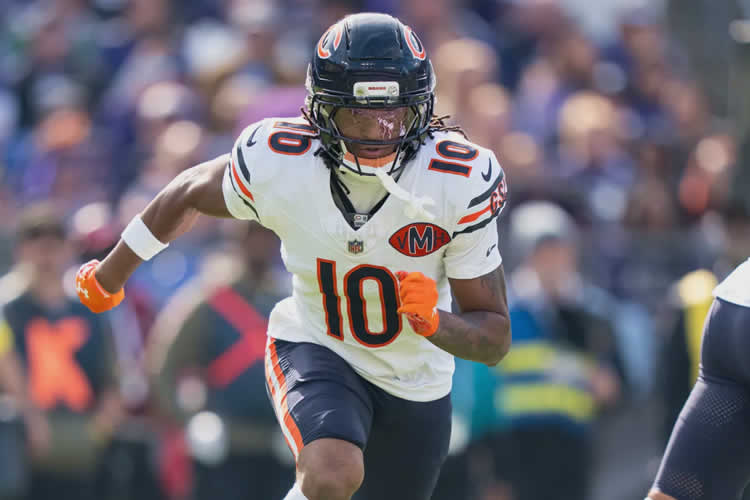
Wide receiver – Luther Burden III, Bears
A top-15 overall recruit in the 2022 class, Burden already flashed his dynamism as a true freshman, before breaking out in year two, with over 1200 yards and nine touchdowns through the air (86 catches). Missouri’s offense and the wide receiver’s numbers dropped off quite significantly in 2024, with just under 800 yards and eight TDs on 70 touches. Yet, he was still recognized a first-team All-SEC selection for the second straight year. While I personally had Burden as a top-15 prospect coming out of college, some people questioned his dedication due to some lack of focus in his junior year, and wondered about his usage, with a high amount of underneath/gadget touches. That’s why he fell to pick 39, for a team that already had D.J. Moore on a 25-million-dollar cap hit, and a top-ten pick in Rome Odunze from the year prior (who was on the cover photo of this article heading into last season). Due to the depth of receiving options in Chicago, Burden didn’t crack 20 offensive snaps played in a game until week nine. It has to be noted that it did include that incredible 65-yard touchdown on a botched flea-flicker against the Cowboys. However, he logged 30+ in all but one of the remaining games, including a couple of playoff appearances. And even if you just take out the first couple of weeks, where he was basically a non-factor, Burden averaged a respectable 47.7 yards per game, and reached the end zone six times, despite only averaging 42.3% of offensive snaps overall. That was good for the eighth-highest figure in yards per route run (2.33 YRR) among skill-position players with at least 30 targets.
The avenue through which Burden started to actually see the field early on as a rookie was special teams. He averaged 27.9 yards per punt return across eight attempts over the first month of the season, where his ability to alter pace and bend his path stood out in a positive sense, although you might’ve wanted him to stay more vertically oriented in that capacity. Otherwise, he was largely limited to garbage time around that period, along with running a bunch of shallow crossers and designed touches. Quick screens remained a key component of his usage, where his ability to adjust to sub-optimal ball placement, instantly get upfield, kind of hide behind his blockers, and find a track for himself regularly led to positive outcomes. On regular catches, his ability to spin through the opposite shoulder and make his defender whiff when driving on the route, or dynamically change directions as he feels guys closing in, made it feel like he was about to turn those routine plays into chunk gains constantly. He’s super twitched up in his movements, with that zig-zag running style that makes it really tough to corral him. In his final season at Mizzou, he basically forced a missed tackle on every second catch (30 on 61 grabs), and he still did so at a solid rate in year one, with 14 MTFs on 53 grabs, if you include the playoffs. You can tell that Burden is now going up against bigger, stronger athletes, even in comparison to the SEC, where he’s not just shaking off wraps as frequently, but he’s still really tough to get a clean shot at him.
His ability to slow-play a little bit and then accelerate out of cuts makes Burden a tough cover on option and slower-developing underneath routes, as well as when involved in these switch-release elements off motion. However, he’s also sudden in the way he can drop his hips and create openings for the ball coming out of his break on digs, curls and comebacks. As last season went along, you saw him incorporate more intentional drifts and head-fakes to leave defenders guessing. Plus, you see him push up into contact before flattening across the field on deep over or out routes. Burden clearly understands the intent of concepts and the urgency he should choose in his routes, depending on where he is in the quarterback’s progression, in relation to the defensive structure, particularly underneath. And what I really appreciate for such a young player is his awareness for zone coverage, settling down in voided areas in an instant, adjusting his angles and/or gearing down as he’s working through a window. There was one play against the Browns in particular, where he recognized a call by the defense to switch responsibilities in cover three against a post-deep cross combination, and rather than allowing the two outside players to overlap and running himself into a jump-ball situation, he basically just replaced that deep middle defender for a big play, after he added a little extra post-catch.
On top of that, you do see Burden show the agility to elude ancillary zone defenders and work towards open space, helping out his quarterback off the intended timing of the pattern. Although, I’d say he’d benefit from having his feet more firmly in the ground as the pass is approaching. The young receiver had a few nice moments of snatching fast balls over his head, working towards the middle of the field. He only received one contested-catch opportunity, which he failed to bring in, in year one with the Bears. But that speaks to his ability to separate as a route-runner. And he quietly had a 55.9% success rate in those situations in his two full seasons as a starter in college. Burden doesn’t offer the type of catch radius to sky above defenders, but he has a knack for maintaining entry points for the ball and kind of trapping the ball against his body when contact is imminent.
Now, on his weaknesses, he did look fairly small out there on NFL fields. Too easily, he’d get knocked off course when zone defenders engage in collisions with him, and throw him off. As already mentioned, he started nudging off guys plastering him a little more down the stretch, but you’d like to see him add some muscle and play stronger throughout the route. He is, however, very slippery to get off contact and work his way open on secondary routes. The bigger negative story for him was drops. The rate at which he allowed passes to slip through his hands more than doubled compared to his final two years at Mizzou, with six total as a rookie. In particular, he struggled to cleanly secure passes around his belt whilst on the run, or he took his eyes off a split second early. Burden will never be looked at as an imposing run-blocker due to his physical stature, but his timing and positioning to get enough of a piece of defenders, including when put closer to the formation, made him a solid contributor in that regard, to the point where he can be an every-down player. That’s along with what he represents as a fly sweep/end around/shovel pass option, and how defenses have to respect that presence when the ball doesn’t go to him. So with Chicago trading D.J. Moore (packaged with a fifth-rounder) to Buffalo for a second-round pick, even if spending an early third-rounder on Sam Roush would indicate that they’ll want to lean further into multi-tight-end sets, Burden should be pretty much a fixture in two-WR sets, and even head coach Ben Johnson has said this offseason that he’d “buy stock [on him]”.
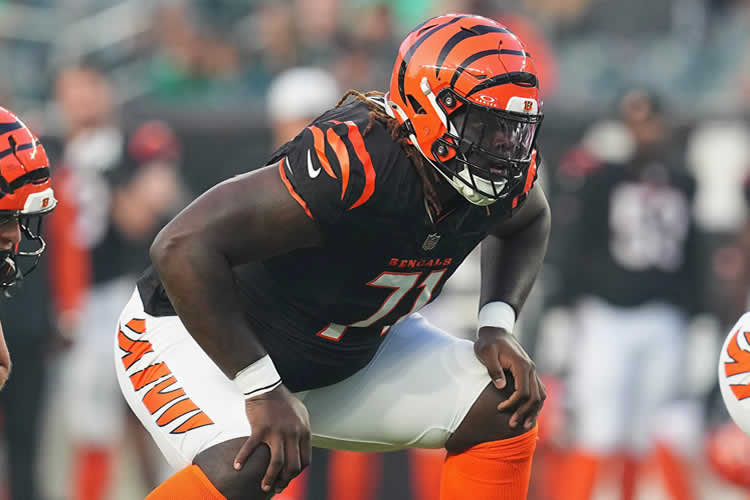
Offensive tackle – Amarius Mims, Bengals
A top-20 national recruit in 2021, Mims saw action as a backup tackle in 19 games over his first two years at Georgia, before jumping in for the injured Warren McClendon on the right side for the College Football Playoff, where his presence, even if obviously having a ways to go technically, was clearly palpable. As a true junior, Mims suffered a high-ankle sprain in week three and underwent tightrope surgery, before returning for the final four contests. In spite of the very limited sample size, the Bengals felt comfortable betting on this freakshow becoming their 14th overall selection in 2024. This guy showed up at the combine measuring in at 6’8”, 340 pounds with seemingly no ounce of fat to his body, just over 36-inch arms and 11-and-¼ inch hands. Other than the first and last game of his rookie season, Mims has started all 30 contests he’s been available for at right tackle (a full 17 in 2025). While the Bengals averaged nearly 28 points per game during Mims’ rookie campaign, that number dropped off by an average of more than a field goal, due to Joe Burrow missing half of last season yet again. When these guys are at full firepower, with the quarterback, that star duo of wide receivers, and simply are given baseline play up front, they’re as dangerous as any offense in the league. Mims taking the next step heading into year three, with how he’s capable of imposing his will in the run game, and being a wall for pass-rusher to get around, much less through, will be critical in reaching that ceiling.
With not even a full eight starts in Athens, we understood that Mims would be a little rough around the edges if asked to handle more extensive true dropbacks in the NFL – which would only be enhanced when protecting for someone like Joe Burrow, almost exclusively operating out of the shotgun. Generally, his understanding for how to frame rushers and not present soft edges was still a work in progress, in large part due to that lack of live reps. Having said that, he’s always been a problem to get around, thanks to his condor-like 86-and-¾-inch wingspan and how densely he’s built. Mims can rapidly take away breathing room for wide rushers and beat them to the spot on diagonal sets. He’s typically very patient to respond laterally and so impressive with gathering his feet after getting to his landmarks. Along with that, he has an incredibly strong core and hips, to slowly give ground to power rushers, even when they have the upper hand in terms of leverage and where they fit their mitts. When he does get his hands inside, Mims is commanding with how he snatches up defenders. I look at the week 14 game at Dallas as kind of a turning point early in his career, or at least a learning experience that led to him cleaning up his technique as a pass-protector. He’d regularly lag behind against All-Pro Micah Parsons. As a response, he started to overset horizontally, and because of how reliant he on the two-handed strike, those could be quickly knocked away, and saw Micah slide inside for several quick wins. Coming out of that matchup, Mims started to massively improve how he countered the inside hand of edge rushers, on one hand, to not allow them to work off the long-arm, but also to trap it and more easily guide opponents beyond the arc, even if they seemingly had half a step on him. And overall, the way he battles the wrists of defenders nowadays, and gets his mitts back onto them is much better. Last season, all four of his sacks surrendered, and 25 pressures, came over the first ten games. He didn’t get charged with any further sacks, and only one of the ten remaining pressures actually involved a hit on his quarterback.
Obviously, Mims’ colossal stature and natural strength also serve him well in the run game. He carries devastating vigor in his hands, paired with the powerful quads to displace people against their will once he’s established that initial movement. When he can get the ball rolling while connecting inside the frame on drive blocks, he can really widen the front side edge. Additionally, his long arms allow him to use the momentum of slanting D-linemen against them, or just steer opponents off track at the end of his reach. Mims doesn’t need much room to build up into contact, but rather can just step to the hip of his teammates and bump defenders to the opposite gap on quick combos. When he’s working down the line from the backside of zone concepts, his ability to knock over a defender trying to stay head-up over the guard, before transitioning to the second level, opens up some big-time cutback opportunities. Although I wouldn’t call Mims explosive out of his stance to go on longer ventures as a puller, his mobility is more than adequate to pull out to the corner on crack-toss plays, and they dabbled in “T-lead” with him digging defenders out of the B-gap after working across the formation. That’s because he doesn’t need to actually snatch up and take control of those smaller targets – he can simply push them around like they’re kids. If you look at the PFF run-blocking grades he was credited for throughout his rookie season, you could also see a significant increase, from 56.3 over the first ten to 68.8 over the final seven weeks. Considering all four of his penalties against came over the initial seven weeks, and he stayed clean the rest of the way, that’s also a positive sign.
Evaluating Mims at Georgia, to me, he appeared a little lazy with his lower half and wasn’t always looking for work if he didn’t have anyone. While I wouldn’t say that was prevalent on his tape this past season, he does get pretty top-heavy as a run-blocker, with his hands not always optimally connected throughout the rep. Mims is still too tall in his pass-sets, making it easier to use his height against him when he allows rushers to fit into his chest. He’ll need to swing those battles back in his favor more often, thanks to simply “out-reaching” opponents, and being able to win first meaningful contact on a more regular basis. There remain moments he gets too heavy onto his outside foot, and allows opponents to slip or spin inside late. With that being said, another positive I noted was his eyes becoming more alert, paired with smooth feet for his hulking size, to overtake looping rushers from the inside. Yet, even if the defense sits up a T-E twist really well, and he can’t brace for the contact, he has the balance to swallow the charge of that spiking D-tackle. Which he can almost single-handedly shut down some of that crossing action, by simply smushing opponents into one another. So, if he can continue to become more settled in his relationships towards rushers, weaponize his length to take charge of battles early on, and force those guys to seek alternate escape paths, he could become one of the best protectors in the league, to go with the ceiling he also presents as a run-blocker. Cincinnati is entering a season, with a coaching staff that is starting to feel their seats heat up, having missed the playoffs in three straight years. Their O-line being more consistent and their defense turning things around with all those big investments, to go with a healthy “Joe Cool” will be the key pillars in going back there.
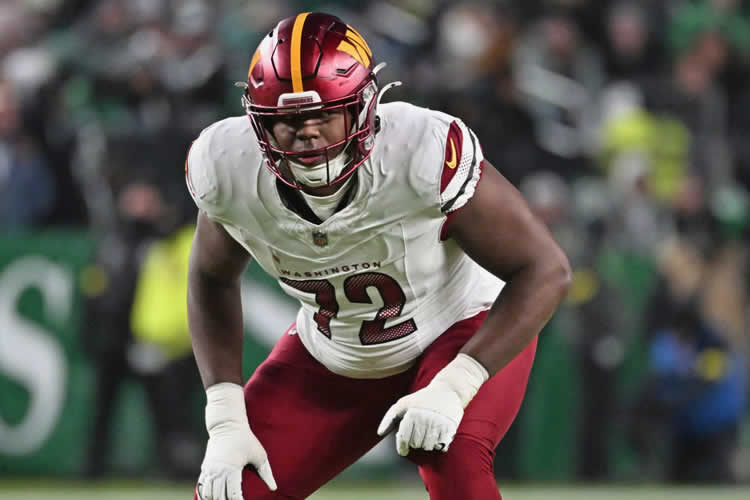
Offensive tackle – Josh Conerly Jr., Commanders
One of the nation’s top two-ranked tackle recruits in 2022 (depending on outlet), Conerly played over 100 snaps as a sixth lineman for Oregon as a true freshman before locking down the left tackle spot for all 14 contests each of the following two years. Along with helping lead the Ducks to the number one overall seed in the College Football Playoff, he was individually recognized as a first-team All-Big Ten performer. Stacked on top of that, he posted the fastest ten-yard split for his position at the combine (1.71) and had one of the cleanest on-field workouts you’re ever going to see, looking at how explosive he was out of his stance and how effortless he looked in his change-of-direction. After that, Conerly became the fourth of five OTs selected in the 2025 draft, going 29th overall to Washington. This was after the Commanders had already traded for former Texans standout blindside protector Laremy Tunsil, which immediately made it clear that the rookie would be destined for a switch to the right side. He locked down that spot for all 17/18 weeks, and while it took a while for him to actually settle in, at the end of the year, it became clear that he was going to be a key piece of their future. Similar to the Bengals, Washington’s highly drafted former LSU star quarterback Jayden Daniels being banged up at different points led to up-and-down results from their offense overall, yet you saw the heights that they are capable of in spurts, and the hope is that standout guard Sam Cosmi should be back fully healthy as well, next to Conerly now heading into his sophomore campaign.
Although one of my critiques of the former Oregon left tackle was that he needed to show more purpose with fitting his hands and actually moving people against their will, to the extent he’s physically capable of, regularly initiating his strike from his knees, I was positively surprised by how his run-blocking came along as a rookie. Generally, he’s low out of his stance and can create that initial momentum to move edge defenders towards the sideline at the point of attack. Conerly rapidly gets his foot down, slightly turns his body, and shields the edge defender on base blocks, to where the backside B-gap theoretically is available. He already does really well to conjoin shoulders and hips with his guard to unite their power on vertical double-teams, or apply force on an angle, to ride that D-tackle into the linebacker, with his legs churning hard. Maybe most impressive about him in this area is his short-area agility to execute backside scoop-blocks against three-techniques, and he displays excellent dexterity and body control to stay engaged with defensive linemen trying to stay square against him on those deep into the play-clock. When working away from the D-end, he makes sure to reach out with his back-hand and not allow that guy to immediately crash flat down the line, but then glides up to the second level with ease, and has the oily hips to peel back, or just adjust as defenders try to back-door him. I’m not sure if this was a check for Washington’s O-line, since it didn’t appear as if they were actually calling those out pre-snap, but Conerly would frequently fold underneath the right guard for basically skip pulls on cross-blocking, where he typically beat the linebacker to a spot. Looking at his average PFF run-blocking grade, we saw it rise from 55.7 to 66.4 from week nine onwards.
As a pass protector, first and foremost, he does very well to force opponents to win the high shoulder, and not open up the inside door. Understanding the depth of his quarterback’s drop and also making second-level or slot blitzers overrun that point is part of it. He smoothly glides out to a wide nine alignments and choke off their angle, yet then gets his post foot down in a hurry and catches rushers under their chest quite regularly when they try to hit up-and-under moves on him. After selling out for the two-handed strike and missing the mark a couple of times per game seemingly in college, which ended with having to grab cloth, I thought Conerly continued to become more patient with his punch as his rookie season went along. Playing at a modest 310-315 pounds, his ability to handle power shone on a regular basis. He showcases excellent contact balance to absorb the initial blow, get all his cleats into the ground, and gradually stall the bull-rush. I thought his diagnosing skills were pretty educated to identify twists and more complex games, while bringing the athletic tools to recover from being half a step behind or caught in suboptimal positions. And when he gets to those closer combats, you see that vice grips for hands put pass-rushers in a cage. According to PFF, Conerly allowed 28 pressures through his first eight starts (313 pass-blocking snaps), compared to only 15 through the final nine (311 such snaps), with more than two pressures in just one of those. That’s despite facing challenges against Seattle and Denver’s ferocious fronts, matching up with Detroit’s Aidan Hutchinson, the Giants’ trio of edge rushers, and all the different looks Brian Flores throws at offenses as the Vikings’ DC. You could tell how he continued playing with more conviction and comfort as he collected more live reps.
Thinking about potential areas of improvement, Conerly can get too far over his skis and sort of “chase” blocks. There are some struggles trying to react to getting back-doored or having someone try to slip his blocks in general, getting arm-overed occasionally. In pass-pro, he hasn’t yet added a commanding punch to stun edge rushers, and more so tries to forklift them, which can present a softer outside shoulder, as they trap or swat down the outside arm. He gets overzealous on slide protections and can overcommit his hips as he’s trailing slanting rushers on twist action. I’d also say overall that he’s still finding the right balance with timing up the snap count and maybe getting a small jump on his opponents in passing situations, rather than being caught a split-second late in those. Nonetheless, just like on his tape with the Ducks, the arrow clearly is pointing up, and his continued improvement is highly encouraging. He did get penalized for a hold at one point in overtime, but Conerly went 59(!) dropbacks against Denver’s ferocious group of rushers without giving up a single QB pressure in that week 13 Sunday Night matchup. And while he still needs to clean up his propensity for getting flagged, going from eight to “only” five penalties overall the final ten weeks is a step in the right direction. With Washington making a grand switch at offensive coordinator from Kliff Kingsbury to former journeyman quarterback David Blough, we don’t fully understand how different this unit will look like. However, it appears that with his experience working under Ben Johnson and Kevin O’Connell, they’ll be adopting more of those wide zone principles, have Jayden Daniels operate from more under center, and rather than being as RPO-centric, rely much more on traditional play-action and booting the quarterback. Conerly should be well equipped on a run scheme that accentuates his on-the-move blocking and lock up defenders when the ball is pulled after faking run initially.
Others on my radar:
QB Cam Ward, Titans
RB Blake Corum, Rams
WR Jalen McMillan, Buccaneers
WR Malik Washington, Dolphins
WR Matthew Golden, Packers
TE Ja’Tavion Sanders, Panthers
TE Gunnar Helm, Titans
OT Taliese Fuaga, Saints
OT Troy Fautanu, Steelers
OT Josh Simmons, Chiefs
IOL Jared Wilson, Patriots
IOL Zach Frazier & Mason McCormick, Steelers


Pingback: Key takeaways from all 2026 week one NFL games: – Halil's Real Footballtalk