

In the second half of this annual series, we’re switching over to the defensive side of the ball and outlining young players around the NFL, who I expect to make a leap in 2024.
For the purposes of this exercise, considering it’s tough to set the guidelines for what counts as an actual “breakout”. Therefore, I relied mostly on statistical metrics that exclude players from this category – no front-seven defenders who recorded double-digit sacks or tackles for loss, players who intercepted 4+ passes, earned a Pro Bowl/All-Pro nominations or are just generally considered one of the better performers at their respective positions. Also, I generally stayed away from players who have barely seen action in the pros yet.
Also, in order to not repeat myself, I won’t mention names like 49ers edge rusher Drake Jackson (who had a hot start before suffering a quadriceps injury that ended last season early for him), Broncos edge rusher Baron Browning (who missed the first half of the season but did put up strong pressure numbers from that point onwards) and Bengals safety Dax Hill (whose grading looks worse than his raw production, but I expect to align more now and Cincinnati’s defense generally bouncing back with him in year two as a starter), since they made the list last year.
Let’s begin:
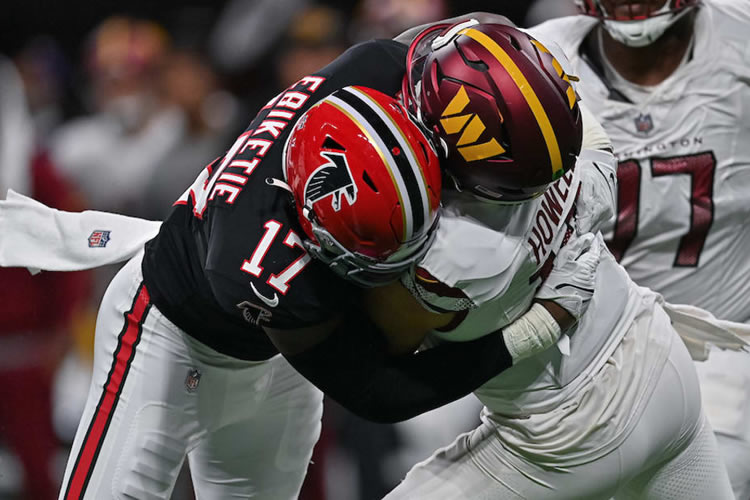
Edge defender – Arnold Ebiketie, Falcons
It took a while for Ebiketie to make a name for himself in college. Arriving at Temple as a three-star recruit back in 2017, he didn’t become a starter in 2020 but then in one season with Penn State, he emerged as one of the top edge defenders in the country, racking up 9.5 sacks and 17.5 tackles for loss. Coming off a year in which their 18 sacks were 11 less than any other team in the league and not having a player reach double-digits in that statistic individually in a decade outside of an outlier Vic Beasley season (16), the Falcons were desperate to find a true impact player at that position. With the top three names in that 2022 draft being off the board by the time they were on the clock at pick eight, they instead opted for USC wide receiver Drake London, but snatched up Ebiketie early in the second round (38th overall). The latter has since appeared in all but one game these past two years, but officially has only started in seven, with Atlanta making quite a substantial investment into their D-line last offseason. While his tackles for loss (three) and forced fumbles (two) stayed the same compared to 2022, his sack total jumped up from 2.5 to six. More telling about the growth he’s already showcased is that his pressure rate jumped from 9.2% as a rookie to 16.0% last year. Having said that, I believe there’s reason to believe he’s about to take another step forward and finally be that lines up on the edge and consistently gives this team the production, that they’ve been desperate for over a decade now. Let me break down why he could become a cornerstone piece for this new coaching staff in Atlanta.
First and foremost, Ebiketie has beefed up a little bit from where he was in terms of his body type at Penn State, and I think that muscle shows up in his ability to extend with his triceps and press off blockers near the point of attack. That’s why the Falcons have been far more comfortable with putting him out on early downs. He offers great pursuit speed off the backside of run concepts and when tight-ends were asked to seal him away from the action, Ebiketie would ride them down the line, in order to plug cutback lanes. Yet, if the quarterback keeps the ball on bootlegs, this guy’s very disciplined with not allowing the passer to pull all the way through to get around him, forcing him to get the ball out, often times just flipping it to someone out in the flats. When he’s initially left unblocked, you do see Ebiketie shuffle inside, but I need to see him set the tone on contact with a guard pulling his way for a kick-out and I don’t think he’s the best stack-and-shed player at the point of attack, where he keeps that outside shoulder free, to actually make the tackle, if the running backs tries to bounce outside of him. That has contributed to him missing 18.2% of attempted tackles for his career so far. Ebiketie was the only Falcons edge/defensive lineman to log at least 20 snaps in coverage last season. Overall, he spent 72 of 247 snaps (29.1%) that he was on the field for on pass plays last season in that capacity. You compare that to the Rams under the coaching of Raheem Morris, where Michael Hoecht and Byron Young combined for 360 snaps in coverage, with the former spending 39.0% of dropbacks going backwards. Through two seasons, the young EDGE from Atlanta has allowed 15 of 22 targets as the next-closest coverage defender to be completed for 115 yards and one touchdown, with three passes broken up and none intercepted. Yet, I do like his movement skills and what he could provide flooding the underneath areas, with a solid ability to get guys to the ground after catching a checkdown.
Anyhow, the reason the Falcons invested an early second-round into this young man is what he offers rushing the passer. As one of his base moves, Ebiketie likes to utilize the dip-and-rip, where he’s become more powerful to turn the corner through contact with the tackle. At the same time, evaluating his college tape, one of the big selling points was his ability to throw a wide array of moves at blockers and find some success on most of those. So you’ll see him stab inside or at least hesitate momentarily in order to create a softer outside shoulder and set himself up to win the corner. Off that, he’ll spin back inside as a counter in one fluid motion and without getting too far off track, as you’ll see some other players early in their careers. You’ll also Ebiketie deploy the long arm or transition into a bull-rush after pushing tackles up the field with his speed around the arc, where it’s the way he gets his body aligned at the quarterback in order to maximize that momentum he has built up, when the blocker has opened up his chest. Having become more powerful while still having the speed up the arc to challenge tackles in their vertical pass-sets gives him easier answers, which was one of my big question for him coming out of Penn State, where I would’ve labeled him more of a finesse rusher. As he now continues to refine tools of his arsenal, I think we’ll see some power-to-speed maneuvers, where he aims more directly at the guy across from him only to quickly follow up with a two-hand swipe and work the outside anyway, or stab at the near-pec once he’s push the opponent up the field in order to slide inside. The more classic up-and-under was actually his most successful move in college I’d argue.
Ebiketie was still off the field on too many base and passing downs I’d say, as well as certain end-of-half situations, than you’d like to see from an early second-round pick you’d want to emerge as a true impact player. Still, they did allow veterans Calais Campbell and Bud Dupree to walk out the door without bringing in any proven commodities in their place. Second- and fourth-round rookies Ruke Orhorhoro and Brandon Dorlus have the types of skill sets to be that big base D-end in the mold of Campbell, but on longer downs I’d largely expect them to be used between the tackles and even along with Ebiketie on some 5-0 looks. To me, he’s an outstanding fit for how that new coaching staff wants to use their outside linebackers, because he can drop into coverage and get his hands on the ball when they bring simulated pressures, he’s very comfortable getting into those wide-nine alignments and either convert speed-to-power or counter inside as tackles overset him, and when they are in de-facto even fronts, they have those bigger body-types on the opposite end of the line, not asking him to deal with double-teams on the strong-side of the formation on certain run plays for example. So combining that with the continued development of the player himself, I believe we could finally see someone hit double-digit sacks for the Falcons, or at least be up there pretty high in pressures and pop on tape with impact plays in different phases.

Edge defender – B.J. Ojulari, Cardinals
Similarly to Atlanta, it’s been a couple years since Arizona has had these standout players on the edge of their defensive front. In 2021, both Chandler Jones and Markus Golden still reached double-digit sacks for them, and J.J. Watt did heat up for them down the stretch of the following season in order to set sail on retirement the right way, but none of their young guys on that side of the ball have really emerged for them since. Dennis Gardeck led the group with sacks this past season, while they tried to transition a former first-round pick in Zaven Collins to the edge. If there’s one player however that they drafted since 2022, who I believe can be that difference-maker for them at the position, it would be B.J. Ojulari. As the brother of another All-SEC outside linebacker in Azeez (Georgia), the younger sibling became one of the more consistent EDGEs in the country, combining for 12.5 sacks and 20 TFLs over his final two seasons at LSU. His 95 total pressures across 646 pass-rush snaps over that time was actually even more impressive. As a rookie for the Cardinals, Ojulari recorded 40 tackles, five of those for loss and four sacks, logging just over 400 snaps total. Looking at the advanced metrics, on 161 pass-rush snaps, he logged 20 total pressures, and nine of his 36 tackles in run defense (22 solo) resulted in defensive stops. Now, the sample size is relatively small and you would’ve liked to see him emerge among a group without any big names, but they did at least get solid play from a heavy rotation of guys on the edge. Meanwhile, B.J. may have weighed in around 245 pounds standing at 6’2”, but he’s always looked undersized and that was a major concern coming into that draft, although he did log 46% of the defensive snaps from week 10 onwards. So Jonathan Gannon and defensive coordinator Nick Rallis did make it a priority to get him out there ultimately, but now with another full offseason of working on his body, overall game and learning what was one of the more complex systems across the league, I think we’ll see results from the second-year player.
Ojulari has always had more of a slender frame, but you definitely saw that difference compared to NFL offensive linemen as more pronounced in his rookie season. Just locking out and anchoring against drive-blocks proved to be an issue, especially when he was in wider alignments or stepped down late from that sort of overhang position, where tackles had a runway leading up into contact. However, you can’t blame him for a lack of physicality or willingness to stick his nose into the action, while being active to slide off blocks and get initial contact on the ball-carrier. And he does utilize his arms of over 34 inches in length well to keep opponents away from the (inside of his) frame. When battling more modern move tight-ends in-line, I thought he generally had the upper hand and was able to yank them aside once the ball was in range. As I sort of mentioned just now, Ojulari was regularly lined up as the de-facto apex defender, off the ball between the slot receiver and the last man at the line of scrimmage, where you’d typically see a SAM linebacker or (big) nickel. Because of that, he’s tough to occupy with his length to battle through blocks in the quick screen game, he’s a pretty smooth mover for that lanky build and reliable with bringing people down one-on-one as he widens out to the flats. Officially, all eight targets with him as the next-closest defender in coverage were completed, but only for 54 yards, as the quarterback dumped it off in his direction without any real success. That speaks to his ability to get out into space, square up the target underneath and corral him without help. Depending on the source you look at, he didn’t miss any tackles or just one attempt all year long, slinging those longs around the legs of the ball-carrier.
Transitioning to what he provides getting after the quarterback, the things Ojulari builds his game is that he has good burst off the ball and is a shifty rusher to threaten the edges of tackles. This guy bends like Gumby, where he’ll dip underneath blockers as he steps to their hip and in particular as an inside looper, where he’s strong enough through contact to get his body tilted at the quarterback and come free. Yet, you see him dig his hands into the frame of bigger pass-protectors quite a bit, in order to create some separation and be able to win in the reactionary phase of the battle. Plus, then he’s sudden with his swipes to get by blockers caught in sub-optimal positions. He’ll need to work on his hand placement, more so attacking the pec or sternum of tackles, in order to make the long-arm a reliable weapon for himself in that regard however. Considering how he was used as a rookie, it definitely didn’t help his numbers as a pass-rusher. So often Ojulari would be aligned on the edge of a slot receiver in a condensed stack or a bunch, where he kind of had to work through traffic instead of just focusing on winning his one-on-one on the edge. Looking at PFF’s numbers, that isn’t nearly reflected appropriately, as he officially only spent 18.6% of his snaps away from the defensive line, but even when he’d ultimately move forward, he didn’t get to just attack the outside shoulder of tackles like you’d usually see from players at his position. And something I appreciated about watching his tape as a rookie, I thought he did a nice job of tracking the quarterback’s movement and not losing contain, overrunning the arc too much and just finding ways to speed that guy up a little bit.
Watching the Cardinals defense on tape last season, they kind of just threw stuff at the wall to a certain degree and as I’ve previously mentioned, a lot of their opponents have noted that they were tough to figure out, even if the bottom-line numbers may not reflect that. We can talk about how they can still become more structurally sound, but they had the third-most “adjusted games lost to injury” (59.5) and the big point here is that they need some of their recently drafted players to emerge for them. Zaven Collins is in the final season of his rookie deal, which the organization already declined his fifth-year option as someone they transitioned the former first-rounder from off-ball to outside linebacker. They did select Darius Robinson late in the first this year, who will play some snaps on the edge for sure, especially if they want him to be their jumbo strong-side D-end as part of even fronts, but I look at him as more of a 4i-/5-technique in base personnel. Otherwise, you’re looking at a bunch of role players at that spot, who have their moments but shouldn’t keep the coaches from getting a talent like Ojulari on the field more, such as Dennis Gardeck, Victor Dimukeje and Jesse Luketa. I believe for more so than anybody among the names discussed across this exercise, having played his rookie year to acclimate to NFL size and physicality, the way I’d expect him to attack this offseason in terms of weight training and transforming his body to not be at a strength disadvantage as regularly, could be huge. And with the pass-rush pedigree I saw from him at an early age, I’m confident that we’ll see him become one of the guys this organization continues to build around.
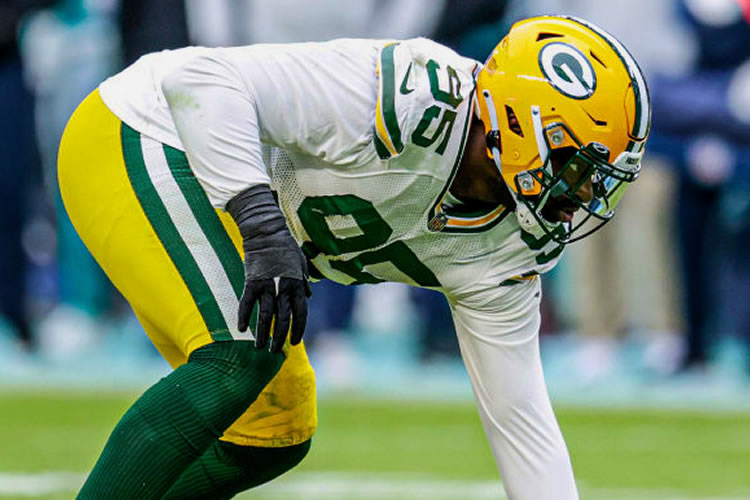
Interior D-line – Devonte Wyatt, Packers
Although he was a highly-regarded four-star recruit coming out of high school, Wyatt’s academic levels did not meet Georgia’s requirements and he had to spend a year at community college before finally arriving in Athens. Even throughout his time with the Bulldogs, he was typically overshadowed due to playing next to Jordan Davis and even Jalen Carter eventually – now both on the Eagles. Looking beyond the traditional statistics and seeing the tape match up with the 90.2 overall PFF grade he received as a redshirt senior, the Packers did end up selecting him at the end of the first round in 2022. However, he was almost a non-factor as a rookie, playing less than a quarter of the snaps for them, despite only missing one game that year. Wyatt earned the trust of the Packers coaching staff heading into year two though, as he played about 2.5 times as many snaps (552), starting six compared to only one game. His stats increased from 15 to 36 tackles, from zero to six TFLs and from 1.5 to 5.5 sacks. However, it’s the advanced numbers that really indicate his individual growth. After only logging eight QB pressures on 111 pass-rush snaps in his debut campaign, he sky-rocketed up to 45 total on 305 such opportunities. That earned him the second-highest pass-rush productivity (9.1) among interior D-linemen with at least 50 chances, sandwiched right in between walking Hall of Famers Chris Jones and Aaron Donald. He also logged 24 total defensive stops, up from five in year one. So while it would be unfair to expect the efficiency metrics to improve even further, I believe we’ll see him become an even more integral piece to Green Bay’s defensive front and have more palpable production, which even casual fans can notice as they look at the stat sheet.
At Georgia, you rarely see defensive linemen be allowed to just shoot up the field and create havoc. Instead, it’s built around being able to gap-control a lot, which is where you saw Wyatt be able to fit his hand, create knock-back and lock out, squeezing down rushing lanes inside of him and take care of his assignment. Those abilities equally showed up on his tape as a second-year pro. He also displays a pretty good feel for angular blockers arriving on quick combos and anchoring against those, in order to not get bumped off his landmarks. Wyatt provides good lateral mobility to track wide zone concepts and then is able to disengage in order to wrap up the ball-carrier trying to blow through that front-side gap on him. He could definitely be a little more sudden with falling back a gap as he’s tracking lateral plays down the line or just deconstructing blocks, in order to wrap up the ball-carrier. Some of that of course has to do with improving his agility in his offseason training, but also advancing technically, lifting underneath the arms of blockers, and not forcing himself to work through contact. In terms of stops around the line of scrimmage – even by the way PFF tracks those – Wyatt was already an impactful run defender, but you do see ball-carriers run by him quite a bit, as he’s engaged with an opposing lineman and can’t quite get off contact quickly enough to wrap guys up from the side or at least clip their ankles. We have yet to see what exactly the Packers will be schematically on the front- or back-end under new defensive Jeff Hafley, but being a primary even-front time compared to the more traditional 3-4 looks we saw recently is to be expected. So the third-year D-tackle being able to just line up at the three-technique and be a play-disruptor instead of having to read and react as much should definitely help him out.
Something I’ve always valued about Wyatt in the pass game is that he has an impressive ability to link his arms and hips, in order to actually get by interior protectors. In particular, on tilted rushes from a 4i- or even 5-technique, cross-facing guards for quick wins is something that popped on a few occasions. However, also when guys tried to short-set or sit on him, quickly pulling off high swim moves and cornering around them towards the quarterback was an effective tool for him. Wyatt is also one of the better speed-to-power rushers on the interior, when they’d get to designated passing situations and the guard would almost kick-set like you’d see on the edge, providing more of a runway to build up momentum. Yet, what really gives me confidence in his development in this regard are his reactionary skills, to sort of read-rush opponents and either stab at their chest as they get to tall, dip-and-rip when they present a soft shoulder, slide inside or hit spin moves as counters as they get their body-weight shifted too far one way. Something that weirdly stood out to me about Wyatt from the start was his snap anticipation. At Georgia, his ability to come off the ball when allowed to penetration was a massive plus, but too often he’d nearly jump or was a tad late, which is something that should continue to improve as he familiarizes himself with different cadences by quarterbacks. And there’s a little bit of tightness in his ankles when Wyatt wins the outside shoulder on his blocker or comes free on a loop or off some kind of game up front, and the quarterback takes off up the middle, not being able to circle around or suddenly redirect in order to trip that guy up. Nevertheless, even if he never quite puts up those All-Pro level sack numbers as a finisher, I believe he could become one of the premier guys on the inside at providing heat on the QB on a snap-to-snap basis. You also see him pull eyes and hands with him slanting across the formation quite a bit, in order to set up lanes for his fellow rushers.
Once again don’t know exactly what new DC Jeff Hafley wants this unit to look like schematically. Yet, looking at some of the general structure principles, his defenses as the play-caller at Ohio State and then head coach at Boston College were consistently near the top in their usage of single-high safety looks and almost exclusively even fronts. That would be a big shift from what they were under Joe Barry, with a lot of more traditional 3-4 principles and 5-0 looks. So as Wyatt continues his individual growth, I believe he’ll be asked to further distance himself from the gap-control and control-rush or even gap-exchange stuff he excelled at but wasn’t set up for major production by Georgia. Being part of a more attacking front does fit his skill sets well and even among critical Packers fans when it comes to all the first-round picks they’ve invested into the defense over the last decade pretty much, they’ll end up being happy with the pick they used on this player. I would not be surprised in the least if Wyatt became a Pro Bowler in 2024 and someone opposing teams circle on the whiteboard when they prepare for their matchup with the Packers.

Linebacker – Trenton Simpson, Ravens
One of the top-three linebacker recruits in the country in 2020, Simpson already flashed as a true freshman but really made a name for himself over the following two years in Clemson’s “STAR” role, racking up a combined 136 tackles, 16 of those for loss, 8.5 sacks and five pass break-ups over that stretch. Yet, while the Ravens selected him in the middle of the third round, he sat pretty much his entire rookie season behind All-Pros Roquan Smith and Patrick Queen. The two linebackers on here are actually the players from this list who easily saw the field the least – especially if you take out special teams – this past season. Simpson played only 46 defensive snaps in 2023 but was effective on those, earning a 76.3 overall grade as well as a 77.4 coverage grade (seven such snaps). In particular, he got to show off his skills in week 18, where he basically started the second half of that game and made up for the majority of his production. You were ability to see him flash the speed and play-making skills that were so apparent at Clemson, even if I had concerns about his instincts and ability to decipher what the offense was trying to do. Of his 13 total tackles on the year, seven came on special teams, but of the six he logged defensively, two resulted in negative yardage for the opponent, and he recovered a fumble on top of it. However, now with a full offseason to learn alongside Roquan, who also showed the ropes to Queen as a young player with similar problems from the neck up and where his eyes led him, he has a chance to earn that second starting gig on the second level of Baltimore’s defense.
This young man plays with a bounce to his step and a battery pack attached to his back. Simpson is sudden in the way he can navigate around blockers, whether he’s dipping around guys trying to lead up to him or falling back a gap when the back cuts up zone concepts. He has the 4.43 speed to chase down plays from the backside or range out to the sideline, while packing the short-area burst to back-door linemen climbing up towards him. Because Simpson used to play so much detached from the box, where he played the tip-man on bunches or simply operated as a big nickel over a tight-end or slot receiver, he’s very comfortable dealing with blockers in space, tracking plays out to the perimeter and breaking down as a tackler with a lot of room to operate. While he did miss 10.5% of his attempted tackles across his two seasons as a starter in college, putting that in context with what he was asked to do, I’d argue that rate is perfectly fine, especially if you compared to other players when they primarily lined up in the slot. Now, Simpson supposedly is now close to 240 instead of the 225 he was listed at for Clemson, and something that always popped to me when playing as a more traditional stack linebacker, was the violence he displayed launching himself into lead-blockers. He packs quite the punch when he does step down against combo-blocks and creates leverage on the gap for himself, along with having the quickness in condensed spaces to establish contact with the ball-carrier trying veer around that traffic. If I were worried about one area of the second-year player’s game, it would be his mental processing and diagnostic skills. Similar to Queen early in his career, the saying “the faster you are, the further you go the wrong way” when you’re not sure about what you’re seeing. You see him “over-flow” on zone concepts, surrendering opportunities to cut up runs inside of him, Simpson getting antsy when the ball-carrier is hidden behind bodies, expecting that guy to squirt out of there, and probably also when challenged with targets in coverage moving in multiple directions to put stress on him, where he could look overwhelmed.
Transitioning to Simpson’s usage in the pass game, the loose move skills he displays have always been a big selling point. Simpson is very light on his feet and quickly closes the gap against backs trying to outflank him into the flats. I saw him be able to take away both someone flaring out that way and a crossing route coming in behind him at one point, indicating his ability to mid-point routes and create spacing problems for an offense when they try to stretch his responsibilities. Even though we have very limited proof of concept in the NFL, you did see at Clemson that he could carry slot receivers down the seams, take tight-ends in man-coverage and hawk down scrambling quarterbacks as a hook-defender. Once again, it will probably be when the defense aims to pull him off his spot with bait routes, isolates him as the read-defender on RPOs or gets his eyes trapped in the backfield with play-action, that there could be some issues arising for him. While he may not quite be at Patrick Queen’s level as a physical presence of their pressure packages, Simpson does offer some of the same qualities and can function in the same way. He may be occupying a center mugged up in the A-gap or act as the set-up man charging into an offensive lineman blitzing from depth, before a defensive lineman comes in behind him on a delayed loop. At the same time, his range is a major plus when bailed out of those walked-up looks, being able to get to extended landmarks before quarterbacks can take advantage of the space that is initially voided. And he adds to the multiplicity of this front with how comfortable he looks lining up on the edge at times – even on base downs. Just running zone plays away from him with his speed off the backside or leaving him one-on-one with a tight-end or running back in protection could prove to be an issue.
Generally, I like to talk about players who have played a certain amount of snaps in the pros already and don’t want to guess on what they may look like when they do actually get a chance. Having said that, I did watch Simpson a lot at Clemson, where understanding his profile and where he’s being plugged in with the Ravens, I think he’s a fairly obvious breakout candidate. Del’Shawn Phillips actually started week 18 in place of the resting Roquan Smith, but not only is that guy no longer on the roster but also considering the role Patrick Queen used to play next to him, Simpson projects as a pretty good fit, where the strengths and weaknesses both align pretty cleanly. When I envision one of those dudes on the second level charging into one half of a lineman and funneling the ball towards his teammate, who cleans things up, or scrapes from the backside to run down a play all the way at the opposite hash, I can absolutely see the second-year man contribute in those areas. Taking things off his plate mentally will be pivotal to allow Simpson to develop at his own pace, but looking at the player development curve of the guy he’s replacing, that did ultimately lead to Queen becoming a smarter, more instinctual piece of the puzzle. Plus, although they’re losing Mike Macdonald to Seattle as their new coach, the infrastructure he’s established in Baltimore for Chris Orr to build off, should set the table for Simpson to showcase his versatility as a player on passing downs.

Linebacker – Daiyan Henley, Chargers
Unlike some other players on this list, Daiyan Henley did not come in college football with much notoriety, as a two-star quarterback recruit for Nevada back in 2017. Of the five seasons he spent there, he was a primary special teamer the first three, before transitioning from safety/nickel to linebacker in 2020 and breaking out the final year there. He used that momentum to prove himself for one last campaign at Washington State and did so with brilliant success. Over his final two years in college, he amassed 208 total tackles, 15 of those for loss, four sacks, five passes intercepted and broken up each, along with being involved on another eight takeaways through fumbles. Yet, while I had a massive grade on him and listed him as my 42nd overall prospect, he didn’t get picked for another good 40 spots. Similarly to a Ravens linebacker coming in his second season in Trenton Simpson, this Charger barely saw the field as a rookie, with 53 defensive snaps, while basically logging the same total (258) on special teams. Of his 16 tackles, ten came on defense. Unfortunately, with them paying for free agent Eric Kendricks and hoping he would help fix another former first-round selection in Kenneth Murray, that staff under Brandon Staley was invested in making that duo work and didn’t allow Henley to really see the field on defense until very late, once they had fired the head coach and named the widely unknown Giff Smith as the guy in charge on interim basis. The Bolts made a massive splash this offseason when they hired Jim Harbaugh as the new general in town and he brought along old friends along his staff, including his defensive coordinator Jesse Minter from Michigan. A starting spot is definitely not guaranteed to Henley, but I believe his skills will be a welcome addition to how they want to run that unit.
Watching Henley’s final year at Wazzu especially, his ability to deal with blockers is something that really had me buying in on him. He could evade opponents without really getting off his path to the ball, packing a sudden dip of the shoulder, yet he also understand when he needed to control his space and would be the one to actively engage contact, with the 33-inch arms to keep his frame clean and deconstruct blocks. He is explosive laterally to scrape over top of traffic or bounce around a double-team as the ball-carrier commits to one side. If your defensive ends are supposed to care of contain responsibilities, Henley’s burst makes it nearly impossible for a guard or tackle on the backside to wall him on stuff like wide zone, even as that blocker is allowed to get flat down the line and just get to a spot, having that head-start of knowing where that play is going. His speed in pursuit across the field or running down plays that do break free for chunks is a massive plus for his team. In tight quarters, he packs the oomph to stop the momentum of ball-carriers, yet he can also lasso guys down to the turf when he catches guys on an angle in more extended space. I saw him prove that he’s a super patient tackler in the open field from his rookie tape. Outside of one snap for a kneel down, the first meaningful down he played at the end of L.A.’s week eight game against the Bears, he was one-on-one with rookie running back Roschon Johnson catching a little hook dump-off, squared him up and brought him down for no extra yardage without another back-seven defender within 20 yards of them. On the very next play, he cleaned up for one of his teammates missing a tackle in the flats. Altogether, he didn’t miss any of the 16 tackles he attempted on either defense or special teams.
While one of Henley’s strengths in college was his presence in coverage, by NFL standards, his feel for spacing is still something that is being developed, not just dropping to a spot and being locked in on the quarterback, instead of adjusting his width and depth accordingly to the distribution of targets by the offense. Now, you’re not going to hit little hook or stick routes targeting him in the quick game. And I believe this negative point I just made is largely based on a lack of live reps. As he gets more time with the first time and can decipher route patterns, his combination of range and length will be a major benefit to the Chargers D. That enables DC Jesse Minter to use the second-year linebacker in mugged-up looks and get to his spots before quarterbacks can take advantage of that free space. I saw him follow tight-ends into the slot and impede their progress from press alignments and even when he has to wait for running backs releasing into the pattern, one of the best qualities on Henley’s college tape was the tightness at changing directions in order to mirror those guys when the coverage scheme asks him to match. Based on the tiny sample size we currently have, across 33 snaps in coverage, he held quarterbacks targeting him to five completions for 20 yards on seven targets (for a passer rating of 74.1). Now, he will get a little overzealous shooting out into the flats when the back is flanked that way, but he did show the quick burst to not get walled off by a slant from the outside that is supposed to act as a slight rub and even when he’s seemingly overrun the target, him being able to able sling himself around and lasso down that guy.
I have no idea what the Chargers were doing late in the season, when Henley did see some action in weeks 17 and 18 after missing a little time with a hamstring injury, he was then subbed off fairly quickly again for veteran Nick Niemann, who will be entering the final year of his rookie deal and had barely been used prior himself as a former sixth-rounder. Maybe they didn’t want to risk the chance of injury, but I thought they passed over the opportunity for a young player to gain some experience in live action. Projecting what the structure of the Chargers defense now under new their coordinator will look like, I would point to what the Ravens were doing under Mike Macdonald last season, who Minter ended up taking over for with the Wolverines. That means we’ll see them rotate the defensive line a lot to keep those bodies fresh, a fairly large roledex of coverages, which they find ways to disguise pre-snap, and a lot of simulated pressures, which they use their linebackers as movable pieces on. Obviously, in them bringing over Junior Colson as the green-dot of that Michigan D as a mid-day two selection, they’ll prioritize plugging him right back into the middle of that unit with his understanding of that system, but I would think the utility of a player like Henley beats out Denzel Perryman and Niemann.

Cornerback – Marcus Jones, Patriots
Transitioning to the secondary now, there were multiple options to choose from for New England. However, I thought last year’s first-round pick Christian Gonzalez already looked like he was about to turn himself into one of the top-tier cover corners in the league before an injured labrum in his shoulder cut his debut season short a month in. So instead, I’m looking at one of the corners they selected in the prior draft. Marcus Jones’ collegiate career started at Troy in 2017 as a fairly unknown name, who actually put himself on the map as an All-American kick returner. He entered the national spotlight in his redshirt senior campaign, once he had transferred to Houston, when along with four return TDs, he also picked off five passes and broke up another 13, in order to repeat those honors – only on defense this time around. As a rookie, his biggest moment certainly was a walk-off score on a punt return in a game that was tied 3-3 and lacking any type of offense, as he ripped out the hearts of Jets fans hoping to finally stand up to their bully in the Patriots. With that being said, Jones also recorded 39 tackles, two interceptions and seven more PBUs that year. Unfortunately, it didn’t even take two full games in 2023 before he actually tore his labrum and he wasn’t able to put up any ball production across 44 snaps (five tackles). Looking at where he’s been deployed so far in his short career, Jones did play 76% of snaps on the outside as a rookie, but he also logged 88 snaps between the slot and box. Last year, the split across a smaller sample size was pretty similar (32 outside, 11 in the slot). So with Gonzo having shown the capability of being a true number one corner and Jonathan Jones as a reliable second starter on the outside, the expectation is for Marcus Jones to compete and probably win the starting gig in the slot.
Going back to his rookie season, 24 of 41 targets Jones’ way were completed for 361 yards and a touchdown, but he also picked off two balls and broke up another seven himself. Yet, when you sort by the numbers in man-coverage, the work he did becomes even more impressive. He allowed less than a yard per snap in those situations (4-of-10 for 67 yards on 77 such snaps) for an abysmal passer rating of just 23.8. Re-familiarizing with his tape, I saw him play boundary corner and wall off more physical X receivers in press, with a safety clouding to his side, line up in the slot and carry someone up the hash 30+ yards down the field, as well as fall off routes and make plays as a zone-defender. Jones is quick to ID route combinations and anticipate the break of the outside receiver as he sees what is happening in the slot. He rapidly closes the gap to guys breaking off routes in front of him in off assignments. In particular, the way he can transition out of a half- or three-quarter-turn and contest a receiver snapping of a route in front of him, really pops off the screen. He also showcases the smarts to make plays off his landmarks and break up/knock down passes up the seams in cover three for example. At the same time, you’ll see him stay down initially against patterns that put a high-low stretch on him, such as “smash” or “bench”, yet fly underneath something like a corner route coming in behind him. His vision comes into play when he’s sinking with a vertical pusher outside but sees a sail route breaking towards the sideline or a receiver crossing the field from the opposite side. There’s a play in their week 14 game at Arizona, where the Cardinals are trying to run off the then-rookie corner, yet he plants his feet and de-cleats tight-end Trey McBride on a deep out, who has a good 60 pounds on him. And he has excellent hands, which he’s shown on multiple interceptions extending his arms away from his body.
The level of physicality this young man displays is something I fell in love with at Houston, where his football IQ did lead to him getting his hands on a bunch of passes when playing zone. Yet, you’d regularly see him challenging bigger receivers in press alignment, taking away breathing space for them. Plus, then he has the oily hips to flip and run with guys, having the long speed to not lose those footraces typically. His lack of length does show up when he’s in trail position and tries to play through the pocket of the intended target, but can’t quite disrupt the catch-point. And without lesser room for error, his technique when targeted on back-shoulder fades will have to be that much better. Yet, I felt like his understanding for leverage and positioning during the route stood out in a positive sense on a regular basis. That level of competitiveness and physicality also show up as a tackler. Depending on source, Jones only missed two or three of 46/47 attempted stops, where his natural leverage advantage does help, but he doesn’t simply dive at the feet of bigger opponents like you’d see from a bunch of other undersized DBs, but rather launch himself into the lower body of ball-carriers, to stop their momentum. Jones is sudden to navigate around blockers. And because he’s built so low and plays so scrappy, you see him fight through one half of opponents regularly, instead of getting hung up with bigger receivers. He will gamble and jump inside of receivers trying to block him on the edge. And when opponents do “win” the initial phase of contact, at 185 pounds with 29-inch arms, he’ll at least have to work overtime if he wants to disengage from guys and get involved on the stop.
All in all, while he may turn 26 years old midway through this upcoming season, this is a defensive back with limited experience but quality tape and production against NFL competition so far. Jones has already been trusted with responsibilities inside and out in a defensive system formerly under Bill Belichick, which tried to simplify rules for their guys on the back-end but did add in creative wrinkles on certain downs to throw off their opponents. Now with Jerod Mayo taking over head-coaching duties along with calling plays for that unit, we’ll see what kind of impact the legendary mind still had. Last season, the Patriots finished as the number eight defense in EPA per play despite also having the highest number of “adjusted games lost to injury” on that side of the ball (63.8), including Jones’ absence. After being forced to be a little more zone-heavy recently due to lacking the horses (in part due to injuries) to play man across the board extensively, it seems Jones may be put in more isolated situations on the inside – and I think he’s up for the challenge. There’s no more Myles Bryant on the Patriots, who played about three quarters of snaps in the two games Jones was available for last season. Otherwise, Shaun Wade is someone they traded a late-round pick for three years ago from Baltimore before even playing a single pro snap, yet has been a fringe roster candidate I’d say pushed into playing time last season, and similarly they picked up Alex Austin once the Texans released him two months into the season. So it’s pretty clear who should be the favorite in line for this starting nickel job.

Cornerback – JuJu Brents, Colts
In contrast to the smaller Marcus Jones, this second-year corner towers over most of the players at his position, standing tall at 6’3”, just under 200 pounds. JuJu Brents began his career at Iowa as a former top-500 national recruit, but after a promising true freshman showing, he only played eight total games over the following two seasons. After transferring to Kansas State, he started all 27 contests for the Wildcats, intercepting and breaking up four passes each as a redshirt senior, earning himself first-team All-Big 12 accolades. Yet, it took an insane combine performance, which earned him a Relative Athletic Score of 9.99, for many people to really dive into his tape, which I had been of the believe already that is was equally impressive. A man of his dimension should not be able to move like that and some of the challenges he took on against top receivers in that conference, had me very excited about his NFL prospects. The Colts – in dire need of outside corners – selected him 44th overall, which was right in line with where I personally had him on my big board. A wrist injury cost JuJu the majority of his first offseason program in the pros along with the first two weeks of the regular season. A banged-up quad cost him another six-game stretch in the middle of the time he was actually healthy. Having said that, he did start all but one of the nine contests he was available for, recording 30 solo tackles (43 total), breaking up six passes, along with putting up ones in interceptions, fumbles forced and recovered each. Will questions on the perimeter of this Indianapolis defense remain, I believe they found themselves one piece that when fit, can be a true difference-maker for that unit.
When you put on the tape, it’s not hard to figure out who you’re looking for, as you see this guy taller than most receivers he’s lining up against, with arms dangling below his knees. You love Brents’ ability to pin receivers into the sideline when they try to release outside of him, but he also has the speed to stick with opponents on fades and drag routes. Surrendering more of a cushion, he has a knack for initiating contact – and you can argue, somewhat catching receivers – but not bumping them or tugging cloth in a way that draws flags, as well as if he does feel like they’re getting hung up with each other, pulling his hands away and literally showing them to the referee. Brents did have to eat his lumps a few times in their week 17 game against the Raiders, especially when he had to defend a pristine technician in Davante Adams with space to operate, but he also had some tremendous reps in that matchup and especially Jakobi Meyers had a tough time freeing himself from the rookie clinging to him like a flea. He can really bother receivers with his length whether he’s plastered to them in off-man or matching routes. The total coverage numbers for the season don’t look great – allowing two-thirds of the targets his way to be completed for a passer rating of 109.1 – but on the 32 snaps (of 295 overall vs. the pass) PFF labeled as “true man-coverage”, Brents only allowed four of nine targets to be completed for 27 yards, actively forcing two incompletions. He was only penalized three times for the year, for a total of 19 yards, with one of those being declined. On the negative side, while he got his paw on the ball or the hands of the intended target quite a few times, he didn’t actually separate those two parts in too many of those moments, where he needs to be a little more precise and/or aggressive.
While his length and supreme athleticism make you want to put Brents in press-man assignments, what I’ve always been impressed with for that lanky build is the change-of-direction skills, playing off-zone (particularly quarters with outside leverage) and redirecting as guys snap off routes around him. And his fluidity to fully flip around his hips against receivers double-releasing on him or trying to slide inside after selling the take-off, is truly special. You see some speed-turns on deep outs and comebacks that you just don’t associate with 6’3” corners. Brents showcased some pretty good route anticipation and ability to decipher patterns, where based on how other guys broke, he’d know where the man he’d ultimately would have to match would go. You also see that sorting through stacks and bunches. Quarterbacks have a tough time layering the ball over Brents’ head, where he can slow down guys pushing vertically at about five yards as a high-low defender in cover-two, yet then still sink underneath when the ball is laid up in the air and get his hands on it. He dropped an almost surefire pick at the goal line like that in week five vs. the Titans. Moreover, the rookie provides good communication when handing off routes to the high post safety in cover-three or as they break inside to the second level. In the run game, Brents is disciplined with not getting sucked up initially before the ball-carrier commits but then urgent to stop the play once he does. Where he does have his issues based on his height is actually dealing with blockers, who can take advantage of that extended surface area, as they attack his chest and control him as blockers. Still, he had a solid 11.1% missed tackle rate despite exclusively being used as an outside corner, where if he had a bit of a runway, he’d sling his arms around the knees of the ball-carrier on an angle to great effect. Only in one game did he actually have multiple misses. Where I don’t love him in that regard is when the offense flips the ball to a tight-end leaking into the flats and it would require a face-up tackle of the much bigger body compared to JuJu.
So there are some issues that arise from the lanky build of this player, whether it’s dealing with blockers or probably also as bigger wideouts figure out how to attack his chest in order to create separation, but in terms of redirection skills and hip fluidity, he’s a rare specimen. Looking at defensive coordinator Gus Bradley’s system, he doesn’t typically flip corners a whole lot, but this is a player in the mold of what he had at the time when his career really ascended with the Seahawks. The Colts once again led the NFL with a staggering 55.2% rate of cover-three, but at 8.5%, they ran cover-one less than all but two teams around. So if they feel like it’s time to run a little more man-coverage as a single-high-heavy team, with Dallis Flowers returning from the torn Achilles, even some of the signs another seventh-round rookie in Jaylon Jones showed when called upon and a couple more draft picks from this year, I could see them asking Brents to be their primary guy in the boundary, even if he may not “travel” with receivers. So even as they officially are in the structure that made this Seattle-three scheme – which has become largely outdated – so well-represented across the league, it gives them the ability to isolate what I see as their top cover-man on the backside of the formation and rotate coverage away from him.
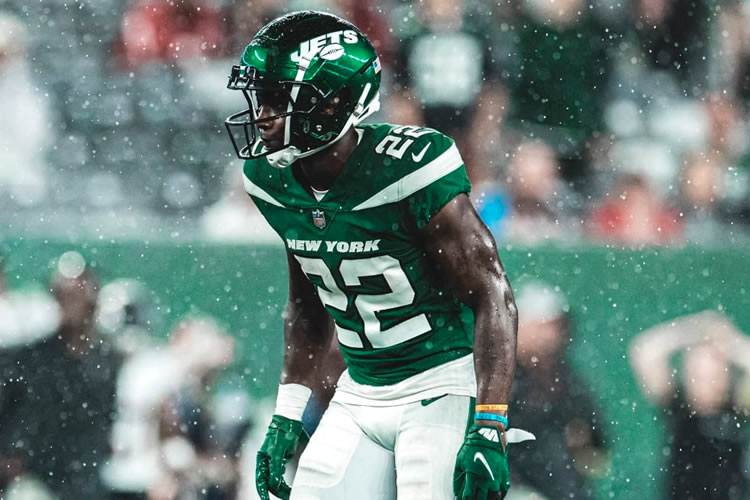
Safety – Tony Adams, Jets
Finally, let’s talk about a safety entering his third season as a pro, as part of what will probably be in the running for the top defense in the NFL. Tony Adams was part of an Illinois program that has just pumped out defensive backs into the pros like no other these last few years. Looking back at their starting secondary, four of their five starters were selected inside the top-100 of the two subsequent drafts, including a top-five pick in Devon Witherspoon. The only one among those who didn’t get picked at all was the guy the Jets picked on as a UDFA and had to fight his way for a spot on the active roster. That’s despite registering over 200 tackles, six interceptions and 11 PBUs across his five seasons with the Fighting Illini, as a consistent player on the back-end for them. Due to that, Adams only played significant snaps in two games as a rookie, recording 17 tackles and not getting his hands on any football. When Gang Green lost expected starter Chuck Clark with a torn ACL in the middle of June last year, they quickly called up long-time veteran Adrian Amos. Yet, he was beaten out for that job in training camp by this second-year guy nobody outside of New York was really aware of, as Adams started all 15 games he was available, logging a total of 879 snaps (compared to only 118 as a rookie). He recorded 54 solo tackles (82 overall), six of those going for loss, he intercepted three passes and broke up another five. I believe with a full season of starting experience now, he could overcome having a fairly generic name on a unit filled with more marquee guys yet again.
In his first two years as a pro, Adams has received overall PFF grades of 69.5 and 68.0. This past season, he registered at least 220 snaps at in the box, at deep safety and in the slot, showcasing his flexibility as part of a defense that has been popularized across the NFL, where he’s asked to drop low or rotate into the deep post. Adams provides good urgency coming downhill against the run, he regularly beats receivers trying to crack back on him to the spot and shoots through the gap between the last man at the line of scrimmage and the single receiver on the backside as the boundary safety. Yet, he understands when he needs to be the cap of the defense as plays are strung out wide, and when he was deployed in single-high duty, he did an excellent job of mirroring and squaring up the running back getting through the line of scrimmage. When blockers do get up to him, he uses his hands pro-actively in order to fend them off trying to get into his frame. Especially when the play is designed away from his original alignment, he denies slots and tight-ends the ability to cut off his angle, almost stiff-arming at their chest in order to maintain that path. Where he does get himself in trouble in that regard occasionally is in two-by-two sets when he’s supposed to be aiming for the outside shoulder of the slot receiver but tries to slice underneath him, forcing his teammates to compensate instead of funneling the ball back towards them. I would also like to see him drive his legs through contact a bit better instead of catching ball-carrier more so at times. His missed-tackle rate did increase to anywhere between 9.9 and 15.3% (depending on your source), but 23 of his 82 total tackles resulted in stops for the defense last season. Nevertheless, I thought his open-field tackling generally is above-average, where he may leave his feet at times trying to sling someone down, but at worst he holds up opponents before his buddies arrive there. Looking at Adams as a blitzer, he’s not one of those guys who truly look like he’s shot out of a cannon, but he times up the snap well and that’s when you’ll see him run down a play from the backside or heat up the quarterback once or twice a game. On eight snaps that he was used as a pass-rusher officially, he actually logged six QB hurries.
Now, transitioning to Adams’ work in coverage, the numbers were pretty solid last year already. On 29 targets his way in coverage, he was responsible for 285 yards and one touchdown – and only 66 of those came after the catch. The young safety displays well-coordinated footwork and greased-up hips when he’s pretty much on an island with a slot receiver pushing vertically at him in two-high looks before breaking off routes. You’d see that quite a bit, where initially it looks like the defense was playing two-man to his side but then the nickel would slide inside to alter the spacing and responsibilities to a certain degree, as the route stem of the inside player wasn’t impeded and there was no help for Adams 10+ yards down the field. While his spatial awareness is a definite plus, Adams may not have that missile quality to him, where he can erase the distance towards a receiver making a flat cut when he has to match the route from depth, to where he and the ball arrive at the target simultaneously. Furthermore, when they were clouding to his side (such as playing the deep half in cover-six), I thought he kind of prematurely gained verticality excessively, providing plenty of green grass in front of him to attack. The Jets also asked him to come down and add to the second level late, with the two other linebackers bumping the other way, as they switched to a single-high structure, which would leave the young DB as a hole defender or matching running backs releasing into the pattern. When he did pick guys up in that way, I thought he did a good job of mirroring his responsibility and being physical with denying free access to the middle of the field. Particularly when they were in big nickel personnel (with three safeties on the field), you had Adams drop down into the slot and cover top receivers at times with outside leverage, where he was able to stay in the hip pocket of guys on quick slants. He shows good initial burst to stick with drag routes, but then slows his feet and doesn’t overrun targets spotting/curling up. When he’s slid over bigger bodies, he’s sturdy when they try to push up the field, forcing them to go through him. And generally, how patient he is, even as he’s asked to flex out wide with a TE/RB, is indicative of the self-confidence he plays with in isolated situations.
Something I valued highly for any safety and particularly young guys, is their ability to understand spacing and responsibilities. Adams consistently takes outstanding angles from depth when the ball is thrown underneath or he’s asked to clean up against perimeter screen passes. I believe that could also lead to even better ball production in year three as a pro, as he just finds himself “in the right place”. The Jets played the highest rate of cover-four and -six combined (38.4%) in 2023, while in return running a basic cover-two at the second-lowest percentage (2.2%). So while he’s not a premiere athlete to make plays out at the numbers playing the high post, Chuck Clark returning as the likely starting next to him, gives them a smart combo of safeties who can both play over the top or match routes to their side. With one of the premier corner trios, arguably the rangiest duo of linebackers and a defensive line that should only improve their ability to get to the quarterback with the trade for Haason Reddick, this unit will be a nightmare for any quarterback trying to complete passes against.
Other names I considered:
EDGE Keion White, Patriots
EDGE Felix Anudike-Uzomah, Chiefs
EDGE/IDL Tyree Wilson, Raiders
IDL Zacch Pickens, Bears
LB Damone Clark/DeMarvion Overshown, Cowboys
LB Troy Andersen, Falcons
CB Kyler Gordon, Bears
CB Deonte Banks, Giants
CB Joshua Williams & Jaylen Watson, Chiefs
SAF Sydney Brown, Eagles
SAF Nick Cross, Colts
SAF Antonio Johnson, Jaguars
 Halil's Real Footballtalk
Pingback: Key position battles across 2024 NFL training camps: | Halil's Real Footballtalk
Pingback: Key position battles across 2024 NFL training camps: – Lifestyle . . . Defiant
Pingback: My NFL Top 100 Players of 2025: | Halil's Real Footballtalk
Pingback: My NFL Top 100 Players of 2025: – Lifestyle . . . Defiant