
We’ve arrived at the final game of the season, as the New England Patriots and Seattle Seahawks are set to face off and determine the 2025/26 NFL champions. Although the cast of characters looks completely different, this is a rematch of Super Bowl XLIX eleven years ago, when Pete Carroll’s group infamously decided to not hand the ball to Marshawn Lynch at the goal-line, but instead opened the door for – at the time – little-known Malcolm Butler to become the unlikely hero, as he intercepted the pass on a designed pick-play, and stopped the potential go-ahead touchdown drive. That also put an end to what might’ve become a Seahawks dynasty, while simultaneously starting the second run of three Lombardi Trophies over a five-year period in New England’s franchise history. They will now try to break a tie with the Steelers for the most hardware collected in league history, compared to the Hawks trying to put their names into the history books for the second time.
As it pertains to main figures in this rematch, we have first- and second-year coaches in Mike Vrabel and Mike Macdonald respectively with their teams, who both led their teams to 14-3 records, with the former trying to become the only man in NFL history to win Super Bowls as both a player and a coach for the same franchise. At quarterback, this matchup features two former third overall picks, who had quite different starts to their career. Drake Maye was an MVP frontrunner in just his second season as a pro, and would be the youngest guy at the position to win a ring, only turning 24 years old about a month before next season starts. Sam Darnold, on the other hand, was an outcast heading into 2024/25 for the Vikings, and might’ve lost out the starting battle to then-rookie J.J. McCarthy, had he not gotten hurt in preseason. Now on his fifth team in eight years, he just became the only QB not named Tom Brady to win 14+ games in back-to-back years with different franchises.
For the Patriots, while Vrabel did inject new life in his return to the franchise, he also brought back long-time offensive coordinator Josh McDaniels to help guide Maye during his development. Projected with an Over/Under of 8.5 wins, thanks to being more calculated with signing largely mid- to lower-tier free agents to a roster still in transition, there were *some* expectations for growth after just picking fourth overall in the draft, but they vastly exceeded those behind one of the most vertically-oriented passing attacks. And yet, it was their defense stepping up during this playoff run against the Chargers, Texans and Broncos – who all strived for lower-scoring affairs – and their excellent game-planning as well as situational awareness as a coaching staff, that has helped carry them here. The Seahawks, meanwhile, could rely one of the truly elite defenses on their part throughout the year, which already helped them win ten games the previous season, but had their own questions about what the offense would look like, after making huge changes when they swapped out Geno Smith for Darnold at QB, moved on from a pair of veteran receivers and put new OC Klint Kubiak in charge the operation. That decision went about as well as anyone could’ve hoped for, and along with some sparks from their special teams, they’ve looked like the most complete team in football. They destroyed the 49ers in week 18 and the Divisional Round, before deciding the season series with their other division rival Rams in their favor.
I want to dive into both sides of the ball, what the strengths and weaknesses look like, and how they match up against one another. Then I’ll bring up a couple of X-factors for either team, before closing out by predicting the final score and Super Bowl MVP. Let’s get it started!
Patriots offense:
On the surface:
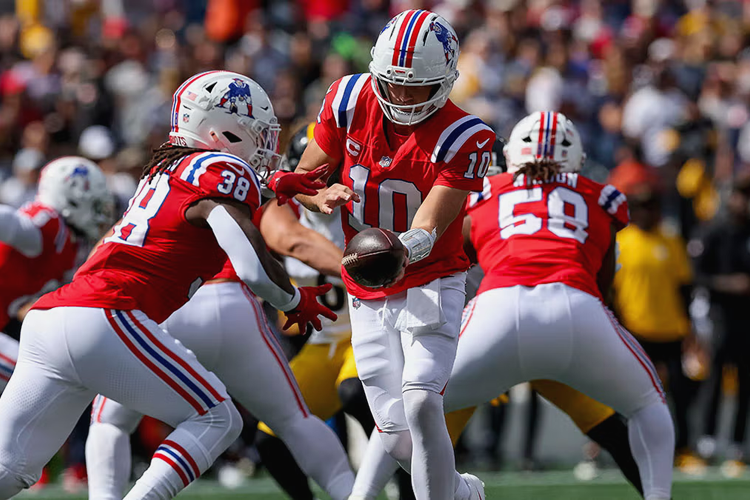
The biggest difference for the Patriots offense compared to last season, outside of the development of quarterback Drake Maye, has been how they re-constructed their offensive line. Michael Onwenu at right guard was the only returning starter, having brought in free agents Garrett Bradbury and Morgan Moses to flank him either way, while putting fourth overall pick Will Campbell and third-rounder Jared Wilson over on the left side. Those two rookies held their own for the better part of the year, but have really struggled during these playoffs. The one other first-year player of note has been running back TreVeyon Henderson, who delivered some explosive runs from mid-to-late season, but barely saw the field in January. As far as the receiving corp goes, Mack Hollins has been a quality addition with what he provides as a run-blocker, who they can put close to the formation, along with a few vertical shots, but Stefon Diggs becoming this team’s reliable zone beater underneath, coming off a torn ACL in Houston last year, has provided them a level of stability they were previously lacking in the dropback game.
Josh McDaniels’ return as New England’s OC has been critical in getting the most of these pieces, where they’ve returned to this Erhardt-Perkins, “pro style” attack that can tap into heavy personnel groupings and either run downhill man-/gap-schemes or take shots off play-actions from those, but also spread opponents out in empty and let their young signal-caller work attack that space he’s provided. Maye, of course, has been the driving force for their drastic improvement overall as an offense, as his cerebral nature, paired with pin-point throws down the field and capability as a scrambler, allows them to operate in this fashion. The Pats led the NFL in overall expected points added per play (0.155) and even with a larger gap on dropbacks (0.308). The run game, on early downs in particular, was a significant point of concern over the first half of the season, and they still finished 28th league-wide in terms of success rate (38.0%). However, they did have their best stretch on the ground over the final month of the regular season, before the numbers dropped off again in these playoffs, which came against three top-ten defenses by most metrics, largely trying to preserve the lead against run-first-oriented approaches.
Run game:
Looking at how Josh McDaniels has wanted to run the football, it’s been a throwback of sorts, where regularly they’re in the I-formation and rely on a lot of gap concepts, such as “duo”, “iso” (with a determined lead-blocker), (lead) inside zone, different power variations and occasional weak-side toss plays. New England already used a fullback at a pretty high rate for today’s standards, being in 21 or 22 personnel (two backs and or two tight-ends) on 21.7% of their offensive plays during the regular season. However, during these playoffs, they’ve leaned even more into going “heavy” and their frequency of having a sixth lineman on the field has risen from around eight to 14% compared to the regular slate of games, while 22 personnel has been their second-most used personnel grouping across those three contests (16.5%, compared to 7% in the regular season). Now, that’s certainly affected by how much they were focused on just running out the clock, when the second half of the AFC title game in Denver turned into a snowstorm. Nonetheless, it indicates what they want their identity to be, with a sledgehammer in Rhamondre Stevenson. After second-round pick TreVeyon Henderson took on RB1 duties in the veteran’s absence and had secured a more extensive role even once the former returned, following a slow start to the year, the Pats have returned to leaning on Rhamondre down the stretch. Over their last seven games, only twice did he not register over 60% of offensive snaps – when he had already done plenty of damage in a pair of blowout wins. In fact, TreVeyon was only on the field for four of 64 offensive snaps in that AFC title game.
Stevenson has taken on the lion’s share of the carries because he understands how to bleed out runs conceptually and consistently finishes strong, which has a cumulative effect on defenses once the fourth quarter rolls around. Although he doesn’t feature great dynamism, he’s one of the best at his best position when it comes to setting up his blockers, keeping his pads square, and incorporating subtle movements to manipulate second-level defenders. According to Pro Football Focus, among running backs with 50+ rushing attempts, he ranked fourth in average yards after contact (3.83) during the regular season. That number has gone down during the playoffs, but I’d argue that’s been more so a result of facing such a tough slate of run defenses and not being able to build up momentum against stacked boxes late in games. Having said that, there’s certainly still value in utilizing Henderson’s explosiveness, capturing the edge on those toss plays or how that angle-burning speed has flashed on his four touchdown rushes of 50+ yards, if a lane does open up going downhill.
New England did pop a few big runs off “counter” plays as change-ups this season, but there’s not a lot of misdirection incorporated into the offense, where receivers are legitimate threats to get the ball on fly sweeps or end-arounds (only ten total WR carries). Largely, they try to create a plus one to the strong side by shuffling the FB/TE over, and every once in a while, they’ll pitch the ball the opposite way in order to keep defenses honest. Yet, because of how much they rely upon man-/gap-blocking concepts that are built around angles and creating displacement at the point of attack, opponents have created a lot of problems for them when slanting their front and messing up what’s drawn up on paper. Including the playoffs, they’ve had 23.8% of their runs stuffed (for zero or negative yardage), which was the third-highest rate in the league.
Pass game:
Part of the Patriots’ success through the air is directly tied to the heavy run looks they present and the play-action shots they take out of those. During the regular season, not only did quarterback Drake Maye top the NFL with 7.7 net yards per pass attempt, but when faking a handoff in particular, he tossed ten touchdowns and not a single interception, while averaging nearly 3.5 seconds time-to-throw on those. They really try to suck in the defense and often times only get two eligibles truly out on a route, along with someone becoming a delayed checkdown option, which Maye utilizes quite frequently if nothing is available down the field. Often times they’ll have a wide receiver on an alert post, paired with a deep over route from the opposite side – something tight-end Hunter Henry specializes in. Not only does this approach highlight the strengths of their quarterback in delivering throws to different levels with appropriate touch, but it also makes the job of their offensive line easier, not being asked to hold up on as many pure dropbacks. When they do go with straight dropbacks, a lot of those are quick game-based, where Drake either attacks leverage or tries to find soft spots in zone coverage as a fast-paced decision-maker. That’s why his time-to-throw drops by nearly half a second (right at 3.00) when he’s not faking run. Veteran receiver Stefon Diggs has been instrumental on “read routes”, as someone they line it in every single WR spot, and has posted a career-best 75.0% contested catch rate. Maye having been the best deep passer in the league this season – especially when it comes to dropping boundary go balls into the bucket of his isolated receivers – nicely complements that, as opposing secondaries trying to play flat-footed would quickly get punished, and it affords them more space underneath.
Maye’s relationship with sacks has been a somewhat curious one. One of his biggest strengths as a young player has been how he’s navigated muddy pockets with subtle movements, affecting rush angles, and maintaining a solid throwing posture in that condensed space. And yet, only three quarterbacks took more sacks during the regular season (47), along with five more in each of their three playoff games. His pressure-to-sack conversion certainly isn’t ideal (20.6%), but again – he holds onto the ball for a long time (fifth-longest among quarterbacks with 200+ dropbacks), which has increased quite a bit since January. Having said that, he’s only losing an average of 4.3 yards per sack taken, as he rarely fades but rather steps up into the pocket with the walls closing in around him, and fights back towards the line of scrimmage, particularly in long-yardage situations, when they’d need to punt anyway. Meanwhile, his ability to escape those crumbling pockets and provide key conversions with his legs has been like an eject button to bail them out at times. Including the postseason, Maye has totaled about 50 yards more on scrambles than any other quarterback in the league (547), and only Josh Allen accounted for more first downs on the ground (48 for Maye), thanks to how much the Bills relied on their guy in short-yardage situations. His legs were arguably the decisive factor in the AFC Championship, primarily taking off when presented a lane, but also on their only touchdown of the game, when they called a designed draw play for him.
Now, their challenging playoff schedule massively influences this, as they’ve been significantly less successful in pretty much all facets, but the Patriots’ passing efficiency from 11 personnel in particular has completely plummeted, from a league-best 0.359 EPA per dropback and a 57.5% success rate to a negative -0.109 EPA and 36.2% success rate. Even more glaring, Drake Maye and company have been catastrophic against any type of pressure, going from -0.085 to an insane -1.293 EPA per dropback, and they’ve really struggled to defeat man coverage, outside of a handful of vertical shots. He’s taken way too many bad sacks, against cover-zero especially, with his two rookies struggling massively to hold up for any extended periods against quality pass-rushers – which Seattle features plenty of.
Seahawks defense:
On the surface:
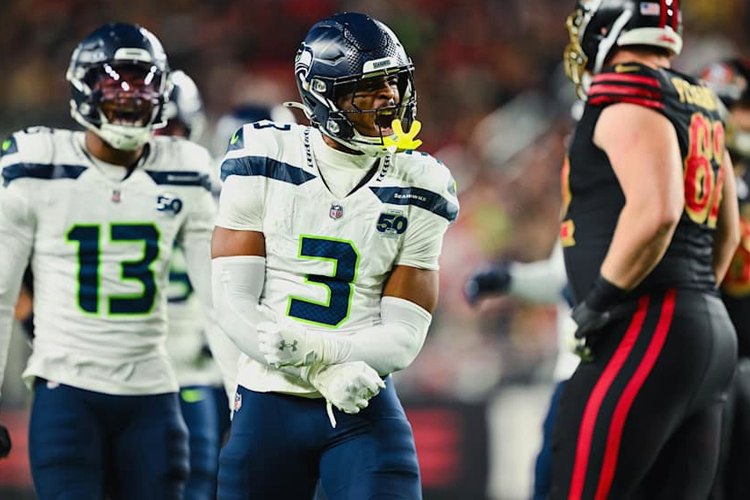
When the Seahawks parted ways with long-time head coach Pete Carroll two offseasons ago, they tried to jump onto the new wave of dynamic defensive play-callers from a system that started to popularize around the league, with one of the key figures of that in Mike Macdonald, after he had just helped Baltimore look like one of the premier defenses in the league. The early didn’t live up to the promise he delivered, but as they traded for Ernest Jones and the rest of the players got more familiar with the system, they showed significant improvements over the second half of the season, finishing fifth in total EPA per play from week ten onwards. This year, instead of being more complex in their deployment of players or pre-snap presentation, they’ve actually simplified things, allowing their guys to play fast and reach new heights. Seattle finished the regular season as the number one defense in both expected points added (-0.113) and actual points allowed (17.2 per game).
The development of some young players and continued growth through the teachings of their coaching staff have certainly been beneficial, but if you wanted to point to one name as the key figure for their transformation, it would be second-round pick Nick Emmanwori. After living in a world where opponents were able to attack them based on being in single- or two-high structures, the rookie immediately became one of the best oversized slot defenders in the game, and has allowed them to operate almost exclusively out of their “big nickel” personnel grouping (77.3% nickel overall – second-highest in the league). In fact, they’ve played just 45 total snaps in base, which was easily the fewest in the league and less than a fifth of the league-average (243). By not being forced to match offensive personnel, like most teams around the NFL, opponents haven’t been able to dictate terms to them and either gash soft box counts on the ground or call up beaters for which coverages they’d be in. Never was that more apparent than when they absolutely squashed a Kyle Shanahan-coached 49ers unit in both week 18 – securing themselves the NFC’s number one seed – and then in the Divisional Round, holding those guys to nine combined points, after they had been averaging over 34 per game over the previous eight weeks.
Run game:
Continuing on the point of how Macdonald’s unit is now able to function in the image of their head coach, we’ve seen them go from getting exposed on the ground over the first half of 2024 to being the best in the league in that regard. Through the first nine weeks of last year, they ranked 31st in defensive success rate from two-high safety alignments, due to their inability to consistently stop the run from those looks. With the trade for Ernest Jones in the middle and the defensive line starting to really apply the coaching points they were taught to mitigate the potential of missing a gap in their run fits, they became an above-average unit on the ground the rest of the way. However, they’ve taken that to a completely new stratosphere this season, finishing atop the league with a bullet in EPA per rush (-0.206 EPA), despite being in stacked boxes at the second-lowest rate overall (24.6%).
Byron Murphy II becoming an anchor as a shade-nose, when he does have to corkscrew against double-teams, the rest of their D-line standing up blockers at the point of attack, and their linebackers filling holes or meeting pullers with authority, have all contributed to their dominant turnaround. However, no other player has better embodied what they want to be than the previously mentioned Emmanwori. His physicality to add onto the edge of the box in multi-tight-end formations and squeeze those guys into the action, but also live up to his billing as a “force” defender who doesn’t allow ball-carriers to get the corner, has made it frustrating for offenses to consistently find any success when he’s part of the play. Primarily, they’ll be in a 3-2i four-down front, where the defensive tackles will be on the outside and inside shade of the guard respectively on the strong-/weak-side, and the D-end will be head-up on the furthest tight-end outside, to where the nickel can shuffle in, and the safety rapidly involves himself in the run fit from depth. That approach lends itself particularly well against outside zone, where they allowed just 3.3 yards per attempt during the regular season (second-lowest in the league).
The only times I’ve seen offenses really have any success on the ground against Seattle was when they were able to create vertical displacement on double-teams and pushed those interior defensive linemen into the laps of their linebackers, such as the Rams for stretches with their “duo”-centric approach, while also being able to punish them to some degree at least for not matching their 13 personnel sets. Hitting them with body blows on these fiv-/six-yard carries and staying out of designated passing situations, is a key factor. That approach mitigates the impact of their fast-flowing defenders outside the box in run support, and as those guys creep up trying to involve themselves, that may open up a few opportunities for run-after-catch by hitting someone on a delayed release off play-action.
Pass game:
Just like how Seattle defends the run, their base down success against the pass is anchored in simplicity and how fast it allows all of their players to operate. According to FTN Fantasy, they ran zone coverage at a 71.7% rate (13th in the NFL) and finished top ten in effectiveness out of it. Although they officially were down at 20th in EPA per dropback from cover-two, they ran it at the third-highest rate, just like any middle-of-the-field open structure, and did so much more effectively than the numbers might indicate, since it included a lot of empty calories for their opponents against a prevent mindset late in games. Although they didn’t opt for the more “aggressive” cousin of the family – quarters – very often (only 7.0%), they were one of the effective units at using it (-0.181 EPA per play being the sixth-best in the league). They simply squeeze the life out of passing attacks with how little air they provide within those coverages, and if someone does catch the ball underneath, how quickly they trigger, close and arrive with violence at the recipient, makes you feel like every yard is earned. Of course, you can only live in that world if your defensive line can make quarterbacks feel uncomfortable and doesn’t allow opposing receivers to find openings late on secondary route adjustments. The Seahawks finished third in total pressure rate (34.2%) despite bringing four or less on 75.2% of dropbacks. Yet, only two other teams ran stunts more frequently (24.5%).
Having bull-dozers like Byron Murphy, Leonard Williams and other to split that crease between linemen to split opposing linemen as they try to pass off twists, how well their edge rushers time their loops inside off that and how well everyone understands their assignments on some of the three-man games they run, creates plenty of issues for protections, without the necessity of bringing extra bodies. Having said that, although they don’t blitz a lot (24.8% of the time – 25th in the league), when Macdonald does decide to bring people from the back-seven, those can be deadly. That’s because he designs his pressure looks specifically to challenge opposing protection rules and calls those up at the exact right moments, from all possible angles, in order to keep offenses guessing. Maybe above all else, this coaching staff understands what the supposed answers are for offenses and where quarterbacks will look first as heat comes in on them. So they can take those options away, and before QBs are able to move off them, they’re being wrapped up for sacks already. When the Seahawks have blitzed, offenses have registered -0.40 EPA per dropback, which is the second-best/-worst mark of any defense over the past five seasons.
Looking at what they’ve done during these playoffs, their blitz percentage has actually decreased quite a bit still across their two games (13.2%). Their pressure rate hasn’t dropped off dramatically (31.6%), but the difference against L.A. in the NFC title was the lack of “quick pressures”, as that O-line provided a sturdy interior early in the play-clock, to where a savvy veteran quarterback had time to rip throws on time to defeat tight windows with audacious throws. One thing they’ve been vulnerable against, based on the structure of their primary coverages, is dump-offs to the running back and, to some degree, tight-ends off these delayed releases, as those match rules have played out, and that fifth eligible wasn’t accounted for, but rather they rely on being able to rally and tackle. When using man-coverage against a Niners team with limited receiving options, they were largely able to lock those up, but the Rams’ standout duo was able to work those corners pretty good.
How they match up:
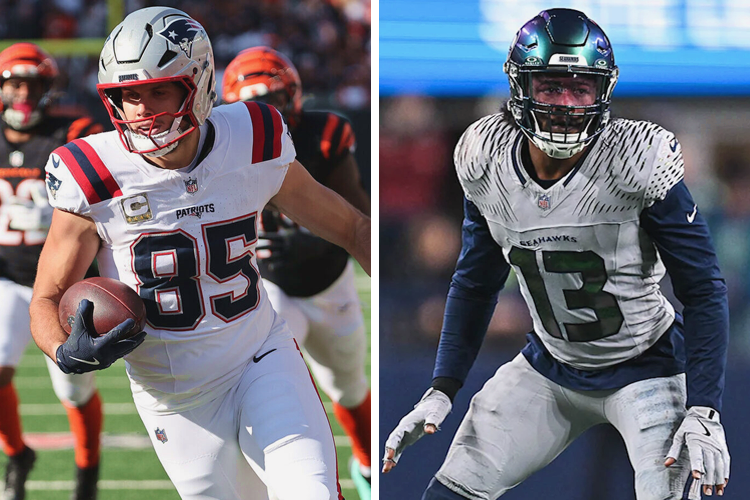
As I already outlined, Rhamondre Stevenson is one of the top backs at maximizing his blocking, thanks to his conceptual understanding paired with efficient footwork. Once again, being able to stay ahead of the chains and not being pushed into these obvious passing downs, is the main objective, considering how much they’ve struggled on those during this postseason run. With how that Seattle unit flies around however, some more urgency will be needed, if their ball-carriers are going horizontal whatsoever. How quickly the Seahawks got to the quarterback in their three matchups against the Rams, compared to almost everyone else, is jarringly different. So adopting a similar plan of attack, where they can really sell the run and take onus off this offensive line with play-action from these heavier sets, should be a major ingredient of the gameplan.
Living in this optimal world would be wish-casting for New England, however. They will be exposed to uncomfortable situations. Seattle finished as the league’s top third-down defense (32.1%), and you simply have to be able to hit tight window throws, whether that’s a backside dig before the safety closes down on it or lofting a crosser over the head of the bodies on the second level. Drake Maye is certainly capable of delivering those, but he hasn’t done so a whole lot during this playoff run, where the only big plays they’ve created were either go balls outside numbers or QB scrambles. Seattle clearly has the advantage at corner over those Patriot wideouts, and they’ve only allowed 6.7 yards per scramble (ninth in the NFL). If Seattle isn’t scared of manning up against these receivers, that mindset needs to be punished by hitting on a few vertical shots. The results on those have been more sporadic over the last month. Can Maye return to his MVP form from the regular season, now facing arguably his toughest test against Seattle’s vicious defense?
And of course, Josh McDaniels is one of the pivotal figures in this. He’s been on the sidelines for eight Super Sundays and won six rings in his career as an OC. This is Mike Macdonald’s first appearance on the game’s biggest stage. How much of an edge is this, understanding the moment, using those two weeks of preparation to build in change-ups, maybe add in a trick or play, which was one of the staples during his time together with Bill Belichick? We’ll have to see to what degree it truly matters when you’re overmatched up front and in terms of the receiving corp against Seattle’s secondary, but he’s familiar with how they relate to routes within their rules in zone coverage and has plenty of experience creating issues trying to match releases in man looks.
Seahawks offense:
On the surface:
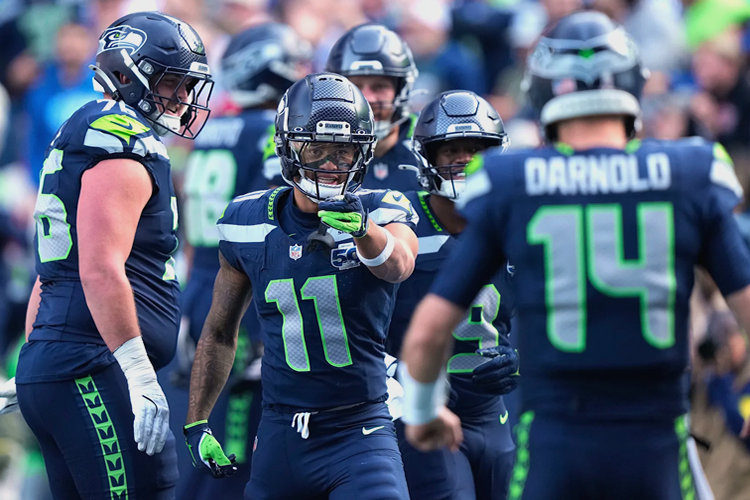
As we flip sides of the football, I believe it’s still important to acknowledge that Seattle’s defense was already on the rise, and them taking the next step was anticipation, although not to that capacity of course. The offense going from borderline non-functional to one of the explosive aerial attacks in the league, over the first half of the season especially, was one of the major surprises across the NFL. As I shortly hinted at during the intro, this organization opted for a philosophical shift when they traded away Geno Smith in favor of signing Sam Darnold as a free agent, which would offer them more financial flexibility, moved on from both D.K. Metcalf and Tyler Lockett at wide receiver, and most importantly, underwent a schematic transition with Klint Kubiak at offensive coordinator. As a result, they nearly scored an extra touchdown per game (28.4 PPG – third-highest) and upped their success rate by 2.1% (46.6% – eighth in the NFL), showcasing a higher level of down-to-down consistency, while big plays through the air also became more frequent.
Now, Darnold also led the league in turnovers individually, and the team overall was only “outdone” by the Vikings in that regard (28). Still, he also helped them finish fourth in dropback success rate (52.7%), for a unit that heavily operated out of formations involving multiple tight-ends and/or running backs, and hit on a bunch of explosives off play-action out of those. In fact, they finished top ten in 12, 21 and 22 personnel usage, on basically half of their offensive plays combined (49.8%). Even more integral to their success through the air has been the development of third-year wide receiver Jaxon Smith-Njigba from a player who was largely limited to the slot and underneath targets, to the most complete three-level threat at the position. Over the first half of the year, their run game served more as an end to their means, where they handed the ball off in order to force defenses to respect that facet, along with grinding away opponents late. Yet, while that did result in them ranking outside the top 20 in both EPA and success ground on the ground, they’ve ranked ninth and 12th respectively in those categories since week ten, if you include the playoffs. They weren’t forced to really push the envelope in their rematch with the Niners, thanks to the opening kickoff being taken to the house and another dominant defensive performance, but when Matt Stafford and company challenged them in the NFC title game, Darnold arguably answered the MVP front-runner with arguably the best performance of his entire career, scoring 31 points without turning the ball over once.
Run game:
In terms of personnel groupings and how they marry their run and pass game, Seattle is actually quite similar to New England offensively. However, Kubiak has his roots in the Shanahan-style wide one zone world and that’s who he’d like this unit to be. That was by far their most frequently used concept on the ground (34.92%), with none others being called at least at a 20% rate, although they were pretty much dead-average in efficiency on those, averaging just 4.2 yards on those calls. As I already outlined in my big playoff preview, an encouraging development towards the end of the regular season however was their run game having more life, rather than simply being an end to the means for their aggressive play-action attack. As they transitioned to more “running back-centric run” with the point of attack being further inside, such as mid-zone and duo, not only did their efficiency see an uptick, but they also hit more explosives on the ground, finish second in carries of 20+ yards for the regular season (at 18). Zach Charbonnet tearing his ACL in the Divisional Round definitely hurts overall, but Kenneth Walker has put together his strongest stretch of play of his career since week 16 (averaging 112 yards from scrimmage per game), and he’s thrived in the role as their workhorse.
Walker may not always be the most mature decision-maker, but when he hits the hole with conviction after allowing things to develop a little bit, in combination with his start-stop quickness, he’s one of the most talented backs in the league. His burst out to the corner on pin-and-pull toss plays and how dangerous he can be cutting across the grain is another element to this, which the 49ers experienced on a back-breaking 3rd-and-17 conversion. Cooper Kupp has been a major asset with his blocking skills from these condensed alignments, even if he isn’t quite the same threat with the ball in his hands anymore as he still was a few years ago. As Mike Macdonald talked about before the NFC Championship, “K-Dawg” was credited for running as decisively as he ever did. Towards the latter part of their season, Seattle also increased his usage as a screen and checkdown option, thanks to his tremendous open-field skills. Going through the PFF database, his 70 missed tackles forced across 252 total touches ranked behind only the league’s leader in scrimmage yards, Bijan Robinson, for the top rate among running backs (27.8%).
At this point, I will point out that facing a depleted front-seven for San Francisco, and even to some degree a Rams front more built around speed, has those positive trends. Rookie left guard Grey Zabel is indicative of the transformation they’ve made with his athleticism and ability to sustain blocks for this zone-centric approach, but he’s been pretty clearly their best player among this interior trio. When they aren’t able to create that initial momentum against bigger defensive lines, and how little success they’ve found on sporadic usage of power/counter concepts, that becomes a concern. So is their overall stuff rate of 22.2% for the year entirely.
Pass game:
Perhaps no other team relied more on its play-action attack to create chunk plays through the air than Seattle. Looking at Sam Darnold’s numbers, he finished second in EPA per dropbacks on those compared to 21st on non-play-action. They use a traditional fullback and their multi-tight-end sets to really block up defenses and set up aggressive shots. Routinely they’ll move Sam’s launch-point, either on true bootlegs or half-rolls, where they seal the backside edge, and hit these deep crossers, but also set up longer developing double-moves down the field. When the Seahawks fake run action against a blitz especially, Darnold becomes a cheat code of sorts. In those specific situations, he averages a league-leading 13.7 yards per attempt and posts an EPA nearly four times higher as on standard dropbacks. Overall, he led the field with 12 completions of 40+ yards on just the 14th-most attempts, and only the Patriots actually averaged a higher net yards per dropback at 7.6 during the regular season. Just like the Patriots, that approach has been as much about creating clean looks for their quarterback and trusting him to let it rip, as it’s been about not exposing their O-line to true pass sets. That’s how they’ve limited opposing defenses to a pressure rate of just 34.2% with Sam on the field, according to Pro Football Focus (29th among 38 quarterbacks with 200+ dropbacks). I’ll also note here, that no one else took more traditional pure dropbacks from under center (52) and he’s been quite efficient on those, which nowadays acts as a change-up that mitigates the opposing pass-rush as well.
From a personnel perspective, the biggest factor in their improvements compared to 2024 however, has been the growth of wide receiver Jaxon Smith-Njigba in his third season. He went from this more pigeonholed slot receiver to someone who can win anywhere on the field to all levels. His suddenness off the line against press coverage, the efficiency with no wasted movement at the break point, and his deceptive skills without premature deceleration, make him a nightmare to cover one-on-one to any extent. That’s paired with impeccable ball-tracking skills, with tremendous late adjustments and sticky mitts on some one-handed grabs. Including the playoffs, his 3.57 yards per route run was actually tied with the Rams’ Puka Nacua for the second-highest mark among players with 30+ targets since 2008, to only Tyreek Hill in 2023. Maybe as important as his actual production is the gravity JSN has, whether defenses roll coverages his way, they dedicate a safety to bracket him, or at least allow the primary coverage defenders to play with leverage. All three of Seattle’s passing touchdowns in the NFC title game were based around him and having to pay extra attention – obviously as he ran that corner route out of the backfield on a beautifully designed play, but then also having the single-high safety cloud over the top of him to open up the corner-post to Jake Bobo in a reduced from the opposite side, anticipating that rotation, and finally sort of losing Cooper Kupp off a switch release out of a stack with Jaxon.
The passing splits for Darnold when kept clean (5th in EPA per dropback) compared to when pressured (28th) have been pretty wild. I will note that he’s responded much better to being heated up, and stunts in particular, during these playoffs. Too often, he’d try to fit in throws with a rusher coming free/closing, or someone being pushed into him took away the space to step into the throw late in the down. Across 24 dropbacks with pressure in this postseason, Sam has yet to be charted with what PFF calls a “turnover-worthy play”, compared to four TDs. Without Zach Charbonnet being available for third downs, this could expose Kenneth Walker’s biggest weakness as a player, when called upon – pass-protection. He simply lacks some mass and stops his feet as he goes for his strikes too often. He was charged with a pair of sacks and eight total pressures across just 49 such snaps this season. Their answer in the NFC title game was barely ever keep him locked in, but rather get him out on a route. On a positive note, Kubiak has continued to create advantageous looks, and they’ve been even more successful through the air during these playoffs. Seattle has increased their motion rate by 9% compared to the regular season (55.6%), and their inefficiency on such plays has improved as well. Playing man-coverage against them has been a problem all year, but their EPA mark has nearly tripled in such situations during these two games, up to a wild 0.769 – which would be more than twice as strong as the Pats’ league-leading number. And their overall numbers in the pass game from 11 personnel have equally skyrocketed over these two postseason contests.
Patriots defense:
On the surface:
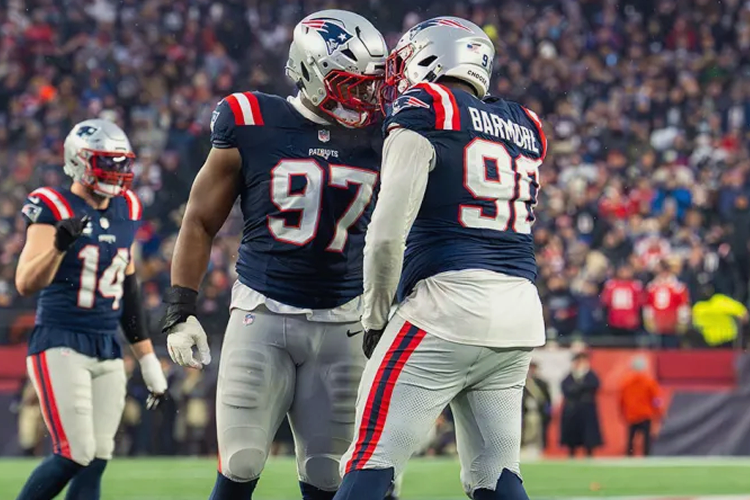
The baseline for defensive football in New England has been about as high as for any NFL franchise in the 21st century. However, even with former defensive coordinator Jerod Mayo taking over the reins from Bill Belichick after 24 years, that standard slipped in 2024, as they finished 22nd in both yards and points allowed. After that experiment ended a year later, they hired another former Patriots player with defensive play-calling experience in Mike Vrabel. They did make one big splash in free agency when they signed former Eagles D-tackle Milton Williams to a four-year, 104-million-dollar contract, coming off his best season as a pro, after helping his former franchise win a Super Bowl. Vrabel reunited with edge rusher Harold Landry from their days together in Tennessee, addressed the number two corner spot with veteran Carlton Davis, and arguably got the top off-ball market in a depressed market with Robert Spillane. Otherwise, they largely shopped in the lower-budget tier and invested four day-three draft picks into that unit. Rather quietly, they’ve been without their de facto defensive coordinator Terrell Williams pretty much all season, dealing with prostate cancer since September and only returning in limited capacity to their facility for the first time again in January. Inside linebackers coach Zak Kuhr has been calling plays in his absence. Under him, they finished one spot outside the top ten in total EPA per play (-0.040) and were league-average in success rate (44.9%), being at or slightly above the mean against both the run and pass.
The general pillars for this unit have been assignment-sound play, great situational awareness, and tackling. In fact, according to pro-football-reference.com, no team has missed fewer attempted stops during the regular season than these Patriots (71). Although their run defense declined to a certain degree throughout the year, in part connected to missing players along the spin of that group, they’ve really leaned into Christian Gonzalez’s shutdown skills at corner, and you can feel their presence when they arrive at the football, for as reliable as they’ve been at bringing people to the ground. And although they’ve allowed opponents to convert red zone trips into touchdowns at the third-highest rate in the league (67.5%), the fact they’ve been one of the best units at getting off the field on third/fourth downs (only surrendering a combined 37.8% conversion rate), enabled them to give up the fourth-fewest points per game (18.8). Although we can argue about the quality of the three offenses they’ve faced during the playoffs, New England has seen a massive jump, all the way up/down to -0.296 EPA per play and a success rate of just 35.2%, which would both easily be number one in the league.
Run game:
New England’s ability to stop opponents on the ground at a high level has been heavily dependent on if they’ve been at full strength or not. Over the first ten weeks and the playoffs, when they’ve had both Milton Williams and Robert Spillane available in the middle of that unit, they’ve surrendered an average of just 77.4 rushing yards per game and 3.6 yards per carry – which would both be number one if extrapolated over the regular 17 games. Without those guys in the seven other contests, those numbers were up to 133.9 yards per game on more than an extra yard per attempt (4.7). Although the Pats do primarily function from nickel personnel (69.2% – eighth-highest in the NFL), they do have three legit hand-in-the-dirt defensive tackles lined up between the tackles regularly on early downs and ask those guys to clog up lanes, and they were been in stacked boxes (meaning a +1 compared to available blockers) at the fourth-highest rate throughout the regular season (54.5%). Their edge defenders really attack pullers to box in plays, and Spillane behind that provides the appropriate level of patience, but also the quick trigger to shoot through an opening, as required.
Going through their efficiency at defending specific concepts, they only gave up 3.6 yards on outside zone. Safety Craig Woodson embodies how this coaching staff wants their secondary to support the run, whether they’re coming downhill before the snap or running the alley from depth, and both their perimeter corners are excellent tacklers, with star boundary man Christian Gonzalez having missed just one attempt all year. Thanks to those big bodies either making it tough to even create double-teams or how they can own their space when they do deal with those, the Pats were the only team to allow just below four yards per carry on man-blocking schemes. Linebackers not cheating by leaning one way behind those is a key ingredient in that. The only concept that has been really fruitful against them has been counter (8.5 yards per attempt – dead-last in the league), but that was on a very limited sample size. Unsung heroes like Khyiris Tonga and Cory Durden have been huge at “eating innings” on these early downs, in order to keep their duo of interior penetrators fresh for passing situations.
How opponents have found success on the ground against New England throughout the season is by spreading them out and creating soft box counts. When offenses have run 11 personnel and faced six defenders or less in the box, they’ve averaged +0.165 EPA per play and a 52.2% success route, which would both be the worst marks in the league overall. Another thing that has been effective against them on a limited sample size has been designed carries by wide receivers, challenging them on the edges to handle jet sweeps and stay home for end-arounds/reverses. 16 such plays have resulted in 149 total carries.
Pass game:
Transitioning to New England’s coverage matrix, fundamentally they’re basically right at league-average in their usage of man vs. zone, and they’ve been basically even in how effective they’ve been running those – 11th in EPA running man, 9th in zone. Going by more specific coverage structures, when they lock onto receivers, it’s mostly with one deep safety behind it, they run the more classic cover-two at the sixth-highest rate among all NFL teams (26.7%), while being bottom in true cover-zero, cover-six (quarters and deep half to either side of the field) and two-man – and they haven’t particularly on those either. What I’d note about watching them is that they do a great job of getting to and adjusting their landmarks based on how routes distribute out of certain formations, but then also have that feel for the quarterback’s internal clock and sort of work through the progression themselves, closing on routes in their vicinity to contest catches, if not make plays on the ball themselves. Throwing into the flats late against a lurking nickelback Marcus Jones is something that’ll simply be punished, as Joe Flacco learned when it ended up in a pick-six as part of the Bengals, for example.
When they do run man, having a shut-down type corner like Christian Gonzalez is a major asset. He’ll typically be lined up on the backside receiver, but does travel to a certain degree, as matchups necessitate him. According to PFF, opposing quarterbacks have registered a completion percentage of just 35.7% and surrendered just 4.1 yards per target, with one touchdown and interception each, when going after Gonzo in man-coverage, which is how he’s been deployed at one of the higher rates among all corners. Carlton Davis, across from him, has posted quite solid coverage numbers himself, but he was penalized more than any other defensive back in the league during the regular season at 13 times. And even for as limited as opposing receiving corps have been in their general success, four more flags for 70 extra yards have followed. He’s someone who doesn’t look nearly as comfortable having to play with a cushion and can be targeted on double moves. When their guys are allowed put their hands on the eligible targets early, their ability to plaster them, in combination with different blitzes, has been particularly impressive since January has rolled around.
Generally, New England didn’t bring extra rushers a whole lot during the regular season (27.3% rate – 20th across the NFL), but they did it quite a bit on first downs to push offenses behind the chains, and then they’ve brought six or more on exactly 10% of dropbacks. They finished with the third-lowest sim rate (2.9%), meaning incorporating second- and third-level defenders on the pass-rush but dropping off guys from the line of scrimmage, to ultimately only bring four. They have run various twists and three-man games, while drawing up quite a few designer pressures, which on paper may not always seem sound, but are able to get home before things break apart. That strategy didn’t always work out to the desired capacity, as their regular season pressure rate (26.2%) ranked just 27th league-wide. However, they clearly spotted weaknesses in the protection schemes of the Chargers and Texans during this postseason, contributing to their blitz percentage (38.3%), pressure (36.1%) and also sack rate (9.0%) rising in significant fashion. Against Denver, their guys were simply able to win one-on-one against a group that by the numbers had been the NFL’s top pass-protecting unit, particularly on the interior.
How they match up:
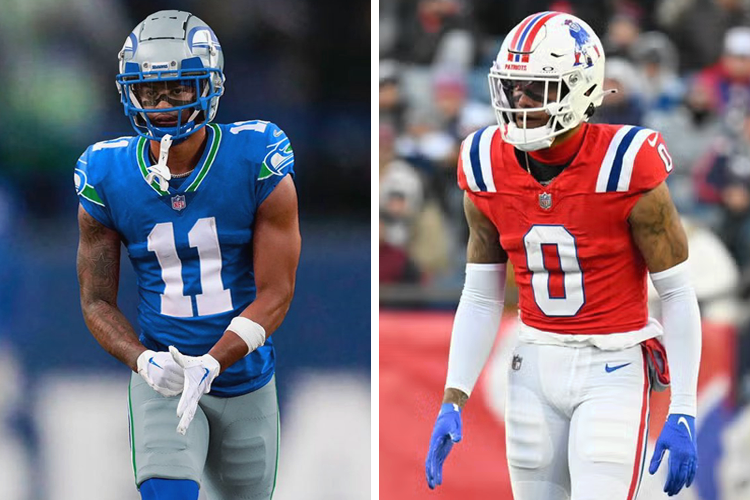
Who ends up having the upper hand on the ground between these two sides may be determined by how much Seattle relies on their fundamental identity. Their lack of efficiency for most of the season on outside zone plays right into New England’s hands. Regularly going with their 12/21 personnel sets may not be the right approach here, because it allows the Pats to put all three of their true D-tackles on the field, and you’re not going to really create vertical displacement against them. Instead, they may be incentivized to put three wide receivers out there more regularly, as they have done already to some degree during these playoffs, and gain some positive yardage on quick-hitting runs against even box counts. The Pats’ safeties rapidly trigger downhill and set the tone against receivers on insert blocks, if Cooper Kupp is a key figure in that, and I could see them automatically check into a blitz with one of those guys based on motion – Craig Woodson had several great such moments in the AFC Championship. If Seattle does want to threaten the edges, putting the ball in Rasheed Shaheed’s hands with speed already built up and maybe calling up a few counter toss plays off that action, could be the path to a couple of explosives through that avenue.
Looking at the limited sample size during these playoffs, whenever the Seahawks have gone to play-action, they’ve been highly effective, averaging 10.5 yards per such dropback. That’s met by a Patriots D that has been elite at defending those, limiting opponents to a minuscule 1.5 yards on those, while their edge defenders have done a great job of staying home on bootlegs. Being able to limit defined dropback situations and not allowing the Pats’ two D-tackles to test their interior protection, will be key, however. And I do believe you can throw over the heads of these linebackers, as long as their receivers can get off contact. I’d expect a lot of man coverage to not be as vulnerable on throws between the second and third level. That brings us to the biggest challenge for New England’s defense in this matchup – how much Jaxon Smith-Njiba can challenge that.
What’s the plan for slowing down JSN and how does Klint Kubiak make it hard for New England to even have a call in place when they break the huddle, with how much the receiver is put in motion and how he lines up all over the field? Can they really ask Gonzo to shadow him for large stretches of this matchup, or do they instead stick their top corner onto whoever the second outside receiver ends up being on the field, while they have a comprehensive plan for how to bracket JSN regardless of where he is? The Rams played a lot of cover-six against Seattle in the NFC title game, because they wanted to be able to cloud towards JSN’s side, but understanding that, we saw Kubiak dial up that corner-post to Jake Bobo from anticipating they’d roll coverage away from when the ball was snapped. The Patriots were just 0.1% off the lowest mark for using that coverage shell (2.1%), and rely on more straight-up cover-two. So this could be a big A.J. Barner game, trying to hit him up the seam, if those safeties expand in order to prevent big plays through the air.
X-factors:
Patriots – Kyle Williams & Craig Woodson
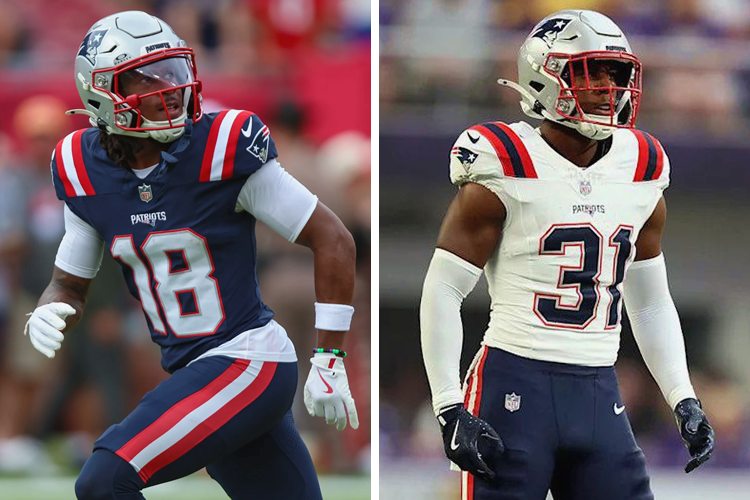
If you’re going to test this Seattle defense, you’d better be able to hit a couple of vertical shots to not allow their secondary to drive up against routes in front of them. On these heavy play-action staples with one of the receivers on a deep post, that route can’t solely be part of the design on paper, but rather be a real factor and remain live, if they catch one of Seattle’s corners isolated with their wideouts on those, while the safety inside stays flat-footed. Kayshon Boutte has been the primary target on those, hauling in an impressive 12 of 20 targets of 20+ yards. However, I’m more intrigued with third-round rookie Kyle Williams as the guy with the best top speed among the bunch. This was someone who dramatically rose up draft boards, with a strong all-star circuit, and I believe he’ll end up being a much more complete receiver in the different routes he can be asked to run, rather than being limited to posts, fades and crossers. He’s only caught 12 total passes, even including the postseason, but three of those went for touchdowns of more than 30 yards, with one of them being a 72-yard catch-and-run play on an over route off play-action. Can he get on top of it early on and therefore create a little more air within the coverage? Or burn an angle by one of these safeties to rip off an explosive play?
In contrast to the big-play potential the Pats are seeking from their underutilized rookie receiver, they need stability from their season leader in snaps (1137) at the safety spot. As I already mentioned, Woodson has been a key cog to stopping opponents on the ground. PFF actually had him as the team’s top run defender, creating 13 “defensive stops” (which constitute a negative play for the offense based on down and distance) and only missing 3.3% of his tackles through that avenue. That’s despite spending just under 30% of his snaps in the box. Kenneth Walker is very much a threat to cut all the way across the grain if the front-side of a run call is clogged up – for better or worse at times – and Woodson staying home in that backside alley could mean the difference between a tackle for loss or a big play on the ground. Being able to knife through the C-gap when the Seahawks try to run behind two tight-ends, win on contact against inserts, or funnel a toss play back inside by wrong-shouldering a puller, could all be very important. In coverage, he’s only been charged with 5.7 receiving yards per target, but he’s given up six touchdowns, with his only career interception coming in the Divisional Round off the hands of a Texans receiver going over the middle. I’d anticipate him having a large role in how they bracket Jaxon Smith-Njigba, whether they in-and-out or top-down him. And he could be quite involved in picking up tight-ends off play-action game, both on these longer-developing double-moves or off delayed releases.
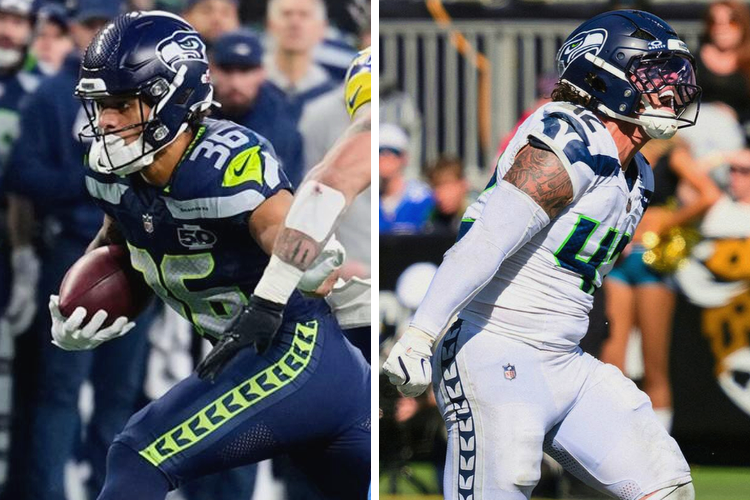
Seahawks – George Holani & Drake Thomas
For as effective as Kenneth Walker has been as a receiving option down the stretch of the season, I already talked about how he never was the preferred third-down back and how he’s struggled as a blocker in the pass game throughout his career. With the injury to Zach Charbonnet, we saw the designated RB3 George Holani log a career-high 23 offensive snaps in the NFC title game – that was more than half of his previous total usage outside of special teams. 20 of those were on dropbacks, but he was only locked into pass-pro for three of those. Looking at the fact that Seattle has been pretty steady in pressure rate allowed when using only five blockers in protection, and they’ve allowed three sacks on just 17 dropbacks with six or more blockers. Meanwhile, New England has upped their blitz, pressure and sack rates all significantly when offenses opted for that approach, as their linebackers would be tagged with green dogs to “blitz the back” or they’d just try to speed up longer-developing concepts. That would go against a trend I previously mentioned around Sam Darnold’s efficiency on play-action when the defense brings extra rushers, but on these straight dropbacks and obvious passing downs, it would behoove them to get their RB out into the pattern. Holani has only gotten the opportunity to do 24 times this year, but he did secure all five of his catchable targets for 42 yards in these playoffs. Can he have an impact through the air, while allowing Walker to catch his breath, and maybe take a couple of physical carries between the tackles?
While I didn’t want to opt for such an obvious candidate like Rashid Shaheed on offense, choosing Holani wasn’t a particularly difficult decision. Defensively, my mind went a few different ways, for a unit that is just loaded with talent at all three levels. I ultimately wrote down Drake Thomas’ name, because he’s been a lesser-known figure, who emerged as an energizer bunny for that group this year. After more than 90% of his total snaps over his first two years as a former undrafted free agent in Seattle came on special teams (just 47 on defense), he was one of eight players who logged more than two thirds of defensive snaps this regular season. He did post a fairly high missed-rate (17.3%), but that‘s because of the way he’s constantly flying around the field and can trust his buddies to clean up for him. The biggest improvement for him this season and why he’s become a constant in their lineup, to me, has been how much quicker he decipher passing concepts and how quickly he redirects in order to contest nearby receivers or corral them immediately. He’ll often end up matched against a running back working to the flats and have chances to deliver splash hits to make those completions in the quick game feel like hard-earned ones. In each of the Hawks’ two playoff games, he logged three “defensive stops” and previously, he ripped the ball away from Christian McCaffrey for a key interception when they were in a week 18 game at San Francisco that was a lot closer on the scoreboard than it actually felt. And he has yet to be charged with a touchdown in coverage.
Prediction:
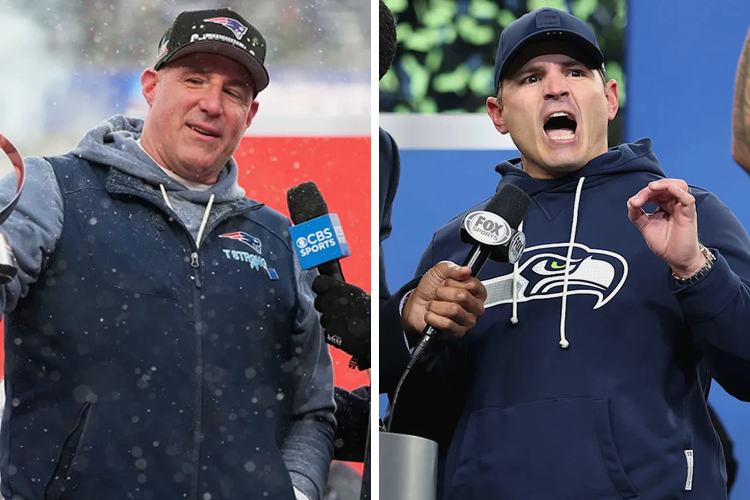
One thing I’ve only mentioned as a side note is the difference in experience from these coaching staffs. Mike Vrabel played in four and won three Super Bowls as a player, while Josh McDaniels has been on the sidelines for eight and won six rings. Mike Macdonald and Klint Kubiak have appeared just once combined on the game’s biggest stage, as the latter worked as the passing game coordinator for the 49ers in 2023 – and lost. How much will that matter? Could the guys on Seattle get tense in these massive moments or do they maybe overthink their gameplans to some degree, trying to find change-ups to the counters they’re anticipating?
When the Seahawks have the football, we’ll see two of the strongest units on either side when it comes to third downs, as their offense has converted 52.2% of their attempts and been nearly unstoppable as long as they kept them at seven yards or less to go (72.7% on those) during these playoffs, while New England has allowed just a 29.3% rate of those to move sticks, and opponents have gone two-of-16 when they’ve needed 8+ yards. While both offenses have been just below average in red zone offense, the difference defensively during the regular season was quite noteworthy, with Seattle having allowed touchdowns on exactly half of their trips inside the opposing 20 (fifth-best), compared to 67.5% for the Patriots D (third-worst). And once again, we’ve seen a massive trend towards the Seahawks cashing in on those opportunities (72.7%), while the Pats have really tightened up in that area (25.0%). Obviously, protecting the football will be key in any big matchup. As we look at recent turnover trends, something has to give. New England took the ball away eight times across those three postseason contests, after being limited to 19 during the regular season. Meanwhile, Seattle has yet to give the ball away in these playoffs, after doing so the second-most times up to that point (28).
Special teams are often the forgotten third facet of any game, but I’m very interested to see if someone on either side can deliver a splash play here to swing momentum. Only three teams scored on both kickoff and punt returns this season. The Jets were one of them. The Patriots and Seahawks were the other two. Including the playoffs, Rashid Shaheed has three such touchdowns, while Marcus Jones has run two punts back to the house. Being disciplined in your coverage lanes when those guys touch the ball are non-negotiables, and I could certainly see either coaching staff opting to boot kickoffs through the end-zone or try to coffin-corner punts, in order to not allow them to be factors. Although the elements were certainly a factor on the AFC side, New England’s Bryce Baringer shanked multiple punts, while Michael Dickson was just named a second-team All-Pro as one of the best at changing up the flight of the ball.
For as commendable as everything Mike Vrabel and his coaching staff has done is, and there’s something to be said about finding ways to win ugly, these two offenses have gone complete opposite directions during these playoffs, to where Seattle would be the best in the league by most metrics and New England would be at the bottom if you extrapolated those across the entire season. Now, the Patriots defense has made massive improvements across their three postseason contests, especially when it comes to pressuring quarterbacks, with Milton Williams back in the mix. However, the Rams are really the only offense across the NFC that has proven to give the Seahawks D real trouble, and I just don’t see the receiving talent on the other side here that could really threaten them. Mike Macdonald is the best defensive play-caller in the league in general, and he’s especially proficient at studying opposing tendencies and incorporating certain wrinkles into their gameplans, for as sturdy as their base construct is. Josh McDaniels has vastly more experience on this stage, but at some point, the “Jimmy and Joes” simply matter above all else. And looking at an objective measure, Seattle was the number one team in total DVOA (44.9%), including the postseason, with still a huge gap to the Patriots in seventh (16.5%), despite their playoff success.
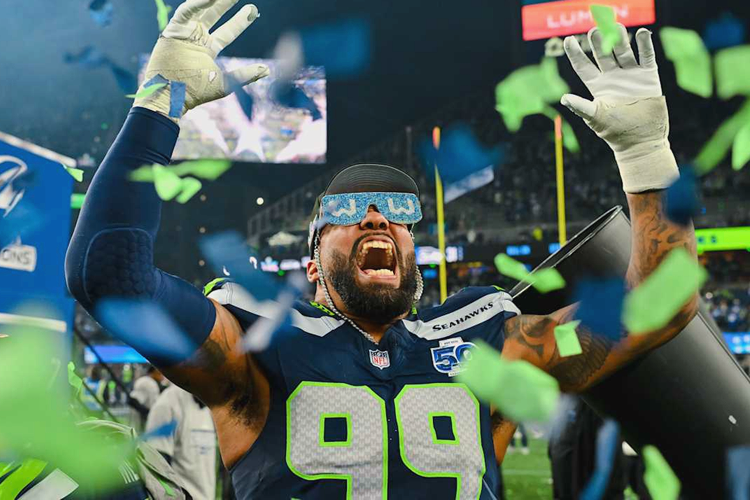
New England Patriots 17:27 Seattle Seahawks
Super Bowl MVP: Leonard Williams
To me, this is a representation of the biggest mismatch between the two sides, as arguably the top interior D-line in the league is going up a mid-round rookie at left guard and a center who the Vikings moved on from after struggling in that area themselves previously. I can easily envision Williams either tossing around one of those guys with his combination of length and strength, or even just knife through the gap between them as the set-up man on a twist, to get right up into Drake Maye’s face, who has been quite prone to taking sacks rather than putting the ball in harm’s way, especially during these playoffs. He becomes the representative of a dominant defense, Sam Darnold is the first quarterback from that wild 2018 quarterback class to win the big game, and Mike Macdonald hoists his first Lombardi trophy in just year two as Seattle’s head man.
 Halil's Real Footballtalk