

We’re back for the second half of yet another two-part series, only this time in written form, as we switch sides of the ball and talk about some of my favorite second- and third-year defenders, who I expect to take the next step. Just like we did in the offensive edition last week, we’ll discuss seven players today.
Once again, to identify what would qualify a “breakout” or rather players excluded in this discussion, I’m largely relying on statistical measurements that they haven’t reached yet – no front-seven defenders who recorded double-digit sacks or tackles for loss, players who intercepted 4+ passes, earned a Pro Bowl/All-Pro nominations or are just generally considered one of the better performers at their respective positions. I also generally stay away from players who have barely seen action in the pros yet. That makes names like Cardinals defensive lineman Darius Robinson and Eagles cornerback Kelee Ringo, for example.
Daiyan Henley emerged as one of the best linebackers in all of football after making the list a year ago, but I’m still waiting on names like B.J. Ojulari and JuJu Brents to stay healthy and show if they can justify me putting them up there in the most recent version of this. Let’s get into these next few names for 2025:
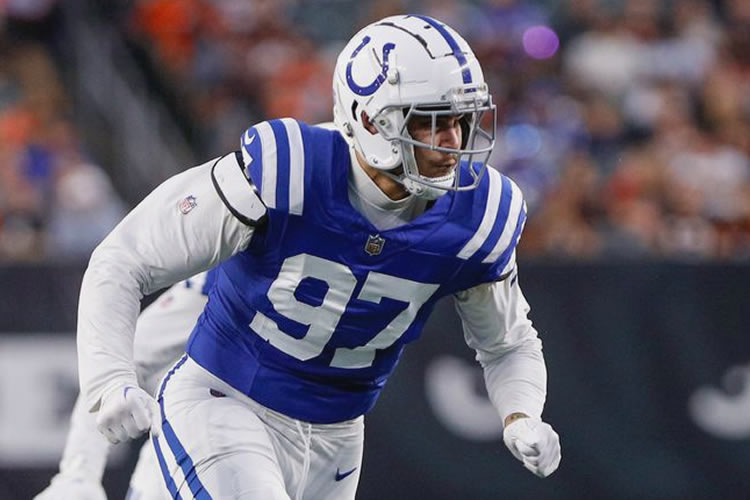
Edge defender – Laiatu Latu, Colts
Thinking back to late April last year, it was a pretty unique draft, as we saw six quarterbacks selected in the top 12, to blow the previous NFL record out of the water, but maybe even more interesting might be that we didn’t have a defensive player’s name announced until pick 15. Colts general manager Chris Ballard proclaimed at the time that they “stole the best rusher in the draft”. That’s how I had the guys at his position ranked as well, considering Latu came off a season in which he was named a first-team All-American and the Pac-12 Defensive Player of the Year, leading the FBS in what Pro Football Focus refers to as “pass-rush productivity” (13.3), after finishing behind only the third overall pick in the previous draft, Will Anderson Jr. I did say at point that there was a case to be made for either him, Alabama’s Dallas Turner or Florida State’s Jared Verse to sit atop your big board depending on what you ask of those guys. The latter obviously looks like the biggest hit, as he ended up winning Defensive Rookie of the Year and made his presence felt in the playoffs for the Rams. Meanwhile, Latu’s path to playing time wasn’t as clear, and he only started one of 17 games. Still, he found ways to make an impact, logging 54% of defensive snaps in this three-man rotation on the edge for Indy. He posted 32 combined tackles, with five of those for loss, four sacks, three fumbles forced and one recovered. Yet, if you go through the advanced metrics and the film, there’s reason to feel confident in him being more productive in his sophomore campaign.
I believe anyone who evaluated Latu at UCLA might’ve had some reservations about his run defense, considering how different the pro game would be in what he was asked to do. That front was so much about creating chaos, slanting bodies and disrupting plays. So seeing Latu lock out with his inside arm, align his base and anchor near the point of attack in a technically sound way was a great sign pretty much right away, for him being able to handle that transition. You still saw him arm-over drive- and down-blocks when opponents would lunge or duck their head into contact with him. Yet, he also had a few snaps as a rookie where he just drove a tight-end a couple of yards backwards and more than completely erased the C-gap. And there were also those plays where opponents put two tight-ends to his side of the formation and he had to occupy them double-teaming him. I was very impressed on a handful of occasions with Latu’s pursuit on wide plays, fighting over the top of pin-downs and running down the ball-carrier at the far sideline, such as on crack-tosses. I also saw him make multiple tackles on wide receiver screens after shooting up the field initially. And the same is true for his change of direction, where initially he flattens for the dive as the unblocked defender, yet redirects for the quarterback pulling the ball and is able to corral that guy. His biggest issue was being able to actually get ball-carriers onto the ground. While the sample size is rather limited, he finished his rookie year with a 25.7% missed tackle rate, which included a couple of quarterbacks slipping out of his grasp on would-be sacks. For Latu, there’s very little time wasted transitioning from run-defense to changing his target to the quarterback keeping the ball on bootlegs or other forms of play-action. The same is true when offenses try to run naked his direction, but Latu stays home for them and at the very least forces the ball to be floated over his outstretched arms.
Everything for Latu as a pass-rusher starts with winning the outside shoulder. He beautifully deploys scissors swipe moves, and while I wouldn’t say he has *elite* bend, the way he pairs it with his lower body and can squiggle his hips around as he approaches the apex of his rush, allows him to get to the quarterback. Yet, even if tackles are able to land into his frame, he just continues to battle the outside hand and ultimately clear the reach in order to turn the corner. And what I love about his secondary hand-combats is that he doesn’t just throw his arms around wildly but rather actually turns his shoulders and reduces his surface area in order to create favorable angles for himself. Latu is so natural with altering his speed cadence and tempo as a rusher, depending on his track – such as if he’s lined up outside of a tight-end (on a delayed release) – and the technique of tackles. What I saw more from him than I might’ve anticipated based on his college tape is him converting speed-to-power. I don’t view him as someone who can really cave in one side that way, but at least he forces quarterbacks to move off the spot a lot of times and doesn’t just blindly run himself past that point, if tackles sell out for the outside rush. Now, he does pack a pretty sweet spin move to actually win those battles, where he uses that ice-pick arm-bar to not let his opponent to catch back up and guide him off track. If they can square him up and establish first meaningful contact into his frame, that’s when he Latu can be disrupted in his approach and neutralized, as a result. Even to some degree early in the season and especially later on, I thought opponents made it a priority to give tackles chip-help or ask the back to help out with Latu on key dropbacks. He also had a couple of good moments of recognizing draw plays, and although it may not be by the book, he’d slide inside and help get the initial wrap on the runner.
If there’s one thing Chris Ballard has prioritized during his tenure as the GM in Indy, it’s continuing to add pass-rush help. They picked up Kwity Paye’s fifth-year option last May and a couple of months later, a headline from Colts.com said “coming off his best offseason yet, Kwity Paye is ready to give the Colts his all in 2024”. Yet, his snap share was right in line with career average of 65% when playing, with two games missed. He did reach the highest pressure total (37) since his rookie season (39), but he didn’t elevate his game generally, and his PFF run defense grade (67.4) was actually the lowest since his first year as a pro as well. They drafted J.T. Tuimoloau in the middle of the second round, but Dayo Odeyingbo moved on to Chicago off a career year, after actually leading this defense in both pass-rush snaps (439) and pressures (42). New defensive coordinator Lou Anarumo didn’t rotate his defensive linemen through nearly as much in Cincinnati as this previous Colts regime was accustomed to. And I struggle to see how Latu isn’t one of their two primary defensive ends, especially with how quickly he’s acclimated to the NFL level as a run defender. If anything, I see Paye either subbing in for this year’s rookie or J.T. potentially sliding inside some on obvious passing downs. Based on the underlying numbers and how close I thought he was on actually finishing at the quarterback, I expect the production to ascend for the man heading into his second season.

Edge defender – Nolan Smith, Eagles
Due to how much Smith heated up later in the season and during the Eagles’ run at the Super Bowl, you might expect he’s not eligible in this discussion anymore, but he didn’t quite reach those statistical marks I outlined in the intro and I don’t believe casual fans necessarily are aware of the force he’s started to become. This was the number one recruit in the nation for Georgia back in 2019. He was a rotational player through his first two seasons before becoming a key member and leader on a defense that led the Bulldogs to back-to-back national championships. Missing about half of his senior year with a torn pec and the individual numbers not being overly impressive led to him slipping to the end of the first round in the 2023 draft (30th overall). With Philly’s depth on the edge, he wasn’t expected to contribute in substantial ways as a rookie, finishing with just under 200 defensive snaps in the regular season. In year two, he nearly tripled that workload and matched his previous snap total in the Eagles’ four playoff games alone, as he added four sacks and tackles for loss to the tally he had posted through 17 weeks (6.5 sacks and eight TFLs). Although Nolan didn’t actually get onto a traditional stat sheet in their dominant Super Bowl showing against the Chiefs, he did put a couple of hits on Patrick Mahomes and had already put together such a strong close resume leading up to the big stage, that general manager Howie Roseman and company felt comfortable with allowing what could’ve easily been the game’s MVP Josh Sweat to walk in free agency, when they already knew stalwart Brandon Graham was headed for retirement as well.
Personally, I thought Smith going at the end of the first round a couple of years ago was appropriate because he’s slightly undersized for the edge, and he hadn’t turned into a true force rushing the passer yet. What I always appreciated about him however, was how hard he played and the physicality in run defense. Officially listed at 238 pounds, the heavy hands and ability to lock out against offensive tackles trying to drive-block him on the front-side, are pretty wild. Smith stays square to tight-ends at the point of attack on wide zone and toss plays, before pressing them off and sliding underneath once the ball-carrier decides to cut up inside of him. When he’s being combo-blocked in those situations, he regularly finds ways to squeeze and step past, in order to force the runner to take quick cutbacks. This guy relishes the opportunity to accelerate into a full-back of guard pulling across the formation on kick-outs, creating traffic in the opposing backfield. And he’s relentless with working off contact, turning his shoulders to create angles to the ball and join the pile. So you’re not really losing anything that a bigger profile at outside linebacker would typically provide, but then Smith also has incredible chase speed off the backside. There were a couple of snaps, where he was basically lined up over a slot receiver and the offense tried to run off-tackle away from him, yet when the ball-carrier tried to cut back, suddenly he got banged down by number three. Even against teams with a rushing threat at quarterback, who should theoretically eliminate the backside edge, having to stay square as he reads the mesh point on something like a zone-read, that extra gap that’s naturally being created between him and the tackle simply isn’t available to the running back. Altogether, Smith recorded 28 “defensive stops” this past season – which Pro Football Focus labels as a tackle with a positive outcome for his team based on down and distance – with ten of those coming in those four playoff games alone.
Something that bothered me a little bit about Smith coming out of Georgia was the fact that he tried to go straight through tackles in passing situations, despite his best qualities showing when he can challenge the edge of their frame. That still shows up more than I’d like to see as I go through his tape – even if he’s improved how he angles into contact, to create knockback and re-establish separation – but what comes with that is quarterbacks rarely stepping towards the B-gap next to him, since Nolan doesn’t blindly shoot upfield and provides that space to them. Having said that, we did see him become a lot more dangerous down the stretch with the outside rush, particularly in defined dropback settings. He’s at his best with the dip-and-rip, where he displays the fluidity in his hips to get his body pointed at the quarterback, even as that guy moves up or away from him, which creates more challenging angles. Early on in his career, we saw Smith allow tackles to be aggressive with their technique, jumping out to him and disrupting him in the early phase of the rush by getting a hand into his chest. Timing their punch in order to evade it altogether and punish guys who overextend remains an area of improvement, but he’s become more astute at countering the hands of tackles, grabbing their wrists and keeping them off himself. And then he’s just really slippery when he gets underneath people and reduces his surface area. If there’s a tight-end chipping him or he has to fight through traffic as the offense fakes run plays his direction, he’ll regularly slide off multiple blockers. We saw Philly put him in some of these super wide alignments, outside of a receiver in a reduced split at times, where depending on how intent the tackle was to beat him to the spot, Smith would either chop down their outside hand and flatten to the QB or attack through the sternum and then put himself in a position where he responds to the passer’s movement. He’s never going to put guys on skates the way these power-rushing D-ends are capable of, but if he works on getting to his secondary counters quicker and with a little more precision, keeping him occupied will become a problem. From week 15 onwards, the then-second-year pro posted 31 total pressures over those final seven contests (227 combined pass-rush snaps). He also peeled off the line of scrimmage about three times per game, where he doesn’t just blindly drop to a spot but rather picks up and forces quarterbacks to turn down throws to his outlet.
Philadelphia’s Super Bowl win over the Chiefs was a culmination and microcosm of their dominance in the trenches on both sides of the ball. While they’re only replacing one starter on the O-line with a player they drafted in the middle of day two in 2023, they are losing a good 1700 regular season snaps from their previous defensive front. On the edge specifically, they’re now putting a lot of faith in Smith, along with second-year man Jalyx Hunt – who I could’ve easily included in this discussion, as someone about to make jump – and a couple of one-year flyers on Azeez Ojulari and Joshua Uche, to go with some late-round picks from previous years at those spots. Although I want to see the Birds rotate bodies enough to where Nolan is allowed to be fresh when they get to third downs, I have no reservations about his ability to handle dirty work to earn those opportunities. Now it’ll be about whether he can continue on this upward trajectory, refine his hand-combats and construct more comprehensive pass-rush plans, to also become a double-digit sack artist.

Interior D-line – Jer’Zhan “Johnny” Newton
Although things took off from the point Laiatu Latu became the first defender off the board through the rest of the top 50, “Johnny” Newton was one of those somewhat volatile prospects, as he needed to undergo surgery on his left foot to repair a Jones fracture and despite one of the stronger resumes for a defensive tackle coming into the draft, he fell to the top of day two (pick 36 overall). Arriving at Illinois as a lesser-known three-star recruit in 2020, he improved all four years with the program, becoming a starter off a redshirt season and finishing as a first-team All-American and the Big Ten’s Defensive Player of the Year. Over his latter two campaigns, he combined for 114 total tackles, 23 of those for loss, 13 sacks, three forced fumbles and five passes batted down. As a result of requiring surgery on the other foot with the same injury, the start of his pro career was slightly delayed, as he didn’t get onto the practice field in limited capacity until the end of training camp. He saw his first regular season action in week two, but was limited to just over 23 snaps per game through week seven, as a rotational player behind Daron Payne and Jonathan Allen. With the latter one of those being placed on injured reserve for the next ten games with a pectoral injury, Newton’s average snap total increased to 35, and with him being fully healthy, what he put on tape became a lot more impressive. Overall, he totaled 44 tackles, yet all but one of his TFLs, his pair of sacks, a fumble forced and recovered each came from that point forward.
Although Newton is well-sized for the role of a three-technique, something he impressed me with at Illinois and also as a rookie, was his core strength and ability to own his space in the run game. He’d be lined up shaded towards that outside shoulder of a guard, where the offense uses combination-blocks against him to move him off his landmarks, but he’d just be able to anchor and stay on his feet. Even when the second man arrived under his rib-cage, Johnny didn’t get bumped off course typically. Generally, Washington actually put him into a 2-technique quite a bit – head-up over the guard – where he’d be in a more conservative four-point stance and counter force being applied from different angles. If he did deal with simple down-blocks, he was typically able to stand up, lock out against and yank aside offensive linemen as the ball-carrier approached. Having said that, I do believe he could improve his reactionary quickness to ID back-blocks and work over top of them to trail pullers and arrive where the ball is designed to go. Similarly, Newton could develop his ability to counter the first steps of the O-line and be more intent with maintaining leverage on his gap on zone concepts away from him. You don’t really see him get walled off and he does have the speed in pursuit to go under those blockers and flatten down the line, in order to still get involved in case the runner decides to cut back. Generally, he’s very skilled with his hands to de-construct blocks, slide inside as he’s engaged with someone and the runner tries to slice underneath or even split doubles occasionally, combined with dropping his knee against the linemen arriving on an angle. I was pretty shocked to see how poorly he graded out for PFF (46.3 run-defense grade), even though he finished above that mark in all but one of his final 13 games (including the postseason), particularly since he finished with 20 defensive stops on less than 600 total snaps. His one truly bad moment came in week ten against the Steelers, when he jumped into the neutral zone on a fourth-and-one at midfield, to cost them an opportunity to drive for a potential game-winning field goal.
As we move along to the pass-rush portion of this breakout candidate, it’s important to note that Newton himself is quick to transition from run defense to chasing the quarterback, where he excels at using the weight-distribution of blockers against them and opening up paths to the target for himself. The crafty hand-usage to free himself of the mitts of blockers also shows up in passing situations, as he creates access to their chest in the process and rides them backwards. I really like seeing Johnny line up right at the zero-technique on longer downs, turn his explosion off the ball into force at contact and right the center into the quarterback’s pace. And he’s able to get to and rip through one shoulder for the most part when he wants to from those head-up alignments. Off that, he packs a strong push-pull maneuver once he recognizes them getting heavy onto their toes. When allowed to just line up in the B-gap and charge upfield, Newton’s two-handed side- or downwards swipes to defeat the punch of guards, led to some impressive clean wins at the line. Yet, if they’re able to connect with his frame and impede his progress, he’ll throw a tight arm-over at them as he feels pass-protectors leaning too far his way, to counter back inside. With that in mind, I do believe heading into year two, he’d benefit from improving his flexibility, disengaging his upper and lower half in a way that allows him to challenge the edges of the frame of blockers more effectively. One of the main selling points for him coming out of college, in comparison to some of these other quick interior rushers, was that he’s strong enough to drive and finish his rushes through contact. You see that show up at times on these T-T twists Washington loves to run, as he comes around on delayed loops, even though he’s also happy to draw an extra pair of hands as the set-up man, at times to give the linebacker behind him that one-one-one with the running backs. Added to that, I thought Johnny did a nice job reading the quarterback’s eyes and getting his arms up to cloud passing lanes.
For as much as Washington exceeded expectations this past season, a lot of it came thanks to their up-tempo offense staying ahead of the chains and Jayden Daniels being able to bail them out if they didn’t. Their defense had about a nice five-week stretch, but ultimately finished outside the top-20 in both DVOA and EPA per play. I still have plenty of questions about where that unit is headed, considering outside of a second-round pick at corner in Trey Amos, they largely relied on these mid-level free agents, while schematically, I didn’t think Dan Quinn and Joe Whitte necessarily elevated the individual pieces. The one major overpay I believe in that pool of names is Javon Kinlaw, who received 45 million dollars for his services these next three years. Considering how much stouter Newton has shown to be defending the run and the upside of him rushing the passer being very apparent, while the veteran has never been able to live up to his potential as a former first-round pick, I’m not worried about who’ll end up starting or earning the majority of snaps alongside Daron Payne. Therefore, with the Commanders releasing Jonathan Allen, after not finding a trade partner, prior to him signing in Minnesota, the second-year man should now be stepping into a prominent role for a team coming off an NFC Championship game appearance – and I believe he’ll be ready for it.

Linebacker – Payton Wilson, Steelers
The history of the linebacker position in Pittsburgh is pretty iconic. However, in previous years, that group had us wanting more, due to draft misses and not investing major financial capital into it. That’s why they dug deeper into their pockets last offseason to poach Patrick Queen away from the divisional rival Ravens, handing him a three-year, 41-million-dollar deal in free agency. Allowing Elandon Roberts to walk in this cycle though, who was the thumper for that unit, they’re now asking Payton Wilson to elevate his level of play in more of a full-time role heading into year two. Typically, you wouldn’t be able to draft a linebacker of his pedigree at the end of the top 100, but I wasn’t sure if he’d end up being LB1 or not hear his name called until day three in last year’s three due to his extensive injury history, with two torn ACLs and a season-ending shoulder surgery across five years with N.C. State. He immediately made his presence felt as a true freshman, when he arrived in Raleigh as a top-100 overall recruit back in 2018. While he wasn’t always available, he continued to productive if he was just on the field, and scooped up basically every meaningful award at the position. There were conversations around how much longer Wilson would be able to hang around beyond his rookie contract due to his lengthy medical record at that point already. However, he immediately became a core special teamer for them and also contributed on defense in all 18 games (including their Wildcard Round loss), combining for 826 total snaps. Still, he officially only started in four of those and never logged at least 58% of defensive snaps once, as more of a sub-package contributor, as they swapped out Roberts for him on passing downs and end-of-half situations. Despite that, he managed to register 78 combined tackles, broke up a couple of passes, came up with an incredible interception, forced a fumble and returned two of his recoveries for a touchdown.
Despite weighing in around 240 pounds, the one main point of weakness for Wilson projecting him to more of a traditional inside linebacker role, was that he’s simply not a thumper in the run game, in part due to his higher center of gravity at 6’4”. He struggles taking on bigger blockers in tight quarters, where he faces these head-up collisions, having to stack, anchor and shed. There’s no hesitation about accelerating and trying to squeeze through a gap when asked to blitz, but when he gets caught under his chest by a lineman, he doesn’t have the raw force to fight through it. Yet, there’s no delay when he sees the backside guard wrap around for him off a pull, to meet him in the offensive backfield and banging the inside shoulder into that guy to close down the new gap the offense is trying to create. And something you could see real-time improvements at was Wilson’s ability to ID counter designs away from him, redirecting quicker and being pro-active with his hands scraping over top of a guard or center climbing up to him. I’m sure part of this early on was based on coaching points, but it felt like he got drawn up way too far on play-action/RPOs, and completely running himself out of the picture on something like counter-bash with the quarterback. Wilson started to exercise an appropriate level of patience behind dual blocks instead of giving the runner an easy answer. At the same time, he became more urgent when he recognized someone peeling off those quicker combos, chopping down their hand and stepping past them, in order to not get walled off. Number 41 isn’t going to allow offensive linemen to outrace him to the corner, such as on toss plays, where the guy he’s lined up over pre-snap pulls out wide. In those interactions with blockers on the move, he can make sure to keep those guys on an arm’s length, maintain his angle to cut off the sideline, yet typically at least is able to slow down the ball-carrier as he gets first contact on him with those long arms, as he funnels him back inside. Wilson finished his debut campaign with exactly one “defensive stop” per 20 snaps played (26 across 520 snaps), and despite his ferocious style, he was pretty effective at wrestling down ball-carriers with those long arms, as he only missed multiple tackles in a game once (10.7% miss rate overall).
While I wouldn’t say Wilson and his running mate Patrick Queen are these instinctive movers in coverage, I do believe that unit could start to feel more dynamic than previously, with two guys just gaining 6-8 yards of depth. The rookie flashed that on his one interception, where he carried RB Justice Hill up the sideline on a rail route in their one win over Baltimore. He closes out to the flats in a hurry, to where you’re not going to pick on him by creating that fast threat off motion based on principles of having him to match that player. He may be mugged up in the A-gap, yet can hang with the back swing out to the side he’s flanked towards, even if he has to navigate around bodies restrict his path with quick hitches. Wilson is patient with staying square and matching option routes, and even if someone gains a step on him, he typically is able to twist them to the ground right after the catch is secured. He’s capable of capping over slot receivers, opening up with the vertical push but then stop as they snap off their routes against him. On 43 targets in coverage, PFF tagged him with 36 completions allowed for 223 yards but no touchdowns (80.2 passer rating), with only two games where he was responsible for 30+ yards as the next-closest defender. At times, Wilson is too heavy on his outside foot as he pushes out with that plus one the offense is trying to create through motion and surrenders a handful of easy completion by being pulled that way, without the linebacker next to him being able to close on someone sitting down into that voided area. And there are absolutely moments where it looks like his head is still spinning, such as bailing out of one of these mugged-up looks and drifting towards someone spotting up for a hot route next to him, but his eyes toggle back towards the QB and he surrenders that lay-up. I did think as I got to his later games, he did command more space, and you saw his ability to run the pole on a handful of occasions, when they’d throw a change-up with cover-two on third downs.
I was somewhat surprised that the Steelers didn’t really tap into what he could provide as a pressure player in pass situations (only five pressures on 39 pass-rush snaps). Although he’ll happily unload on contact into the running back sliding in front of him, Wilson isn’t going to just bowl him over. He’s much better at throwing in a little stutter in those one-on-ones and then swimming over top of that guy stepping up. Pittsburgh involved him in some three-man games, even when the run wasn’t off the table, and this guy would end up looping all the way outside and force the runner to search for cutback lanes. So allowing that short-area burst to shine more could be a priority for 2025. Generally, I’m pretty optimistic that we’ll see this defense be a lot closer to what they did over the first half of last season rather than the latter. Them prioritizing Oregon’s Derrick Harmon in the first round, to put alongside Cam Heyward and Keeanu Benton in front of that second level, should allow those two guys behind it to roam around more freely, because the O-line is occupied. Wilson’s chase speed to clean up and hunt down runners as they try to bounce wide could be given a chance to shine. I didn’t see it throughout the totality of his rookie year, but he did earn a 76.4 PFF coverage grade, and he wasn’t penalized once.
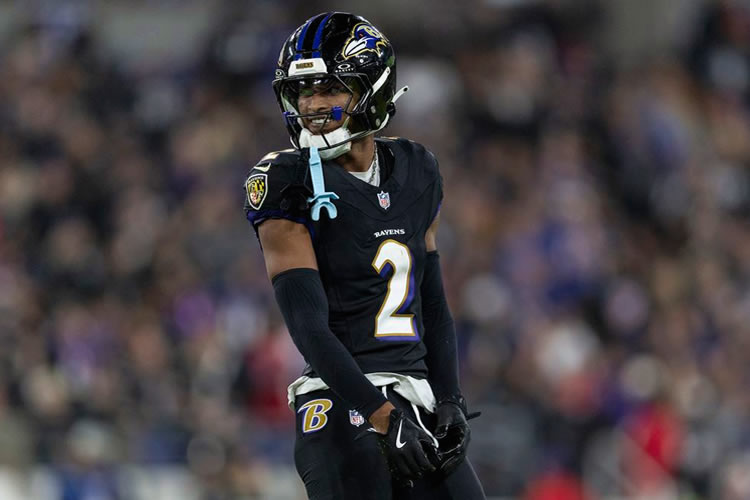
Cornerback – Nate Wiggins, Ravens
The success the Eagles had with their duo of defensive backs selected in the top 50 en route to a Lombardi trophy – Quinyon Mitchell and Cooper DeJean – has kind of overshadowed that last year’s cornerback class was a pretty strong one. Looking back at my top ten list, all but two of them are expected to be key starters this upcoming season. Wiggins ranked second for me, behind only the previously mentioned Mitchell. A true junior at the time, he came to Clemson as a top-100 national recruit and developed into one of the premier shutdown corners in the ACC, making first-team all-conference. Yet, despite putting up a blazing 4.28 in the 40 at the combine, questions about his slender frame (6’1”, 173 pounds at the time) and the lack of appetite for getting involved in the run game, led to him slipping to the Ravens at pick 30. Even though Marlon Humphrey was coming off his first slight “down season” in a while, considering Brandon Stephens just quietly put together a strong year across from him and Kyle Hamilton was becoming a star mostly deployed as a big nickel, this wasn’t viewed as a glaring need necessarily. Coming off a season in which Baltimore finished top-two in basically all meaningful metrics, the transition from Mike Macdonald to Zach Orr at defensive coordinator didn’t go perfectly smoothly however, as it took a while for him to settle in as a play-caller but more importantly some personnel decisions, moving Hamilton back deep while taking out their pair of struggling veteran safeties. That coincided with Wiggins becoming a (quasi) starter from week seven onwards, as Humphrey was put back in the slot primarily, going from averaging 34 to 46 defensive snaps per game all the way through their playoff exit in the Divisional Round. He finished the year with 13 pass break-ups and added a pick-six in the regular season finale against Cleveland.
Watching this uber-talented cover-talent at Clemson, what fascinated me was his ability to play almost flat-footed and either redirect forward or flip and run with guys from that soft pedal in off-man or match coverage, which most human beings would lose multiple steps on the guy lined up across from him. Wiggins looks completely unbothered by most receivers during the drive phase of the route, and that’s why he’s often right there as they break inside deep or snap off their route. His light feet also shine in soft press duty, being able to mirror releases, and if opponents declare early, he’ll make sure to engage within those first five yards and widen them towards the sideline. There was a bit of a learning curve in year one, but even when he was half a step behind and the ball was up in the air, he was able to avoid interfering and played through the hands of the intended target. During the regular season, the rookie allowed exactly half of the passes in his direction (33 of 66) to be completed for 431 yards, and he didn’t get charged with a single touchdown until their Wildcard Round win over the Steelers, which they were in control of the whole way and it was Russell Wilson’s best throw of the day, perfectly hitting George Pickens at the sideline between the corner and safety playing cover-two to that side. That made for a passer rating of 64.6. The Cowboys, back in week three, tried to go after the rookie and he drew three flags for different versions of illegal contact. Outside of that, he was only penalized five other times on defense as a rookie despite being targeted on 71 total occasions. Ceedee Lamb got him to completely lose track on a wicked out-and-up, but the young corner also redeemed himself by stripping the ball for a big takeaway in the red zone. In general, these savvy route-runners, who can add in head-fakes or other false indicators and not allow Wiggins to jump on the break playing off, could continue to give him trouble in isolated situations.
Putting him on the far side of the field and allowing him to see all the eligibles that way in vision zone assignments, his closing burst to contest what should be open throws based on where he is as the quarterback releases the pass, pops off the tape. Once he sees number two stem inside, he’s focused on potentially having to come back down the stem with the flanker on a curl/comeback. And Wiggins may have that slender frame, but there are no reservations about throwing all of it at opponents, and he’s able to jar the ball loose that way. His pick-six in week 18 against the Browns is an illustration of how he became more intelligent in zone coverage, as he’s responsible for the flats and the offense tries to put him in conflict with a slant-flat combo, yet after bumping the wideout inside, he falls off it to undercut the slot receiver. By the numbers, Wiggins still didn’t contribute a whole lot in run support, finishing the year with just eight “defensive stops” (prior to adding three more in two playoff games). Yet, not once did PFF credit him with a run defense grade below 60, and outside of four missed tackles back in week three, he only missed four of the other 32 attempts. That also helped him limit potential yardage after the catch, allowing 15+ of those in two contests all year long. Not allowing the ball to get outside of him is the most important part of playing wide corner against run and screen plays, and Wiggins rarely does. He simply isn’t someone you want closer to the formation due to his size profile or who’ll punch off blockers when the run is designed his way, but he won’t surrender contain typically.
From week seven onward, Wiggins earned a 69.4-plus PFF coverage grade in six of 12 contests. Among outside corners, he ranked in the 70th percentile in that metric (70.9) and in forced incompletion rate (12.7%). With Brandon Stephens now having moved on to the Jets, after being one of the clear weak spots for that defense in 2024, they’re looking for Wiggins to be a locked-in starter who may have put more on his plate when it comes to covering the opposing team’s number one receiver on crucial plays. It’ll be interesting how exactly Baltimore constructs their secondary and what the deployment of certain packages looks like. Considering Ar’Darius Washington unfortunately tore his Achilles during an offseason workout, even though they did spend their first overall pick on Georgia standout safety Malaki Starks, I’d expect Kyle Hamilton to line up next to him in principle for the majority of snaps. Humphrey, at this stage of his career, is best suited at the nickel, which leaves them with Wiggins and someone else on the perimeter. That other spot wouldn’t have been up for grabs three weeks ago still, but by signing a two-time All-Pro in Jaire Alexander for a one-year, prove-it deal following a pair of injury-riddled seasons, that unit has a chance to be truly special. Considering the Ravens put him more into the boundary on third downs towards the end of his debut campaign, Wiggins getting a chance to prove himself matched up with the ace pass-catcher on the backside of the formation potentially, but there also being no weakness like Stephens previously who offenses would excessively target, now granting him more opportunities to make plays on the ball himself, he could turn himself into a household name for a unit that ranked behind only the Eagles in most meaningful metrics over the second half of last season.
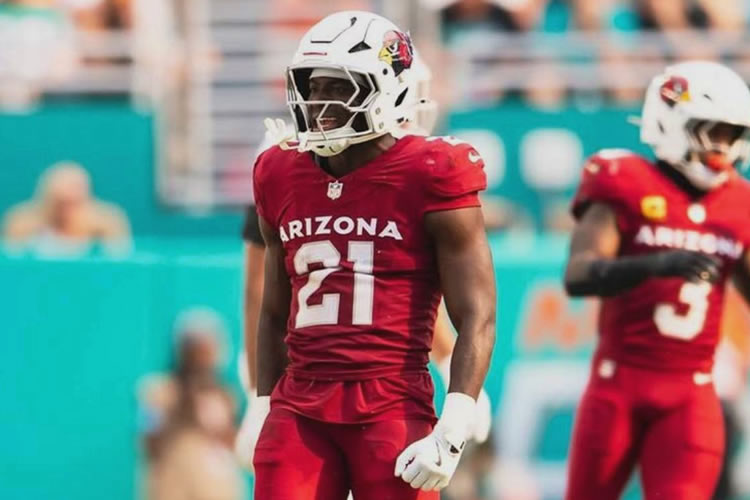
Nickelback – Garrett Williams, Cardinals
After arriving at Syracuse as a three-star recruit with little attention from FBS programs of note and redshirting his first year on campus following some special team contributions, Williams broke up ten passes each of the next two seasons, along with returning one of his two interceptions for a touchdown in the first of those. Unfortunately, he tore his ACL midway through his redshirt junior campaign, but had put together good enough tape to enter the 2023 NFL draft anyway. The former member of the Orange was largely correct, as the Cardinals selected him at the top of the third round (72nd overall) and once he returned in week seven of his rookie season, he ended up starting six of the final nine contests. He actually intercepted a pass off Seattle’s Geno Smith in his debut, but only added two other PBUs. Personally, I thought he already took a massive step in year two, remaining in his full-time role at nickel, but more regularly being involved in the run fit, when opponents condensed the formation (212 snaps in the box compared to 547 in the slot, according to PFF). Being a quasi-starter in all but one of 17 weeks, which he missed, he hauled in two picks and logged nine for PBUs, while logging 58 total tackles (40 solo) and forcing a fumble. Although the Cardinals defense finished 24th in EPA per play and second-to-last in success rate allowed, they were just above average in schedule-adjusted DVOA and straight-up points allowed per game (22.3 PPG). Still, for as interesting as some of the exotic ideas they’ve been willing to tap into are, it didn’t really manifest in the bottom-line results, because they were lacking difference-making players they could rely upon. Williams has started to become one of those, and I believe people may start to pay attention as he leaves more of a mark on the stat sheet.
Watching him alongside Budda Baker on that defense, it’s tough to measure anyone up to the reckless abandon that maniacal dude plays with, but Williams is a sound, invested run defender, even if the Cardinals don’t always have him on the field on early downs if opponents use pro personnel (21/12) or in some goal-line packages. I certainly wouldn’t call him violent into and working off contact, but he’s pro-active with his punch to deny receivers the ability to cut off the angle to the ball and wall him off. He keeps his frame clean and is at least able to drag down the ball-carrier to limit explosive runs, as they’re about to break through the second level. When motion at the snap dictates it, Williams shows no qualms about shuffling inside and being involved in the run fit, where he displays some suddenness to side-step climbing linemen or tight-ends. When opponents throw perimeter screens to his side, he rapidly barrels down on those, to where he’s often too fast for whoever’s tagged with blocking him and funnels the ball inside immediately. Through one-and-a-half seasons as a pro basically, Williams has put up a 13.3% missed tackle rate. Yet, he showed massive improvements over the second half of this past year, only missing two of 35 attempts. You see him sling his arms around the ball-carrier and lasso them to the ground for plenty of challenging stops. Williams only logged three pressures across ten pass-rush snaps, but his closing burst could be utilized coming off the slot or as an automatic check at times maybe, when put closer to the formation against condensed sets.
As for the coverage profile, he went through allowing 182 yards and one touchdown compared to one interception on 29 targets as a rookie, to going 35-for-60 for 343 yards, with two TDs and INTs each in year two (71.7 passer rating). Williams does an outstanding job of playing to his outside leverage when they try to box in the offense, forcing receivers to go through him if they want to break out to the sideline ultimately. And in general, he has a great feel for the level of contact he can get away with, sort of “catching” his assignments out of stacks/bunches without getting grabby to where he actually draws cloth from the referees. This guy is so light on his feet, not overreacting when opponents bend the route and making himself vulnerable on whip/return routes. And he really feels things develop when engaged with his opponent. Yet, he also recognizes any tilt in the route stem and looks very comfortable staying in front of his man in a straight back-pedal for off-man-coverage or match assignments. Plus, then he excels at maximizing his length when he wraps around the intended targets as he’s on that guy’s hip. That makes it so impressive that he’s only been penalized once in his career, when he arrived early at a slot receiver for the Jets bending to the middle of the field as the ball came out of the quarterback’s hand a tad late. His worst game in solo coverage came in their second meeting with the Seahawks, where he was put on an island against Jaxon Smith-Njigba without being able to put his hands on him. At Seattle a couple of weeks earlier, he was charged with one completion for three yards. In zone assignments, Williams is quick to close to the flats after bumping out with a motion that creates a fast threat that way. Overall, he provides expansive peripheral vision and the ability to command space, closing in on receivers approaching him to dislodge the ball from the intended target. With how many funky ways they get to their zone coverage distributions on longer downs, you saw Williams from the slot sink to a deep half or even fly to the high post a few times For someone who almost lined up outside in college and has been a pure slot defender (by alignment) in the NFL, I really appreciate the way he manages that relationship to slot receivers pushing vertically, staying over top, and how he squeezes down the space, slings his around them and knocks down passes. In the Bears game in particular, there were multiple snaps where he was responsible for a deep half and was just able to break up a seam ball and a corner route. I would argue that he occasionally still ends up covering grass and misses opportunities to drift underneath nearby targets when his area is voided.
Nonetheless, in his second year in Arizona, no other defensive back who primarily lined up in the slot received a higher overall PFF grade (82.0), with Detroit’s Brian Branch just edging him out after playing a few more snaps as a free safety. Yet, I don’t think he’s quite received the national recognition I believe he deserves already. Even though “reliable” is the term I would describe him with in run defense, he has a few moments where he ends up accelerating into gang tackles on longer runways, you’re not going to full this guy with motion to pull him off his landmarks, and he has a myriad of impressive snaps in man-coverage. I expect the Cardinals’ influx of talent up front to create more opportunities for their guy in the slot – and their entire secondary, for that matter – to get his hands on the ball. With Jonathan Gannon and DC Nick Rallis having the most talent along their lineup during their tenure and starting to figure out the right levers to pull, Williams could be one of the faces of a young, rising defense.

Safety – Ronnie Hickman, Browns
While I didn’t think the 2023 safety class was particularly great, looking back at how I personally valued them compared to when they actually heard their names called, it only became clearer that the NFL undervalued them collectively. Washington’s Quan Martin was the only one of the top six names that was selected earlier than where he found himself on my big board, and one of them didn’t get drafted altogether (even if injury concerns came to light later on). Ronnie Hickman was the first safety just outside the top ten and would also have to prove himself as a UDFA in Cleveland. Even though they had already signed free agents Juan Thornhill and Rodney McLeod to put next to Grant Delpit, I wrote about how I could see him make an impact sooner rather than later in Jim Schwartz’s defense. Through his first two seasons with the Browns, despite the veterans on that roster, he has started nine of 24 games played in Cleveland, for a total of 775 combined snaps – just under half the percentage of time he was available for. Over that stretch, he has combined for 70 total tackles, one interception, four pass deflections and a fumble recovery. I believe those numbers don’t reflect the quality of play Hickman was provided when called upon up until this point, and by allowing Thornhill to walk in free agency, he is not only slated to start but could prove himself to be one of the better young safeties in the league, for a defense with their eyes sight on return to the dominant ways we saw out of them in 2023.
Hickman’s usage in the pros has been kind of interesting, because he was primarily deployed in the slot and the box at Ohio State, yet 81.9% of his snaps with the Browns have been at “free safety”, according to PFF. With that in mind, I definitely wouldn’t call him passive in that responsibility of becoming that extra layer in run defense. Although based on coaching, his initial movement may be backwards or diagonally when asked to cloud over top of the three-wide-receiver side on longer downs, once he’s certain the ball is handed off, he’ll charge upfield with the mindset of getting involved on every pile of bodies in front of him. Rarely do you see him create contact with the ball-carrier when he hits somewhere between the tackles. Now, if the runner does bounce wide or offenses throw a screen, he understands his role of having to play the cap of the defense. He’ll adjust his angles to navigate around bodies in his path and get back on track as soon as possible, with the suddenness to evade offensive linemen on tunnel screens. When offenses call fly sweeps or the perimeter runs, Hickman trusts the slot defender to take care of his contain responsibility and is aggressive with “shooting the gap” to the O-line in order to not grant the ball-carrier room to operate as he tries to get vertical. Officially, he has only logged 13 defensive stops in his young career, due to how often he lined up in the high post and became the last line of defense. The few times he did drop down into the box and a hip slot or receiver motioning close to the formation was tasked with blocking him, that typically ended with that opponent being discarded. Ronnie has posted missed-tackle rates of just over 11% in each of his first two seasons, shooting cross-body through the quads of the ball-carrier to actually take them off their feet on several occasions on contact. He can be vulnerable to shifting his weight too far over his toes, to where I thought he was about to whiff or slip of the runner, but he has a knack for somehow still twisting guys to the ground even as that guy hits the third level near full throttle.
Going through the numbers for Cleveland’s defense this past season, they led the league with a 35.4% cover-one rate, and they were 10th in EPA on those snaps. Meanwhile, they were near the bottom of the league in both quarters and cover-six – and their efficiency on those plays reflects that. The menu of calls was fairly similar to the year previous, when it was either them or the recently mentioned Ravens vying for the top spots across all the different metrics. Opponents were able to run the ball more frequently (rather than efficiently), the ancillary pass-rushers around Myles Garrett simply didn’t contribute a whole lot, and their corner trio – Denzel Ward excluded more so than the two others – simply struggled. Hickman was the single-high safety on the vast majority of those middle-of-the-field closed structures, where he’d discourage quarterbacks from hitting posts and seam routes. Having said that, with those locked-up man-defenders typically playing with outside leverage, he’d often end up dropping down and allowing the corner to replace him, in order to take away easier throws over the middle of the field. You can argue his job description wasn’t as difficult as some other center-fielders in that capacity, since he doesn’t offer the same type of range typically associated with that spot. Generally, I liked seeing the third-man man digest route combinations, not playing scared of getting beat deep and therefore excessively gaining depth. Mixed in were the occasional snaps trailing a tight-end motioning out wide, where he looked comfortable playing off-man in that quarter-turn. Through his first couple of seasons as a pro (510 coverage snaps), Hickman has allowed 12 of 21 targets his way to be completed for 107 yards, with both the two touchdowns and one interception to his name coming in his rookie year. I believe he finds an excellent balance between triggering downhill from depth but still coming to balance. One of the things I appreciated most about watching him in his starts last year was him positioning himself to cut off the runway for receivers catching the ball on in-breaking/crossing routes, to where he and the trailing man-defender could combine for the stop. The only flag thrown against him came in Cleveland’s blowout loss at Houston at the end of his rookie year, by the way.
All in all, while it’s been curious for me to see Hickman almost switch roles compared to how they allocated those during his time with the Buckeyes, the fact that he’s found ways to get onto the field speaks to his football IQ and particularly the tackling in space. I would very much think he’ll continue to be deployed that way in base personnel, we’ll have to see if they diversify their approach and how new arrivals Rayshawn Jenkins and Damontae Kazee factor in. Cleveland ranked 26th in nickel personnel usage (58.8%) last season and they actually led the league with any packages that aren’t either one of those or dime, with six DBs on the field (5.3%). How much they’re willing to put on the plate of second-round pick Carson Schwesinger (UCLA) in relief of Jeremiah Owusu-Koramoah – who will all of 2025 with a neck injury he suffered late last season – will factor into that as well, of course. Either way, as long as he’s healthy, I don’t envision Hickman ever really leaving the field. The Browns added a couple of new pieces to their D-line, their corner group has a good chance of bouncing back, and if Kevin Stefanski can figure out how to get any acceptable level of play out of one of their quarterbacks, they hope to not constantly be playing from behind. I expect the young safety to be given more opportunities to get his hands on the football and receive recognition among a defense that terrorized opposing passers just two years ago still.
Others on my radar:
EDGE Keion White, Patriots
EDGE Jalyx Hunt, Eagles
IDL Byron Murphy II, Seahawks
IDL Moro Ojomo, Eagles
LB Marte Mapu, Patriots
LB Trevin Wallace, Panthers
LB Tyrice Knight, Seahawks
CB Cam Smith, Dolphins
CB Kool-Aid McKinstry, Saints
CB Jarvis Brownlee Jr., Titans
NB Javon Bullard, Packers
SAF Tykee Smith, Buccaneers
SAF Jaden Hicks, Chiefs
 Halil's Real Footballtalk
Pingback: Key takeaways from all 2025 week one NFL games: | Halil's Real Footballtalk
Pingback: Key takeaways from all 2025 week one NFL games: – Lifestyle . . . Defiant