

Another draft cycle comes to a close, as we started with all 32 teams being in control of their first-round pick for the only time in the common era, yet it only took until the second overall selection for us to get a major shake-up, when the Jaguars’ new regime moved up three spots with the Browns to add two-way superstar Travis Hunter. And Cleveland would be the ones to end one of the most prominent draft slides we’ve ever seen, which ended up being the biggest storyline of the weekend.
To recap everything that happened, I will once again outline who I believe were the biggest winners and losers, steals and reaches across those three days. As always, my thoughts are purely based on evaluating the skill-sets of prospects at this moment and without access to all the information about medical reports and potential character/off-field concerns. However, I will disregard some names for the “steals” category if either one of those clearly applies based on the reporting out there.
If I don’t talk about your favorite team specifically today, in just two weeks I’ll start my divisional draft and roster review series, where I give the spotlight to all 32 teams in podcast form, discussing every single player they selected, their projected role and how it all fits with the other roster moves they’ve made. And of course, I have scouting reports on over 130 prospects here on my site, as part of my positional draft rankings, if you want to dive deeper into individual names.
Let’s break down the biggest storylines and selections today!
Winners:
John Schneider taking back control in Seattle
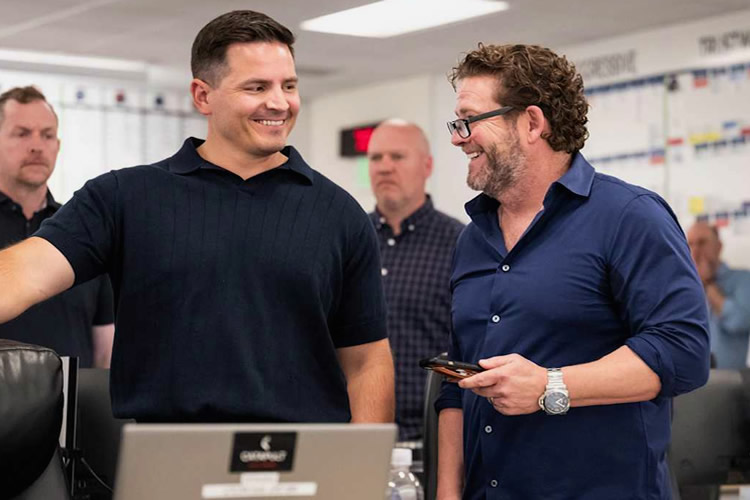
For anyone who’s get tracked of what’s been going on in the Pacific Northwest since 2010, when Pete Carroll and John Schneider joined forces in Seattle, they were able to build one of the more dominant franchises in the NFL for about a nine-year stretch, as only once they didn’t win at least double-digit games (and they went 9-7 that year). As we all know, the interception by Patriots cornerback Malcolm Butler in Super Bowl XLIX has haunted this franchise to a certain degree, never making it back to the big stage, but they still had the infrastructure around as the talent started to decline with age. Following the 2021 season, Seattle traded their 10-year starting quarterback Russell Wilson to Denver in a stunning move, which Carroll reportedly was the main driver behind, before two 9-8 years later, the head coach and organization (somewhat) mutually decided he would step back, which felt a little bit like the GM had won an underlying power struggle. Although people probably wouldn’t think so, the Hawks did go 10-7 in the first season under Mike Macdonald, yet decided to trade both quarterback Geno Smith and leading receiver D.K. Metcalf basically for a third- and second-round pick respectively, along with parting ways with former offensive coordinator Ryan Grubb. Now, with the state of the roster being sort of in question, Schneider seems to be forming it in his vision, looking at what they did with this draft class.
At pick 18, they did what I projected in my mock draft and selected North Dakota State’s Grey Zabel, who played on both ends of that offensive line, but legitimately can play line up at all five spots, his agility makes him a great fit for new OC Klint Kubiak’s wide zone ground game, and paired with his quick hands to win the battle early, he can survive on an island in pass-pro. Next, they traded a third-rounder to move up 17 spots in the second for South Carolina safety Nick Emmanwori (35th overall), who can either be seen as Mike Mac’s version of Kyle Hamilton or be a callback to the heart of the Legion of Boom in Kam Chancellor. Yet, what separates the projected first-rounder is that he actually was an elite athletic tester, even though I personally have a few questions about him. Later in the second (pick 50), they bring in Miami’s Elijah Arroyo, who is very reminiscent of Schneider’s pet project several years ago in Jimmy Graham as a big seam-stretching tight-end. And 92nd overall, he identified Alabama’s Jalen Milroe as the hyper-talented developmental quarterback who could end up making him look like a genius if he comes close to reaching his ceiling, while they have the contractual flexibility to move on from the younger Sam Darnold once they traded away Geno.
I even like what they did on day three a lot, with a slender but effective run-after-catch WR in Colorado State’s Tory Horton, a hard-nosed fullback/H-back in Alabama’s Robbie Ouzts, long-time starters at both tackle spots in Kansas’ Bryce Cabeldue and Iowa’s Mason Richman, who could also move inside, a special teams demon and underrated WR in UNLV’s Ricky White III, and above all else to me, Miami’s Damien Martinez – who was my RB6! I believe at worst he’s the best third running back in the league as a rookie already and gives them flexibility down the line because he’s such a complete player.
Second-year quarterbacks Caleb Williams and Drake Maye
Undoubtedly, reigning Offensive Rookie of the Year Jayden Daniels had the best start to his NFL career and the Commanders made a couple of trades to build out the offense around him, but with those couple of draft picks now missing, they were working with limited capital to keep adding pieces. I actually love the combination of Oregon OT Josh Conerly Jr. and Virginia Tech WR Jaylin Lane, but just in terms of the volume of acquisitions they made, building a support system for the number one and three picks from last year was clearly the priority for the Bears and Patriots respectively.
After most mock drafts had either an edge defender or a skill-position player like Ashton Jeanty/Tyler Warren going to Chicago, they actually slightly surprised us by taking my personal TE1 Colston Loveland (Michigan) tenth overall. They followed that up by using the final pick they got in return from the Bryce Young trade with the Panthers on Luther Burden III, who I believe they got on a discount based on his production drop as part of a bad Missouri offense, but purely based on skills I ended up with as my WR2. And then after moving back from 41st to 56th overall, they selected a solid offensive tackle in Boston College’s Ozzy Trapilo, who has starting experience on both ends of the line and is someone you’re simply not going to go through in passing situations. All of this is on the heels of completely overhauling the interior of their offensive line in the mold of what head coach Ben Johnson had in Detroit, and he’ll find ways to take pressure off the quarterback, while now having a bunch of high-value pieces around him.
For the Patriots, they did fall in line with what pretty much became consensus, as they selected LSU’s Will Campbell fourth overall, who I personally project to play inside, but even if it takes some struggles at left tackle early – which he did hold his own against SEC edge rushers for the most part across the last three seasons – he’ll end up being an anchor piece of their front. Towards the end of the third round, they added one of the most athletic centers ever in Georgia’s Jared Wilson, who I thought had a chance to go in the second after his one excellent season as a starter. And in-between those, they added some dynamism that this skill-position group hasn’t had in maybe a decade with Ohio State RB TreVeyon Henderson (39th overall) and Washington State WR Kyle Williams (69th overall). For Drake specifically, Henderson was one of the top two personal protectors of the class and Williams already brings an advanced release package to win early in the route and gives them a legit separator, who can also add plenty after the catch.
James Gladstone as the new sheriff in Duval County
Among dysfunctional franchises we see towards the bottom of the league for the most part, what differentiated the Jaguars for many years is that they actually kept their general manager Trent Baalke around through different firings, who clearly was in the owner’s ear about many of the key decisions. That changed this offseason, when head coaching candidate Liam Coen temporarily went back to Tampa Bay to remain as their OC instead of taking the job, before Shahid Khan finally realized it was time for a change. Jacksonville replaced Baalke with 34-year-old James Gladstone, who had worked his way up to the title of “director of scouting strategy” with the Rams. With the power move Coen pulled, you would’ve thought he was the one in charge of personnel and overhauling management, and I’m sure he was on board with the early approach they’ve taken.
However, for the youngest GM ever in his first draft he’s in charge of, to trade up from pick five to two, and basically give up pick 36 and next year’s first-rounder (while moving up 22 spots in the fourth themselves), was quite the “big balls move”. I can’t say I fully agree with the allocation of resources, but no matter which big board you look at, Colorado two-way superstar Heisman winner Travis Hunter was ranked either first or second, and the Jags needed some excitement after they’ve gone 5-and-18 since week 12 of 2023. I like the fit for a Florida kid going to a team with an established number one receiver in Brian Thomas Jr. and that can figure out how exactly his offense/defense splits look like, while already having a 55-million-dollar quarterback in place. With that early fourth-rounder, they grabbed a homerun hitter at RB in Virginia Tech’s Bhayshul Tuten. Gladstone’s team traded up in the third round in what clearly be another negative value exchange of draft picks (fifth for a seventh) for West Virginia’s likely tackle convert Wyatt Milum, but that was after arguably the most one-sided surplus trade of this entire draft, as they acquired two third-rounders next year in return for moving down 32 spots in the third round along with a sixth this and next year respectively.
So I don’t know how all these moves work out and I believe you can absolutely call the Browns the “winners” of the big transaction up top in the moment, with that extra first-rounder in their pocket, but if nothing else, this signals that this ownership in Duval County is willing to hand the keys to the organization to this young hotshot GM – and the still only 39-year-old head coach.
Kris Kocurek
In the last six years, the 49ers have at least made it to the NFC Championship game four times and had two seasons from hell when it comes to injuries – 2020 and ’24. While injuries at quarterback derailed the first of those, it was the sub-par play alongside Nick Bosa on that defensive line that really stood out as a deterrent for living up to their usual standard. They finished 29th in rush EPA allowed (0.008) and 24th in pressure rate (20.5%) as a unit. That was with Bosa finishing top-ten in both pass-rush and run-defense grade, according to PFF. So they needed to add some bad-ass pieces around him – and that was their focus from the start of draft weekend.
With the 11th overall pick, they added Georgia EDGE Mykel Williams. At 6’5”, around 265 pounds, this guy has 34.5-inch arms and massive hands of over 10 inches. From day one, he can be an elite edge-setter in the run game, and while his pass-rush plan isn’t particularly unrefined right now, he has a lot of potential with his combination of length, strength and versatility, where he can slide inside in sub-packages and stunt/loop all across the front. Exactly 32 spots later, the Niners added massive Texas nose-tackle Alfred Collins, who has about the same height and length as Mykel but 70 extra pounds. This guy was a rock in the middle of that Longhorn defense, who would just swallow double-teams, but then also had the lateral agility to track zone runs down the line, never missed tackles and then he has some shake to him as a pass-rush paired with a sudden arm-over move. And finally, early in the fourth round (pick 133), they went back to D-tackle with Indiana’s C.J. West. He’s a different type of player on the interior, who is kind of unique in his playing style, because he’s only 6’1”, 315 pounds, but would regularly line up as a shade-nose, because he has the natural leverage and uber-active, heavy hands to control blockers, split combos and chase down plays. He only has 31.5-inch arms, but he’s typically quicker and then just outworks interior protectors.
San Francisco’s D-line coach Kris Kocurek has taught some of the game’s best, but his most valuable trait in the past has been taking on reclamation projects and turning them into very much useful players, to where they’d often sign significantly bigger contracts elsewhere a year later. He hasn’t had this much talent to work with in a while. Williams and Collins in particular were right up there for the biggest upside prospects on the edge and interior respectively, but also provide a high floor the day they step onto an NFL field thanks to their work in run defense. This unit should have a much different feel in 2025 and I trust their position coach to get the maximum out of them.
Tampa Bay Buccaneers
I can’t say the first two days of the draft played out the way I expected for the Bucs necessarily, but as I look at the results, this on paper is one of my favorite classes of the weekend. Typically, I’ve felt kind of hit-or-miss on what Jason Licht and company have done on a year-to-year – and to a certain degree even pick-to-pick basis – but of these last three groups they’ve put together, they’ve definitely been more on the positive side and this new one has a chance to be the best one yet. Every single pick they made was basically at or above value for me personally. Let’s quickly look at them individually:
19th overall Emeka Egbuka, WR, Ohio State – Arguably the cleanest receiver prospect in the draft, capable of excelling at Z or the slot, where he can complement Chris Godwin or fill his role in case of another injury, as a great zone beater and blocker from day one.
53rd Benjamin Morrison, CB, Notre Dame – Who might’ve had the best tape of any pure *cover corner* in 2023 before suffering a hip injury early on this past season. He shows tremendous balance and calm in (soft) press-alignment and plays the deep ball like a wide receiver.
84th Jacob Parrish, CB, Kansas State – My favorite corner and maybe player in this entire class. Parrish is a little undersized (5’10”, 190 pounds), but you would never believe it based on how feisty he is, challenging bigger wideouts or involving himself in the run fit.
121st David Walker, EDGE, Central Arkansas – A super productive small school edge defender, with more a compact build but who uses that leverage masterfully to his advantage and has a powerful lower body. He packs a wide array of pass-rush moves and presents a very limited surface area to blockers.
157th Elijah Roberts, EDGE/IDL, SMU – Was even more productive against a higher level of competition these last two years, combining for an FBS-high 131 total pressures. He’s a jumbo-sized D-end, who can be a dirty work run defender, but plays off his power as a rusher.
235th Tez Johnson, WR, Oregon – At 154 pounds, this is now the smallest player in the NFL. Johnson’s game speed is significantly better than what he timed up, he erased some earlier drop concerns in 2024 and brings basketball-like cross-over skills to the table before during the route and after the catch.
I would’ve liked to see them add another linebacker at some point, but I believe you shouldn’t just look at how they addressed their “needs” based on what draft trackers may tell you, because you have to add context for what they already had on the roster. I already quickly mentioned Egbuka’s flexibility with how they can play their three-WR sets, Morrison has a chance to be a legit high-end starter as a boundary corner, Parrish has inside-out versatility with last year’s third-rounder Tykee Smith maybe moving back to safety on passing downs after starting out in big nickel packages, they add a couple more bodies up front and Tez may at worst be their starting punt returner.
Other drafts I liked:
Baltimore Ravens
Dallas Cowboys
Kansas City Chiefs
New York Giants
Philadelphia Eagles
Losers:
Kenny Pickett
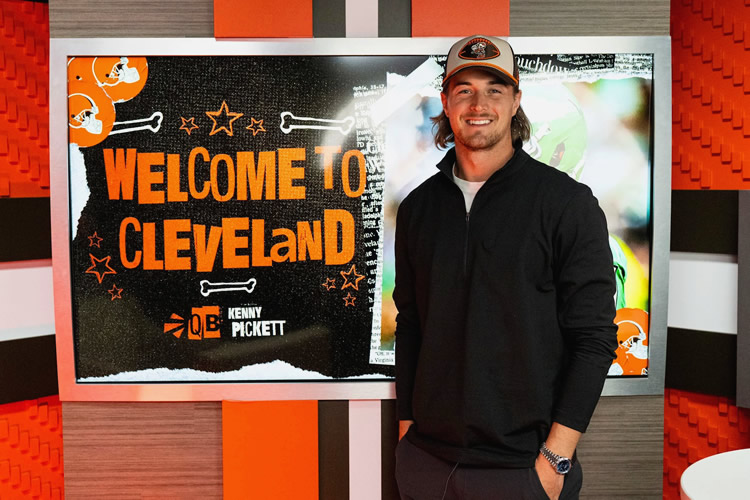
To truly understand the severity of this situation, we have to go through the timeline chronologically here. In week 16 of this past season after Jalen Hurts suffered concussion early on, Pickett came onto the field in absence and even though he didn’t play particularly well, the Eagles basically lost on a walk-off touchdown by Washington before the following week, he has very little to do in a blowout win over the Cowboys, and then six weeks later, he’s taking kneel-downs for the Super Bowl champs. About a month later, the Browns trade their backup QB Dorian Thompson-Robinson and a fifth-rounder to Philly for the fourth-year passer and now the only guy at the position still under contract for Cleveland is Deshaun Watson, who tore his Achilles for a second time this offseason and who owner Jimmy Haslam admitted at the owner’s meeting that they “took a big swing and miss”. Again, one month later, they signed veteran Joe Flacco, who in 2023 was named Comeback Player of the Year after coming off the couch for them at midseason. And now they drafted both Oregon’s Dillon Gabriel in the third round and Colorado’s Shedeur Sanders in the fifth – who was projected to go on day one, and we’ll get to his slide in the next paragraph.
So now with five quarterbacks on the roster, Pickett very much feels like the odd man out. To qualify this, I was a lot lower on him coming out of Pitt three years ago, when I had him as QB5 in that weak class with a third-round grade on him. Still, I think anyone can see that Joe Flacco is the most qualified guy to run this offense as of this moment, considering he did perform very well for head coach Kevin Stefanski two years ago, as he went 4-1 down the stretch to put them in the playoffs, before things came crumbling down in the Wildcard Round. Pretty clearly, the organization – probably fueled by ownership – decided not to bring him back for 2024 in order to not undermine Deshaun, who *still* has 167 million dollars of dead cap remaining on his once fully guaranteed contract. Now, you add in two more rookie quarterbacks, who at worst are probably as talented as Pickett and haven’t yet shown what they can bring onto an NFL field, while we already know what the limitations are for an offense led by former first-rounder by the Steelers. In two years as the starter in Pittsburgh, he posted the exact same amount of passing touchdowns as interceptions (13), his career pressure-to-sack conversion rate of 18.2% was right in-line with the guy that he was traded for in DTR last year, and even though he had a few nice late-game drives, it was all go routes or checkdowns for him.
To me, I give Shedeur a chance to eventually get the opportunity to start for this team, Flacco is the most likely option for this year and the Browns just really like Gabriel as a long-time backup at least, investing a top-100 selection in him. Ultimately, Pickett required the lowest draft capital (not trying to assign value to the other QB involved in the trade) and at this point, I’d be surprised if he’s on the active roster by the trade deadline at the very latest. This does lead me into my next point.
The Sanders family
With all the attention around Shedeur Sanders heading into this draft and everything that proceeded, I don’t feel like I need to cover this topic in detail, but this was such a significant storyline that lingered around that I had to address it. So obviously, the first two days of the event did not go as expected whatsoever for Shedeur and his family, as he didn’t come off the board until pick 144 in the fifth round, when the Browns finally ended probably the biggest slide of a single player we have ever witnessed, as they traded a sixth-rounder to Seahawks to move up 22 spots in the fifth. That doesn’t mean his phone didn’t ring earlier, as he received a prank call by some college kids, including the son of Falcons defensive coordinator Jax Ulbrich, who stupidly acted as if they were the Saints picking him ninth overall. Although I never believed the talent warranted it, it wasn’t too long ago when there were conversations about how Cleveland may make him the second pick of the whole draft. On the surface, this ended up as a great value for them, as this was clearly way later than even many of the Shedeur non-believers rated him as. I did come on the heels of them drafting ANOTHER QB earlier in third round however, in Oregon’s Dillon Gabriel, and while I don’t won’t to put too much into the interpretation of the Browns’ war room, the people in charge didn’t seem super enthused about the decision, which a vocal ownership group may have been on the forefront of once again. So I stopped short of calling the team a “winner” in the first segment, since I don’t fully know the dynamics, even though I think they had a strong weekend of acquiring players and adding Jacksonville’s first-rounder in the trade-down for Travis Hunter.
From Shedeur’s perspective, this was a devastating experience and he was served a big piece of humble pie by the NFL at large. We can argue about the merits of him being more of a day two talent and my biggest gripe with his evaluation was people with a real voice in the media saying he operated in a “pro-style offense” that required high-end post-snap processing/decision-making – which simply isn’t true – but clearly a large part of this fall was based on how he handled himself during the process. Whether that’s not partaking in any of the on-field activities at the Shrine Bowl, the combine, only doing a (less than impressive) throwing session at his pro day or reportedly not leaving a great impression on several teams he interviewed with. I don’t want to speculate too much about how those went down exactly, but nobody has denied any of the claims about him acting like he’s “above it” or seemingly being unprepared for installs coaches wanted to go over with him. I did certainly feel bad for the young man, but this to some degree was a statement by the league, that they’re the ones employing these players rather than being told by Deion that “there are a couple NFL teams he will not allow his son(s) to play for”, they don’t want to deal with any media circus and a two-year starter at QB having his jersey retired by Colorado isn’t a great look. As I said in the moment – now it’s time for Shedeur to leave the cameras behind, put his head down and go to work. Then I’ll definitely be rooting for the guy!
I believe Deion as an agent ultimately didn’t help his sons. Shilo went undrafted, although I thought that’s 100% what the tape would indicate. And let’s also throw in Mel Kiper Jr. for his ridiculous over-the-top behavior on Shedeur’s fall and how he seemingly wanted to fight the whole ESPN set while the rest of the crew wanted to make actually meaningful statements on it.
Terry Fontenot’s resource management
Let’s now talk about an actual team again and what they did over the weekend. And this is certainly affected by the track record of general manager Terry Fontenot’s and Atlanta’s recent history in the draft. In 2021 – the first he took over his current position – I thought at the time that the right decision with the fourth overall pick was to select either Ja’Marr Chase or Penei Sewell, who are now both top two players at their respective positions, but I did otherwise like what they did without hindsight of me being higher on a few players they selected on day two. Over the next three drafts, basically the only player they selected later than where I had him on my personal big board was Bijan Robinson two years ago – and I can’t give them *that* much credit for taking one of the elite running back prospects we’ve recently seen in the top ten. What’s more glaring however, has been Fontenot’s utter disregard for managing his draft capital, especially in accordance with the money they spent in free agency. In 2022, he flipped an early fourth-rounder to move up five spots in the second for edge rusher Arnold Ebiketie. A year later, he basically did the exact same thing for guard Matthew Bergeron. The latter has established himself as an adequate starter while Ebiketie has at least shown flashes, but based on any trade value chart you want to look at, they were both MASSIVE overpays. Yet, this front office didn’t learn from their mistakes, as they swapped a third- for a sixth-rounder last year in order to move up for a talented developmental interior D-lineman in Ruke Orhorhoro, which at 35th overall was still about a round early based on consensus boards. And that came on the day after they made the biggest headlines of night one, when they selected quarterback Michael Penix Jr. six weeks after signing veteran Kirk Cousins to a four-year, 180-million-dollar contract.
So that leads us to this draft, into which they came just ahead of the Vikings with only five selections at their disposal – and two of those were in the seventh round. Therefore, the general temperature around them was that they were much more likely to trade down from 15th overall and acquire additional resources, than move up. They ultimately ended up sticking at that spot and took Georgia EDGE/LB Jalon Walker, who I have questions about where he’ll actually end up playing in the pros and wouldn’t have taken until late in the first round, but there was at least enough buzz around that going as high as eighth overall. It’s what they did next that just had me throwing my hands up in the air. In order to move up 20 spots from 46th overall to get back into day one, they sent one of their sevens and next year’s first-rounder to the Rams, along with getting pick 101 back in return. Of course, we don’t know where Atlanta will finish this upcoming season, but even if they were to earn that exact same pick, that’s a massive win for L.A. based on those already referenced trade value charts – and right now they’re tied for 21st in Super Bowl odds. If this ends up as anything close to that, this could end up as an insanely one-sided deal. And that has nothing to do the guy they selected in James Pearce Jr., who literally was exactly 26th in that area. Plus, Terry tossed the Eagles a fifth-rounder next year to move up five spots at the end of the third.
Altogether, I’m fine with the players in they selected at those individual spots, but I don’t see how owner Arthur Blank even approves his GM making these uber-aggressive moves at this point, when they just had to engage in pathetic attempts to drum up interest for Cousins, who feels completely out of place now.
LSU team culture
I’ll be shorter on this next point, because part of it is just a sad state of affairs and I simply don’t have the inside knowledge to speak as educated on the topic as I’d like to be able to. I have to start with the part of the story that really made me feel sick in my stomach, because it creates the umbrella under which we have to look at some of these other situations. A year ago, wide receiver Kyren Lacy was considered a potential first-round pick in this draft and even though he didn’t quite live up to the hype in 2024, it was January 13th when he was jailed on charges stemming from a fatal car crash where he “recklessly passed multiple vehicles at a high rate of speed” and “fled the scene without stopping to render aid (or else)”. Exactly three months later, he tragically committed suicide when he crashed into a wall to end his pursuit by the police. Lacy’s father later called on parents via social media to “start talking to [their] kids at a very early age and make sure they are confident and comfortable confiding in [them]”.
Two weeks later, the Patriots did select the biggest leader of that program in recent years with offensive lineman Will Campbell and six other LSU players ended up hearing their names called ultimately. However, edge defender Bradyn Swinson was a projected second-round pick and my 36th overall prospect purely based on tape, yet he somehow fell to the fifth round based on supposed immaturity concerns of “not meeting team standards”, yet was only suspended for one quarter of a game and head coach Brian Kelly didn’t care to elaborate. Multiple other players went later than expected or didn’t get their names called at all, whom we don’t have any credible sources on yet. That was on the heels of multiple sideline interactions between Kelly and players, the nation’s number one recruit – quarterback Bryce Underwood – flipping his commitment from LSU to Michigan back in November, and an extensive piece by Ralph D. Russo and Bruce Feldman coming out a week later, where multiple former assistants and players claimed the program wasn’t “up to the standard” and “if you don’t know the players […] how to talk them […] and build relationships, it’s not going to work”, to some degree regarding the rigid accountability system he had installed.
I want to be careful with invoking a topic like this, but you’re talking about someone who was accused of being involved in the death of a student at Notre Dame, where the videographer fell as the hydraulic lift he operated toppled over due to strong winds. The players still are the ones making decisions that’ll affect their future in the pros and otherwise, but something seems to be off in Baton Rouge, where the head coach who is all about winning hasn’t done nearly enough of that so far there to justify questionable team culture, based around the lack of personal relationships he’s built up.
Christian Watson
To bring us back to actual football, here’s one more (still very young) veteran probably affected heavily by the moves his team made early on in this draft. The entire Packers wide receiver room wasn’t particularly happy when starting running back Josh Jacobs made comments about how they needed “a proven number one” around the time of the Super Bowl. Last offseason, head coach Mike LaFleur said that he likes the fact that they don’t have that type of guy because it makes them less predictable on a weekly basis of who they might feature, but clearly based on what the organization did during the draft, they’ll keep throwing darts at the board. Not only did they draft a wide receiver in round for the first time since 2002 when they brought in Texas’ Matthew Golden, but then in round one they also added TCU’s Savion Williams, when they already had three guys at the position drafted within the last three years, along with signing free agent Mecole Hardman for close to a veteran minimum one-year deal.
So why do I single out Watson here? He was the most talented guy of the group heading into last year, but he’s been battling through various injuries and in the week 18 regular season finale against the Bears, he tore his ACL to delay when he might actually be back. More importantly, as I look at the skill-sets of the two guys they brought in, they most clearly fill the roles/provide the skill-sets of what Watson has been for this offense. I never thought Golden lived up to the 4.29 he ran at the combine, but clearly he can act as a vertical threat and zone beater, who they can move around pre-snap. Meanwhile, Williams is more of a gadget player at this point, who some even projected to transition to running back based on taking some wildcat quarterback snaps during his time with the Horned Frogs. He’s incredibly strong with the ball in his hands to break through tackles, but then he also has some of the most spectacular high-point grabs in traffic that you’re going to find, posting a 78.8%(!) contested catch rate over the last three years. So those two players in combination kind of replace what LaFleur prioritized Watson getting onto the field for and in Golden’s case, he’s simply a more reliable every-down target. Christian’s brother and dad voicing displeasure about the first-round selection on a live stream wasn’t a great look either, claiming “They don’t want to win, man.”
Entering the final year of his rookie deal with uncertainty about when he might be able to come back (at full strength), it’ll be tough for Watson to re-claim any prominent role on Green Bay’s offense this season. Romeo Doubs has been arguably the most consistent guy of the bunch, capable of regularly winning at the X, and Jayden Reed has become their designed touch option behind the line of scrimmage. Maybe he can join Aaron Rodgers in Pittsburgh, who I could’ve easily laid out as a “winner” for the Steelers not drafting a quarterback until the sixth round (Will Howard, Ohio State) and basically locking him in to eventually sign there, since Watson is a guy the veteran QB wanted to heavily involve as a rookie in Green Bay.
Other drafts I have questions about:
Arizona Cardinals
Cincinnati Bengals
Denver Broncos
Green Bay Packers
Minnesota Vikings
Steals:

Malaki Starks, SAF, Georgia to the Ravens – 27th overall
I partook in The Huddle Report for the first time this year and scored right between titans of the industry like Daniel Jeremiah, Peter Schrager, Trevor Sikkema and others. Yet, I was kicking myself for not sticking with Starks going to Baltimore for my ultimate mock draft, as I had it on my previous version that I posted on social media. He just like one of those really good football players who typically falls to the Ravens later in the first round, in this case because teams clearly didn’t value safeties a whole lot. I personally had him as a top-ten prospect, because I believe his combination of instincts, football IQ and ball-skills are about as good as you’re going to find in a college player at that position – which is why he was a standout starter for Kirby Smart’s complex defense as a true freshman already. I understand that the athletic testing was pretty underwhelming, but I never felt like that showed up on tape and don’t expect to in the pros, unless you maybe ask him to cover a 4.3 receiver in the slot full-time.
Luther Burden III, WR, Missouri to the Bears – 39th overall
Talking about explosive pass-catchers, my WR2 and arguably the most dynamic prospect at that position did make to the seventh pick of round two, which felt like where we were headed based on the temperature around the league. If you had told me that a year ago, with no legitimate medical or off-field concerns that I’m aware of, there was no way I would’ve believed you. Even understanding that his production dropped off massively (from 1212 to 676 yards), I thought contextualizing the mess that was the Missouri offense and how they relied on Burden to make something happen by getting him the ball around the line of scrimmage, I think you can understand to a certain degree why he felt somewhat disengaged. If you just evaluate the movement skills and all the different qualities he brings to the table, I don’t see how this guy makes it to day two. He’s really twitched up, when he was allowed to run actual routes, I thought he showed impressive details, has that extra gear to separate down the field and win with late hands, he plays above his size in contested situations and then with the ball in his hands, he de- and re-acceleration to make defenses look foolish is special.
Shavon Revel, CB, East Carolina to the Cowboys – 76th overall
We get to the one player on this list that we actually know is coming off an injury, but from everything I’ve heard it’s “just” a clean ACL tear, which may push him down a round but looking at similar situations in the past, it’s typically less drastic a fall and with Revel specifically, his first professional game will ultimately be four days shy of being a full calendar year apart from the injury (unless Dallas plays in the kickoff game). In terms of top-end potential, I think Revel was right at the top of this year’s list of corners. This guy is about 6’2”, 200 pounds with an 80-inch wingspan and he would’ve probably run somewhere in the 4.3s. Obviously there’ll be some questions about level of competition and there’ll be a certain adjustment period in the NFL, but this guy has the ability to bully receivers at the line of scrimmage, hanging with guys vertically looked effortless for him, he has impressive ball-skills paired with that large catch radius when he does turn his head and he’s a forceful tackler. He may make Trevon Diggs expendable a year from now.
Charles Grant, OT, William & Mary to the Raiders – 99th overall
Similarly to Revel, the step-up in quality of opponents will be the biggest hurdle for Grant coming out of the FCS, but unless the injury he suffered in his final collegiate game – which sidelined him for Senior Bowl week – is more significant than what I’m aware of, him lasting until the end of day two to me was much more surprising than had the gone early on. This guy is an incredibly nimble athlete for the tackle position, with an incredible combination of agility and fluidity to escort the ball out to the corner or execute backside cut-off on wide zone concepts, as well as to secure moving targets in space. At this point, Grant plays way too tall and will get taught a lesson by NFL edge rushers if he doesn’t correct how often he surrenders his chest, but he has such light feet paired with 35-inch arms to steer defenders off track and it’s certainly not a flexibility issue when you watch him uncoil his hips to stall power moves. If you count LSU’s Will Campbell as an OT, there were five selected in the first round and there was only one other name I had ahead of Grant – and he went at pick 48.
Elic Ayomanor, WR, Stanford to the Titans – 136th overall
The other wide receiver I needed to bring up here and I knew I was personally a lot higher on than consensus is Ayomanor, yet even if you just go by consensus boards, he was projected to be an early third-rounder. For context, I had ranked him just ahead of Matthew Golden – who went 23rd overall – at the position. He does need to work on his ability to stack corners on vertical routes and how he approaches the ball based on its trajectory, as he allowed to many passes to hit him in the chest and up on the ground. Yet, he did have plenty of spectacular high-point grabs and his 48.3% contested-catch success rate was actually held down by suboptimal placement from his quarterback. I love this guy’s powerful frame but also how shifty he is off the line. He can stick his foot in the ground in dynamic fashion to create separation, he shows the capability to contort his body to deal with slightly off-target throws without really losing speed, and he can kick into another gear with the ball in his hands to burn angles.
Marcus Mbow, IOL, Purdue to the Giants – 154th overall
Another offensive lineman I was shocked about the NFL not liking more, since the only red flag I might see is if there are any lingering concerns about the gruesome broken leg he suffered in 2023 – but he followed that up with his best college season and decided to declare for the draft as a redshirt junior who only just turned 22 years old at the start of the month. Mbow has tremendous foot quickness and body control, which clearly goes back to his basketball background and how it translates to the gridiron. I believe to maximize his skill-set, he’s best deployed in an offense that wants to attack the edges of the defense, whether he’s asked to execute reach-blocks, backside scoops or weaponized on long pulls. His loose movement skills also show up in his ability to mirror twitchy pass-rushers, where he flashes a propensity for individual hand-usage, but also packs plenty of grip strength. With only 32-inch arms and how he struggled to deal with speed-to-power moves during Senior Bowl – and he’ll need to improve his core strength either way – I projected him to move inside the whole time, but I thought he should’ve been a mid-day two pick.
Smael Mondon Jr., LB, Georgia to the Eagles – 161st overall
The Eagles already got some great value with Alabama linebacker Jihaad Campbell at pick 31, since he was a projected top-20 pick, but there were at least some late news about how there were concerning parts of his medical reports. Why Mondon dropped all the way to the middle of the fifth round makes no sense whatsoever to me. I understand that he’s on the smaller end around 225 pounds, but he does have 32-inch arms, 4.58 speed, and to me profiled as a starting WILL linebacker in the pros. I thought he was the glue piece of this super-talented Georgia front-seven with the short-area burst to shoot through gaps or work around traffic and he only missed 6.3% of attempted tackles over the last two years. What I truly loved about his tape was his work in coverage though. He showcases excellent spatial awareness and active eyes with expanded range in zone assignments, but then you also see him hang stride-for-stride with slot receivers on drag routes. At worst, he’ll be a tight-end eraser for Vic Fangio – and that would easily pay off the investment in this range.
Chase Lundt, OT, UConn to the Bills – 206th overall
This next is a player I’m aware I was a bigger fan of than what multiple teams probably valued him as, due to the physical profile. Despite being over 6’7”, Lundt’s 78-inch wingspan ranks in just the tenth percentile among tackles and he won’t be looked as a fit for all teams with strict benchmarks for measurables, but I absolutely adored his film. To me, he was best the offensive lineman in the entire draft as a zone-blocker. Whether it’s locating entry points for combo blocks, his ability to climb off those or overtake first-level defenders and maintain that momentum created, but also just to widen the front-side by driving edge defenders out to the sideline – that was teach tape. You do see him lean into speed-rushers up the arc and the lack of range limits his ability to guide them off track on cross-move moves, but he shows great mobility in his lower half to slow down the bull-rush and how I put it in my scouting is that “he’s patient but purposeful with his punch”, displaying savvy in how he swipes down long-arms and re-gains favorable positions.
Aeneas Peebles, IDL, Virginia Tech to the Ravens – 210th overall
Another favorite of mine with sub-optimal measurements was this D-tackle for the Hokies. Peebles is only six-foot-and-a-half with 31.5-inch arms and weighed in the mid-280s, but he has some of the most fun tape you’re going to find at that position. He uses that natural leverage to his advantage all the time as a penetration-style player, capable of splitting double-teams and wreaking havoc as he slants across gaps. His get-off combined with how he comes off the ball also creates very little surface area as a pass-rusher and he has the sudden hand-combats to defeat guards trying to take the fight to him early with short-sets. Plus, he’s one of the very few guys I’ve ever watched who actually makes outside spin moves work. Occasionally you see him get uprooted by double-teams when he can’t immediately create leverage on the gap and his room for error with those shorter arms is definitely limited, but even if he only makes an impact as a pure designated pass-rusher on the interior, this is way too late for him – he just snuck into my top ten on the IDL.
Damien Martinez, RB, Miami to the Seahawks – 223rd overall
Finally, we get to a running back who I thought was too low on consensus boards throughout the process, but everyone I trust in evaluating the position was aligned in my belief in him. Martinez was my personal RB6, yet he somehow ended up as the 20th(!) selected. This guy was highly productive from the day he arrived at Oregon State, excelling in a one-cut-and-go zone-heavy scheme for two years, before being asked to ask to execute lot more gap concepts this past season at Miami. So he’s proven that he’s a quality runner regardless of what’s asked of him, navigated congested areas with efficient footwork, manipulating linebackers behind combination blocks and then when he gets into the open field, he can a bruiser churning through contact, but for someone who played anywhere between 220 and 230 pounds, his ability to string together different moves in consecutive fashion really impressed me. He’s not going to blow you away with his explosion through the hole or the long speed to finish long runs, but he has the size to develop into a solid pass-protector and was probably unproportionally heavily punished just for not being very involved as a receiver. Only six running backs coming off the board over the first two days and the depth of the class certainly didn’t help.
Other value selections:
32nd overall – Josh Simmons, OT, Ohio State to the Chiefs
44th overall – Donovan Ezeiruaku, EDGE, Boston College to the Cowboys
65th overall – Darius Alexander, IDL, Toledo to the Giants
82nd overall – Kevin Winston Jr., SAF, Penn State to the Titans
133rd overall – Jalen Royals, WR, Utah State to the Chiefs
144th overall – Shedeur Sanders, QB, Colorado to the Browns
157th overall – Jeffrey Bassa, LB, Oregon to the Chiefs
171st overall – Miles Frazier, IOL, LSU to the Lions
172nd overall – Chris Paul Jr., LB, Ole Miss to the Rams
177th overall – Dorian Strong, CB, Virginia Tech to the Bills
187th overall – Jaylen Reed, SAF, Penn State to the Texans
207th overall – Cameron Williams, OT, Texas to the Eagles
214th overall – R.J. Mickens, SAF, Clemson to the Chargers
219th overall – Thomas Fidone II, TE, Nebraska to the Giants
235th overall – Tez Johnson, WR, Oregon to the Buccaneers
236th overall – LeQuint Allen, RB, Syracuse to the Jaguars
Reaches:
Will Campbell, IOL, LSU to the Patriots – 4th overall
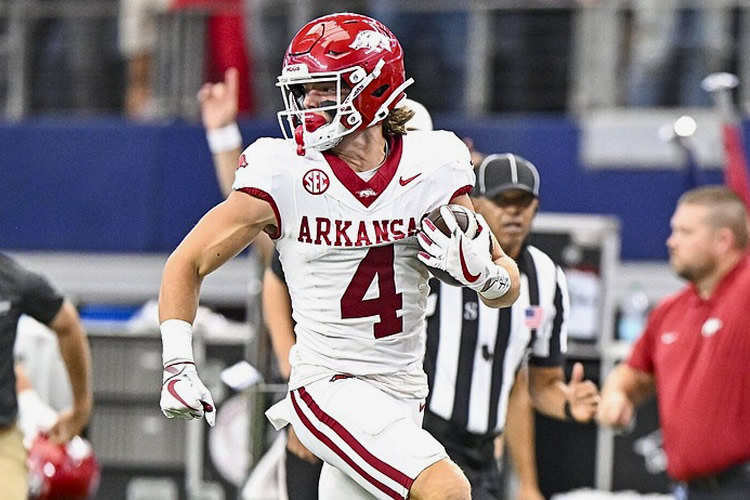
On the other end of the spectrum, I have to start with the fourth overall pick, which unless either the Browns or Giants had truly fallen in love with a quarterback at picks two or three, the Pats were in a tough position either way. Cam Ward was locked in as the first overall pick for a couple of months already and then there were two blue-chip prospects left in Abdul Carter and Travis Hunter. Boise State RB Ashton Jeanty was my next-highest remaining player, but I didn’t view New England’s roster being in a position to make what might be considered more of a “luxury pick” when they already have Rhamondre Stevenson under contract. So unless they found a trade partner to move down and maybe add future draft capital, they were probably not getting great return value regardless. Still, I would’ve much preferred them to select Missouri’s Armand Membou and tried to re-program the 21-year-old freak athlete if you need to flip him over to left tackle rather than taking Campbell, who I believe they’ll allow to fail there before ultimately moving him inside. The lack of arm length or rather his seventh-percentile wingspan is a big part of my concerns about him playing on the edge, but how that also contributes to his struggles dealing with speed-to-power moves was the key factor.
Jaxson Dart, QB, Ole Miss to the Giants – 25th overall
Next up, we get to our one quarterback on this list. I already mentioned how purely based on tape, Shedeur Sanders ultimately ended up being a value selection in the fifth round after being hyped up as a potential top-ten pick for months, and Cam Ward to me was worthy of the first overall selection in many years. Otherwise, really every other signal-caller went later than I expected, other than Oregon’s Dillon Gabriel at the end of third round, before the Browns doubled up with Shedeur later on. However, that makes me feel even stronger about how the Giants could’ve/should’ve waited on the position. Myself, I valued Dart as more of an early third-rounder compared to a fringe first based on consensus boards, which weigh positional value more heavily for the most part. While I do appreciate the toughness and willingness to work up into compressed pockets to deliver big throws, his projection to the NFL level is definitely a tricky one, because of Lane Kiffin manufactures open throws on a limited menu of route patterns delivered from different looks and he has yet to learn to live another down with his decision-making and how he puts his body at risk. I would’ve been willing to gamble with the Browns maybe taking him at pick 33 or if they wanted to jump them, call KC or Philly with those final two selections on day one.
Shemar Turner, IDL, Texas A&M to the Bears – 62nd overall
For anyone who read my interior D-line rankings prior to the draft, you’d know I viewed this class as the strongest of any position. Twelve of them found themselves inside my top 102 prospects overall – meaning they were worthy of being selected within the first two days. Turner wasn’t one of them. He wasn’t massively behind that point, but even based on consensus boards, this was about 20 picks early for him – and we saw players at other deep position groups getting pushed down the board. There are some flashy snaps crashing through a gap or chasing down a scrambling quarterback, but too often he’ll lose track of the football, his hands lack a certain violence, his pass-rush moves have a tendency of being more flashy than effective and his missed-tackle rate has steadily increased throughout his time with the Aggies, up to 23.3% in 2024. So I like his versatility to line up all over the front and I expect him to have some moments as a sub-package player, but at this spot, he would have to be a starting three-technique, which I don’t think he’ll be for a couple of years at least.
Ashton Gillotte, EDGE, Louisville to the Chiefs – 66th overall
This next one is more so a player I never got too excited about in my evaluations. I was kind of going back and forth between Gillotte and UCLA’s Oluwafemi Oladejo, who came off the board 14 picks earlier as another similar profile as a long, strong edge defender. He did get selected early for my taste as well, but at least there was plenty of buzz around his name and he’s an intriguing guy because he only transitioned there from off-ball linebacker this past season. As far Gillotte goes, I never saw anything but a late day three rotational player, who will primarily be on the field on early downs. Yet, while I thought he set a physical edge in the run game, he definitely has room to improve his ability to deconstruct blocks and actually “make plays”. While as a pass-rusher, he leaves you wanting more in terms of his juice off the ball, the snap in his hips or flexion in his angles to really bend the corner. Too often, he’d just run into pass-protectors and more patient NFL tackles won’t create soft edges to him if he throws in a little stutter, to where he’ll be overly reliant on condensing the pocket.
Isaac TeSlaa, WR, Arkansas to the Lions – 70th overall
From this point onwards, my gripes with these picks are much more based on a combination of what teams invested in players based on the value they acquired, without even really needing to tap into my personal rankings. TeSlaa for example is a name that started to rise later in the process, largely thanks to people realizing he’s a 6’3”, 215-pound receiver who ran a 4.43 in the 40, put up explosive jumps and good numbers in the agility drills. Even if you use the last piece of this as somewhat new information, I don’t think there was much that should’ve been surprising when you watched him on tape. He can gain plenty of speed on crossers, he didn’t drop a single one of his 62 catchable passes over the last two years, and he can really climb the ladder for jump balls. Yet, he definitely needs that runway to build up to that top gear, his hand-swipes are really underdeveloped, which is why he basically a power slot only with the Razorbacks and I didn’t see that abruptness or make-you-miss ability on the field. With all that being said, even if you think he’s worthy of being the ninth WR taken – and he was projected to be a fringe fifth-/sixth-rounder – the Lions gave up pick 102 and two third-rounders in 2026, while the Jaguars threw in a sixth this and next year each. That’s insanity!
Nick Martin, LB, Oklahoma State to the 49ers – 75th overall
This next one, I can very much envision what defensive coordinator Robert Saleh and the Niners organization saw in Martin, since they don’t mind these undersized, rangy linebackers who play with their hair on fire and no regard for their body. Watching him fill his gap against the run, stonewall running backs trying to release into their route or slicing through one half of them as a blitzer, was a lot of fun. Yet, with sub-30-inch arms, he can kind of has to shoot his gun and gamble to a certain degree, because he can’t actually stack-and-shed offensive line at all. That means however that he’ll also false indicator to take him completely out of the play, he’ll badly overrun some zone concepts and presents big cutbacks, with him over-pursuing as much and leaving his feet as much, he misses a bunch of tackles, and he had some weird-looking snaps in zone coverage, where his feet literally don’t leave the ground before the ball leaves the quarterback’s hand. More important than my evaluation (as LB22), he was right there with the previous player on the fringes between the fifth and sixth round based on where analysts ranked him collectively, and there were only three(!) true off-ball linebackers taken at that point.
Justin Walley, CB, Minnesota to the Colts – 80th overall
With cornerbacks, there was a little more of a run between the middle of the second and third round, as we saw six guys at the position hear their names called between picks 47 and when the Colts got back on the clock. There were pretty much right in-line with what the board dictated, selecting Penn State TE Tyler Warren 14th overall (which plenty of people had him even a bit higher) and Ohio State EDGE J.T. Tuimoloau, and they were definitely in the market of adding one more corner. Where I think they just mismanaged this to a certain degree is that the market kind of dried up around this stretch. As you go through the individual CBs selected in that 33-pick window – Michigan’s Will Johnson, Notre Dame’s Benjamin Morrison, Ole Miss’ Trey Amos, Iowa State’s Darien Porter, Florida State Azarehe’h Thomas, East Carolina’s Shavon Revel – three of were coming off significant injuries but are all uber-talented, one is a complete freak who somehow only started in one of his six seasons after converting from WR and one has excellent tape but ran in the high 4.5s at his pro day. Amos is the only one that slid a little bit without anything major that I’m currently aware of. Nonetheless, all of them actually came off the board slightly later than expected, while Walley was about 100 picks early in relation to where he was on consensus boards.
Arian Smith, WR, Georgia to the Jets – 110th overall
Similarly to corner, the guys lining up across them actually were picked a little later than where they were projected to go. Ultimately, 13 of them were selected within the first two days (not counting Colorado’s Travis Hunter) but a couple of them were unexpected and in the case of TCU’s Savion Williams (now on the Packers), he’s more viewed as a gadget player right now. Once we got to Saturday, teams declared their love for those more upside-based pass-catchers, who currently are rather one-dimensional and come in with some questions. The next three that got the call were Florida’s Chimere Dike, Tennessee’s Dont’e Thornton and Georgia’s Arian Smith. Personally, I’m the highest on Dike because he shows the most applicable skills as a route-runner, but him and Thornton are at least fast *and* pretty big. Smith just cracks six feet, 180 pounds, and while he can definitely provide vertical stretch, he struggles to decelerate again, he posted an 18.8% drop rate over the last two years and an abysmal 16.7% career contested-catch rate. For the Jets to do this after grabbing almost a running back tagged as “WR” in Malachi Corley in the third round based on his YAC skills, they just lack options who I’d consistently want on the field.
Ruben Hyypolite II, LB, Maryland to the Bears – 132nd overall
This brings us to the most egregious reach of the entire draft and I have a personal gripe with this one. I evaluated over 370 prospects this year and pride myself on at least making it to the sixth round before any players are announced whom I didn’t get to watch. Chicago ruined that when at the end of the fourth, suddenly a name was called that I had never even heard of – and neither did the Bootleg Football boys during their live stream, which E.J. Snyder is a big Bears fan who also was completely caught off guard. I then checked in “The Beast” by Dane Brugler, who had a write-up for 34 linebackers – ten of which he graded as UDFAs – and Hyppolite was the first one outside of that. I did evaluate four other Maryland players, but as Dane later said himself on The Athletic Football Show, he’s not sure if this guy gets drafted at all two months ago before he runs a 4.42 at 236 pounds. I will have to watch him before I get into my NFC North draft and roster review – unless I decide not to out of spite – but there’s a certain level of either arrogance or disregard for what common knowledge would tell you when you invest a pick in this range when he still finds himself 100 spots outside of draftable range for the media at large and he may be a pure special teamer for them. And it’s not like we didn’t have enough tape on him – he started 46 career games!
Julian Ashby, LS, Vanderbilt to the Patriots – 251st overall
And finally, this is pretty much self-explanatory, when you’re the first team to draft a pure long snapper since two of them were selected in the sixth round of 2021 – and neither one of them was on an NFL roster anymore last four, which would’ve been the final one of their rookie contracts. I don’t evaluate specialists personally and struggle with the concept of someone sitting down and watching guys do nothing but snap the ball and run down the field. According to PFF, Ashby last year was involved in as many tackles as he missed (two). New England had a total of 11 picks at their disposal. So it’s not like they invested anything of major significance, but you could’ve probably rung this kid up at this time and told him you had that 4.3-million-dollar contract waiting for 4.3 million over the next four year with 100K signing bus, and he would’ve hopped on a plane as soon as Mr. Irrelevant was announced.
Other early selections:
9th overall – Kelvin Banks Jr., OT, Texas to the Saints
16th overall – Walter Nolen, IDL, Ole Miss to the Cardinals
49th overall – Demetrius Knight Jr., LB, South Carolina to the Bengals
52nd overall – Oluwafemi Oladejo, EDGE, UCLA to the Titans
81st overall – Dyland Fairchield, IOL, Georgia to the Bengals
108th overall – Dont’e Thornton Jr., WR, Tennessee to the Raiders
116th overall – Woody Marks, RB, USC to the Texans
140th overall – Cam Jackson, IDL, Florida to the Panthers
149th overall – Jaydon Blue, RB, Texas to the Cowboys
186th overall – Tyler Loop, K, Arizona to the Ravens
 Halil's Real Footballtalk
Pingback: Undrafted free agents from 2025 who could make an early impact: | Halil's Real Footballtalk
Pingback: Undrafted free agents from 2025 who could make an early impact: – Lifestyle . . . Defiant
Pingback: What does success look like for your favorite NFL team in 2025? | Halil's Real Footballtalk
Pingback: What does success look like for your favorite NFL team in 2025? – Lifestyle . . . Defiant