

We’re four weeks into this collegiate season and it’s time for me to give my annual check-in on who the best players in the nation are currently. My rankings are largely based on the film work I did partially during this prior draft cycle for returning names and studying up during the summer, but also catching up on them in the early stages here. Obviously, I haven’t watched every single FBS game, but a large portion of those, I went through a bunch of the advanced numbers and tried to at least evaluate each of these (and other) guys in one more matchup so far.
Just to clarify, these rankings are concerning the top five players at each position for the college level – so how well they’re performing at right now and how I’d pick them in a team selection-like setting, somewhat detached from their surrounding pieces, as I’m trying to judge them individually. There’s a lot of overlap to how I’d stack the names up projecting forward to next year’s draft already (at least for the guys who are eligible), but I wanted to make that distinction here.
Let’s get into it:

Quarterbacks:
1. Carson Beck, Georgia (RS Sr.)
2. Cam Ward, Miami (RS Sr.)
3. Jalen Milroe, Alabama (RS Jr.)
4. Nico Iamaleava, Tennessee (RS Fr.)
5. Quinn Ewers, Texas (Sr.)
This was very much a 1A and 1B type of situation, as I was debating the top two names here, but I ultimately gave Beck the nod, since he was there for me during the summer as someone who’s been more consistently performing at a higher level, and while the numbers aren’t as spectacular, he’s facing stiffer competition so far – and should continue to do so. This guy is an effortless thrower, who delivers a beautiful spiral and recognizes which kind of velocity/touch is required. While he’s not as regularly required to push the envelope due to the quality of the Bulldogs overall, you definitely like how he takes what the defense gives him – whether that’s his back outflanking the coverage on the checkdown or a 40-yard post route (seven TDs vs. zero INTs so far). For more of a lanky build, you see some pretty sudden movements inside the pocket and he rapidly re-sets his feet if moved off the spot.
Ward took a very different path to the top of college football, as he only received one offer coming out of high school – Incarnate Word. After annihilating all kinds of records there through just 19 games, he became one of the most exciting – even if also at times chaotic – playmakers at the position for the world to see at Washington State over the next two years, before deciding to take his talents to Miami for his final season of eligibility. The high-end moments with him have always been there, where he perfectly drop vertical shots into the bucket of his receivers streaking downfield and extend plays to ludicrous levels, in order to create secondary opportunities, but now in that new environment, he’s eliminated that crazy side to him mostly, where he’d then toss up balls for grabs. He did have one flashback moment against Florida in the season-opener, but I love the calmness he generally operates with, even when chaos arrives, and he currently leads the nation in touchdown passes (14), yards per attempt (11.7!) and Heisman odds.
With Milroe, he’s a name that has been steadily rising ever since he got benched for a game three weeks into last season, and people were ready to completely write off Alabama at the time. Instead, he led the Crimson Tide to a win in the SEC Championship over the back-to-back defending national champions in Georgia, with their only loss under him coming in overtime against the eventual champs in Michigan. This guy simultaneously brings one of the deadliest deep balls, with an incredible strong arm, and dual-threat ability, where he can flat-out run away from guys but also truck a linebacker at the goal-line, if needed (42 total TDs vs. four INTs over those last 14 contests). New head coach Kalen DeBoer has further unlocked those strengths, but Milroe also is very willing to attack the middle of the field and test tight windows.
The least experienced of the bunch of course is redshirt freshman Nico Iamaleava, who along with the Vols as a program have taken the college football world by storm. He brings a smooth release to the table and has the requisite arm talent to attack all areas of the field, which make that attack so tough to slow down, averaging 54 points per game, despite facing a couple of ranked opponents away from home. Thanks to the nature of this Josh Heupel offense, there’s so much space to attack, and the few times there are muddy looks for the quarterback, such as having to layer the ball to someone on a deep in-breaking route, I have seen him sail the ball. However, he’s very elusive, rapidly gets his cleats into the ground to deliver the ball on secondary-reaction plays – as an element the guys in this system hadn’t really provided in the past – and we’ve seen that if he has some room to build up, he can pull away from the defense as a runner with those long strides.
Finally, I do have to show some love to a quarterback, whose value for that Texas offense has been in question for me in the past, but Ewers has taken his game to the next level this year. Along with having tightened his throwing motion itself in order to put less stress on his shoulder/elbow and being more consistent with ball-placement as a result, he’s really looked like a “veteran” this season in terms of his ability to solve problems and exhaust progressions in more of a designated dropback game – rather than a heavy focus on RPOs and screens. I’ve always liked his ability to identify additional bodies on the rush pre-snap, how light he is on his feet and how well-calibrated his internal clock is for when to escape the pocket. Now, he’s actually using those skills in a more controlled manner to deliver key third down conversions, even if he has to go beyond the intended timing of the concept.
Honorable mentions: Shedeur Sanders (Colorado), Noah Fifita (Arizona), Dillon Gabriel (Oregon), Kaidon Salter (Liberty), Brady Cook (Missouri) & Jaxson Dart (Ole Miss)

Running backs:
1. Ashton Jeanty, Boise State (Jr.)
2. Quinshon Judkins, Ohio State (Jr.)
3. Ollie Gordon II, Oklahoma State (Jr.)
4. Damien Martinez, Miami (Jr.)
5. Omarion Hampton, North Carolina (Jr.)
I’m sure you’ll hear me talk plenty in the future about the quality of this upcoming running back class in terms of the NFL draft, but for the college game right now, there’s not really any debate of who reigns supreme. Jeanty has been borderline unstoppable through three games, leading the country in rushing yards (586) and touchdowns (nine) on an absolutely insane 10.5(!) yards per carry, nearly powering the Broncos to a perfect record with how he ran through the Oregon defense, before the Ducks turned things around on special teams primarily. This dude has insane incredible contact balance, with a lower center of gravity that enables him to break tackles (nearly one miss forced on every second carry). Yet, it’s the granular level of how he paces his runs and bleeds out concepts, along with what he provides as an outlet that’ll turn routine checkdowns into explosive gains, that really has me in love with his game.
The talent in Columbus as far as the offensive backfield goes has reached almost unfair levels, when Ole Miss superstar Quinshon Judkins decided to join forces with TreyVeon Henderson – who is one of the first names in the honorable mentions section. At 5’11”, 210 pounds, Judkins is a monster-truck with the top gear of a Lamborghini. The combination of explosiveness, agility and power is second to none, to where he can get around penetration in the backfield with jump-cuts, but also win the corner, bend up his runs and plow through third-level defenders who dare to get in his way. Under Lane Kiffin, his work as a receiver was mostly limited to swing routes and we’ll need to see if the Buckeyes make it more of a priority to develop his skills in that regard with an eye on his pro future, but right now he’s one of the premier power backs, who also just showed his home-run ability on an 86-yard TD this past weekend against Marshall.
Last year’s rushing leader Ollie Gordon will have to settle for third place, as the Oklahoma State ground game hasn’t quite kicked into gear the way we’re accustomed to seeing from them. Yet, his 3.5 yards per carry and total output are more so a product of getting fed as their workhorse in the opener against South Dakota State (28 carries for 126 yards and three TDs) and then being largely in negative game scripts. So while Ollie has more of build-up speed than instant burst and is more of an upright runner, when he can hit the hole at full speed, he’s a problem to even slow down, much less stop. He’s very efficient with his movements once he gets through the line of scrimmage, as he has to make slight alterations to his tracks, pulls his feet out of the grasp of would-be tacklers and dishes out devastating stiff-arms. He also has solid receiving chops and plus awareness to take care of second-level rushers in scan protections.
Martinez has been one of my favorite backs in the nation ever since his freshman campaign in 2022. Despite not having high quality quarterback play for the most part during his first two years, all he’ did since the second half of that debut campaign with the Beavers is average 108 rushing yards per game on 6.1 yards a pop, while forcing a missed tackle on better than every fourth attempt. So far this year, with the Hurricane offense being more Cam Ward-centric, he’s not been required to carry the team on his back, and he’s not someone who’ll rip off 70-yarders typically, but he’s proven over and over again, that he’s one of the most efficient, hard-nosed runners the college game has to offer. I love watching the way he presses the front-side of zone concepts, reduces his surface area for defender trying to reach out for him and his body-control is outstanding.
I put Hampton at number five, because even though the UNC offense has taken massive hits, in particular with the injury to starting QB Max Johnson, until their defense got smoked by James Madison this past weekend for 70 pounds, their running back had allowed them to win their three other games with a pretty simple formular. Big O leads the country in carries (85) and rushing yards (555), yet still averages a more than healthy 6.5 yards per, because his violent running style has such a lasting cumulative effect on opposing defenses. Listed at six foot flat, 220 pounds, as a no-nonsense type of runner, with a great feel for inside zone in particular, as he’ll build up momentum for when he cuts upfield and then becomes a rolling train for defenses trying to stop him, burying his helmet in the chest of linebackers in the hole or throwing off defensive backs trying to corral him. He’s just not as creative in the open field as other guys you’ll watch on Saturdays.
Honorable mentions: Nicholas Singleton (Penn State), TreyVeon Henderson (Ohio State), Kaleb Johnson (Iowa), Raheim Sanders (South Carolina), Trevor Etienne (Georgia), D.J. Giddens (Kansas State), Ja’Quinden Jackson (Arkansas), Dylan Sampson (Tennessee), Jonah Coleman (Washington), Woody Marks (USC), Kyle Monangai (Rutgers), Phil Mafah (Clemson), Devin Neal (Kansas), Makhi Hughes (Tulane) & R.J. Harvey (UCF)

Wide receivers:
1. Tetairoa McMillan, Arizona (Jr.)
2. Luther Burden III, Missouri (Jr.)
3. Emeka Egbuka, Ohio State (Sr.)
4. Isaiah Bond, Texas (Jr.)
T.-5. Tez Johnson, Oregon (RS Sr.)
T.-5. Evan Stewart, Oregon (Jr.)
I was definitely going back and forth here with the number one spot, since I may flip the top two names again when projecting them forward to the pro game, due to the dynamism of Luther Burden drawing me in, but you can’t really argue who has put a bigger stamp on the season so far than McMillan. Obviously, he erupted for over 300 yards and four TDs in the season-opener against New Mexico, before the Wildcats relied on their run game the following week vs. Northern Arizona, but then against Kansas State, he was the only part of that offense they could at all get going, making big-time adjustments to passes down the field, but also snapping off routes in front of guys at 6’4”. This phenom offers crazy length and some of the best ball-skills you’re ever going to see, including on Sundays. He has the speed to run by people when isolated on the perimeter and he’s also more elusive with the ball in his hands than you might expect.
For Burden, he immediately checks the “moves different” box when you watch what he can do with the ball in his hands. Those yards-after-catch skills are the biggest calling card right now, because of how much they get to shine in the wide-open college game, but that’s far from everything. The suddenness that makes him so intoxicating to watch in the open field also makes him incredibly tough to box in at the line, he does an excellent job of stacking his man on vertical routes and tracks the ball with a great level of focus, whether the placement forces him to keep the DB on his hip or he’s allowed to access that extra gear to detach. Thinking ahead to his NFL prospects, I really appreciate the level he works back down towards his QB in order to create easier throws and how he consistently plucks the ball away from his frame, yet then secures it right away.
While McMillan and Burden really emerged this past season, Egbuka has been a mainstay as one of the most effective pass-catchers in college for multiple years now. As part of a loaded Ohio State group of receivers, he’s never actually been the de-facto number one for that offense, but the way he’s played the position has been a joy to watch throughout. Egbuka is a highly advanced route-runner for the level he’s still at, where he can keep defenders guessing or manipulate them with discipline in his stems and variety in his footwork leading up to the break-point. And he has some of the most defined spatial awareness you’re going to find, being able to pace himself and really work the intermediate area of the field. He’s basically a 50% guy on contested catches, his quickness makes him effective after the grab and while I wouldn’t call him a burner, he scored from 68 yards out on a simple tunnel screen in this past game against Marshall.
Talking about speed demons, nobody may strike fear in the heart of FBS defenses quite like Mr. Bond right now. He’s fully capable of burning even bracket-coverage on post routes, if the safety just plays a little too flat-footed, but it’s the way he can threaten defenses with that vertical prowess and take advantage of the space he creates for himself and his teammates that really stands out. Bond displays excellent body-control and no hesitancy in elevating for elevating between bodies for tough grabs, such as the game-winning touchdown on 4th & 31 against Auburn, when he was still on Alabama’s side last year. Since joining the Longhorns, what he can bring racking up yardage with the ball in his hands, thanks to how shifty he is, but then also drops the pads on someone waiting at the sideline, has seen his usage underneath increase.
At number five, I wanted to throw in both Oregon receivers in Tez Johnson and Evan Stewart, who have transferred into Oregon the last two years respectively. Through three games, that duo has combined for 343 yards and three touchdowns on 33 receptions. Johnson is one of the most urgent, abrupt moves you’re ever going to find, where he can absolutely roasting poor underneath defenders on option routes out of the slot, but then also letting bodies fly as people are trying to corral him in space. Stewart’s ability to win vertically is more of the prevalent component of his game, being able to evade contact at the line of scrimmage and putting corners in catch-up mode early. Yet, he’s shown in the SEC (Texas A&M) that he can line up at any receiver spot and has several highlight reel catches on tape, where he asked to climb the ladder. Both of these guys are simply very undersized, which shows up in different areas.
Honorable mentions: Travis Hunter (Colorado)*, Xavier Restrepo (Miami), Tre Harris & Antwane Wells (Ole Miss), Kyren Lacy (LSU), Elic Ayomanor (Stanford), Ricky White (UNLV), Jayden Higgins (Iowa State), Kobe Hudson (UCF), Kevin Concepcion (N.C. State), Ryan Williams (Alabama), Jeremiah Smith (Ohio State), Pat Bryant (Illinois) & Tai Felton (Maryland)
Tight-ends:
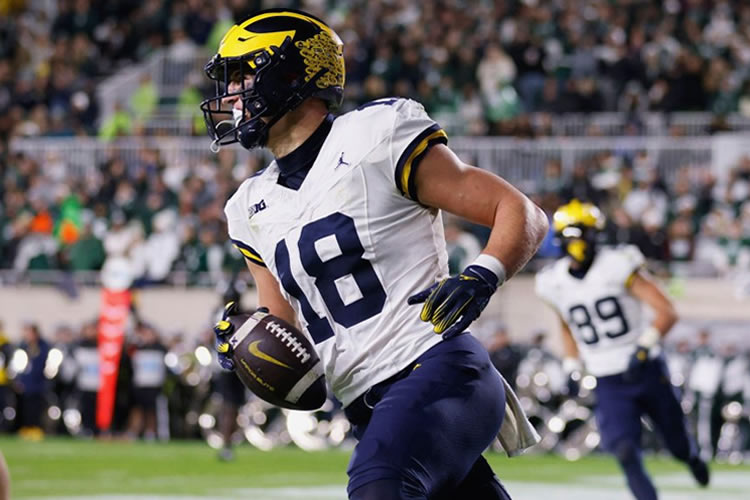
1. Colston Loveland, Michigan (Jr.)
2. Bryson Nesbit, North Carolina (Sr.)
3. Brant Kuithe, Utah (RS Sr.)
4. Luke Lachey, Iowa (RS Sr.)
5. Tyler Warren, Penn State (Sr.)
Keep your eyes on: Oscar Delp, Georgia (Jr.)
Similarly to running back, the gap between the top tight-end and the rest of the group is pretty vast, even though Loveland missed this past game against USC and may not produce in a big way without any consistency from the quarterback position for the Wolverines so far. That makes it even more impressive that he’s already caught 19 passes for 187 yards and a score – 38% of their total yardage through the air. Similarly to some of these other “F” tight-ends who largely operate as oversized slot receivers, Loveland’s best utilized as someone who can stress the rules of defenses, whether he’s beating a linebacker down then seams or uses his body to shield the ball in matchups with a corner isolated on the backside of the formation. He aligns his hands well in accordance to the flight of the ball and he brings great combination of elusiveness and speed once the catch is secured.
Nesbit comes in a similar mold, although about ten pounds lighter (235) and even more detached from the line than Loveland (only has a 15.6% career in-line rate). Now, he doesn’t mind throwing his body around at times when escorting the ball to the perimeter, but it’s his ability to threaten the defense vertically that he makes his money with. The ability to kick it up a notch and separate from trailing defenders on deep crossing routes has been a major factor for UNC’s passing attack in the past, I love how he works towards open space in order to help out his quarterback on secondary-reaction plays and he really snatches the ball above his helmet when needed.
Similarly to his quarterback Cam Rising, it feels like Kuithe has been at Utah for FOREVER. That’s probably because he arrived there all the way back in 2018. After seeing now-Bills standout Dalton Kincaid steal the spotlight two years ago as the more dynamic of the duo in their two-tight-end sets, Kuithe missed all of last season, but quickly reminded us of his brilliance, when he scored on three of his four catches in the Utes’ opener against Southern Utah. Unlike the first two names here, his calling call definitely isn’t speed, he’s incredibly patient with setting up defenders, incorporates different footwork on the fly in a very natural way and is an expert at finding voided space in zone coverage. He may not be an overpowering in-line blocker, but he’s excellent at securing targets on the move in the screen and perimeter run game.
While this is “only” Lachey’s fifth year with the Hawkeyes, I think of him in a similar mold as a mainstay for a program that prides itself on running the ball and producing talent at the position. At 6’6”, 255 pounds, he brings the size and blocking skills of a more traditional Y, with pop in his hands on contact and great effort to dig bodies out of rushing lanes. The way he can sneak out off play-action makes him a nice counter-punch to the ground game, but this can eat against static zone looks with his spatial awareness, he consistently applies the correct catching technique, including when he needs to let it into his body and wrap it tightly as defenders are converging on him, and the he has that basketball background you see with the ball in his hands.
I had a few options at number five, but decided to go with Tyler Warren for one reason in particular – he hasn’t dropped the ball yet this season after rates of 15% or higher each of the past two seasons. Those mind-numbing moments where the ball would just go off his hands in the worst spots were the only thing that had really held him back previously, because this is a 260-pound junkyard dog in the run game, with the strength, technique and mindset to bully linebackers, he has the frame to haul in big-time combat catches and and he’s a load to bring down with the ball in his hands. Since the start of last year, 37 of his 50 catches have resulted in first downs, and his 16 grabs this year are twice as many as anybody else on that offense.
As for Delp, I thought he showcased some talents as the de-facto Y for Georgia alongside All-American move-tight-end Brock Bowers last year, that could help him ascend to the TE2 in next year’s draft, but with three catches for 25 yards through three games, there’s not much of an argument that can be made at this point.
Honorable mentions: Terrance Ferguson (Oregon), Harold Fannin Jr. (Bowling Green), Jake Briningstool (Clemson), Mason Taylor (LSU) & Jack Velling (Michigan State)
Offensive tackles:
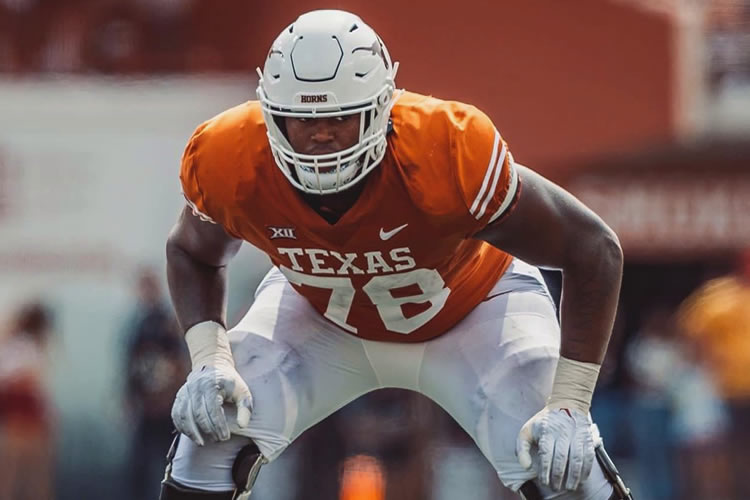
1. Kelvin Banks Jr., Texas (Jr.)
2. Will Campbell, LSU (Jr.)
3. Wyatt Milum, West Virginia (RS Sr.)
4. Blake Miller, Clemson (Jr.)
5. Josh Simmons, Ohio State (Sr.)
This might be the first shocker of the list, as I have the consensus top two tackles flipped here. Banks to me reigns supreme, because he’s already more advanced with his hand-usage as a pass-protector, being able to pair his patient style in his sets with alternate strikes to keep rushers off balance and emerge victorious from extensive battles. Now, the way he fits those mitts in the run game and aggression he brings to the table at all times may be a tad less than Campbell, but those strides are still very powerful, he’s able to execute challenging backside scoop-blocks brilliantly and he’s explosive pulling out to the corner or wrapping around to take somebody out of the lane.
My nit-picking with Campbell in the pass game will be more prevalent as we get to talking about him as a future pro, since you can’t really argue with the results in the SEC so far – zero sacks and only 19 total pressures allowed across 669 pass-blocking snaps since the start of 2023. I’m largely influenced by his two matchups with Florida State star and now-L.A. Ram Jared Verse, who really gave him trouble with speed-to-power maneuvers. Having said that, I actually like what he brings in the run game better, where he’s excellent with his first couple of steps and aligning his base, fluidly is able to redirect off combo-blocks and is able to use the momentum of moving targets against them, regularly riding linebackers away from the action.
Wilum is one of those classic examples, where he’s certainly higher for me as I rank these guys as college players rather than projecting their NFL futures. He may not be as physically talented as the two guys below him, but he’s been a plus starter on both ends of the line, he’s excellent with his angles and hand-placement in the run game, and he hasn’t given up a sack since his true freshman season (nearly 1000 pass-blocking snaps since). There’s really not much you can critique about his level of play across multiple years, as a stalwart for that Mountaineer offense, through several changes under center.
Miller became one of my big crushes studying up on him at the start of the season, going back to last year’s tape and then some of this early action. I thought he understood angles and how assignments needed to be adjusted so well already for a true sophomore last year, his agility and speed to take care of highly challenging blocks with extended runways is outstanding. There’s a clear plan of how to counter pass-rusher depending on the depth of the drop and overall play design, while keeping a tight punch and having incredibly easy lateral movement skills to mirror different approaches. I absolutely love the urgency he plays with and something that really made me fall in love with him was what I saw rewatching the tape from Clemson’s season-opener against Georgia – where I expected him to have struggled just like the rest of that offense, yet he was outstanding in all areas against that loaded front.
Finally, Simmons will evoke a lot of similar conversations during the draft process as a highly talented young player, who’s already shown a lot of growth early in his career. This young is explosive out of his stance and wants to bury people in the run game, with excellent flexibility to stay connected on challenging angles, even though he needs to still get stronger, which he tries to make up for by lunging. As a pass-protector, he quickly gets to his landmarks and times up his strikes very well, along with snatching the jersey of defenders when they get too tight to him. Plus, he diagnoses and counters twists well already. As a first-year starter in 2023, he was responsible for only one sack and this year he has to even surrender any QB pressures on 84 pass-blocking snaps.
Honorable mentions: Emery Jones Jr. (LSU), Jonah Savaiinaea (Arizona), Anthony Belton (N.C. State), Aireontae Ersery (Minnesota), Reuben Fatheree II (Texas A&M), Josh Conerly Jr. & Ajani Cornelius (Oregon)

Interior offensive linemen:
1. Donovan Jackson, Ohio State (Sr.)
2. Tyler Booker, Alabama (Jr.)
3. Tate Ratledge, Georgia (RS Sr.)*
4. Parker Brailsford, Alabama (RS So.)
5. D.J. Campbell, Texas (Jr.)
Moving on to the interior of the O-line, we saw a lot of similar programs represented, actually continuing with another Buckeye up first here. Jackson is one of the elite zone-blocking guards in the game, being able to secure the play-side shoulder of D-linemen in order to allow those guys to win the gap when attacking the edges, but also being able to create horizontal displacement in order to open up massive lanes to cut up through. In pass-pro, he plays great sink in his hips to set a firm anchor against power-rushers, but also slide effectively to counter lateral movement. His PFF grade on true pass-sets last year was rather underwhelming, but he’s continued to grow with picking up different games in those settings.
Once again, as more of a 1B for this category, Booker already was one of the most dominant guards in the country as just a true sophomore. Being able to play low with a massive lower half, this guy can really dig out nose-tackles and shades on gap schemes, he displays excellent timing for when to climb off doubles and you see smaller defenders make business decisions when the Crimson Tide pull him out to the corner. In the pass game, he’s like a brickwall to run through, keeps his head on a swivel when initially unoccupied and when he catches defenders off balance, he’ll quickly bury them underneath himself.
Georgia’s offensive line consists of five guys who might ultimately get selected over the course of next year’s draft. Their left tackles Earnest Greene II may be the favorite to get picked first because of the potential he brings to the table, but Ratledge is the best player among that front at this time. He has that wide build and brings plenty of thumb on contact, really being able to get the ball rolling on combo-blocks and bullying linebackers. He may not be the most graceful mover, but he packs a tight grip and a sturdy lower half to neutralize interior rushers. That’s how he earned a 87.4 PFF pass-blocking grade in ’23. Unfortunately, Ratledge recently underwent tightrope surgery and will be held out until late in the calendar year most likely.
We come with Alabama’s new center at number four, who followed his head coach Kalen DeBoer over from Washington, following a national championship game appearance with the Huskies. Brailsford is one of the more unique player profiles you’re going to find at 6’2”, well below 300 pounds it appears, with conflicting reports about his weight. So as NBC’s Connor Rogers likes to put it – he’s a lightweight in a heavyweight arena. Yet, this guy is so outstanding at working angles and fitting his hands underneath the pads of defenders in the run game, along with legitimately being a weapon pulling out to the perimeter on toss or sweep plays. In protection he rapidly gets on top of guys, persistently creates favorable positions for himself with his hands and takes control of reps, while managing that space between his guards tremendously well.
Let’s close things out on the offensive side with a kick-ass Longhorn guard in D.J. Campbell. At 6’3”, 330 pounds, he’s built like a fridge, who regularly wins with pad-level and churns his feet through blocks on first-level defenders, yet is also able to snatch up bodies on the move. He can get a little top-heavy and allow defensive tackles to pull him aside in passing settings, but with his ankle flexibility, he can really brace against the bull-rush, if guys try to aggressive with upfield, he rides them past the quarterback and he squares up second-level rushers very well. If he can put people on the ground, he’ll of course take advantage of those situations.
Honorable mentions: Dylan Fairchield (Georgia), Bryce Foster (Kansas), Joshua Gray (Oregon State), Bryan Felter (Rutgers), Luke Kandra (Cincinnati), Clay Webb (Jacksonville State) Cooper Mays (Tennessee), Jaeden Roberts (Alabama) & Gus Miller (South Dakota State)
Edge defenders:
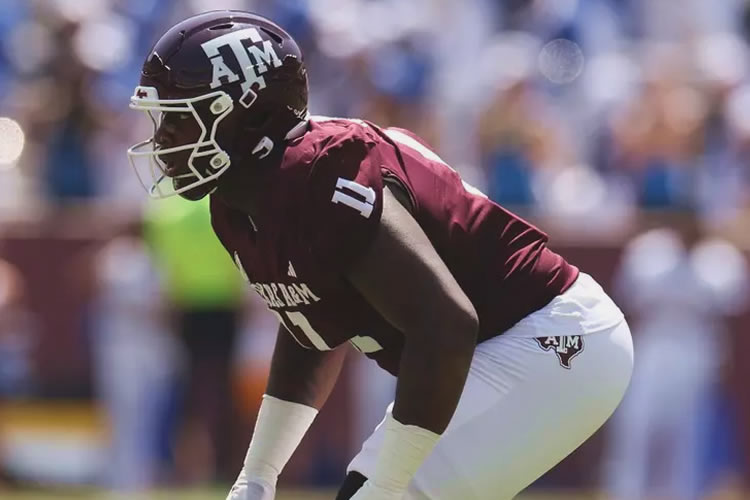
1. Nic Scourton, Texas A&M (Jr.)
2. Abdul Carter, Penn State (Jr.)
3. James Pearce Jr., Tennessee (Jr.)
4. J.T. Tuimoloau, Ohio State (Sr.)
5. Princely Umanmielen, Ole Miss (RS Sr.)
There are fairly different profiles among this group of EDGEs here, with Scourton coming in the mold of a jumbo-sized defensive end, who actually stands up more now with the Aggies than he used to at Purdue. Trying to widen the B-gap on the front-side of run calls seems pointless, trying to seal him away from the action with a tight-end feels flat-out disrespectful, as he’ll take that guy for a ride to create traffic in the backfield. For being 285 pounds, Scourton’s get-off really pops and then he’s just a monster using that momentum to attack the depth of the pocket, routinely shortening the arc for himself that way. What’s shocking is the way he can contort his body to create favorable angles, the fluid spin move he unpacks occasionally and how rapidly he drops out into the flats when peeled off.
Making my previous point here, Carter was still about 50 pounds lighter than Scourton last year, when he was still primarily deployed as an off-ball linebackers. Wearing number 11 for the Nittany Lions as a true freshman already, he had big shoes to fill with the guys who have come before him, including one of the elite NFL defenders in Micah Parsons, who reminds you a lot of the transition Carter is making here to a full-time edge role, only it took the predecessor about midway through his rookie season with the Cowboys to get there. The calling card for Carter of course is also that incredible burst off the ball and even though he’ll need to tame himself to some degree still in order to not get flagged for offsides, he more than makes up for it with the way he can disrupt plays. The ability to swipe away the hands of tackles and bend the edge was already a big plus as a part-time rush player on longer downs previously, but now seeing the violence to accelerate into pulling guards really stands out, along with knowing what he provides in terms of lateral range, if you wanted to utilize him as a spy.
Pearce was the favorite for the title as EDGE1 in next year’s draft heading into the season and this ranking still more so reflects the quality of this trio overall in my opinion. His get-off to stress the upfield shoulder of tackles is well complemented by the ability to slide inside of guys as they’re forced to overset, paired with a tight arm-over. That’s how he finished just ahead of UCLA’s Laiatu Latu last year for the highest pass-rush productivity (13.3) among edge defenders with 100+ snaps rushing, winning 21.9% of his matchups. He’s not off to as hot a start this season and I’d like to see a little bit more of a power element added to his profile, but he’s also slippery with a knack for creating TFLs in the run game.
If you’re looking for the best technician of the bunch here, J.T. Tuimoloau is definitely a step ahead of the three juniors ahead of him, with one more year on his belt, having continued to great tradition of Buckeye D-ends with effective hand-swipes to keep their frame clean. Obviously, J.T. put his name on the map nationally last year, when he was able to put eventual mid-first-round pick Olu Fashanu (Jets) on skates at one point during the Penn State game, but it’s his ability to stack moves on top of one another and slide off blocks that have made one of the more productive pass-rushers in the country. Let’s not allow that to take away from his ability to deconstruct blocks and create angles to the ball in order to create early stops when opponents keep the ball on the ground.
Similarly to J.T. riding that high he was on last year, Umanmielen surprisingly didn’t enter the 2024 draft, but instead deciding to move in-conference from Florida to Ole Miss. Against the run, he uses that length and upper body strength to keep blockers away from his frame, and then his motor is constantly revving to pursue the football. Rushing the passer, he uses those hands as weapons with a pretty good rolodex of moves, yet I like him best hitting up-and-unders when he can get tackle to open the door inside and then set up euro-step maneuvers off that, where you see the improved flexibility in his lower body to take those wide steps and bend around after jabbing inside. Now he simply needs to be more disciplined with not peaking inside of blocks as a contain player and get to his secondary counters a little bit earlier.
Honorable mentions: Tyler Baron (Miami), Jack Sawyer (Ohio State), Ashton Gillotte (Louisville), Collin Oliver (Oklahoma State), Josiah Stewart (Michigan), Mykel Williams (Georgia), Kyle Kennard & Dylan Stewart (South Carolina)
Interior defensive linemen:
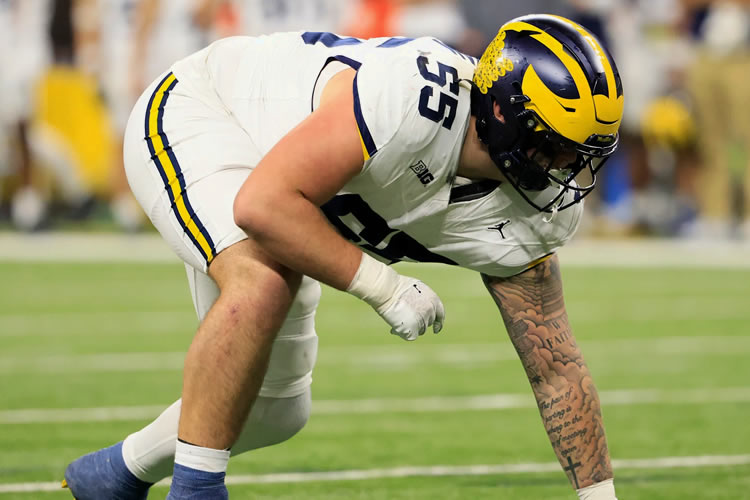
1. Mason Graham, Michigan (Jr.)
2. Deone Walker, Kentucky (Jr.)
3. Kenneth Grant, Michigan (Jr.)
4. Dontay Corleone, Cincinnati (Sr.)
T.-5. Jordan Burch, Oregon (RS Sr.)
T.-5. Shemar Stewart, Texas A&M (Jr.)
There’s a good chance that if I were to rank the top 50/100 players in college football right now or my top draft prospects, that Mason Graham would his name atop both lists. Even along a very talented Wolverine from last year, I couldn’t help but take not of the havoc this guy created. Graham can absolutely line up at 2i-/3-technique and just win the B-gap as a penetrator, but his ability to deconstruct blocks and the lateral mobility to track down zone runs are even more impressive. Going after the quarterback, he really challenges the edges of blockers’ frames, with the wiggle he brings to table and then can yank cloth once those guys get caught leaning too far to one side. Last year, he finished in the 96th percentile among then interior D-line in run-stop percentage and in the 98th percentile as a pass-rusher. The grading hadn’t quite been up to par previously, but last Saturday he absolutely whooped the interior of that USC front.
One of most misunderstood and unique defensive players on this list altogether, is Kentucky’s 6’6”, 345-pound dancing bear Deone Walker. Based on measurements alone, people like to label him as this massive nose-tackle, when in reality, he lines up at 4i-/5-technique much more regularly and doesn’t do a lot of two-gapping or even gap-control stuff. Instead, what really flashes for him is the suddenness at which he defeats the hands of blockers, the way he can back-door guys and the range to make plays outside his area. You can not present a soft shoulder to this guy in the pass game, blow right through those, yet then he surprises guys with the counter-spin off that. Walker kind of gives off the “biggest kid on the schoolyard” vibe, but the way he can toss people aside combined with the way he moves at this side, screams crazy potential, as he’s getting ready for his NFL future.
At number three, we have the “other” Michigan D-tackle, who was still being rotated in and out of the lineup last year thanks to the depth of unit. Nonetheless, Grant’s impact on games was palpable, never more so than in the national title game, when he wrecked multiple plays/drives. This is someone with the trunky lower half and strong upper body to two-gap at times, but even more so you like how he can create problems for the interior blocking from shade alignments. Obviously, his calling car as a pass-rusher is that bull-rush to really test the anchor of interior protectors, but he also packs a surprisingly rapid arm-over as guy try to lunge into contact. Now he’ll need to work on widening his base in order to counter angular force being applied on combos and generally improving his play-recognition skills.
I’m so glad to have “The Godfather” back in college football after his absence during the summer, dealing with blood clots. On the field, he his presence has continuously been very much felt, with the shock in his hands to bench-press guys across from him, the ability to flow with plays down the line and yank blockers aside once the ball is in range. As a pass-rusher he likes to build off a bull-rush that regularly has interior protectors on in-line skates it feels like trying to slow him down, plus then he converts into a push-pull move off that. He definitely has to work on generating advantages by keying plays and not relying so much on his physical dominance, but this guy is a problem up front for anybody facing him once again.
Finally, I have another for the fifth spot, between a couple of guys listed and primarily lining up on the outside shoulder of the tackle, but will be treated as interior defenders most likely in terms of their NFL projections. Burch has played that oversized strong-side D-end role for the Oregon Ducks for multiple years now, where his length and ability to pull aside blockers create advantages in the run game, while that extra runway to build up power makes him only tougher to slow down, and it’s near you see a near-300-pounder win the corner with a chop-rip move. Stewart on the other hand has emerged as one of the names among an A&M front loaded with these hybrid body-types. Since he aligns head-up on the tackle or in a really tight outside shade, I wouldn’t classify him as an actual “EDGE”, as he fulfills a similar duty in funneling the ball inside with little room to press runs his way. On passing downs, he can obviously slide inside and use his quickness plus flexibility to create trouble, but it’s the juice off the ball and then how he can convert speed-to-power that’s truly devastating for tackles. Both may just be labelled as tweeners to a certain degree.
Honorable mentions: T.J. Sanders (South Carolina), Derrick Harmon (Oregon), Joshua Farmer (Florida State), Zane Durant (Penn State), Walter Nolen (Ole Miss), Tyleik Williams & Ty Hamilton (Ohio State)
Linebackers:
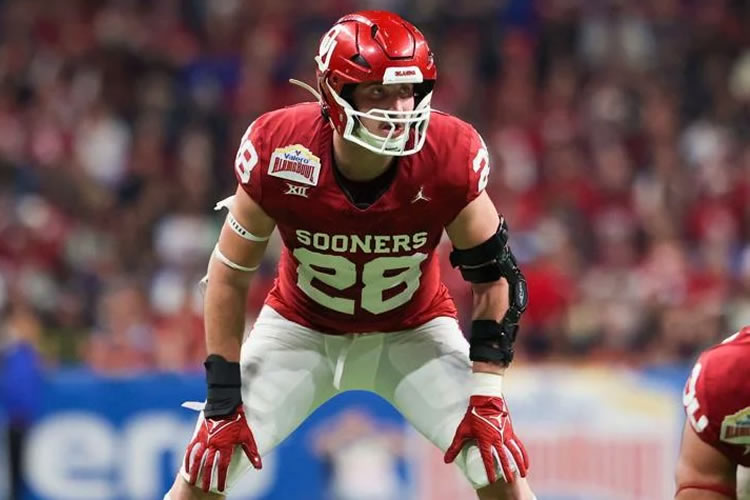
1. Danny Stutsman, Oklahoma (Sr.)
2. Barrett Carter, Clemson (Sr.)
3. Smael Mondon Jr., Georgia (Sr.)
4. Jay Higgins, Iowa (RS Sr.)
T.-5. Lander Barton, Utah (Jr.)
T.-5. Karene Reid, Utah (Sr.)
Medically excluded: Harold Perkins, LSU (Jr.)
It may be the optics to some degree, but Stutsman early on reminded me a lot of now-Broncos LB Drew Sanders, formerly at Alabama and then Arkansas, where he transitioned into primarily an off-ball player, who would move down to the edge and rush the passer some on passing downs still. His ability to move laterally and then range out to the sideline stands out, but when he can get downhill and charge into a pulling linemen in the hole, he embraces that part of the game. In coverage, he’s tough to layer the ball over him, thanks to being 6’4” with long arms, he packs some pretty rapid hand-combats and the power to win through one shoulder of pass-protector as a heavily involved piece of their pressure-packages, and while he can be a little overaggressive trying to trigger forward, he’s generally a strong wrap-up tackler.
Carter be about 15 pounds lighter than Stutsman (flirting with 230), but the twitch and urgency in this guy’s game is even more apparent. Early on in his career, he would be deployed as the apex or overhang defender a lot of times, where his ability to create muddy pictures to the wide side of the field in coverage and how quickly he’d shut down screens or completions into the flats could really. He’s now lining up between the tackles at a far higher rate and while there’s still too much see-ball, get-ball to his play, he constantly beats blockers to a spot, his speed to run the pole with in Tampa-2 or in man-coverage against a tight-end is very useful and his closing burst as a blitzer makes him incredibly tough to pick up, where he can legitimately bend the corner or loop around traffic. The one big issue with his tape is that he leaves his feet way too much as a tackler (on pace for back-to-back years with a miss rate above 20%).
Mondon beefed up this offseason to be in the range of the guy who actually played on the other side of the dominant week one win of Georgia over Clemson, and he presents a lot of the same qualities with active eyes and great range. He’ll shoot through gaps in a hurry when he sees things open in front, but then you also see him track down plays all the way at the opposite numbers compared to his original alignment – and he’s actually much more reliable with getting people to the ground (8.3% career missed tackle rate). You do see him get knocked down at times when linemen are able to get a piece of him from the side, but you can confidently line him up over slot receivers and stick with or even undercut challenging crossing routes, and he’s really valuable as a spy against mobile quarterbacks, rarely allowing them to escape.
At number four, we’re looking at a very different player with Jay Higgins being much of a traditional inside thumper, who gets the job done thanks to his high-end instincts and football IQ. The leverage this guy is able to play with at the point of attack, to stonewall linemen trying to climb up to him at times, but then also the lateral agility to swipe-and-step around guys when he has an angle to do some, allowed him to log the seventh-most defensive stops (62) of any defender in the FBS last year. In coverage, he showcases excellent spatial awareness and understanding for where offenses want to attack based on alignment, leading to him being in the right place for two rather easy picks through four weeks already. He’s simply a below-average athlete for NFL standards and may end up being more of a two-down player once he gets there.
I had to put the Utah linebackers in a tie here, since they work so well in tandem but also deserve a spot each based on their individual evaluations. Barton certainly catches the eye more so, with the way he can play stack-and-shed in the run game at 6’4”, 240 pounds and then has the force on contact to halt the momentum of ball-carriers. I think there’s room for improvement in the way he leverages the ball and breaks down as a tackler, but his mass x acceleration to attack the pocket as rusher is a big plus. Meanwhile, Reid misses four inches of height and ten pounds of weight on his teammate, but the way he sees the game and tracks the football is up there with just about anybody in college football. He understands where his landmarks are as a zone defender, but also reads the quarterback’s eyes and contests throwing lanes at a high level.
Honorable mentions: Jamon Dumas-Johnson (Kentucky), Nick Martin (Oklahoma State), Jeffrey Bass (Oregon), Jack Kiser (Notre Dame), Jalon Walker (Georgia) & Jason Henderson (Old Dominion)

Cornerbacks:
1. Will Johnson, Michigan (Jr.)
2. Travis Hunter, Colorado (Sr.)
3. Benjamin Morrison, Notre Dame (Jr.)
4. Jabbar Muhammad, Oregon (Sr.)
5. Denzel Burke, Ohio State (Sr.)
Medically excluded: Shavon Revel, East Carolina (RS Sr.)
This race for how the top spot was a lot closer coming out of summer scouting for me and as we think ahead to the 2025 draft, I think we’ll end up holding this class in high regard overall. However, Johnson may be the best man- and zone-corner in the country right now, where he can lock up the opposing team’s number one receiver but also read the quarterback’s eyes to trigger on throws and get his hands on passes, where he needs to fall off his initial assignment. Johnson has recorded a couple pick-sixes this year already, once to close out the Fresno State game late in their season-opener and then to put the Wolverines up by double-digits this past Saturday against USC, which ultimately made the difference in the result. Really all you can “fault” him for is being a little over-aggressive and getting beat on double-moves occasionally, but even then his closing burst really pops.
You can make the case for any of the next three names deserving to come in second, as they all shine in different ways of what they’re being asked to do. What separates Hunter from the rest of the list – along with the fact that he obviously plays both phases of the game (sorry special teams) – is the way he attacks the football in the air. I listed him as an honorable mention among the wide receivers, since he averages 118 receiving yards and better than a touchdown on offense. The fact he’s playing 134 total snaps a game makes what he’s doing defensively even more impressive, since he’s become more aggressive with racing up into the flats and creating early stops, along with baiting quarterbacks in zone assignments. I looked at him as more of a drag-tackler coming into the year, but he has yet to miss any attempts so far.
I initially had Morrison second on here, because he is just so technically sound and may be taking care of his job description as well as any corner out there, not allowing guys to get open and catch the ball on him. Whether it’s in soft press or playing with like five yards of cushion in quarters, where he can operate with leverage and be physical to still dictate terms to the receiver, he’s incredibly tough to shake. He had an outstanding showing against Ohio State’s Marvin Harrison Jr. in 2023, holding him to just three catches for 32 yards on seven targets. He’s flirting with what is allowed in terms of getting physical at the break-point of routes, but also shows great focus and high-point skills to haul in passes himself (nine interceptions compared to only four touchdowns responsible for in his career). He’s content with staying on his island vs. the run game is on pace for having a missed-tackle rate of 15% or higher all three of his seasons with the Fighting Irish.
Muhammad has been one of my favorite corners to watch since the beginning of last season with Washington, prior to transferring to their former conference foes in Oregon. His football intelligence to key route patterns, track the quarterback’s eyes and jump routes really impressed me in 2023. Now with the Ducks, he’s locked to the left side defensively, but is regularly being lined up close in soft-press looks, when he’s left one-on-one on the backside of the formation and challenges receivers during the stem. He’s had some impressive stops, where he has to trail guys all the way across the formation off motion, and in the run game, he consistently keeps his outside arm free. It’ll be interesting if he can show a little more force in his hands when asked to disrupt guys in press and the main question will be what he’ll run, since some NFL evaluators are concerned with his long-speed.
Finally, Burke is someone I was excited about during this past draft cycle already, but like so many Buckeye defenders especially, he decided to return for his senior campaign, trying to win a national title. This guy features this muscular build and shock in his hands to significantly re-route opponents off the line and ride them into the sideline, yet then also effectively roll off his ankles to stay attached as they break towards the middle of the field. He plays with good vision on the quarterback and alertness for mid-pointing routes as a flat defender and trusts his teammates to funnel receivers to them playing with outside leverage in quarters. Savvy route-runner are able to manipulate him with head-fakes and he tends to get a little grabby as they try to stack him, but I really appreciate the way he fights off blocks, comes to balance and finishes tackles.
Honorable mentions: Maxwell Hairston (Kentucky), Tacario Davis (Arizona), Jahdae Barron (Texas), Cobee Bryant (Kansas), Ricardo Hallman (Wisconsin), Tommi Hill (Nebraska), Zy Alexander (LSU), Jason Marshall Jr. (Florida) & Avieon Terrell (Clemson)
Safeties:
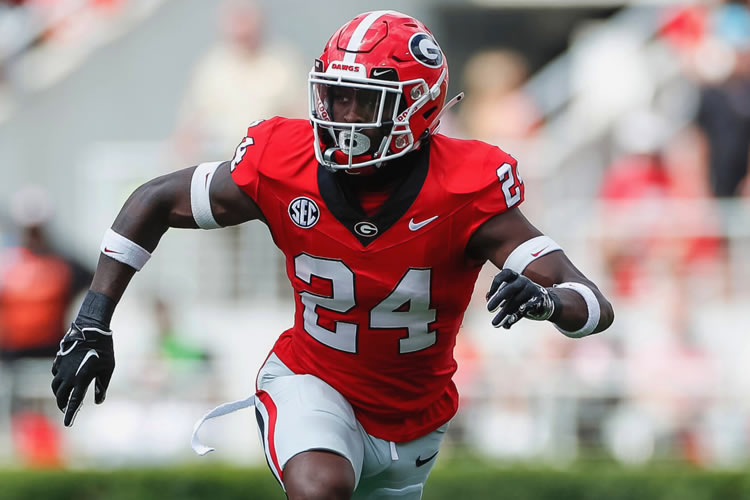
1. Malaki Starks, Georgia (Jr.)
2. Caleb Downs, Ohio State (So.)
3. Kevin Winston Jr., Penn State (Jr.)*
4. Keon Sabb, Alabama (RS So.)
5. Xavier Watts, Notre Dame (RS Sr.)
This brings us to our final position group and it’s another pretty strong one, as we consider these secondaries altogether. Starks to me has been SAF1 projecting ahead to the 2025 draft pretty much since I re-watched his true freshman tape. He’s continued to improve as a tackler, anticipating routes when asked to drop down into the slot and he’s a constant communicator in zone defense. Most notably, his ball-skills for the safety position are second to none, which were best illustrated best by that incredible high-point pick to put an exclamation mark on their dominant win over Clemson in the season-opener. His angles from depth could use a little bit of fine-tuning still, but he has yet to miss a tackle through three games and is responsible for a passer rating of 45.1 when targeted.
My experience with Downs has been quite similar, only that he’s a year behind and blew me away even more so as a true freshman for Nick Saban’s vaunted Crimson Tide defense. This guy attacks downhill in the run and screen game with an attitude, understanding when to side-step or go through blockers in his path. He can legitimately be used as a traditional single-high free safety, with the way he can simultaneously have vision on vertical pushers and the quarterback, but also position himself square in front of guys who catch the ball underneath. And in man-coverage, he’s very patient and has great ID skills for routes. He’ll just need to start using his hands to wrap and finish as a tackler, rather than lowering the pads on guys to make his presence felt so much.
Winston ultimately has been ruled out recently with a ‘long-term’ injury, but the ridiculous lack of information when it comes to this, we don’t know anything more specific right now, although it’s at least somewhat promising that nobody’s said he’s done for the year. He’s one of the more fundamentally sound players you’re going to watch at the college level, with the angles he takes up from split-safety looks and the way he negates the ability for blockers to cut off his tracks, on top of the instincts he displays for the ball is about to go. He showcases a good understanding for where offenses may want to attack their coverage, finding the right balance in closing down on routes without providing opportunities to go behind him. His longer build leads to slight delay in change-of-direction and his pad-level in close encounters when fitting the run.
There were a lot of stars on that national championship-winning Michigan D last year, but Sabb quietly was a key contributor and his play has been highlighted more with the switch to Bama this offseason. Whether he’s supposed to race up the alley against perimeter runs from two-high looks or stay between the ball and his end-zone from the deep middle, he’s a valuable run defender. In coverage, he displays the feel for space, pattern recognition and appropriate range to fulfill a variety of assignments and his presence as a versatile piece on the back-end for the Crimson Tide has immediately been felt. I’m not totally sure if he has the final gear to actually hang with speedster in isolated situations and he’ll need to do a better job of wrapping and driving through tackles, but he’s already racked up a couple of interceptions and PBUs each on just ten targets his way through three games.
To finish things off, Watts to me does the definition of the term “safety” justice, with the way he operates as the last line of defense for that Fighting Irish defense a lot of times. Last year, he did spend over 200 snaps in the box, slot and deep each, where either way he leverages the ball and uses a forceful strike to get the job done in run support. Notre Dame does some pretty crazy stuff with their safeties, where they spin them, going from a one-robber look, to widening and giving the illusion of cover-two, only to end up in the same picture as initially, with those two guys having swapped spots. Watts doesn’t have top-end range necessarily, but he makes up for it with instincts to be trusted in the high post and one of the craziest stats you’re going to find – despite coming up with seven picks in 2023, he also didn’t get charged for a single touchdown in coverage (on 32 targets).
Honorable mentions: Lathan Ransom (Ohio State), Billy Bowman (Oklahoma), Jalen Catalon (UNLV), Malachi Moore (Alabama), Nick Emmanwori (South Carolina), Jack Howell (Colorado State), Sebastian Castro & Xavier Nwankpa (Iowa)
 Halil's Real Footballtalk
Pingback: Top 10 tight-ends of the 2025 NFL Draft: | Halil's Real Footballtalk