

We’ve been heavily focused on video and podcast formats recently. So now it was time to get back to writing about players and delivering detailed evaluations/outlooks for one of my favorite pieces of the offseason. Split up into offense and then defense next week, we’re looking at some young players across the league I expect to make a leap in 2024.
For the purposes of this exercise, considering it’s tough to set the guidelines for what counts as an actual “breakout”. Therefore, I relied mostly on statistical metrics that exclude players from this category – no 1000-yard rushers or receivers, players that have scored double-digit touchdowns, earned a Pro Bowl/All-Pro nominations or are just generally considered one of the better performers at their respective positions. Also, I generally stayed away from players who have barely seen action in the pros yet.
Also, in order to not repeat myself, I won’t mention names like Colts left tackle Bernhard Raimann (who has established himself as an average starter I’d say) and Broncos tight-end Greg Dulcich (who missed pretty much all of 2023), since they made the list last year.
Let’s begin:
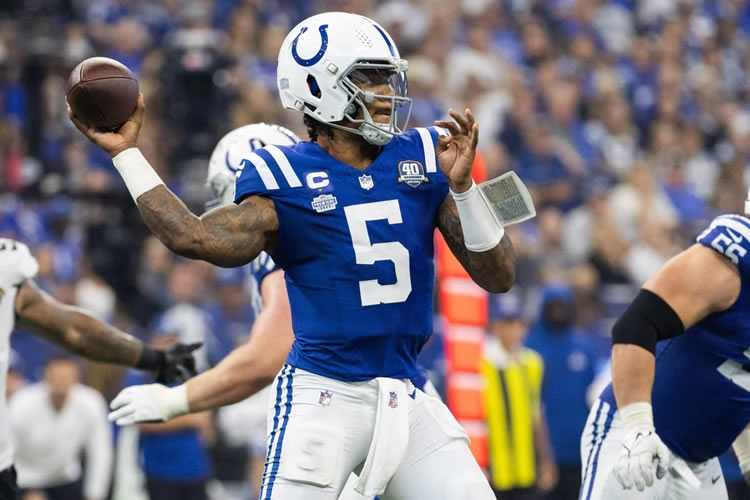
Quarterback – Anthony Richardson, Colts
This almost feels like cheating, because I was ready to crown AR15 along with C.J. Stroud as “the next big things” less than a month into their rookie seasons, but I’ve been a fan for a while now and since I just asked “if the has enough live reps to be a true superstar in year two” as part of my burning questions for each AFC team, I thought I should break it down in more detail here. First and foremost, I had all three quarterbacks that were selected within the first four picks of the 2023 draft as top-ten prospects and as I mentioned back then, I flirted with the idea of putting Richardson first, since the ceiling he presents was the highest of the class and I thought the baseline he provides was better than people gave him credit for. A four-star recruit in 2020, this guy only started a total of 14 games at Florida, completing just 54.7% of his passes for 3105 yards and 24 touchdowns vs. 15 interceptions, along with another 1116 yards and 12 TDs on the ground. However, I thought those lackluster numbers were more so the result of his environment, where the spacing of their passing concepts was poor, his receivers didn’t separate at a high rate, and didn’t cash in on opportunities to make plays for their QB when he gave them chances. Now, as I said in April last year, there were some inconsistencies in terms of accuracy in the short range, his ability to identify coverage rotations was still a work in progress and he needed to mature to some degree as a decision-maker out of structure. Nonetheless, I thought the sentiment of him being “raw” was oversimplifying things and I’ve gone into detail about how I preferred the term “inexperienced” to describe some of the areas of his game that he still needed to work on. Taking into account that he missed the second halves of two of the four games he played before suffering a shoulder injury that cost him the majority of his rookie season, Richardson basically accounted for 238 total yards per game and seven combined touchdowns compared to only two turnovers.
Looking at the Colts passing game structurally whilst the then-rookie was still available, you did see them deploy plenty of multi-tight-end sets and condensed formations, out of which they’d aggressively attack with two-man play-action concepts at times. Even when they opted for 11 personnel, they’d use the traffic they could create from stacking their pass-catcher closer together and ran a lot of mesh concepts, which head coach Shane Steichen would dress up slightly differently. Richardson has the type of bazooka attached to his right shoulder that even when he’s a beat late or there’s no space to step into the throw, he can fire in passes in the 15-to-25-yard range at the sideline. He can fire in seam balls just as his guys clear the second level or put it in front of his target to beat a trailing defender with generally good position. You’ll see him drop down the arm angle and speed up his release a little bit, especially when trying to just sling it out to somebody leaking out into the flats as part of their RPO game. We didn’t get a chance to see a whole lot in terms of manipulating guys on the back-end, but Richardson would force flat-defenders to sink due to his posture, and in particular, I did like some of the look-offs when he was on the move, especially when he knows he has somebody breaking open coming across the field. He does need to operate with better eye discipline and not stare down the window between zone-defenders on spacing concepts or anticipation sit-down routes. On deep curls in particular I thought some of the passes were far from pin-point, not allowing the intended target to work for it and to protect the ball. And according to Pro Football Focus, he only registered three big-time throws compared to four turnover-worthy plays.
Richardson’s pressure-to-sack conversion numbers (22.6% rate) weren’t quite as good as they were in college, but I thought his pocket presence and innate feel for moving away from pressure points did show up on a few occasions. That was one of my big takeaways from watching his Florida tape. He regularly got away to the left side by tucking in the throwing shoulder, working around backside pressure up his face and squaring his body again to deliver passes down the field. Plus, he’d quickly get that second hand back on the ball if they separated for a second. Some of the throw-aways he had, often with a defender already wrapped around him, even getting it off after switching over to left hand in a couple of games, were pretty crazy. While he’ll leap over trash and run designed plays like a running back would, when he escapes the pocket, he does try to stay upright and get guided out of bounds or slides. As a rookie, AR15 was pressured on 31.6% of his dropbacks, and even though he brought some of that on himself, with a time-to-throw mark of 2.86 seconds, there’s reason to believe that the second-year QB will receive cleaner pockets, considering for the full 2023 season, the Colts O-line finished sixth in both pass-blocking efficiency (86.4) and PFF pass-blocking grade (71.7). Richardson had a couple of nice scrambles, but really on designed runs is where he hurt defenses, averaging 9.0 yards on those, where that mid-4.4 speed could flash occasionally. You saw some classic zone reads, at times with a tight-end sifting across as a lead-blocker, if the end crashes. They ran “counter bash” with the backside guard and tackle pulling, and something that could be a true weapon is the QB draws with a slightly delayed wrap-around, while the back flares out to pull a linebacker with him.
With the selection of second-round pick Adonai Mitchell from Texas, they added my WR4 and someone I consider as a potential X who can win one-on-one on the backside of the formation, which allows them to move around Michael Pittman Jr. more regularly. Josh Downs complements the size they have otherwise among their receiving corp, as a smaller and shifty slot, while Alec Pierce could at least function as a tall vertical target and I’ll get to one of their young tight-ends I expect to make a jump along with his quarterback further down this list. With a healthy Jonathan Taylor sharing the backfield with Richardson, they could have one of the most lethal duos to put stress on defense on the ground, and the way this O-line rebounded has me confident in their ability to keep the latter upright. Ultimately, I trust the development plan they’ve put in place and the infrastructure Steichen and company are building to facilitate growth of their young signal-caller, where they encourage him to play loose and grow on the fly while setting boundaries with play-designs that take stuff off his plate at a certain rate of snaps, instead of possibly stunting that development by putting him in a gimmicky offense that doesn’t allow him to make mistakes. So as I’ve mentioned before, I consider this young man as a potential darkhorse MVP candidate, if everything works out.
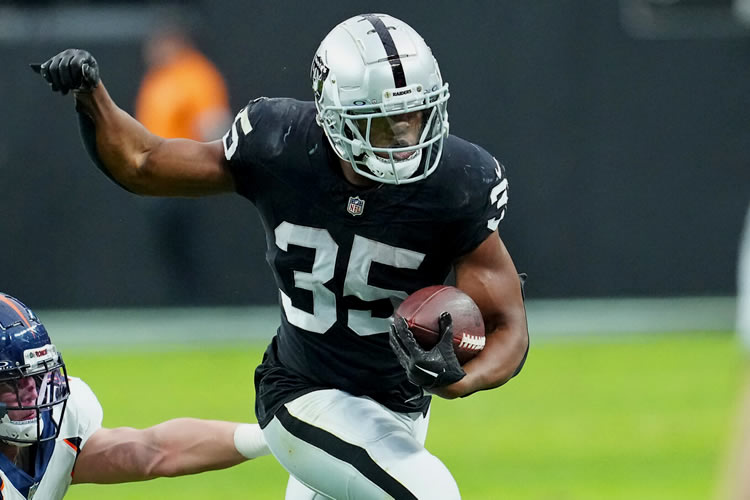
Running back – Zamir White, Raiders
Transitioning to a couple of other names that will be operating out of the backfield for AFC teams this upcoming season, the names of Zamir White and the RB listed next were not nearly as prominent heading into last year’s lead-up to the draft. Drafted in the middle of the fourth round, it always felt like the Raiders looked at the former Georgia Bulldog as a backup plan depending on how they’d handle contract negotiations to keep Josh Jacobs in Las Vegas. Even in college, White was the lesser-discussed running back on his own team, considering James Cook came with higher name recognition, due to his brother being a perennial All-Pro for the Vikings at the time. He did however spearhead the attack for the back-to-back national champs, rushing for 1635 yards and 22 touchdowns combined, whilst averaging an impressive 5.4 yards per carry in both seasons. Leaving Athens as a junior, he did get selected earlier than some predicted, but was quickly buried on the depth once the Silver and Black were able to come up with a solution for one year with the 2022 rushing king in Jacobs, Ameer Abdullah being their primary third-down back and even Brandon Bolden as someone Josh McDaniels brought over with him from New England. As a rookie, White only gained 70 yards on 17 total opportunities. Through week 13, White had only touched the ball 25 times for less than 100 yards and no touchdowns. Over the final four weeks as the starter in Vegas however, with Jacobs missing time due to a quad bruise, the then-rookie carried the ball 84 times for 397 yards (4.73 yards per) and a score, along with catching nine of 13 targets his way for another 60 yards. With the standout veteran taking his talents to Green Bay as a free agent and former Viking Alexander Mattison as the only substantial name to join the Raiders this offseason, White could be in store for a season where he’s shouldering a heavy workload.
Looking at where White excels at in terms of the run scheme, even at Georgia, I thought he was a highly capable zone runner, who also understood the rhythmic aspects and ideas behind setting up gap schemes which may involve the creation of additional gaps by utilizing pulling blockers. You like the way he keeps his shoulders square to the line of scrimmage on vertical concepts, such as duo, not allowing linebackers to get to one side of double-teams, so they can take him on in the hole. And he utilizes a little one-two-step with a shoulder fake at times to make guys miss in that condensed space if they do scrape over. Yet when he’s running inside or split zone and he works against something like an Over front, where the backside B-gap is uncovered and the linebacker over there turns his pads down the line immediately, he’ll quickly take that cutback. If he does want to hit front-side, he often will give a slight dip inside as the linebacker is already down around the line of scrimmage, creating a softer angle and allowing himself to rip through that defender’s shoulder as he’s plowing forward. And when he’s going downhill, he does so with a head of steam and no hesitation approaching contact. White can veer off either foot and point the other toe in order to work around traffic and bounce runs outside, paired with the peripheral vision to spot a wide receiver or detached tight-end in a condensed split pinning his (apex) defender inside. He’s not necessarily going to win the corner on contain defenders who stay square initially rather than leveraging themselves all the way outside or outrace a safety dropped down towards the sideline, but he’s a diligent runner between the tackles with excellent maturity and determination.
White’s 3.21 yards after contact on average as a rookie ranked ninth among the 49 total NFL running backs with 100+ carries last season. Looking at the Next Gen Stats database, his 0.33 average rushing yards over expected slot him right between first-team All-Pros from the two years prior in Saquon Barkley and Jonathan Taylor. White isn’t a dynamic make-you-miss type of runner, where he sort of freezes a little bit too much in those true one-on-one situations in the open field, instead of just putting a move on guys to get by/around them. Becoming a little more decisive and adding a couple more tools in that regard would be helpful for him this offseason. He does well to protect the ball when there are arms swinging at him and pulling his knees up, to slide off defenders trying to wrap him up low. And what I do really like is that he’s that mature decision-maker and team player who pulls through on fake handoffs in a way that buys his quarterback a little extra time. His deployment in the pass game certainly could be expanded upon or we at least have very little to evaluate him based on. Through three years at Georgia, he only caught 17 total passes and while he did haul in a few checkdowns as a rookie, he didn’t even see a single target of 10+ air yards. In the screen game, he’s deceptive releasing out, not prematurely tipping off defenses, and he excels at using jump-stops and sliding inside of his linemen leading the way. It’s always tough to trust Pro Football Focus’ grading when it comes to things that take a schooled eye to truly evaluate fairly. However, a 46.4 pass-blocking grade on the surface is underwhelming. With that being said, there were only 18 total such snaps to evaluate him based on, and based on my draft prep, I thought he had the size and mindset to anchor down against charging blitzers.
There’s a lot of uncertainty around the Raiders as a franchise, particularly on the offensive side of the ball. Antonio Pierce was upgraded from interim to full-time head coach after going 5-4 once he took over the reigns last season, Luke Getsy was brought over as offensive coordinator following a couple of underwhelming years in Chicago and they’ll be having a quarterback battle between Aidan O’Connell and Gardner Minshew. Outside of that, I’d say they offer one of the more intriguing collections of pass-catchers and they’ve re-constructed the O-line in a way that should make them an average unit. I’m much less concerned about Getsy’s ability to orchestrate a functioning run game, considering the Bears ranked fifth in EPA per rush over his time calling plays there. And there should be plenty of opportunities on the ground, as Chicago finished first (56.2%) and second (48.7%) respectively in run play rate, while the Raiders ran the ball an average of 25.9 times per game once Pierce assumed his interim role. Now, in terms of competition, the two RBs left on the roster from last year combined for just 19 total carries and Ameer Abdullah was the only one to catch any passes for that group. Former Viking Alexander Mattison could theoretically be the starter when week one rolls around, but his elusive rating dropped off 33.3 points from 2022 to ’23 and he dropped six balls. The only other player they added to that room for seventh-round pick Dylan Laube out of New Hampshire, who could battle Abdullah as a passing down specialist, since he was the best pass-catcher in this past RB class. Yet, I would argue in terms of handling the load as a rusher, White has a pretty clear path to running the ball 200+ times potentially, and as they figure out their quarterback situation, he could be the steady drumbeat for this attack.

Running back – Chase Brown, Bengals
Looking at all the teams across the NFL, very few have been as one-running back-centric as the Bengals over the last few years. Joe Mixon had logged at least 65% of offensive snaps when available each of the past four seasons and handled 19.87 touches per contest over that stretch. That focus was justified thanks to the stability he provided, as someone who consistently provided good yardage on the ground and caught pretty much everything thrown his way. Following his debut season in the pros, Mixon gained over 1250 scrimmage yards and at least eight touchdowns in all but one of the next six years – 2020, when he was limited to six games. However, after more defined role players were his competition in the past, Cincinnati started wanting to feature a more dynamic young player in Chase Brown down the stretch of this past season. The reason they selected him in the fifth round of the prior draft was the steady improvement he showed with the Fighting Illini, leading up to a senior season in which he racked up nearly 1900 yards and 13 touchdowns from scrimmage. Until week 12 of his rookie season, the former Illinois standout had only touched the ball a total of five times and didn’t even see the field at all in five games. Over the final six weeks, he rushed for 173 yards on 42 attempts and caught 11 passes for another 149 yards, reaching the end-zone once. So while he wasn’t featured very heavily, he did have two runs and receptions of 20+ yards each (nine combined of 10+ yards). He made the list of best plays of the week a couple of times with those explosive touches and after Cincinnati sent Mixon to Houston for a late-round pick, after basically having released him already at that point, Brown’s name up every once in a while as someone who could be a factor on what could once again be one of the better offenses across the league. Why I believe he can be a legitimate piece of this attack, I’ll break down now.
While Joe Mixon has been one of the more efficient movers and producers of positive yardage as a runner, Brown added some more dynamism in terms of start-stop burst that we hadn’t seen recently. So if he spied an opportunity to bounce a run outside, he could press vertically for that extra split-second, get his hips pointed towards the sideline in one thorough motion, and then as a force defender steps down to take away the edge, bend inside of that guy, to really stress the opposing unit in multiple directions. I prefer him in more of a gap-scheme approach, which the Bengals have shift towards anyway, as they started to operate almost exclusively out of the shotgun when Joe Burrow was in the lineup and they needed a run game that would complement that better. Going laterally deeper in the backfield as much as they did early in Zac Taylor’s tenure as a former Sean McVay disciple wasn’t beneficial for what they wanted to do and Brown to me didn’t execute zone concepts optimally, actually pressing the front-side in order to set up lanes instead of prematurely turning his shoulders when he decided to take quick cutbacks due to the front he was facing. Being the one controlling terms with leaning behind or hugging blocks, pacing himself before stepping on the gas, and then letting that 4.43 speed shine when he could hit the hole at full speed, is something that feels more comfortable to him. You see a lot of subtle start-stop movements and slipperiness to navigate those condensed areas, and then when he has to, he’ll churn his legs forward for extra yardage through contact. Overall, I’d say he does need to be quicker to ID penetration and process information in general, which is why he only averaged more than four yards per carry in one game as a rookie. He’s a bit too boom-or-bust in that regard, when the frontside of plays closes up and he doesn’t stick his foot in the ground to just try to get vertical or even when he does put a move on somebody, trying to cut it ALL the way back, leads to additional negative yardage. Yet, he offers an elite athletic profile and the movement skills to turn himself into one of the better gap-scheme runners, with the burst to get to the corner on the occasional toss as well.
Obviously, the same size of Brown once he gets through the line of scrimmage or creates in the open field is fairly limited. The couple of times we saw him break loose, he’d just try to run away from the whole defense and maybe widen or cut inside of somebody trying to angle his way desperately. From the information we have currently as an NFL player, this guy forced eight missed tackles on 44 attempts, but more impressively, he had an average of 3.27 yards after contact, according to Pro Football Focus. With his ability to stutter and re-accelerate, he could become a problem for safeties trying to bring him down as the last line of defense. Brown packs a nice side-hurdle combined with a stiff-arm to the crown of the helmet, in order to make a diving tackler whiff. And he runs hard, bouncing or spinning off hits, digging those cleats into the turf, and keeping himself alive on the play. More impressively in terms of the advanced metrics, Brown forced a missed tackle on half of his 14 catches and the craziest number for him was his yards per route run mark at 4.46 yards – that would be significantly above receiving leader Tyreek Hill, if he actually qualified with the low number of times he was actually involved in the pattern. He is more of a body-catcher, but he also only had one drop for the season. The concern is more so when he’s actually locked into protection. Brown did receive a PFF pass-blocking grade of only 26.7, but that was based on eight such snaps for the year and he didn’t allow any QB pressures on those. Yet, that area was one of my main negatives on his scouting report coming out of college, as he’d dip his head and allow blitzers to get past almost untouched at times. Meanwhile, veteran Zack Moss has established himself as one of the better pass-protectors at the position heading into his fifth season as a pro. So growing in that department and giving Cincinnati’s coaches reason to trust him in keeping their 275-million-dollar quarterback healthy will be key in keeping him on the field for dropback settings.
Since I just mentioned Moss, it has to be pointed out that based on what he was able to accomplish in Indianapolis, after an underwhelming start to his career in Buffalo, does present more of a roadblock for Brown than anybody on the depth chart in Las Vegas for the previously discussed Zamir White. A two-year, eight-million-dollar deal for the veteran may not sound significant, but that does actually tie him for the 20th-highest annual salary at his position and looking at the numbers, you’d understand why he will absolutely play some kind of role for this team. Just over 10% of Moss’ carries last season resulted in 10+ yards, he didn’t fumble once and he didn’t allow any sacks or hits on the quarterback (four hurries). With the Bengals spending another third-round pick on Alabama wide receiver Jermaine Burton, I think we could see them lean more into “big 11 personnel”, where they move Ja’Marr Chase into the slot and maybe involve those guys more as blockers near the point of attack, at least adapting some of the insert stuff their head coach’s former boss with the Rams has made increasingly popular now. Depending on if Burrow is willing to go under center more often, I think Moss may be more effective in those looks to facilitate a legit play-action game, but Joe wants to stand back there with extensive vision, having Brown’s explosiveness to shoot through creases that the spread-out defense presents could set up some impressive numbers by the end of the season.

Wide receiver – A.T. Perry, Saints
Moving on to the wide receivers now, there were a couple of earlier draft picks I considered here, even if the hit rate for first-rounders has increased recently it seems compared to its usually low bar, but I instead opted for a sixth- and fifth-rounder from the last two years respectively. The first name up here is actually part of a group in New Orleans, where the number one option Chris Olave has worked out beautifully as the 11th overall pick from 2022, with back-to-back 1000-yard seasons, but needs him to step up coming into year two. Perry caught 152 passes for just under 2400 yards and 16 touchdowns across his consecutive first-team All-ACC selections at Wake Forest. In a wide receiver class that saw four straight guys selected in the 20s of the first round, rankings seemed to be all over the place beyond that and I personally had the former Demon Deacon up there as my WR6. Things didn’t start optimally for him, as he didn’t dress over the first seven weeks due to being placed on the non-football injury list and having to wait his turn before Michael Thomas ultimately got hurt again. He only logged 24 combined snaps over his first two games in action, but then stepped in and functioned as a quasi-starter over the final eight weeks of the season. Altogether, he hauled in 12 of 18 targets for 246 yards and four touchdowns, for a passer rating of 149.3. What’s impressive about that limited production that he did have, was the fact that all but two of his receptions resulted in first downs while only dropping one pass. Now with New Orleans finally ending that weird relationship they had gotten to with Thomas and Cedrick Wilson as the biggest name added to the mix, following two disappointing years in Miami.
Watching Perry’s first game of extensive action at Minnesota in week 10, the first thing that was encouraging to me right away, was seeing him line up and run routes from every single receiver spot – that speaks to a lot of trust from this coaching staff for a rookie. You can put him outside and run deep post routes off heavy play-action, where they want to put the single-high safety in conflict with a crosser in front of him, as Perry stays disciplined with the stem and tests the defender’s peripheral vision before breaking across behind him. Yet, he can also run hooks over the middle of the field as the number three in trips, where he sits down and splits that space between guys on the second level. This young man shows quality initial burst out of his stance to gets up near full speed quickly. Then he can glide through dig cuts effectively and present an attractive target over the middle, as the linebackers expand and safeties haven’t erased that space in front of them. I like his presence as a vertical big slot, but he also looked good running those in-cuts from the backside of the formation, which is how teams across the NFL open deploy their best wideout. Perry is twitchier than you’d expect for a guy with his body type, hesitating and fooling DBs with extensive releases or breaking across the face of defenders further down the field, paired with a well-timed and effective swipe-by move. He’s sudden with pulling his shoulders away from contact and not having his progress impeded by defenders, particularly working against more static zone looks. On several occasions, I saw him break free from press and then tempo himself to expand that window between the corner and safety in cover-two when running fades. Unfortunately, he didn’t receive many opportunities on those types of looks, and overall,he only averaged 1.18 yards per route run as a rookie. That’s about half of what his teammate Olave registered in his debut campaign.
Something that made Perry one of the biggest creators of highlights at Wake Forest and that flashed in moments with the Saints is his ability to play above the rim and come down with catches over the heads of defenders, even when they’re in solid position to make plays on the ball themselves. Perry hauled in four of six contested targets as a rookie and all but one of his six targets of 20+ yards, where he can kind of hang up in the air and extend those go-go-gadget arms to pluck balls off the top shelf. I really like the way he tracks the deep ball and gains positioning for back-shoulder placement, but doesn’t panic or allow his man to go for the punch-out early. The area he’s always been sort of underwhelming at is creating with the ball in his hands. Less than 20% of his collegiate production came after the catch and he only gained 20 YAC this past season. You can certainly argue that this is more of a function of the type of downfield usage he’s received, but for a guy with his flexibility in his joints and the way he can cut outside his frame for a tall player, you’d expect him to add a little more in this capacity. As a blocker, Perry operates under good control, eating up the cushion to off-defenders and gathering himself without loading up his punch excessively, which would allow guys to elude him potentially. When the run is designed away from him, he adjusts his angles accordingly, to cut off the path for his corner. And you can put him at the tip of the bunch and he’ll occupy a slot defender over him, in order to not scrape from the backside. It’s not a matchup that’ll favor him of course, but I did see in lighter sets, him having a linebacker pulled out with him and creating solid initial movement on that guy to help the running back blow through the line. Because he’s lanky and rather light, when defenders do get their hands inside his chest as a blocker in the run or screen game, they can dictate terms to him largely.
So this isn’t a name you see pop up in a lot of written pieces about potential breakout candidates and the fantasy community doesn’t have any under-the-radar metrics they can really grasp here to predict him being a sleeper for 2024, but based on my draft evaluation and the signs he was able to show when given playing time, I’m betting on him becoming a productive pass-catcher. Obviously, Olave remains first in the pecking order and they got a lot out of Rashid Shaheed this past season, with the speed he provides vertically and horizontally. However, with offensive coordinator Klint Kubiak coming over from San Francisco and the offensive world he comes from, even if by name this will remain a West Coast offense, this shouldn’t look like what we saw from Pete Carmichael there for so many years, where they just hammer throws short of the sticks. Moreover, understanding that this team is aging defensively and needs to take pressure off those guys, they will encourage Derek Carr to not blindly check it down to his running constantly and drive up the usage of play-action. Perry operating on the intermediate level of the field, being able to take advantage of isolated matchups at the X, but also work the soft spots vs. zone looks when moved inside, is something I see as a more prevalent piece of the pie.
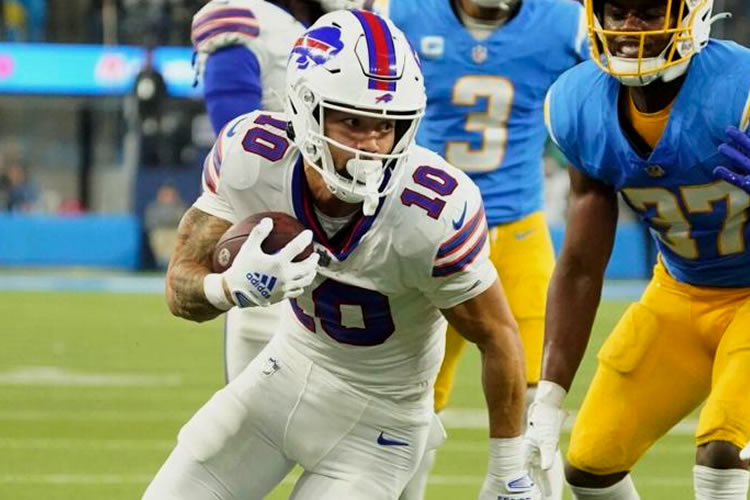
Wide receiver – Khalil Shakir, Bills
With Buffalo deciding to end their relationship with Stefon Diggs, as they sent him to Houston whilst paying most of his salary, there are now significant questions about his group of receivers around Josh Allen. When you see reports out of OTAs saying Chase Claypool has been the most consistent guy of the groups, there’s definitely reason to be concerned. Be that as it may, I believe they have a player on the roster who is about to step into a more prominent role and benefit from the lack of clarity in terms of a pecking order. Khalil Shakir was unfortunate to be part of a wide receiver class in 2022 that saw eight guys selected in the top-18 picks but even beyond that there was so much talent available, that he fell to the fifth round. That’s despite racking up over 3000 total yards and 22 touchdowns over his final three seasons at Boise State. Personally, I had him as one of those names just outside my top ten at the position, but with that kind of low capital invested in him while having Diggs, Gabe Davis, Isaiah McKenzie and Jamison Crowder, it was always tough for the then-rookie to see the field a whole lot. He only played 275 snaps across 14 games that year, catching half of his 20 targets for 161 yards and one touchdown. Shakir was off to another slow start last season, not cracking 20 offensive snaps since week six or seeing more than one target until the ensuing game. Yet, with neither Trent Sherfield nor Deonte Harty establishing themselves as meaningful contributors and Dawson Knox getting injured midway through the year leading to the Bills becoming more 11 personnel-centric, a window opened for the second-year man to prove himself. In the nine contests which he played at least 50% of offensive snaps, Shakir caught 31 of 35 targets coming his way for 536 yards (and one touchdown). That would project to 59 catches for 1012 yards across a 17-game season. I will now outline why I believe he could reach those marks or at least come close to him as a more central piece of their passing game this year.
While he looked fairly small next to Gabe Davis and the two tight-ends for Buffalo, Shakir is actually a solid six foot flat and 190 pounds. So while he’s mainly operated on the inside so far in his career, he has displayed the propensity to line up in multiple spots. His suddenness to elude contact and stay on schedule with deeper-breaking routes stood out to me on multiple occasions. He can kind of walk into or stutter before hitting the gas in order to blow by nickel defenders on inside fades. This guy just glides through speed-cuts on digs, flat posts, etc. and I love the way he creates separation when breaking out to the sideline with an extended drive-step and at times throwing in a slight shoulder-fake. He will opt to add an extra pair of steps or hesitate and try to create angles for himself to defeat the leverage by safeties who can wall him off, instead of fighting through contact, but not to where he doesn’t get to his spots with appropriate timing. Shakir did a lot of his damage out of the slot this past season, working up to depth and settling down in open windows vs. zone coverage. His feel for open space and sliding towards it once the timing of the route has passed is excellent and he aggressively works back down towards his quarterback, whether he’s snapping off stuff with defenders trying to close to gap to him or just helping out Josh Allen later in the play-clock. In one of the more impressive statistical feats I stumbled upon, Shakir’s yards per route run actually increased from 1.47 to 1.75 despite his average depth of target being nearly cut in half (down to 7.4). That speaks to his ability to be where he’s expected and find openings if they aren’t there initially.
Evaluating Shakir at Boise State, he would alligator-arm or try to one-hand the catch a little too much for my taste. Yet, he’s been uber-dependable with securing passes so far as a pro. He only dropped one of 50 catchable targets this past year. Furthermore, he’s dealt well with contact with the ball arriving there. Generally, he displays great concentration tracking passes, and so far, he’s hauled in five of eight contested targets coming his way. Specifically, when he’s flying up the seams and there’s a corner falling off to disrupt the catch-point or a linebacker on his heels trying to carry the vertical push, he doesn’t lose focus in those moments. Yet, what really intrigued me about this kid in college was what he could provide once the ball is actually in his hands. Shakir runs through the catch and he’s always had that quality of gaining speed once he’s secured the catch seemingly. He’s super slippery to wiggle past defenders in space, and even when they do get hands on him, he reduces that surface area to where he can slide forward that extra yard or two. He’s just not going to straight-arm or truck a safety at any point necessarily, but his momentum constantly carries him up the field, slide or spin off hits. That start-stop ability can also be utilized to great effect in order to navigate around blockers in the screen game. In 2023, he accounted for 32 first downs despite only 13 of his catches coming 10+ yards down the field, and he forced six missed tackles. In terms of blocking, Shakir does a good job of sliding in front of defenders and forcing them to go through him, giving you an honest effort, but that’s where the lack of size does show up with opponents setting the tone at contact in those interactions typically. So you’re best served to use his lateral quicks to shield DBs on perimeter runs if you have him close to the point of attack. Putting him at the tip of a bunch or stack with a defender up close in press on him especially can throw him off in that capacity.
Transitioning to Shakir’s potential usage, I do believe Curtis Samuel will be more of that gadget type that they use on fly sweeps and as eye candy for the defense, but Shakir to my surprise officially only carried the ball once so far in his pro career. Meanwhile, the departure of Stefon Diggs opens up a role that would allow the third-year man to be motioned across the formation and attack from different alignments. That means he can be that off-set Z, motion out of bunch sets to level the defense and force them to declare, while giving Shakir room to operate. His slot rate increased from 61.3% as a rookie to 76.8% this past season. But even though that granted him a lot of free releases, he was fairly static in terms of the routes he could run based on alignments. I believe second-year tight-end Dalton Kincaid is an obvious candidate for this list of names as well, but the difference in catches between him and Stefon Diggs as the number one receiving option and Gabe Davis at number three last season was nearly the same already. So as a first-rounder who became an integral piece for Buffalo already as a rookie, I thought this was almost too easy and the distribution of opportunities among these actual “WRs” was more interesting. They’ve already stated that 33rd overall pick Keon Coleman (Florida State) will primarily play the X for them. Taking out 2021, when he didn’t even log 100 snaps due to injury, Samuel has played at least 70% on the inside in his three previous seasons. So while they could be somewhat interchangeable, a flanker that moves around a lot sounds like a pretty clear definition for Shakir.

Tight-end – Jelani Woods, Colts
In one of the more interesting stories for players on this list, Jelani Woods was a highly successful quarterback in high school, but used a redshirt year at Oklahoma State in 2018 to transition to tight-end. After averaging just over 10 catches for 120 yards and a touchdown his three seasons in Stillwater, he transferred to Virginia, where in one year he caught 44 passes for 598 yards and eight TDs. Yet, it wasn’t until his combine the following spring, that people really started to consider him a big-time NFL prospect, as he ran a 4.61 at 6’7”, 260 pounds, and followed that up with elite numbers in both the jumps and three-cone drill at his pro day, ultimately earning a perfect Relative Athletic Score (10.0). Understanding the Colts’ inclination for drafting freakish athletes, I wasn’t surprised by the least that they selected the monstrous pass-catcher early in the third round of 2022. With veterans in Mo Alie-Cox and Kylen Granson on the roster however, Woods didn’t log at least 40% of offensive snaps or saw more than three targets until week 12 of that season, only totaling seven catches (on 13 targets) for 79 yards, although he did reach the end-zone three times. Over the final six weeks, he played just over 30 snaps, hauling in 18 of 27 looks his way for 233 yards. Unfortunately, reoccurring hamstring injuries limited him during OTAs, training camp and ultimately cost him the entire 2023 season. Now, fully healed and having a full offseason to work with recently discussed quarterback Anthony Richardson, who he probably spent playing of time with together in the training room with, recovering from shoulder surgery himself, those two are ready to take off together.
As for Jelani specifically, despite turning 26 already a month into this upcoming season, they felt comfortable betting on the athletic profile and the college production once he was inserted into an offense that actually tried to take advantage of his skills, rather than making him a glorified H-back. You see that explosiveness he brings with how quickly he eats up that cushion to safeties in two-high looks, even out of three- or parallel two-point stances. The Colts isolated Woods on the backside of the formation as the de-facto X receiver in reduced splits quite regularly during his rookie campaign, where his ability to stick that foot in the ground and cut towards the middle of the field was shockingly dynamic for a guy at 255+ pounds. Plus, then he’d a little shoulder shake to soften that break for himself, throwing off the awaiting defender. That’s where he separated himself from Mo Alie-Cox as a similarly gigantic pass-catcher, since the veteran does need excessive steps at the break-point too often and struggles to actually get away from his man. With his large frame and ability to push defenders up the field – at times literally as he bends across the field – he can open up room for his fellow receivers coming in underneath him, such as on levels-based concepts. In general, safeties being asked to play off-man coverage against Woods have a tough time bumping him off the route, as he has room to build up momentum and get the opponent further onto his heels and up the field than he needs to be as the tight-end nudges him off at the top. You see the wheels to run past a linebacker out of a bunch or a safety buzzing down into the flats and then having to carry him on wheel routes. And he’ll also use that horizontally, giving a little size outside and then blazing away from his defender on drags. When defenders were able to challenge him earlier in the route, I thought they had much better success and that’s definitely an area the third-year man will need to work on, actually using technique in the way he uses his hands to re-gains control of the rep. That doesn’t mean he can’t battle through contact and still “win”, but rather that he could become more effective by refining that area of his game.
Nevertheless, when it comes to using physicality once the ball is in the air, Woods’ aptitude to slightly push off and gain rebounding position, or initiate contact and put guys on his backside as he curls up around the sticks, make him a problem for defenders who aren’t able to put themselves between the quarterback and tight-ends. Altogether, he hauled in four of seven contested targets as a rookie. Yet, while he officially only dropped two of 27 catchable passes, he does slightly misjudge balls coming in at challenging angles over his head, where he didn’t get his fingers on it but might have been able to lay out for the ball. That’s a weird match with corner routes being some of his best ways to win. Having said that, this definitely isn’t somebody you want to catch the ball with a head of steam. He covers a ton of ground with those long strides and becomes a locomotive you don’t want to, but simply have to try to get in the way of, even if he’s not going to add much creativity or variety on the fly to get around opponents. Of the 224 snaps Woods logged when they threw the ball his debut campaign, 92 came in-line, 86 in the slot and 46 out wide. Almost all of the remaining 110 snaps he played on rushing downs he was attached to the hip of the tackle. I definitely wouldn’t classify Woods as a people-mover in the run game, certainly not in a way that would make sense for his size, but he does gain good positioning early on, operates from a wide base and keeps moving his feet in order to take care of his assignments. His PFF run-blocking grade of 50.3 seems underwhelming, but at least there was very little variance, to where he only once he finished below 50 – making me once again question who in the world they calculate this, since it makes no sense mathematically. You see Jelani effectively execute down-blocks on defensive ends to keep the C-gap clean, handle backside seals, trap three-techniques, and insert up the A-gap from wing alignments.
As I already mentioned with second-year QB Anthony Richardson, I believe there’s a lot to get excited about with the infrastructure they’ve created around him. Woods isn’t anywhere close to cemented as an integral piece of their passing game specifically or even guaranteed to be their starting tight-end. Alie-Cox and Granson are still on the roster and even a guy they drafted in the sixth round along with Woods in 2022 in Andrew Ogletree logged 40% of offensive snaps in the games he was active for, as they were dealing with those injuries. With that being said, I believe in terms of explosiveness, the way he uses his big frame and the tank he becomes with the ball in his hands, along with competency as a blocker, Shane Steichen will make it a priority to get the third-year man involved. The head coach said a good ago that about Woods, that he’s “a big body TE that can run the vertical routes, shallows, the deep cross” and that he’s “a matchup for a defense that they gotta be prepared for”. I’m geeked up about the potential of a jumbo-sized 11 personnel, where if they want to use Michael Pittman Jr. more as a big slot this year, rookie Adonai Mitchell (Texas) might be the smallest among the guys throwing and catching the ball, at 6’2”, 205 pounds, which I captured already last year in a tweet depicting them as “The Monstars” from Space Jam.
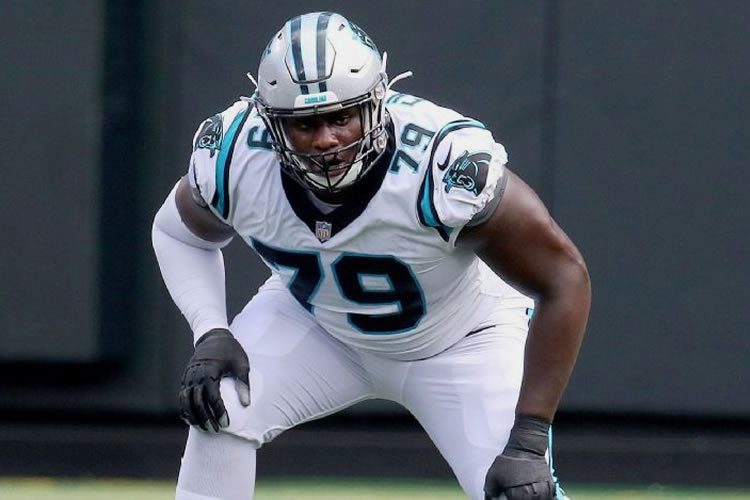
Offensive tackle – Ikem Ekwonu, Panthers
Splitting time between left guard and tackle as a true sophomore at N.C. State, Ekwonu earned second-team All-ACC honors at BOTH spots. The following year he settled in on the blindside and improved to first-team All-American. Yet, there was plenty of discussion in the lead-up to that 2022 draft about which may be his optimal position in the pros. The Panthers made him the first of three OTs selected in the top ten that year (along with Alabama’s Evan Neal and Mississippi State’s Charles Cross) and kept him on the edge. Following a rough three-week stretch to begin his debut season, Ickey turned himself into at least an average starting left tackle, only allowing more than two pressures in one other game, and especially as Carolina started beating up opponents on the ground, averaging 152 rushing yards per contest from week seven onwards, people started to pay attention to this young offensive line. After a promising rookie campaign however, Ekwonu – along with the rest of the interior three – took a step back this past season. Pro Football Focus had the unit bottom-five in both run- and pass-blocking grades for the year. However, diving into the numbers and re-watching the tape, I would argue Ekwonu’s fall individually was largely exaggerated. His overall grade from PFF actually slightly improved from 65.3 to 67.4 and while his sack total responsible for nearly doubled, that blurred some of the snap-to-snap play. He did allow every 6.0% of snaps compared to the 4.9% from his first season, but his run-blocking grade took a significant bump from 64.0 up to 77.0 and he was flagged three times fewer for 31 yards less (40) on 140 additional snaps.
This guy packs an insane amount of vigor in his hands and when they are connected to his lower body, he can truly enforce his will in the run game. I love Ickey’s raw force to launch himself into a 2-technique head-up on the guard and just plow that guy off his space, blowing open the C-gap or creating room for a puller to come around behind him off a kick-out on the end-man at the line. He’s sturdy in a way where he can swallow a punch, as he basically just walls off the backside defensive end. Although he can get a little lazy on those types of plays and allows guys to slip his blocks, in order to chase down the line and establish first contact with the running back. On the front-side of inside zone and or arriving as the second man on combos, Ekwonu will incorporate what is referred to as a “gallop technique” when required, where instead of potentially getting over his skies to much leading into contact with the defender, he’ll add an extra step with the play-side foot and then lift up into contact. In particular when the defense brings down a back-seven defender to the edge late or shift the front, that can allow him to toss guys out of the club. When peeling off doubles and progressing to the second level, he snatches up linebackers, with the ability to torque them to one hip and indicate where to go for the ball-carrier, as he gets through the line of scrimmage. The Panthers left tackle showcases impressive hip fluidity for a man of his dimension, being able to swivel his base around and secure scoop-backs on the backside of wide zone if given a help hand by the guard. Although, his step-sequencing in order to overtake down-linemen could use refinement. And he’s shockingly nimble when asked to get out in space in screen game. He may not be on the level of some of these truly elite athletes for the position at getting to certain spots, but the ease at which he gathers himself and progresses to third-level targets stood out to me on multiple occasions.
While Ekwonu doesn’t gain a ton of depth in his initial kick-set I’d say, he does get that foot back down quickly again and you don’t really see speed-rushers just beat him around the corner. Yet, neither does he have issues hunkering down against bigger EDGEs or interior linemen moved over him, if they try to use power against him. Occasionally, he will fake a stab with the outside hand in order to make rushers declare against him, and something you see in those closer combats is being pro-active with his arms like you see from the guys on the opposite side, lifting or pressing those limbs off himself and finding new anchor points as he places his hands back inside. Even if his footwork isn’t always by the book, Ickey is typically able to make it work, as he has sort through different (delayed) pressure looks or has to slide in front of a looping lineman, squaring up and staying in front of them. Often as rushers are about to win the outside shoulder on him, Ekwonu will deliver a forceful shove to push them past the quarterback and be able to guide them off traffic enough so they don’t affect that guy. Now, he would jump out and throw his hands at times to widen the arc for rushers on quicker drops, yet because Bryce Young didn’t trust his receivers or they just didn’t get open, it would end up leading to QB hits/hurries to his name. Where he does get himself in trouble is generally getting his weight shifted too far over his toes and him dipping his head, which provides defenders opportunities to access his edges and slide off contact. Ekwonu uses his feet and hands as independent contractors a little too much as a pass-protector. That’s why you’ll see him initiate contact with the outside hand while putting the same foot down, leading the motion with his outside hand instead of redirecting off the post-foot against cross-face moves, and generally allowing rushers to gain access to his chest by carrying his mitts fairly low. Watching their week eight game versus Houston, you saw Jonathan Greenard really take him to school by angling his rushes with momentum that he’s built up and then being a great reactionary technician, as he felt Ickey try to hold his ground but making himself vulnerable in other ways. So that’s one thing he certainly needs to work on from a technical standpoint – becoming the one to establish first meaningful contact and bracing for that contact phase, to where he’s not forced to adjust as much. From a strength perspective, some of the things you see on tape with him should not be happening.
The Panthers offense truly was a mess last season, finishing bottom-four in EPA, success rate and DVOA. None of the receivers outside of 33-year-old Adam Thielen to a certain degree could consistently create separation, some of the situational play-calling had me flabbergasted, their numbers in the run game fell off pretty dramatically and because they also couldn’t protect first overall pick Bryce Young, he didn’t comfortable all year long. Not only have they continued to address the skill-position group, but Carolina also paid their new guard tandem of Damien Lewis and Robert a combined average of just over 33 million dollars. Allowing their sub-six-foot quarterback to have space and see the field will be key in turning things around, but also taking pressure off that guy with a more consistent run game. With a shift to more of a gap-scheme approach on offense under new head coach Dave Canales, I expect that to help out guys like Ekwonu, who did operate in a zone-heavy approach at N.C. State but can really make an impact by caving in one side of the line or even being used as a puller himself. That could also make their play-action game more effective and take stress off their front with so many true dropbacks.
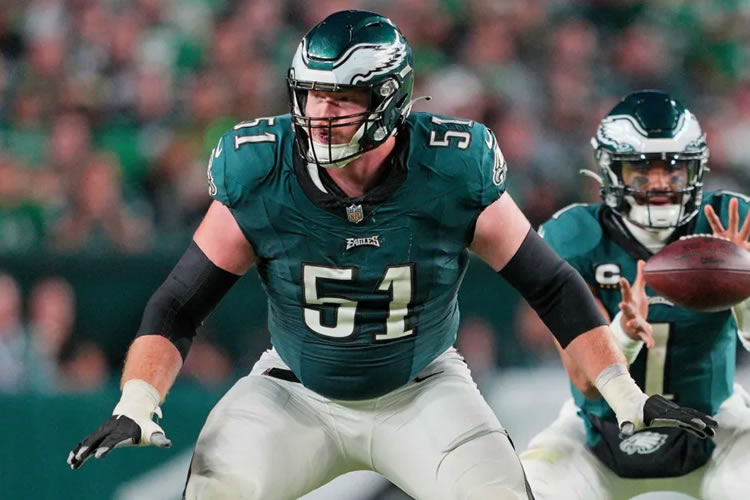
Interior O-line – Cam Jurgens
A name who saw a pretty meteoric rise during the draft process a couple of years ago was Nebraska’s Cam Jurgens. The three-year starter did earn third-team All-Big Ten accolades and was liked by people across the industry, but it wasn’t until the combine that he was considered a likely day-two prospect. With elite numbers in the 40, both the jumps and agility drills, he catapulted himself into the conversation for the top true center outside of Iowa’s Tyler Linderbaum (who the Ravens selected in the first round) – even gaining notice from non-film enthusiasts with branding the “Beef Jurgy”. The Eagles ultimately selected him 51st overall as the eventual hand-picked replacement of perennial All-Pro Jason Kelce, who was heavily involved in that process. After only logging 35 snaps in mop-up duty as a rookie, Jurgens started all 11 games he was available for this past season at right guard, with a six-week stint on injured reserve with a foot injury in the middle of the year. He didn’t allow a single sack and just two hits on the quarterback, along with another 20 hurries. Yet, I would argue those numbers actually look worse than what they should be, as Jalen Hurts finished with a time-to-throw mark of 3.03 seconds. He’s only been flagged three total times so far in his career – once on a holding penalty that was offset and on a couple of ineligible down passes, as he was too far past the line of scrimmage before the quarterback released the ball. Now, leading up to 2024, he is supposed to fulfill his destiny and take on the seemingly impossible task of replacing a Philadelphia legend and to me a first-ballot Hall of Famer at the pivot. Still, he will have the benefit of being part of what arguably still is the best front-five across the NFC and being guided by pretty definitely the top O-line coach on the planet in Jeff Stoutland.
The first thing that popped up watching Jurgens in last year’s season opener at New England and beyond was that the right guard was responsible for scanning the front and looking back at Jalen Hurts, so he could tap center Jason Kelce once the quarterback was ready for the snap when they’d use silent counts during road games. I don’t know what his exact responsibilities might have been, with the veteran center still being the main line of communication, but I’m sure sitting in meetings together and starting to get the second-year player involved with the pre-snap process will pay dividends as he now becomes the physical connection between the front-line and the QB. This past year, Philadelphia reverted to a more simplistic offensive attack after losing offensive coordinator Shane Steichen to the Colts as their new head-man, and Brian Johnson taking over play-calling duties. Now with Kellen Moore bringing in a more practicable dropback game and as I discussed a couple of weeks ago, them working out a functioning marriage between him and Stoutland, who is instrumental in their ground game design, I’d expect them to diversify their run game portfolio. Jurgens provides good lateral mobility, but running inside zone on more than half of their rushing plays isn’t giving them any advantage and doesn’t benefit their young interior lineman, since you optimally want to move bodies diagonally rather than flat down the line. He does a nice job on back-blocks and generally using angles to wall off defensive linemen, who want to chase after the ball, such as on power or counter concepts. Freeing up his fellow big men to pull has been one of the main advantages Kelce provided for so many years, when other centers would log missed assignments trying to secure a 2- or 3-technique from ruining the play. I’d also love to see Philly weaponize Cam as an on-the-move blocker. He can kick out or wrap from the backside, but keeping him out to the corner on toss plays and such could open up the run game more again, as we’ve seen in previous iterations of the coaching staff.
Looking at dropback game of “The Birds”, I thought their protection schemes were also pretty simplified in 2023. With some rotation at that second guard spot, as Sua Opeta also logged 46% of offensive snaps, that may have contributed, but this coaching staff failed to give the quarterback options and clarity for how to defeat the blitz and as a result, opponents did so at the highest rate in the league (40.5%), which coincided with his numbers dropping off on those plays. It’s tough to judge what exactly Moore will offer in that regard, considering he had a top-tier O-line in Dallas, as well as two supercomputers with the ball in their hands in Dak Prescott and Justin Herbert. So I’d expect them to have better solutions for when opponents are sending heat, and with their new center, I don’t see any limitations in terms of mirroring guys rushing from the second level. In general, Jurgens is a highly patient pass-protector. He’ll quickly close the space to his fellow linemen when asked to slide, but keeps his feet pretty much in-line with his shoulders and doesn’t load up his punch excessively, which would allow pass-rushers to make him whiff. I don’t think he has the firmest anchor, where if rushers have a bit of a runway in designated dropback situations, they can take him backwards with the bull-rush at times, but considering how they were able to make Kelce’s lack of size not become a factor in that capacity, I’m not overly worried. This guy’s eyes are always busy and you constantly see him deliver rib shots on rushers bubbling over to either gap next to him. Cam also covers a ton of ground in the screen game, which is something that made me fall in love with him at Nebraska, de-cleating a safety 20+ yards down the field. We didn’t see that nearly enough, as the Eagles were close to the bottom in terms of their percentage of RB screens. Moore’s offenses have generally been pretty average in terms of the rate he’s called them, but they were very effective in Dallas and to a slightly lesser degree even in L.A. last year. With the organization finally prioritizing a superstar running back like Saquon Barkley, you’d expect that to be an even bigger factor.
Now, looking at the individual metrics for Jurgens as a first-time starter, Pro Football Focus awarded him run- and pass-blocking grades of only 62.9 and 55.0 respectively last season – not great. However, we have to pretty much count that as his rookie year, which then makes those marks look more in-line with what you’d expect, and he did play slightly out of position, as Philly has typically had fairly big guards, who completed well what Kelce was able to do at the pivot, folding under blocks on lateral concepts and setting them up to use their power in more advantageous fashion. Even with how simplistic and predictable they were in the run game this past season, they still finished fourth in rushing success rate and EPA per rush. They just didn’t get many explosives, which hopefully should change with Saquon. In no way would I ever argue Jurgens will be an upgrade over a walking Hall of Famer and of course now someone else – likely Tyler Steen – has to plug in at right guard, but I believe being back at his more natural spot and the changes we’ll see structurally from this offense will lead us to view the third-year player as an above-average starter by the end of 2024.
Other names I considered:
QB Bryce Young, Panthers
RB Tyjae Spears, Titans
WR Jameson Williams, Lions
WR Jaxon Smith-Njigba, Seahawks
All young Packers WRs
TE Daniel Bellinger, Giants
TE Davis Allen, Rams
OT Rasheed Walker, Packers
OT Broderick Jones, Steelers
IOL Matthew Bergeron, Falcons
IOL Olu Oluwatimi, Seahawks
IOL Joe Tippmann, Jets
 Halil's Real Footballtalk
Pingback: Key position battles across 2024 NFL training camps: | Halil's Real Footballtalk
Pingback: Key position battles across 2024 NFL training camps: – Lifestyle . . . Defiant
Pingback: Checking in with the rookie and sophomore NFL quarterbacks: – Lifestyle . . . Defiant
Pingback: Checking in with the rookie and sophomore NFL quarterbacks: | Halil's Real Footballtalk