

Three weeks into the 2023 college football season, I decided it was time to give an overview of the landscape and list my top players in the nation right now, going through each position. Generally I tried to stick with five or six names – if there was a tie for number five – but for some of these I felt the need to quickly outline one other player, who I struggled with ranking due to different circumstances, but looked at as worthy of bringing up in this discussion.
Please bear in my mind that I look at this through the lens of where these guys are right now at the college level, rather than evaluating them as NFL Draft prospects – there’ll be plenty of time for late from February until the end of April and beyond – although I may mention certain qualities/question marks that will ultimately be discussed further. So look at this as “If I had to play a college game today, who would I pick for my team?”. I went a little further in depth about the quarterbacks, while trying to give more of a general understanding of the other positions.
And just a quick note – some players that were in the running for me when I started putting together this list before the season kicked off, but haven’t yet played at all or have gotten hurt and therefore didn’t qualify – QB Michael Pratt (Tulane), WR Zakhari Franklin (Ole Miss), WR Ladd McConkey (Georgia), TE Brant Kuithe (Utah), LB Jestin Jacobs (Oregon) and SAF Rod Moore (Michigan).
Let’s get into the list:

Quarterbacks:
1. Caleb Williams, USC
2. Michael Penix Jr., Washington
3. Drake Maye, North Carolina
4. Jordan Travis, Florida State
5. Bo Nix, Oregon
Listening to the draft community prior to the college season being kicked off, there were people out there, who considered this a 1A and 1B-type of race for the number one overall pick. I’d think even for them, a gap has been established/widened and when it comes to looking at these guys as standout college players, Caleb is in a league of his own right now. Coming over to SC from Oklahoma along with head coach Lincoln Riley, they’ve orchestrated one of the most explosive offenses in the nation together. Lincoln deserves a ton of credit for the way he challenges defense with this spread-out Air Raid-based system. However, not only can Williams take advantage of those advantageous looks, but what he adds as an out-of-structure play-maker is just insane. He just toys with pass-rushers, denying their angles towards him and floating around back there, plus then of course his arm equally loose and powerful to still hit any spot on the field. He doesn’t mind living in the chaos, indicated by an unheard of PFF passing grade of 78.9 when under pressure, as he had the highest time-to-throw mark among all NCAA quarterbacks with 200+ dropbacks (3.24 seconds). In the 2023 season-opener against San Jose State, Williams had a play where he bad to pick up a bad snap and was able to hit a receiver 45 yards from the launch-point off his back-foot almost, with insane torque created through his hips.
Penix has been one of my favorites for a while now, thinking all the way back to his incredible two-point conversion to beat Penn State in overtime of the 2020 season-opener, where he just extended enough for the plyon. He had several great performances when he was at Indiana, but injuries held him back and he really jumped onto the draft of pro evaluators when he came to Washington and went from being known as more of a dual-threat to one of the most dangerous downfield passers in the nation. I certainly like Rome Odunze and actually have been of the belief that “the other receiver” Jalen McMillan is right there with him, but in no way should that take away from what Penix has been able to do. He uses his eyes and pump-fakes regularly to move safeties and then has a rocket-launcher attached to his left shoulder, where he can drive far-hash throughs cutting through the wind you get in the Pacific Northwest or deliver those pretty teardrops right into the bread-basket of his guys streaking down the field. Last year, he a tremendous big-time throw to turnover-worthy rate of 7.1% vs. 1.9%, while featuring the lowest pressure-to-sack conversion rate among all NCAA QBs with 100+ dropbacks (3.2%). It’ll be very interesting how pro scouts will look at a 25-year-old guy with an extensive injury history though.
If you just looked at the numbers, you’d have a tough time making a case for Maye to be number three on this list and people might actually be able to bring up five names they believe have a case to be above him. Having watched all three of his games, I believe the box-score doesn’t nearly tell the story here. It hasn’t been perfect, but going back to his two interceptions from the South Carolina game, one of them came right off the hands of his receiver on a well-placed back-shoulder ball, and on the other one, he was also let down by his receiver not being friendly towards the QB by working flat across the field on the scramble, but allowing the trailing DB to undercut him by drifting up the field. He had already put up 31 points by the first one of those with beautiful vertical shots and a couple of extended plays. Against App State, the Tarheels did rely more on the run game, but Maye contributed through that avenue, before setting up what should’ve been a game-winning field goal in regulation and then actually deciding the game with a touchdown run of his own in overtime. And finally this past week vs. Minnesota – a top-ten defense in the country coming in – he did throw one bad pick, but otherwise was firing lasers all over the field and had a TD taken off the board by his receiver going down at the one. According to PFF, Maye had ten more big-time throws (45) than any other QB in the NCAA in 2022, along with the highest PFF grade on deep passes (97.5). He’s always reminded me of Justin Herbert, as a big, mobile guy, who has all the clubs in his bag as a thrower.
What head coach Mike Norvell has built at Florida State over the last four years, after they seemed kind of lost as one of the most well-recognized programs across the country, is pretty special. However, the Seminoles’ ascent starting last season, which now has them ACC favorites, is most closely connected to their redshirt senior quarterback. Travis is a very quick decision-maker and accurate distributor, who likes to spread defenses out and attack the voided areas with anticipatory throws. In particular, the way he handles third downs, routinely having answers to the test and getting key conversions, stands out about him. And then, Travis is one of slippery son of a gun, who guys can’t get a clean shot on with his sudden movement in and out of the pocket, where once he escapes, he’s really good at pulling defenders up and lobbing passes over their head, as well as shaking off way more would-be-tacklers than his stature would indicate. Last season, he had a tremendous big-time throw to turnover-worthy rate of 27-to-8. And since a couple of questionable moments at the start of their week one contest vs. LSU, he’s been lights out. I’ll be curious to see if they eventually face a great pass-rush, if they can get him jumpy early on, which we’ve seen at times happen to him, but there’s a lot to appreciate about his game.
If you had told me two or three years ago that Nix would be on any list like this, I would have just have scoffed at you. At Auburn, he did make some big plays in unorthodox ways and ultimately pull out wins. Yet, never did I believe it would translate to the pro level. Well, now he’s considered a fringe first-round pick. Oregon head coach Dan Lanning’s spread attack has massively benefitted Nix’s development, in terms of actually being able to play on time and target on dropbacks, while taking a lot of advantages of what defenses present to him pre-snap, in terms of attacking leverage and taking free-access throws, such as speed-outs against off-corners. That’s how he finished just 0.1% behind the top mark for adjusted completion percentage among all QBs with 100+ dropbacks in 2022 (82.3%). However, what he’s also transformed himself in is still utilizing his movement skills to manipulate rush angles and extend, but for the purpose of allowing plays to enter their secondary phase, rather than running around like a wild man and getting into backyard football mode. From an NFL evaluation stand-point, you’d still like to see more subtle movement within the confines of the pocket and him not presenting the ball by padding it with bodies around him, but he’s turned himself into a completely different player with the Ducks.
Honorable mentions: Jalon Daniels (Kansas), Shedeur Sanders (Colorado), Tyler Van Dyke (Miami), K.J. Jefferson (Arkansas), Riley Leonard (Duke), Sam Hartman (Notre Dame), J.J. McCarthy (Michigan), Jayden Daniels (LSU), Cameron Ward (Washington State), Dillon Gabriel (Oklahoma) & Grayson McCall (Coastal Carolina)

Running backs:
1. Blake Corum, Michigan
2. Quinshon Judkins, Ole Miss
3. Raheim Sanders, Arkansas
4. Trey Benson, Florida State
T-5. Nick Singleton, Penn State
T-5. Braelon Allen, Wisconsin
On the watchlist: TreVeyon Henderson, Ohio State
The Michigan Wolverines are coming off their two most successful seasons under Jim Harbaugh thanks to back-to-back top-ten scoring defenses and well over 200 rushing yards in each of those. After putting up just under 1100 scrimmage yards on 6.6 yards per carry in 2021 as the RB2, Corum emerged as a Heisman candidate last year with over 1500 yards and 19 touchdowns until tearing his ACL late in the year. That’s why he decided to return for one more season and while Donovan Edwards is a prominent part of this backfield, Corum is still the driving force for that group. His vision, feet and body-control are excellent, showcasing the ability to efficiently navigate those condensed areas. When approaching tacklers, he effectively utilizes jump-cuts and has the compact build to slip out of their grasp. He may lack break-away speed, but he has s legit three-down skill-set, with his ability to contribute as part of the pattern or protection.
Coming into 2022, many expected former number one running back recruit Zach Evans transferring over from TCU to have a big year as the lead-back for Lane Kiffin’s offense. However, instead it was this three-star freshman who forced himself into a position to handle the majority of the workload, as he turned 289 touches into 1700 yards and 17 touchdowns combined. At 5’10”, 210 pounds, Judkins provides a great combination of explosiveness, agility and power. He really excels in this wide-zone based rushing attack, with his burst to threaten the corner and then how effectively he transitions vertically once he feels a lane opening up. His ability to accelerate through curvilinear movement as he bends upfield on toss plays really popped and so was that extra gear to split two-high safeties looks later in games, once those guys had crept up a little bit. You see the contact balance to shrugs off hits from the side, but he’ll also act like the enforcer himself with regularity and run over defenders stepping down.
When it comes to running backs built a certain way that move in a fashion that shouldn’t make sense, Raheim Sanders is the guy that comes to mind. At 6’1”, he’s reportedly bulked up to North of 230 pounds, yet his short-area quickness is up there with the great jitterbugs across the country. His ankle mobility to plant-and-go on lateral concepts is excellent, yet how he hesitates behind blockers, give second-level defenders a little wiggle and then slices underneath his guys is what really stands out. Sanders does have the benefit of a lot of big lanes due to the nature of an RPO-heavy spread offense with a legit +1 in the run game with his quarterback and tends to dance too much in the backfield, but he has good hands for the position and his make-you-miss skills faking out defenders with his body-language, the acceleration to defeat angles and finish off big runs is pretty wild. His 41 rushes of 10+ yards in 2022 was tied with Bijan Robinson, despite carrying the ball 33 times fewer.
Nobody in the country was more effective at running the ball in 2022 than Benson – and yet he didn’t touch the ball 12 times or more until week eight of his two seasons at Oregon and then Florida State respectively. According to PFF, he put up a ridiculous 0.51 missed tackle-per-attempt rate, which was 0.1 higher than Bijan Robinson in his best season at Texas. He finished six in total missed tackles as a runner (79) despite being tied for 75th(!) in carries (154), and averaged 4.53 yards after contact. While I want to see him become a mature decision-maker when the defense has him leveraged well and he just needs to accelerate into contact for positive yardage, when he does have a hole to hit, he explodes through it and becomes a problem for defenses, bouncing off contact and keeping those legs churning for additional yardage. And he can get skinny for a well-built back.
At number five, I put a tie with two Big-Ten backs. Singleton was actually the one of only three players ahead of Benson in yards after contact among all NCAA backs (4.58 yards per). While the top RB recruit of 2022 needs to improve his ball-skills to eventually be considered a first-round caliber player by the NFL, he showcases great short-area agility and problem-solving skills for a young back. Then he provides non-stop leg-drive and the speed to be a true home-run threat. Meanwhile, the junior from Wisconsin doesn’t quite have the same kind of explosiveness, but he’s a 240-pound back with sweet feet for that size. I really enjoy watching him affect the front-seven and set up runs conceptually, plus then he’s a load to bring down. In 2022, he gained 54% of his rushing yards after contact (671 of 1242) and he’s tremendous at converting short-yardage situations. Now with OC Phil Longo calling the shots, it’s not just 21-personnel I-formation, but we actually see three receivers out there for the Badgers to lighten the box and Allen is getting involved as a receiver (already with a career-high 15 catches through games so far).
I had to mention Henderson here, because I couldn’t really bring him up a year ago since he was already banged up and just didn’t look the same – as he did for most of the season. He still averaged 5.3 yards per carry and scored seven touchdowns across 111 touches, but he was truly special as a freshman, when he racked up 1560 yards and 21 touchdowns on 210 combined opportunities. When he’s not dealing with a foot injury, Henderson’s ability to hesitate behind blockers and then explode through the hole jumps off the screen. The acceleration and tackle-breaking ability was not the same last year, but he has the foot quickness to make people miss, the balance to keep moving after taking a hit from the speed and the after-burners to hit his head on the goal-post. Through three games this year, he’s turned 33 touches into 236 yards and three TDs.
Honorable mentions: Audric Estime (Notre Dame), Damien Martinez (Oregon State), Carson Steele (UCLA), Will Shipley (Clemson), Rasheen Ali (Marshall), Bucky Irving (Oregon), Jaydn Ott (California), Omarion Hampton (North Carolina), Donovan Edwards (Michigan) & Trevor Etienne (Florida)

Wide receivers:
1. Marvin Harrison Jr., Ohio State
2. Malik Nabers, LSU
3. Emeka Egbuka, Ohio State
4. Xavier Worthy, Texas
T-5. Johnny Wilson, Florida State
T-5. Keon Coleman, Florida State
In the context of best overall draft prospects, Harrison Jr. might actually end up grading higher if you don’t add in the QB tax with USC’s Caleb Williams. This son of Hall of Famer Marvin Harrison Sr. shows his bloodlines in some of many of the intricacies of the position, but he’s also 6’3”, 205 pounds and was number two on Bruce Feldman’s Freaks List thanks to his explosiveness and agility. For his height, how nimble his feet are at the line, the way he can plant outside his frame and roll through cuts is pretty remarkable. The way he tracks the deep ball and wins with late hands, but then also the incredible body-control, to adjust to passes during the flight for acrobatic grabs was on the display over and over again in 2022, including what appeared to be an impossible sideline grab against Indiana, as his momentum carried him out of bounds, yet he somehow was able to tap one foot down on the green. He’ll be as complete a draft prospect as we see at the position.
I could have easily gone with back-to-back Buckeyes here, but decided to slide Nabers in-between the two, coming off a monster performance against Mississippi State (13-239-two). Even though Kayshon Boutte came into 2022 as the ace receiver for LSU and was discussed in a tier with eventual 20th overall pick Jaxon Smith-Njigba (now with the Seahawks), Nabers was the one who ended up emerging as the main guy and Boutte tumbled all the way to the sixth round. At 6’1”, 190 pounds, the junior doesn’t stand out physically in the same way Marvin Harrison does, but his instant acceleration off the line to threaten DBs vertically pops right away. Then he frequently makes those guys overrun the break point by violently slamming the breaks. He doesn’t show any hesitancy elevating for the ball in crowded space, he can access that extra gear once the pass is secured and can make people miss exceptionally well. Last season, he recorded a massive 61.9% contested catch rate, forced 21 missed tackles and gained 50 first downs on 72 receptions.
We do get to the “other” Ohio State receiver, which has become a tradition over the last several years it feels like. I don’t believe it’s as close a race between him and Harrison Jr., due to a difference in physical gifts, but Egbuka is still a tremendous player in his own right. In the absence of JSN last this past year, he capitalized on the opportunity that slot role in Ryan Day’s offense provides. I love the combination of not giving away breaks during the stem, yet then having the manipulation elements with his eyes and footwork to separate on short to intermediate routes. For somebody just about to turn 21 years old, his understanding for spacing and adjust to zone looks on the fly is apparent. The other thing that popped about Egbuka is how effortlessly he snatches passes over his head. In 2022, he averaged just under three yards per route run and had almost the same passer rating when targeted as the more prominent Harrison Jr. (129.1).
Number four was pretty tough and if it didn’t allow me to cheat a little bit with sneaking a sixth name on here, I might have flipped them around a little bit, but Worthy has a true trump card to his game – elite speed. The acceleration he shows to blow by corners untouched or goes from 80 to 100% to dust safeties when isolated with them down the post is remarkable. He’s clearly improved his ability to swipe away the hands of defenders trying to impede his progress and how effectively he breaks off route, as you some guys just fly by when he comes out of deep out routes or comebacks. However, as eye-popping as 17.6-yard average depth of target was last season, the ten drops he had were equally frustrating. As far as I’m aware, he’s only had one pass slip through his fingers so far this year and Steve Sarkisian has made it a bigger priority to get the ball in his hands quickly, so he can burn pursuit angles on designated touches.
As for the two Florida State receivers, I believe Johnny Wilson was the more established name among college fans, being part of a well-recognizes program and putting up just under 900 yards last season. Keon Coleman on the other hand started to really emerge among draft evaluators – most notably The Athletic’s Dane Brugler – on the eve of kickoff pretty much. He did put up about 800 yards and seven touchdowns for Michigan State in ’22 however and is off to a fulminant start this year. These guys are 6’7” and 6’4” respectively, being able to win above the rim and use their use to box out defenders. However, while Wilson is more of your big-bodied chain mover, who Jordan Travis frequently looks to on third downs and regularly takes tacklers for a ride, Coleman has more juice after the catch, to rip balls out of the air and blow by people or even hurdle them, as we saw in week two again Southern Mississippi.
Honorable mentions: Rome Odunze & Jalen McMillan (Washington), Luther Burden III (Missouri)), Travis Hunter & Xavier Weaver (Colorado), Adonai Mitchell (Texas), Troy Franklin (Oregon), Tory Horton (Colorado State) & pick your USC receiver
Tight-ends:
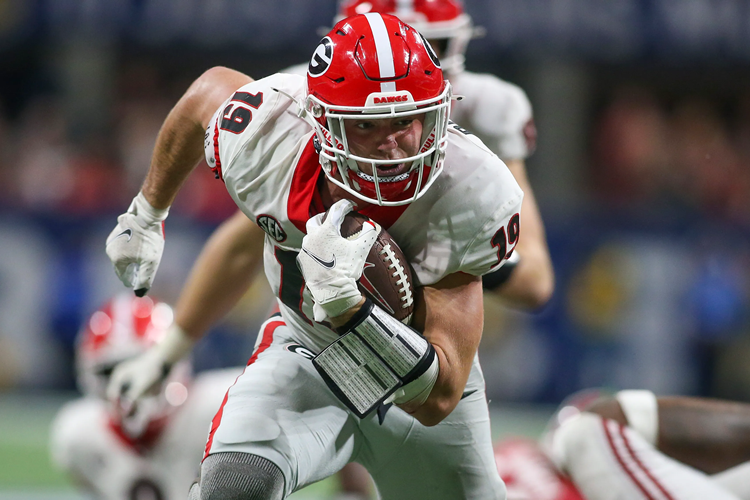
1. Brock Bowers, Georgia
2. Ja’Tavion Sanders, Texas
3. Brevyn Spann-Ford, Minnesota
4. Jaheim Bell, South Carolina
5. Ben Sinnott, Kansas State
I don’t think there was ever really a question who the number one tight-end would be. What Bowers did as a true freshman and sophomore is almost unheard of at that position in college. Across 132 touches, he come up just 11 yards short of 2000 total and reached the end-zone 24 times. I explicitly mentioned “touches” because the back-to-back national champs specifically designed plays for him to take end-arounds and jet sweeps – which he scored on from 75 yards away last year. Yet, I’m more interested on that speed running the seam or striding away on wheel routes, while being well-coordinated to make challenging adjustments to the ball and showing the strong hands that allowed him to haul in 12 of 17 contested targets last season. Plus, just go back to the national title game game and watch him drag along TCU defenders as if they’re little kids. With the gigantic Darnell Washington as the de-facto Y in 2022, we see Bowers deployed more as a wing/H-back and in the slot, but his urgency and leg-drive as a blocker allow teammates to get out in space regularly.
Number two here was certainly tougher to determine, but really going back to the tape, I thought the choice for the most complete player out of the bunch, Sanders separated himself from the rest of the pack. As a former standout defensive end in high school, you see him explosive and low he can come out of his stance, to deliver impact as a blocker, yet his ability to reach the point-man or take targets off their landmarks in space is what he does best in that regard, in order to get the ball out to the corner. He certainly has room to improve as a route-runner, to manipulate guys at the break-point, but his speed to split two-high safety looks or run away from trailing man-defenders on drag routes creates challenges for defenses. Plus, he has the instant juice with the ball in his hands, to defeat pursuit angles, as well as use that momentum he’s built up to go through people in his path.
A name that at this point last year I didn’t really see anybody discuss, but had an excellent season and is now considered a solid candidate for a true “Y” role at the next level is the 6’7”, 270-pound giant from Minnesota. Spann-Ford reached career-highs in catches (42), yards (497) and touchdowns (two) last year. As a legit in-line blocker, he’s completely different to the rest of the group. The way he can latch his hands, transfer power from the ground up and create movement against defenders in the front-seven is pretty rare for a college tight-end. The Gophers used to skills to lead the way from different alignments, yet he’s asked to pass-pro against true edge rushers at times as well. At the same time, he did finished sixth in yards per route run (2.22) among FBS TEs last year. He comes off the ball with his pads over his knees, does a nice of recognizing when/where to sit down vs. zone coverage, has those big paws that allow him to hold onto the ball as defenders are raking at it and then he gets North for YAC quicker than you’d expect.
Bell to me is the most fascinating name to discuss here. He may be able to impress via the most avenues, if you take out the classic in-line job description. To give you a picture of what kind of role he fulfilled at South Carolina – think of how the Tennessee Titans have used Jonnu Smith and now to a lesser degree Chig Okonkwo, offset from the line, in the backfield and a movable “F” slot receiver. However, he actually played tailback for them at times, where his physical running was key in an upset win over Tennessee last year. His speed is an asset vertically but even more so horizontally, although you actually saw him stack corners on go balls flexed out as the single receiver on the backside of the formation. His routes are definitely more rounded and lack detail, but this guy has an attitude with the ball in his hands. Because of the pace he’s moving at it, you almost forgot he’s 230+ pounds and he’ll truck safeties in a hurry.
Sinnott is sort of similar to Bell, but also not. In terms of the usage, you’ll see him play in-line, H-back, slot receiver and even fullback, but he’s not the same type of dynamic athlete as the guy just ahead of him. Where his diversity comes into play more is as a blocker. The way he can play with leverage and utilize his powerful lower half allows him to ride defensive ends off their landmarks on combos with the tackle, but it’s what he does working out to the corner and locating targets in space after sifting underneath the formation, as K-State ran a lot QB keepers or lead reads. For more of a compact build, his ability to accelerate out of his breaks is definitely a plus. In particular, he does a lot of damage on dig routes, where he does a nice job of shielding the ball and then is tough to wrestle down when he’s moving. In 2022, Sinnott had an average depth of target at 10.5 yards, yet a passer rating of 127.7 when targeted, and he’s on pace for career-bests across the board (11-163-two).
Honorable mentions: Benjamin Yurosek (Stanford), Bryson Nesbit (North Carolina), Brant Kuithe & Thomas Yassmin (Utah), Isaac Rex (BYU), Luke Lachey (Iowa) & Cade Stover (Ohio State)
Offensive linemen:
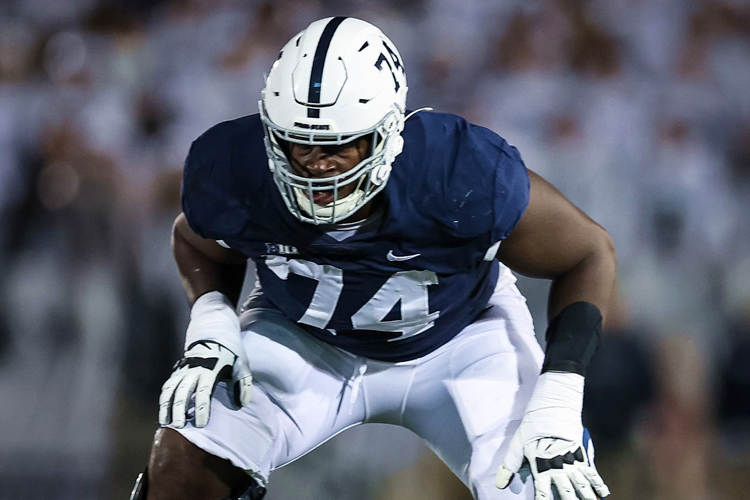
1. Olu Fashanu, Penn State
2. Joe Alt, Notre Dame
3. Cooper Beebe, Kansas State
4. Graham Barton, Duke
T-5. Zack Zinter, Michigan
T-5. Donovan Jackson, Ohio State
On the watchlist: Amarius Mims, Georgia
Fashanu could have easily entered the draft this past April and been a top-ten pick. However, he decided to return for his redshirt junior year and work on his craft, to match the natural talent he showcases. Sometimes you’d like to see a little more of an aggressive demeanor as a run-blocker, but the explosiveness off the ball, the short-area agility to reach- or scoop-block defenders on the first level or climb up and secure linebackers is remarkable. Watching him level DBs on crack-toss or screen plays is really fun. What really has the NFL excited however are the movement skills as a pass-protector, easily matching speed off the edge and redirecting laterally against counters. The way he can brace with his hands and absorb power with his solid strong base makes it tough to go through him as well, plus then he’ll punch at the near-shoulder, flip and ride guys past then QB on secondary approaches. Last season, he allowed just one sack and zero QB hits across 281 pass-blocking snaps.
Notre Dame has been an offensive line factory for multiple decades now and while he may not be as talented as Ronnie Stanley or Quenton Nelson, particularly when it comes fluid athletes, the Irish’s current left tackle has established himself as one of the best in the country. Alt was the highest-graded lineman in college football by PFF as just a true sophomore (91.4), earning the top mark in run-blocking grade (91.0), while not allowing any sacks, just two QB hits and six hurries. Through four games this year, he has to yet even allow any single pressure. He offers a crazy long reach to steer defenders in the run game and force pass-rushers to take a wider arc around him. I could argue he’s actually more technically advanced than Fashanu – his angles and aiming points in a pretty diverse rushing attack are excellent, while reading rushers and countering their approach in an advanced fashion and showing equally impressive awareness for how to sort out different games up front. He had a tremendous showing against eventual Bengals first-round pick Myles Murphy, when facing Clemson last year, and he was penalized just once across just under 900 snaps.
Beebe seems to be the most forgotten name as somebody that was considered a day-one guard prospect heading into this past season, then looked dominant sliding inside from left tackle to guard – his best natural fit – and somehow I’ve barely heard his name mentioned at all in 2023. What gives? The line atop my scouting report for him basically reads “At 6’3”, around 330 pounds, this guy is built like a cinder block and sees his purpose as making defenders want to give up”. The force in his hands and the power in his massive quads routinely allows him blow guys off the ball and create lanes on the front-side of inside zone, while putting linebackers on their butt quite regularly. I don’t believe he has the lightest feet and the short arms necessitated a move inside with sights set on the pro level, but his wide base, patience and vice grip hands allow him to neutralize rushers effectively.
Full transparency – While I was aware of the name, I had familiarize myself with Barton’s game prior to the season, when I also started watching his quarterback Riley Leonard as a future draft prospect. And man, was he fun to watch. I believe he’ll ultimately have to make the transition to guard himself, but he’ll remain on the blindside for this year at Duke still. The explosiveness out of his stance and dig B-gap defenders out of their space pops immediately. However, where he really stands out is as a puller, where he can really get on his horse and outrun MIKE linebackers to the spot coming from the backside of run calls. In pass-pro, he consistently is the first man off the ball, shows excellent awareness for the depth of the pocket and a great base, which allows him to redirect however needed. That combined with the way he latches his lands allowed him to give up just two sacks, allowed to finish as the only OT with PFF pass- and run-blocking grades of 85+, while his 17 “big-time blocks” were five more than anybody else at the position.
Tied at number five, I have two Big Ten guards. While they’re both listed around 315 pounds, Zinter feels like a much more burly blocker, operating in Michigan’s more vertically-oriented rushing attack, where he can help push shade-nose tackles towards the opposite A-gap on combos with the center, torque guys out of the lane and cover up bodies on the second level with his wide frame. In pass-pro that is also a major factor and he’s tough to go through, which is how he limited opponents to just nine total pressures on over 400 pass-pro snaps last season. Meanwhile, Jackson excels at latching, sustaining and riding defenders down the line in a more wide zone-based scheme. While PFF only gave him a 57.6 pass-blocking grade on true pass sets in 2022, that was as a first-time sophomore starter and you see how smooth he is at transitioning on twists or guiding aggressive B-gap rushers too far up the field. Plus, you see the ability to re-anchor when caught in sub-optimal positions.
I felt the need to list Amarius Mims here, because he appears to be on the Broderick Jones path, where they both stood out at the end of their respective sophomore seasons, filling in for loaded offensive lines at Georgia and potentially taking advantage of the opportunity to start a full year to the tune of ultimately both becoming top-15 draft picks. Mims was lights out during the Bulldogs’ two college football playoff games against Ohio State and TCU. How he was able to neutralize a strong group of Buckeye defensive linemen in particular was highly impressive. There’s room for improvement with maintaining sink in his base and not lifting his inside foot as much, but how easy he covers ground vertically and redirects laterally as a pass-protector is pretty rare. That mobility stands out when he’s allowed to get into space as a run-blocker as well and now he just needs to put it all together.
Honorable mentions: J.C. Latham (Alabama), Kingsley Suamataia (BYU), Sedrick Van Pran (Georgia), Bryce Foster (Texas A&M), Will Campbell (LSU), Beau Limmer (Arkansas), Javon Foster (Missouri), Christian Haynes (UConn) & Christian Mahogany (Boston College)

Edge defenders:
1. Laiatu Latu, UCLA
2. Jared Verse, Florida State
3. Demeioun “Chop” Robinson, Penn State
4. Bralen Trice, Washington
5. J.T. Tuimoloau, Ohio State
On the watchlist: Harold Perkins, LSU
Coming into the season, I had Latu solidly in third place, behind the next two guys on this list. However, we just can’t ignore how much bigger his impact has been than pretty much anybody coming off the edge in college football. Last season, among Power Five edge defenders, Latu was tied for second in pressures (64) with Will Anderson Jr., third in pressure rate (21.7%) and tied for third in sacks (12). This year, he’s already put up 5.5 tackles for loss, four sacks, an interception and forced fumble each, while being the highest-graded EDGE by PFF (92.5). He’s a disruptive run-defender, with his ability to shed blockers and chase after the ball. Yet, it’s how advanced he is rushing the passer that really stands out. The way he anticipates the snap, times up his get-off, is able to defeat the hands of tackles in a variety of ways and flatten at the top of the rush look like a pro already. Right now it’s tough to say anything about his NFL prospects, since he wasn’t medically cleared by Washington after head injuries and took a year off, before starring for the Bruins again.
Verse remains atop my draft board for now, because he would’ve been a top-20 pick for me this past April already and doesn’t come with any medical concerns. The reason he isn’t number one on this list is based around the fact he hasn’t made a ton of impact plays since the season-opener at LSU this year, when the box score (two tackles, one pass deflection) didn’t look impressive, but he had a questionable strip-sack reversed on replay (forced the incompletion instead), chopped down the QB for an almost sack (one yard) and was riding All-SEC left tackle Will Campbell backwards routinely, after murdering him in his freshman debut a year ago. Verse has some real shock in his hands to re-set the line of scrimmage or take away cutback lanes when sealed off away from the action in the run game. In 2022 as a redshirt sophomore, his 24.4% pass-rush win rate ranked fourth among Power Five edge defenders. His forceful hands regularly challenge the anchor ability of tackles, yet then he throws in in-and-out or up-and-under maneuvers with different swipes or scissor moves.
One of the top-ten names on Bruce Feldman’s Freaks List, Chop not only has the insane athletic traits the NFL covets, but also appeals to oldschool football fans for his hard-nosed style of play and the fact he plays with no gloves mostly, all while having graded out as the top pass-rusher (92.4) and overall edge defender (90.6) in the Power Five for PFF. He’s regularly the aggressor with his punch and works with good flexion in his lower body to control the point of attack in the run game, while taking tight-ends being assigned with blocking him personally. Robinson threatens tackles in their pass-sets right away with his explosion off the ball and can turn the corner effectively with the chop rip. Along with that, he brings the lateral twitch to cross-face those guys and can ride them backwards by digging a hand into their chest. The only real worry about his pro potential is the lack of arm length.
I don’t think there’s another player in the country who plays with more anger and violence than Trice. You consistently see pads being rocked backwards, guys having to take a couple of steps backwards and gaps being plugged with him. Along with that he’ll happily wrong-shoulder pulling guards to create traffic in the backfield and shows the balance to stay on his feet as he’s getting banged around. He brings that same attitude rushing the passer, where he puts tackles on skates with the long-arm, softens edges for himself with impactful stabs and does a really good job of timing up the strikes of blockers. Not only did Trice unseat Will Anderson Jr. for the most pressures in the country in 2022 (70), but as a redshirt sophomore he also led all FBS edge defenders in pass-rush win rate (29.5%) and racked up 12 TFLs. Unfortunately, so far he’s only picked up one stop for negative yardage through three games, but his presence has been felt either way.
Tuimoloau is one of those guys the NFL may overthink come next spring, because there may not be one element of his game that really pops. However, he’s one of those guys who can get to the quarterback in a variety of ways. The way he can execute a variety of hand-combats and string moves together for just a 20-year-old is highly impressive. He reads drops, tracks the quarterback’s movement and gets his hands up into passing lanes tremendously well. That’s how along with his 32 pressures on just 264 pass-rush snaps in 2022, he batted down six passes and picked off two, including a game-sealing pick-six in the Penn State game. In the run game, he’s not content with staying blocked and he understands what offenses are trying to do to him when leaving him unblocked (initially). What’s missing from his game to some degree is violence, to set a firm edge and challenge tackles in their pass-sets with power.
If you had told me before the season kicked off that Perkins wouldn’t make a list of top-five edge defenders after what he showed as a true freshman, there’s no way I would’ve believed you. During LSU’s run at an SEC West title, he actually led the team in tackles for loss (13), sacks (7.5 sacks), quarterback hurries (14) and forced fumbles (four), along with snatching an interception. I thought for being listed at just 225 pounds, his ability to hold his ground vs. the run was pretty good and he’s too fast to leave unblocked on the backside. Although where he really creates problems is in passing situations, where his acceleration up the arc and bend to win the outside edge is breath-taking. Plus, then he can legitimately match tight-ends down the field and has plus spatial awareness dropping out into zone coverage. Unfortunately, I simply can’t even evaluate him as such right now, since the Tigers coaches inexplicably almost purely played him off the ball until this past week. Let’s hope that changes going forward.
Honorable mentions: Dallas Turner & Chris Braswell (Alabama), Mykel Williams (Georgia), Brandon Dorlus (Oregon), Adisa Isaac (Penn State) & Jack Sawyer (Ohio State)

Interior D-linemen:
1. Jer’Zhan Newton, Illinois
2. Kris Jenkins, Michigan
3. Dontay Corleone, Cincinnati
4. DeWayne Carter, Duke
5. Nazir Stackhouse, Georgia
While the rest of the board may look very different if you go through consensus draft rankings for 2024, there wasn’t really ever a question about number one here. “Johnny” Newton has been a disruptive force for the Illinois front since taking over as a starter a year ago. His burst off the ball to win the gap and slice through the reach of blockers to create penetration jumps off the screen, plus then he has some ridiculous reps of back-dooring guards to actually “make the play”. In 2022, he finished tied for the top-spot among Power Five interior D-linemen with 36 defensive stops. There’s room to improve his weight distribution countering run concepts and become more efficient with his hand-usage, but you can’t teach the short-area suddenness he showcases. You regularly see him get to the hip of or cross-face blockers, plus then his pursuit speed to hunt down quarterbacks for a near-300-pounder is insane. PFF graded him behind only Jalen Carter and Calijah Kancey last year and despite a lesser season for the Illini so far, he’s off to another strong start.
The NFL bloodlines as the son of former Jets All-Pro defensive tackle Kris Jenkins Sr. show up when you watch “Junior” control the line of scrimmage vs. the ground game. He’s low coming out of his stance low and regularly is the one to strike first with his hands. And then he’s super active with working off blocks. His 31 run-defense stops last year were tied for the most in the nation among interior defensive linemen. Where he’s different than pops is his ability to dip and corner his rushes, along with the lateral agility to beat guards the opposite way if they overset on him in true dropback situations. His shuttle and three-cone times were both almost two-tenths of a second faster than the quickest IDL did at the 2023 NFL combine. He just needs to expand his tool-box as a pass-rusher this season and we’ve seen signs of that. Last week he added an interception to the mix, where he identified a running back screen, high-pointed it and was just dragged down at one-yard line.
When I’m thinking of how I can describe Corleone to you, just consider that according to Bruce Feldman’s Freak List, he can deadlift 700 pounds and runs a 4.68 pro-shuttle. This guy regularly bench-presses centers backwards and eats up running backs when they try to get through the A-gaps to either side of him. The 315-pounder nicknamed “The Godfather” logged the sixth-most run-stops (27) in the nation despite finishing 256th in run-defense snaps (172), and he led all FBS defensive linemen with a 93.8 overall PFF grade. The first tape I watched for Corleone was SMU and I’m telling you, he made their center look like a high schooler going up an NFL player, with the way he was pushing that guy around and tossing him to the side as if he was nothing. He doesn’t give you a whole lot in terms of play-recognition and technical advancement yet, but Corleone is highly capable of putting interior linemen on skates and placing them in the quarterback’s lap, along with throwing out some devastating push-pull maneuvers as guys try everything to slow down the bull-rush.
The description that came to my mind when I was thinking of Carter was a “no-nonsense type of player”. This isn’t somebody who’ll try to throw out any fancy moves or shows great speed to chase down fly sweeps out to the sideline. He might ultimately be undervalued in the draft process because he doesn’t have the freaky athletic traits that the NFL covets, but he’ll probably end up being a quality contributor for a decade. You put on this man’s tape and constantly re-sets the line of scrimmage, making the pads and helmet of blockers snap backwards if not take them a couple of yards into the offensive backfield and force quick cutbacks on wide zone concepts. Carter does a great job of creating push up the middle of the pocket, taking away space for quarterbacks and regularly deflecting passes over his head. Duke let him rush off the edge and take tackles into the passer’s lap quite regularly. He may not looked at this way, but only Illinois’ Jer’Zhan Newton had more than his 52 pressures among Power Five interior D-line in 2022.
Finally, let’s talk about one more name that may not flash a whole lot to casual Saturday watchers, but is consistently getting his job done. At 6’3”, 325 pounds, Stackhouse is the rock in the middle of this dominant Georgia defense. He’s much more than just a cinder-block who’s hard to move though. His ability ID run schemes and counter the first steps of the O-line is impressive. He can effective drop the knee closer towards angular blockers and eat double-teams, in order to keep the second level clean, and if left one-on-one with a center, that guy gets bench-pressed and both A-gaps are unavailable typically. Stackhouse isn’t going to give you a whole lot in passing situations, with just a 2.9% win rate last season, but he regularly demands four hands which opens up opportunities for his teammates and he’s still able to ride interior blockers backwards. His 86.1 run-defense grade in 2022 was second to only then-teammate and top-ten pick Jalen Carter, while having delivered the swing play in the SEC title game against LSU, when he blocked a field goal early on, which was returned for a huge touchdown.
Honorable mentions: Mekhi Wingo & Maason Smith (LSU), Tyler & Ruke Orhorhoro (Clemson), Leonard Taylor & Akheem Mesidor (Miami), T’Vondre Sweat & Byron Murphy II (Texas), Keith Randolph Jr. (Illinois) & Tim Smith (Alabama)

Linebackers:
1. Abdul Carter, Penn State
2. Jeremiah Trotter Jr., Clemson
3. Tommy Eichenberg, Ohio State
4. Jamon Dumas-Johnson, Georgia
5. Junior Colson, Michigan
I was kind of going back and forth if I should have a true sophomore as my number one linebacker, but when I put on the tape, I don’t think anybody impacts the game from that position more than Carter right now. Wearing number 11 is a prestigious honor at Penn State, doing so since your true freshman season is almost unheard of. Carter shows good patience for a young player and has a nice bounce to his step, yet with the way he uses his hands as weapons to keep his frame clean allow him to be an elite run-defender despite having to deal with bodies that have nearly 100 pounds on him. The suddenness and ability to dip underneath blockers, paired with the stopping power even against backs that have a full head of steam regularly allow him to shut down plays before they can really get going. In the pass game, he’s an easy mover, with the long-speed to carry TEs/RBs on seam or wheel routes, and he’s a dangerous blitzer, with his twitch to side-step protectors and tremendous closing burst if you give him a lane as a looper or delayed rusher. He already filled the stat-sheet with double-digit TFLs, 6.5 sacks, four PBUs and a couple of forced fumbles in year one, before adding his first career pick this past weekend against Illinois.
Trotter is the closest thing we have among the most noteworthy names in terms of those oldschool inside thumper at the position. His instincts between the tackles and the film-studying habits to be a beat ahead of the competition show up regularly, to limit the opponents’ success in the run game. Plus, then he’s like a bear as a tackler, where ball-carrier don’t seem to ever get away from him if he gets a clean wrap, negating any additional yardage. With that being said, don’t label this guy a pure run-stopper – As a true sophomore, Trotter was the only Power Five linebacker with 80-plus grades as a pass-rusher and in coverage. He does a great job of tracking the quarterback’s eyes and seems alert for targets in his vicinity. Going forward in those situations, he packs the force to flat-out go through running backs in protection. The only thing really missing for the son of former Eagles linebacker Jeremiah Trotter Jr. is the speed to chase down plays towards the sideline.
Number three here in Eichenberg is actually quite similar, in terms of somebody with a feel for what’s coming, great studying habit and a quick trigger to create stops in the run game. He was actually the most valuable returning linebacker for 2023 according to PFF’s wins above replacement (WAR) metric, thanks to 49 run-defense stops in last year, which ranked second among all linebackers in the country, regularly ripping through the reach of blockers and creating an angle towards the ball for himself. In coverage, Eichenberg is a little lighter on his feet than Trotter, shows plus awareness for how to position himself in the underneath areas and takes excellent angles when the ball comes out to targets in front of him, but there isn’t a whole lot of responsibility in terms of what’s going on behind him, as he regularly doesn’t even gain depth vertically. It is fun to see him bang down receivers trying to clear his zone however.
Both Georgia linebackers could have easily made the list here, between Dumas-Johnson and Smael Mondon, but I went with the downhill presence of the former, which is perfectly complimented by the range and coverage skills of Mondon, who I’d consider number six in this exercise. When you watch Dumas-Johnson attack forward, you know you’re about to hear some pads popping. He has a real knack for sorting through the trash, sliding off contact and ultimately getting to the football in the run game. He doesn’t have that burst to shut down plays to the corner or to attach to targets when he has to match as the pattern develops, but what I really like about him in coverage is how active his eyes toggle back and forth between the quarterbacks and surrounding targets, along with the aggressiveness to disrupt the catch-point. Plus, you’re not going to find many RBs that want to get in his way, much less can slow him down when coming as a blitzer. His presence and communication skills in the middle have been key for the Bulldogs’ success the last two years.
Finally, while Colson may not quite have the oomph at contact to create stalemates with linemen near the line of scrimmage, the way he trusts his eyes and the short-area burst to hit a crease before it can really open up stands regularly. He showcases impressive contact balance to stay on his feet in condensed areas and tackles with an attitude, without the downside of missing many attempts (just a 6.7% miss rate in 2022). You see Colson send some receivers airborne when he funnels/pushes them towards his fellow zone-defenders and he’s patient when asked to match guys releasing out of the backfield. Michigan ran quite a few simulated pressures last year at least and to some degree from I’ve seen so far, where this guy was asked to drop out to different spots and flood the underneath areas to negate easy completions. The one thing I don’t love seeing is how stiff he appears in his ankles at times, whether that shows in some clunkiness in redirecting or breaking down as a tackler in space.
Honorable mentions: Smael Mondon (Georgia), Barrett Carter (Clemson), Cedric Gray (North Carolina), Danny Stutsman (Oklahoma), Trevin Wallace (Kentucky), Jaylan Ford (Texas), Karene Reid (Utah) & Payton Wilson (N.C. State)

Cornerbacks:
1. Kool-Aid McKinstry, Alabama
2. Kalen King, Penn State
3. Cooper DeJean, Iowa
4. Benjamin Morrison, Notre Dame
T-5. Javon Bullard, Georgia
T-5. Kamari Lassiter, Georgia
Since the first three names are all draft-eligible this upcoming year and I’ve studied them quite a bit coming into this season, I have to say that this has a chance to be one of the stronger trios we’ve seen enter the NFL in a while. Typically it’s been two names near the top and then a slight dip recently. Kool-Aid not only has the funniest name between them, but he’s also closest to the prototype boundary corner at 6’1”, 195 pounds with branches for arms. He uses those exceptionally well to throw off the timing of routes and deny receivers easy access towards the middle of the field. In quarters, he does a nice job of using leverage to his advantage as he deciphers route patterns and is fully comfortable turning and running with wideouts on go routes down the sideline, plus then his length and ball-tracking skills allowed him force 18 incompletions in 2022 – which was tied for second among all corners in the country. He’s more than willing to contribute in run-support and you’ll see him flip some receivers trying to run quick hitters or sweeps to his side.
King doesn’t have the same type of measurables as McKinstry, coming an inch shy of the six-foot mark, but if you’re looking for a guy that “has that dawg in him” this kid is it. Lining up on the opposite end of the field as now-Steeler Joey Porter Jr., the then-true sophomore got tested quite a bit, but across 59 targets, allowed just 27 completions for 343 yards and one touchdown, while forcing 15 incompletions and picking off three passes himself. King refuses to surrender any type of release in man-coverage and even once guys are about to get even with him, pins the near-arm and frustrates them. Allowing with the active eyes he displays as a conflict defender in zone coverage, he can quickly decelerate against anything breaking off in front of him and when he has to turn and run with guys, he’s the one who ends up looking more like the wide receiver a lot of times thanks to the way he can track the ball. Plus, he’s an absolute screen destroyer. It’s when he misses the initial jam and has to catch up that he starts to look a little uncomfortable.
How the NFL views DeJean and what his role may ultimately be will be very interesting. The junior is a 6’1”, 205-pound ball of muscle, who’s equally adept at playing man- or zone-coverage, primarily lined up on the outside but has moved into the slot for certain matchups against bigger bodies and looks like a strong safety when involved in the run fit. Last season he was the only corner in the country with 85+ PFF grades both in coverage and run-defense, while leading the Hawkeyes with five interceptions. On one snap, he will bury his hands inside the chest of a receiver and put that guy on skates as run plays come his way and then on the very next he’ll carry a post route 40+ yards down the field, where he leans to the outside and then speed-turns to never actually get out of phase. For a guy his size, the fluidity in the hips and the explosiveness to click-and-close is very impressive, while showcasing a quick trigger and plenty of hitting power when driving up on quick stuff out into the flats.
Now let’s get to our one underclassman on the list. In terms of a natural cover-talent, with the quick feet, oily hips and to some degree also endurance to stick to receivers through multiple breaks and not even give them any breathing room on secondary routes as the scramble drill happens, what this guy can do is pretty rare. He has insane closing burst to get into the hip-pocket of guys on crossers, even when by alignment he should be at a massive disadvantage. That also shows up when driving on stuff in off-quads and he excels at attacking the ball at its highest point, indicated by six(!) picks and four PBUs as a true freshman. Morrison plays the position with so much athletic confidence. Looking at his (somewhat limited) one-on-one reps against Ohio State superstar WR Marvin Harrison Jr., you can argue he fared as well as anybody in the country last season – and that was in the very first game of his career, without even starting actually. Of course, we get that rematch this Saturday in a massive clash and I’m anticipating these guys going head-to-head a lot.
Then at number five I have another tie between teammates. To think the Bulldogs had two full-time starters in the secondary drafted each of the last two years, yet there’s three more altogether between the corners and safeties here – plus another honorable mention – is pretty wild. Bullard is probably the more recognized name here, because he ends up being around the ball a lot more due to the nature of his role. His 79.3 PFF grade in 2022 ranked third among Power Five slot corners and he only surrendered 0.88 yards per coverage snap from the slot. He doesn’t mind sticking his nose in the fan when big bodies come his way in the run game, he’s a deceptive blitzer off the edge and he appears very comfortable reading the hips of receivers and staying in control of routes. Lassiter on the other hand doesn’t get as much attention, because he’s out there blanketing wideouts for the majority of contests. For having that lanky build, he displays easy gas to run with guys down the field and he effectively rolls off either foot to not get lost on speed-breaks, along with being surprisingly quick to re-direct when asked to play off. Lassiter is operating at the fringe of what’s allowed in college football in terms of contact with the ball in range, but he just put on a nearly perfect display of what a boundary corner should look like vs. South Carolina this past Saturday.
Honorable mentions: Will Johnson (Michigan), Josh Newton (TCU), Denzel Burke (Ohio State), Nate Wiggins (Clemson), Fentrell Cypress II (Florida State), Quinyon Mitchell (Toledo), Kris Abrams-Draine (Missouri) & T.J. Tampa (Iowa State)
Safeties:
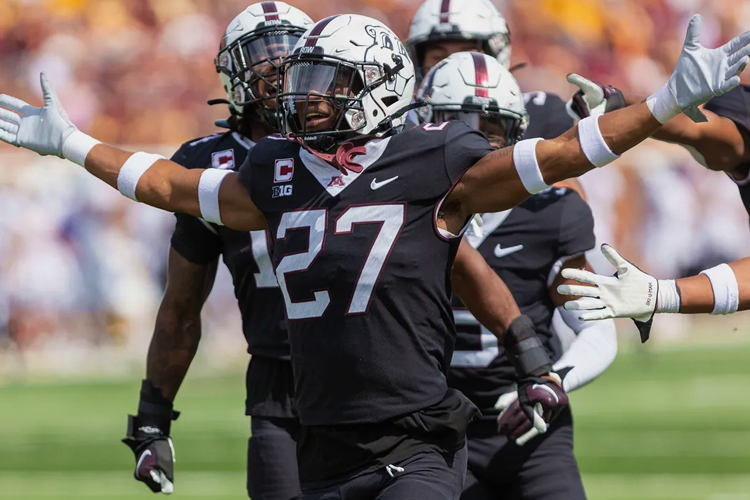
1. Tyler Nubin, Minnesota
2. Kamren Kinchens, Miami
3. Malaki Starks, Georgia
4. Cole Bishop, Utah
5. Calen Bullock, USC
Finally, we get to the safety position. And this time, I had a very strong of duo of candidates for that top spot, who could both ultimately end up being top-20 draft picks come next April. Nubin has been one of my favorites since I was asking myself “I know I’m not supposed to watch him, but who the hell is number 27?”, as I was evaluating a couple of other Minnesota defenders in the spring. He urgently works up the alley, tracks and adjusts his angles exceptionally well from single-high alignments and doesn’t mind dropping the shoulder on a tight-end when he’s down in the box. Nubin has several impressive man-coverage reps playing off against TEs on tape, but it’s what he does in deep zone responsibility that sets him apart. It seems like an old cliché, but he really follows the quarterbacks eyes and trusts what he sees in order to take him to the football. The range and impact he provides to dislodge receivers from the ball at the sideline in cover-two has saved the Gophers on multiple occasions and he’s actually looking to make plays as a center-fielder, rather than just not getting beat deep. He was responsible for a passer rating of just 41.3 in 2022 and just watch the second pick he had in the season-opener vs. Nebraska, where he’s playing the deep middle and undercuts a post route in front of him.
Kinchens once again is probably the more well-recognized name in the scouting community, after he was named a first-team All-American as a true sophomore last year, having broken up and intercepted six passes each, of which he took one back to the house. He can cover a ton of ground in coverage to get over the top of stuff, but also closing on routes in his vicinity and then disrupting the catch-point. That’s why he led all safeties in the country with a 90.7 PFF coverage grade in 2022. With that being said, because his teammate James Williams (honorable mention) was compared to Kam Chancellor coming out of high school and is running around like a maniac, people don’t realize how physical this guy is. He’ll race downhill from split-safety looks in a hurry and makes sure to shut down bubbles to his side before they can even really get going, as he understands how to come to balance and bring people to the ground in space.
Since I already mentioned that there’d be a third Georgia DB on this list, let’s get to Malaki Starks, who when I first realized that 2022 was his true freshman season, I almost couldn’t believe him. The confidence in himself, the intelligence, how well he communicated with his teammates – nothing ever said that this is a first-year player in the SEC. He’s a tremendous force player and edge setter, who quickly works up from depth and routinely makes ball-carriers regretting trying to bounce out towards him, thanks to his reliable tackling skills, wrapping and finishing under good control. Georgia’s defense is based around a lot of match-zone principles, where Starks beautifully uses leverage to his advantage and never seems out of position as he ends up having to carry or cut off routes. He had a couple of plays last year where he just misjudged the ball by the length of a finger, but once again that was on the top defense in the nation as a 19-year old. And it’s easily offset by the amount of times he limits quick in-breakers or scrambling QBs to small gains as he’s shooting upfield from depth.
I really enjoyed studying a couple of Utah defenders this offseason – linebacker Karene Reid and safety Cole Bishop. The latter of those two wasn’t regarded particularly high, but has made an impact right away and the stat sheet through 27 career games backs that up – 154 combined tackles, 19 of those for loss, 6.5 sacks, two interceptions and nine PBUs. The Utes coaches put him down into the box quite a bit, where he comfortably seems to be able to lock out against tight-ends and hold his ground, while being a confident wrap-up tackler, who gets people to the turf in plenty of tough open-field situations. His 35 run-defense stops and 14 tackles for loss/no-gain over the first two years of his career were top-five marks among all FBS safeties. Bishop has plenty of experience covering tight-ends one-on-one, with the awareness for when he’s in control and can peak back at the QB, he consistently stays over the top of routes in deep zone responsibility, yet then helps limit explosive plays by how quickly he arrives at and finishes off completions. His long-speed is the only thing NFL scouts will be wondering about.
Bullock is the name people out there tend to get enamored by due to the rangy style of play and ball-skills he presents. In 2022, he broke up and intercepted five passes each, returning one of those for a touchdowns. Because of how much Pro Football Focus values coverage or run-defense, he ended up being their third-most valuable safety in the country in wins above average (WAR), yet even if you look at their metrics, as he earned a 80.9 coverage grade, but only a 55.1 run defense grade. He’s just somebody who will typically avoid getting involved on those collisions if he can, rather than somebody who relishes the opportunity to jump on a pile late. With that being said, can this kid cover some ground. He does a nice job of positioning himself accordingly in-between routes in deep zone assignments, understanding when to help out, he showcases active eyes and instincts to take away multiple options when dropped down as a hole defender and he arrives at targets in a hurry, where he will chop them down before they can do anything after the catch.
Honorable mentions: Jalen Catalon (Texas), Jaden Hicks (Washington State), Tykee Smith (Georgia), Andrew Mukuba (Clemson), Malachi Moore (Alabama) Lathan Ransom (Ohio State) & James Williams (Miami)
 Halil's Real Footballtalk
Pingback: Top 10 edge defenders of the 2025 NFL Draft: | Halil's Real Footballtalk