
Four years after Patrick Mahomes pedaled backwards and hit Tyreek Hill on “2-3 Jet Chip Wasp” to convert a third-and-15 and start their comeback over the 49ers, these two sides are set to face off again on the biggest stage. This time around, Kansas City is looking to cement itself as a dynasty, with their third championship in five years, while San Francisco is going for their sixth title in franchise history, but the first one in 29 years, after knocking on the door with four NFC championship game appearances in those last five seasons.
The Niners looked dominant throughout the regular season en route to the NFC’s number one seed, before having to battle until the end against the Packers and Lions, coming back from a 17-point deficit in that conference title game. Meanwhile, it wasn’t nearly as smooth a ride for the Chiefs, trying to defend their championship, finishing with an 11-6 record and having to go on the road in the playoffs for the first two teams in the Mahomes era.
Based on the current active rosters, the 49ers are slated to return nine players and the Chiefs seven who were also part of those Super Bowl 54 teams. Both Kyle Shanahan and Andy Reid return as head coaches, while Steve Spagnuolo on defense and Dave Toub on special teams for the Chiefs are the only two of six total coordinators still around. They also have the benefit of a quarterback starting his fourth Super Bowl in five years, but the Niners have their best signal-caller under Shanahan in the Bay Area.
I want to look at both sides of the ball, break down in detail how the offensive and defensive units function respectively, along with how I believe they’ll match up, before presenting a couple of X-factors for each group and ultimately giving you my prediction for the final score.
Let’s dive in:
49ers offense vs. Chiefs defense:
NINERS O:

Going through the history of head coach Kyle Shanahan in San Francisco, they’ve been a very efficient offense every year without a difference-maker at quarterback, considering their track records once they moved on. However, with a full season of Brock Purdy running the show, they’ve taken things to the next level. Looking at the regular season numbers, the 49ers easily the number one offense in expected points added per play (0.179) and success rate (51.6%), with the top marks on both dropbacks and run plays, along with being tops in Defense-adjusted Value Over Average (31.8%). In fact, the difference between them and number two in DVOA is the same as the gap between second and eighth. Their passing EPA is down a little bit – in large part due to Purdy struggling in the rain until the final drive of the Divisional Round game against the Packers – but they’ve actually been even more effective on the ground by quite a margin (0.1 EPA better). They also led the league with 75 explosive passes (20+ yards) and overall in terms of yards per play (6.6 YPP). Once again, due to the weather conditions versus Green Bay and Deebo Samuel getting banged up early on, that number was a little bit down, but they still logged four such explosives in that contest and then eight more in the NFC title against Detroit.
Run game:
The “Shanahan offense” and in particular its run are terms that are often vaguely thrown around. The base run concept of wide zone that Kyle father’s Mike Shanahan popularized towards the end of the millennium has become a core component of many offensive systems across the NFL, but as you follow its trails and look at how Kyle himself has continued to evolve during his tenure in San Francisco, you realize that it would be a disservice to categorize what they do in such a simplistic manner. While they haven’t swung so far towards a more vertical orientation, such as one of his disciples Sean McVay with the Rams, where now their primary run concept is duo, they’ve certainly become more diverse in their approach. They still major in the inside and outside zone, but while they started to only enhance that horizontal stretch of the defense by tossing the ball to the back a couple of years ago, now it’s more about having additional blockers on the move at the snap already along with different sift elements to kick out the backside man at the end of the line of scrimmage, such as with a tight-end or fullback. So while the idea remains to make their opponents flow play-side, in part because they have a running back more suited to make quick decisions and translate information to his feet, they end up hitting inside a lot more than they would’ve in prior iterations. Along with that, pulling the backside guard plus a TE/FB on power and counter plays is a lot more frequent.
Where Shanahan is truly special though, is the way he can identify how you’ll defend certain looks and dress up the same plays differently. More than any other team in the league, the Niners use shifts and motion at the snap to create numbers advantages against static defenses. Yet, if opponents do react to it and try to overload that way, they’ll happily hit weak-side (inside zone) runs. Additionally, when they do want to get the ball out to the perimeter, they love to run toss out of more condensed sets along with flipping the ball to receivers on end-arounds/reverses, frequently off counter action, where they pull what ends up the play-side guard the opposite way, as a false key presented to linebackers. In particular, they love to use Kittle as a kick-out element basically to their toss plays, while having receivers in condensed splits pin down edge-defenders, in order to get their tackles out to the perimeter as well. Separate from the scheme itself, Christian McCaffrey has turned himself into an elite decision-maker and operator in condensed space, where he truly understands how body language can affect second-level defenders, how to press creases, get guys moving to one side of blocks and cutting the opposite way at the last moment. For the regular season, he finished second in average rushing yards over expected (1.32) to only Miami’s Devon Achane, who just set a new NFL record in yards per attempt on a much smaller sample size. And he did so rushing against the highest rate of 8+ defenders in the box (36%) among RBs with 90+ carries, according to Next Gen Stats. I wouldn’t say San Francisco has maulers on the O-line outside of left tackle Trent Williams and the one blemish you can put on them is that they’ll happily keep running into unfavorable looks, particularly on early downs.
Pass game:
So, fundamentally you’d think an offense so expertly constructed in the run game would heavily rely on moving the launch point of the quarterback with bootlegs and building plays off punish the flow of the defense with misdirection throws. And don’t get me wrong – they still have plenty of that on the menu. However, they have gone from the most play-action-heavy offense over the last couple of years to being in the middle of the pack this season. Part of that is modern NFL defenses adjusting to the influence Shanahan’s coaching tree and its offsprings have had on the landscape of football, but also having a quarterback, who is more comfortable and a cleaner, quicker decision-maker from the pocket. There are a lot more new-school West Coast elements I would call it, where the route distributions are very similar to what you may find in even the old Bill Walsh playbooks from the late 80s and early 90s, but they do it with a lot more movement before and at the snap, where Shanahan understands extremely well how to create issues for how match-coverages operate. Where Kyle separates himself from the rest of the league though is his ability to isolate defenders and if there’s a weakness across that unit, keep picking on it relentlessly. We saw that came to full effect in their week 13 win at Philadelphia, when they put those linebackers in hell for four quarters by the way their heads were spinning. I actually put together an extensive All-22 analysis on the way San Francisco threw all kinds of misdirection at them, putting those guys in a bind with high-lows and changing up who they were responsible for matching multiple times.
One of the big differences for San Francisco’s more traditional dropback game is how insanely good Brandon Aiyuk has become – in particular as that isolated X receiver on the backside of the formation. He finished the regular season third among all pass-catchers in yards per route run (3.01) and has absolutely feasted when left one-on-one. We’ve seen Shanahan play around with that a lot, where they’d work that backside matchup when calling four-strong concepts the other way, before taking advantage of the space it creates as defenses adjust and now another pass-catcher would have a lot of room to run on a crosser towards where the receiver was originally lined up, as that guy ends up being bracketed. An element to watch that they’ve incorporated is a swing route with a designated lead-blocker, almost like an option to throw a screen pass within a typical pure-progression read. Being able to use that type of route-running expert like Aiyuk requires a guy not only willing to hit him on in-breakers and setting up YAC opportunities – like previous quarterbacks would do as well – but also capable of testing defenses outside the numbers. That’s where Purdy has added another layer to the aerial attack, as you see him hit out routes from the opposite hash and push the ball vertically, especially working against aggressive isolated defenders on the backside, who you can occasionally punish with double-moves. Also taking into account what Brock brings to the table with extending plays with his slithery-ness, those are the components that have furthered what already made San Francisco a nightmare to prepare for with their position-agnostic personnel, where they can freely swap alignments and have five dangerous eligibles out there when they’re in a traditional run-play 21 grouping (two backs, one tight-end). The one concern to keep in mind is that outside of left tackle, this O-line has issues at providing clean pockets beyond the typical “play-clock”, which has become an issue at times when defenses have changed up the picture for the quarterback and made him hold onto the ball, which is why the other four starters have received PFF grades between 50 and 65.
CHIEFS D:

On the other side, this is the best unit defensive coordinator Steve Spagnuolo has coached in Kansas City and maybe the best overall since he put together a masterful gameplan to stymie the Patriots in Super Bowl 42, to ruin their undefeated season in 2008. The Chiefs defense finished the regular season sixth in EPA per play (-0.076) and fourth in success rate allowed (39.8%), along with second in the two more traditional statistics – yards (289.8 YPG) and points allowed (17.3 PPG). That’s because even though they rank 28th in rush EPA, they’re top-three in both categories against the pass. They’re actually the only team in the NFL that has a better per-dropback success rate allowed (40%) than rushing success rate allowed (41.4%). Even beyond the statistics, the attitude they’ve brought to the table and how they’ve picked up the slack at times when the offense hasn’t been lighting up scoreboards, has been highly impressive. Looking at their three-game sample size during these playoffs, they’d rank dead-last in both EPA and success rate against the run, although in large part facing highly mobile quarterbacks in Josh Allen and Lamar Jackson affected that. What has mattered is that they dominated the Dolphins up front in one of the coldest games in NFL history, making it feel like those guys didn’t want to be out there anymore during their seven-point outing, even in by far their worst showing at Buffalo, they were able to create a key stop at the end to force what ultimately turned into a missed field goal attempt, and then they just held the likely MVP Lamar Jackson to just ten points in the AFC title game, with an aggressive gameplan and timely takeaways.
Run game:
The Chiefs like to start out games in a lot of two-high looks and generally want to operate out of those, because of the options it gives them against the pass. However, a big key to them being able to live in that world is how their safeties run the alley and involve themselves in the run fit, when they’re not actually accounted for. So structurally, they’re willing to concede box count advantages to their opponents when they push explosive passing opponents into more run-heavy scripts, while trusting their ability to rally and limit that effectiveness. Where this is interesting though is looking at the AFC title game and seeing that they are equally capable of making certain opponents check out of run calls, because they have the personnel flexibility to put bigger bodies out there, using base personnel and making a safety threaten to drop down as the quarterback is about to get into his cadence. That’s how the Ravens ended up with an insanely low six(!) carries by their running backs against them, after leading the league in rushing. At a time when many teams across the NFL have continued to get smaller, the Chiefs have zagged the other way. The six defensive linemen who have played more than 35% of snaps for them (nobody else is above 20%) have an average weight of 284.5 pounds. That’s because they ask that group to play a lot of gap-control instead of shooting up the field, in order to occupy the O-line, while the second level can aggressively shoot through open lanes. Meanwhile, they’re one of only two teams in the NFL to use both base (three linebackers) and dime personnel (six defensive backs) on over 23% of snaps. They may have Leo Chenal at 250+ pounds basically functioning as another D-lineman for a five-man surface on first down, but on third-and-long play cover-zero, where they double/bracket two pass-catchers on third-and-long.
Where they’ve struggled as a unit is not only when offenses have called their bluff of the illusion of disadvantageous box counts to run the ball against on one hand, but then from a more schematic perspective, when opponents were able to use angles up front and create new gaps with pulling linemen. Because the Chiefs want their D-line to hold its ground, blocking down against them and just keeping them there becomes easier than trying to run right at them, as it’s more about walling off bodies whilst the displacement offenses intend to create is with those bigger bodies on the move. KC has bigger defensive ends to attack pullers on designated kick-outs, but you put pressure on those linebackers to box in what would be referred to as a lead-blocker wrapping around from the backside. While Spags helped push Baltimore away from the run game, two of their seven designed carries were back-to-back FG power (fullback kick-out, guard wrap-around) calls for 21 and 15 yards respectively. As cool as watching that unit match the aggressiveness of their coordinator is, that can also be taken advantage of with counter plays – in particular in short-yardage – and flipping the ball to one of your receivers on reverse action. The one other factor to look at is the availability/health of Derrick Nnadi. He’s their primary (shade) nose-tackle and while the sample size is limited, if you extrapolated their two playoff games without him in the lineup for a full season, they’d rank dead-last in both EPA per rush (0.090) and rushing success rate (57.1%).
Pass game:
Transitioning to how Spags approaches the pass game, it’s very different on early downs and to some degree early in games compared to more defined dropback situations. For the regular season, they ran cover-two at the third-highest rate (16.7%). That’s what they want to do when offenses can either run or pass, because of what I just explained about having that heavier front-seven along with keeping routes in front of them. At the same time, they used either cover-one or cover-zero on a combined 30% of dropbacks, along with straight quarters on another 21.2%. That speaks to the confidence they have in their guys in coverage for 2-3 seconds at least, to where it allows them to send additional rushers. They posted the eight-highest blitz rate across the NFL (31.2%), while using stunts fewer than any other team (11.4%). When they get to those longer downs, it’s not about sitting back and hoping that gives the front enough time to get home. They want to be the aggressors, either challenging receivers off the line to throw off the timing or because of how well-taught those DBs are, being able to read routes playing off and driving on them, since they know quarterbacks won’t have the time to hold onto the ball for double-moves typically. Through week 18, they had posted the second-highest pressure rate league-wide (27.8%) according to pro-football-reference.com, and nobody created more unblocked pressures (73), meaning defenders putting heat on the quarterback without being accounted for by the protection. You just don’t ever really see them line up one safety deep and play straight zone, as indicated by the lowest rate of cover-three league-wide (17.2%).
Arguably no team in the NFL has a more physical group of cover-guys, which is why they trust that group to be one-on-one on such a regular basis, in combination with their safeties and their smarts to use leverage and route anticipation to their advantage. Trent McDuffie was a first-team All-Pro selection in the slot this year and I believe you can make a strong case that L’Jarius Sneed on the outside could’ve joined him there. Across 16 regular season games, Sneed was targeted 100 times, yet allowed just under 30 yards per contest, with zero touchdowns compared to his two interceptions (slightly worse in the playoffs). How tight the refs call things in this game will be huge however, since he was penalized 11 total times throughout the year. With all that being said though, going back to the tape from the AFC Championship game, as well as the Chiefs did for the most part at plastering receivers while heating up Lamar, there were opportunities to hit a couple of big plays down the field. He was about to launch the ball for a potential 64-yard touchdown to Rashod Bateman on a deep post route, but Charles Omenihu was able to beat the left tackle around the edge and strip the QB. That’s along with a couple of deep balls down the sideline in the Divisional Round not being hauled in by Bills receivers for a good 100 yards, despite them having a step on their defenders. When the Chiefs don’t bring extra pressure, I’d still say the areas you want to attack are their linebackers when isolated – particularly if Willie Gay Jr. at least isn’t 100% – and to some degree that second outside corner, when McDuffie is in the slot. They also suffered a significant loss in terms of their pass-rush when Omenihu tore his ACL in that conference title game.
HOW THEY MATCH UP:

While the Chiefs ended up winning 44-23 when they traveled to San Francisco in week seven last season, early on it looked like Niners were going to bludgeon the visitors. They ran the ball on four of the first six plays for a combined 38 yards. That was actually Christian McCaffrey’s debut performance with his current team and he only touched the ball ten times – fewest in any game he’s finished with San Fran. They had plenty of other runs pop, but some ticky-tack holding calls took them off the board. Re-watching the tape from that game, only strengthened my belief/memory of a lot of the negative plays being a product of quarterback play. Jimmy Garoppolo made several costly mistakes, holding onto the ball, missing open receivers and running himself into sacks with questionable pocket movement. What made me smirk at the end of the All-22 was that we got to see Brock Purdy for the first time as a rookie, outside of a kneel-down, and he actually had a couple of nice throws on deep in-breakers before getting picked off at the goal-line when he slightly overthrew another one of those.
In terms of the run game, the advanced metrics would strongly signal the Niners should continue to have success calling inside and outside zone, as it presents the biggest advantage in terms of success rate differential (both +11.2% above average). With that being said, as I already explained, counter as the “counter-punch” to take advantage of the second level defensively starts opening their shoulders prematurely as they work laterally could result in a couple of explosive gains and I’d think a healthy Deebo will be a focal point of the gameplan, where the get him involved quick-hitting end-arounds and sweep plays out of reduced splits. Once Kansas City starts reacting to it and guys away from the point of attack have to freeze instead of chase, you’ll see McCaffrey cut up runs between the guards with success. While being able to stay on/ahead of schedule will be key for San Francisco of course, the facet of the game that will be the biggest tell for its outcome is the Niners’ top-ranked passing game against a top-three defense against in EPA and dropback success rate.
As tremendous as the Chiefs may be at plastering receivers in man-coverage, to give the rush a chance to get home, this is a different animal. No collection of skill-position players is more capable of killing man-coverage, because of their ability to break that one tackle and put the rest of the defense into scramble mode basically, as they transition from having their eyes locked on their responsibility to locate the “free runner” and trying to corral him. One metric that supports that idea is the fact that Deebo, Kittle and Aiyuk all finished the regular season in the top-15 in terms of average YAC above expectation, according to Next Gen Stats. Going back to when these two sides last met, it was a big George Kittle day, as Shanahan designed a lot of misdirection plays off play-action for him. Yet, when they do get to designated passing situations, the matchup I’ll be watching closest is Brandon Aiyuk versus L’Jarius Sneed. Kansas City has bullied several opponents along the way with their aggressive pressure packages. Throwing hot and alerting to screens against it has rarely been a good answer, in large part due to the excellent tackling by their DBs. As a unit, they only missed 76 tackles throughout the regular season despite that style of play (sixth-fewest in the league). I can remember that early in the season, the Vikings had success disrupting the pass game with a blitz-heavy approach, but otherwise Shanahan has found solutions schematically. Including the postseason, Purdy has posted a league-best passer rating (119.4) and yards per attempt (9.9) against the blitz, and one more crazy stat on him – his 7.94 yards per attempt under pressure would rank fifth(!) among QBs on ALL plays. So could we maybe see them deploy resources into coverage a little more and use simulated pressures, since on plays where they don’t blitz opposing passers hold onto the ball for 3.02 seconds (fourth-longest in the NFL)?
One position the Chiefs should have an advantage against is right tackle Colton McKivitz. He has allowed easily a team-high nine sacks and he’s the biggest question mark, trying to hold up in defined dropback situations. George Karlaftis will regularly match up with him, having racked up 34 combined sacks and QB hits through 19 games. Yet, I would also expect Spags to move Chris Jones out there on critical downs, where his power advantage will help close in those walls for Purdy. I’ll also be very interested in Shanahan’s usage of wide receivers, in two areas. One of those is how much the Niners like to put those guys into condensed splits and involve them closer to the action in the run game. That has largely played into Spags’ hands however during his time in Kansas City, because he takes that as an invitation to blitz his DBs, who now have a shorter towards the ball. The second part of this is general personnel groupings, because while San Francisco has built their own “death lineup” – whose name was inspired by another Bay Area team in the Golden State Warriors – when they are in 21 (meaning McCaffrey, Juszczyk, Kittle, Aiyuk and Deebo), as we already discussed, the Chiefs like to counter with base, at least on early downs. In part, that’s because the one position they don’t have a ton of confidence in is that second outside corner, which is why they move McDuffie out there with three linebackers on the field and a third guy at that spot has only logged a cumulative 63% of snaps, if you take out week 18, when both definitive starters sat out. I’d still very much expect Shanahan to ride with the crew that got them here, but could we maybe see some more Jauan Jennings in 11 personnel sets and force KC to match with traditional nickel – or take advantage if they get a receiver matched up against a safety? One huge advantage this would present – the Niners are number one in rushing success rate with three receivers on the field, while the Chiefs rank 31st defending it.
Chiefs offense vs. 49ers defense:
CHIEFS O:

For Kansas City’s offense, it truly is remarkable how they’ve been able to go from an offense that was marked with mistakes, leading the league with 39 team drops in particular, and that has struggled to create chunk plays, to all of a sudden looking like they can get that key first down or score whenever they really need it. The Chiefs during the regular season ranked just outside the top-ten in both offensive EPA per play (0.021) and success rate (43.8%), along with scoring more than a touchdown less on average (21.8 PPG) than what they’ve done since 2018 (first season under Mahomes). And while the latter of those two numbers is only slightly higher, they’d be pretty much right there with the 49ers as the number one unit in terms of dropback EPA (0.294) looking at their three playoff contests. A massive reason for that is of course is Patrick Mahomes and Travis Kelce getting back to creating magic on third downs, but also the ability to create explosive plays. For the regular season, they were tied for 15th in 20+ yard gains (62). During these playoffs, they logged seven each against the Dolphins and Bills – in inclement weather – and then a couple against the Ravens, when they had built a ten-point lead and it was more about ball control, being in possessing for 37:30 minutes. After rotating receivers at a high rate throughout the year, they’ve settled in on Rashee Rice as their designated yards-after-catch threat (finished second to only Deebo Samuel with 8.3 YAC/reception), MVS as their primary deep threat (108 yards on just five catches during the postseason) and of course Kelce as the high-volume target, as he’s had a little more juice after being able to sit out week 18, leading all pass-catchers in the playoffs in targets (27), receptions (23) and yards (262). Yet, while positive game-script has played a huge role, with inconsistencies that plagued them throughout the regular season, they’ve gone from the seventh-most pass-happy unit (60.2% of plays) to a very balanced attack (53.3% pass rate – would rank fifth-lowest), with the violent Isiah Pacheco handling the majority of the work.
Run game:
As I just mentioned, it took Kansas City a while to transition to this ground-oriented approach, which not only mitigates some of their issues in pass-protection on the edges and wide receiver consistency. Focusing on this postseason run, I don’t believe I’ve ever seen an Andy Reid-coached team become this patient with the run game. A big reason they should’ve probably swayed that way earlier is the number of advantageous looks they’ve been presented to run against. Isiah Pacheco, who has handled a massive 79.8% of RB carries when available, faced defenses with 8+ defenders in the box on just 12.2% of his carries (41st among 49 running backs with 90+ carries) – that’s basically a third as much as McCaffrey, which I mentioned earlier for the 49ers. Even with the issues this group has had for most of the year at threatening their opponents through the air, because they’ve gone away from the multi-tight-end sets that were a big factor in their run at the Lombardi trophy last year, opponents have chosen to make Big Red lean into a facet he’s refused to at times in his past. That’s a big reason they were able to finish top-ten in yards per attempt on inside zone, power, counter and pin-and-pull – so four of the six big run play categories in terms of how they’re typically categories.
With that being said, there’s a clear path for how they should be trying to attack the edges of the defense on the ground. They’ve been very effective when condensing the formation and getting the back out on the perimeter with toss plays. And presenting that threat is of course, because it forces the entire unit on the other side to flow that way and open up lanes on the inside. Where they’ve gone wrong to some degree is insisting on running outside zone from the shotgun, in order to support the RPO game, which messes with the blocking angles, and then the occasional sweep plays with their receivers, in particular when they get a little too fancy, trying to catch the defense off guard in short-yardage situations. Getting back to what they generally do well, you want to see Pacheco be able to hit the hole at full speed and not have to read plays behind the line of scrimmage. As fun as he is to watch, running the ball as if he has rabis it seems, he’s not advanced in his ability to set up run plays conceptually and adjust his pacing on the fly. What he does typically is run towards open space, which can close in a hurry if you tell the second level to meet him there, being able to take a direct angle. So there may be more of a focus coming into this matchup with how Kansas City can affect the defensive backfield with eye-candy, in order to not allow them to fly to the ball.
Pass game:
Moving on to the pass game now – when Andy Reid first unleashed Patrick Mahomes onto the scene in 2018, it took all of three games for me to acknowledge that he would be taking the NFL by storm and he ended up winning his first MVP award, as they were running a style of offense unlike what we had quite seen before. While the ideas weren’t completely new, some of the deep-developing concepts they used and how they allowed the speed of someone like Tyreek Hill to shine was stressing defenses in ways they weren’t used to. Since then, as defenses across the league have transitioned into playing a lot more top-down, basing off their coverages in two-high safety looks and being less static on the back-end, so have the Chiefs made their adjustments. We saw that in 2022 – after trading Tyreek to Miami – when they had just one ace left in Travis Kelce, along with role-players around him. They went from the most explosive aerial attacks to a well-oiled machine, which had Pat getting rid of the ball quicker, with a lower depth of target and attacking the middle of the field repeatedly. This season, that trend has gone even further, but the difference in their quarterback winning a second MVP trophy and being part of the 12th-ranked passing attack in EPA has been a decline in Kelce’s play, highly inconsistent ancillary pass-catchers and a struggling duo of offensive tackles – at least until they reached the tournament.
Taking a look at Mahomes’ playoff statistics is truly insane. He has now basically played a full season when you just look at his 17 postseason appearances and despite facing the toughest competition across those, who have designed ultra-specific gameplans against him/them, the Chiefs with #15 under center have posted a 14-3 record and Pat himself has put up numbers that would rival, if not outdo his best MVP campaign, accounting for 5360 yards and 44 touchdowns compared to only seven picks. In his last six playoff games, he has a sack rate of just 2.0% and he hasn’t thrown a single interception. So there are virtually no negative plays – which are the biggest indicators for drive success rate. This postseason, 50% of Mahomes’ throws have come out of his hand in less than 2.5 seconds (would rank ninth league-wide during the regular season) and he’s only averaging 6.7 intended air yards per attempt – which is actually just a tad higher than his regular season numbers (30th in the NFL). Kansas City run four-strong concepts more than any other offense in the league and they’ve taken it up a notch during their playoff run. The idea behind that is to flood zone coverages and put defenders into a bind with multiple routes in their vicinity. What that also does however is limit the space they can attack and asks a lot from their quarterback and primarily Kelce as the designated target to find openings as a tandem. Yet, when they used such concepts in the past, they’d have #87 on the backside to take advantage when singled up or the coverage would bump over towards the passing strength. NFL defenses have been more willing all season to play a little further off and make KC navigate through the limited space, in part also because of the lack of threats after the catch outside of Rashee Rice. That simply hasn’t been the case during the playoffs, where they’ve scored on 14 of 22 drives through the first three quarters and found more explosives, with a couple of them coming on long Mahomes scrambles. And of course, you always have the possibility of insane play-extension by the quarterback, who is as comfortable and creative out of structure/in the midst of chaos as anybody in history.
NINERS D:
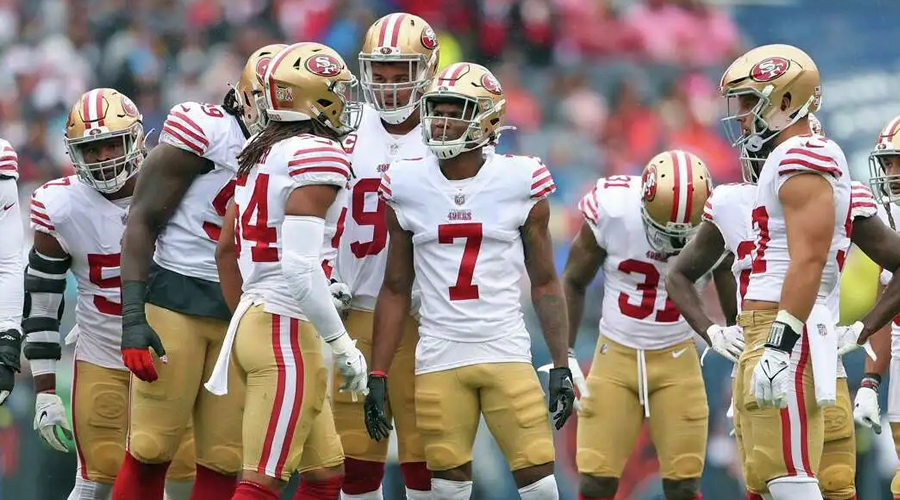
Comparing where they’ve finished across multiple categories since these two sides last met, the 49ers defense has taken a step backwards from where they’ve stood over the last five years, if you take out an injury-riddled 2020 season – where they still fielded a more than respectable unit. As I already explained in the prior paragraph, playing alongside a more explosive offense has led to gamescripts that have lent themselves to more easy yardage surrendered. Yet, the switch at defensive coordinator from DeMeco Ryans to Steve Wilks has also necessitated a certain adjustment period. Altogether, San Francisco’s D finished the regular season 10th in EPA per play (-0.052), but even worse – only 26th against the run. During their two-game playoff run, they’ve been even worse, allowing a success rate vs. the run of a massive 51.7% (which would be dead-last for the regular season). We’ll get to their issues in that regard momentarily, but they’ve been able to step up in the biggest moments, holding the Packers and Lions to a combined 1-of-4 on fourth downs, including when they were able to flush Jared Goff to force an incompletion which set up their game-winning touchdown drive, plus an interception to seal that win in the Divisional Round on an ill-advised throw across his body by Jordan Love. And looking at schedule-adjusted DVOA, they were up there for fourth league-wide (-9.6%), because of how well they’ve performed against the pass.
Run game:
While San Francisco has invested a lot of resources into their defensive line, what pops off the screen right away are Fred Warner and Dre Greenlaw flying around the field from that second level. The speed of those two linebackers to scrape outside against perimeter-oriented plays makes it really tough to win the corner on them. They can get a little overzealous at times with wanting to beat blockers to the spot between the hashes and the numbers, which we’ve seen the Packers and Lions have success with, but generally trying to go horizontal against them has proven to be a mistake, unless you have a ball-carrier with tremendous curvilinear movement and flexibility, who can bend around bodies without losing speed – see Green Bay’s Aaron Jones. It also somewhat plays into the 49ers’ hands, since they rely on “wide nine” fronts, meaning they align their defensive ends further outside, along with partially also putting what generally is a three-technique on the outside shoulder of the guard at a 4i, meaning the inside shoulder of the tackle. They trust that they can crash those edges and create penetration that way. We’ll get to the pass game in a minute, because it ties in with this conversation, but generally the Niners have been more willing to move a safety into the box on early downs during these playoffs, if they face anything but a spread-out 11 personnel set offensively. Generally, you want to attack them vertically rather than horizontally, with their mobility to track plays down the line.
With that being said, offensive play-callers with well-developed rushing gameplans have had success attacking that front. They’ve had those fast-balls off the edges in the past that would happily accelerate into pulling guards or wrong-shoulder them, in order to funnel the ball towards his teammates, but with the guys they currently line up opposite Nick Bosa, that’s simply not the case. Chase Young in particular just put together a highlight reel of plays where he was jogging instead of chasing after the ball in the NFL title game. The addition of Javon Hargrave as gap-shooting one-technique has certainly made a difference for their interior pressure across the season, but that style of player can be walled off on the backside while Arik Armstead has always been more of a tweener as the three-technique. Even Javon Kinlaw, who has played a lot better as of recent, even though he doesn’t get enough snaps, has his biggest issue anchoring versus angular blocks. That’s how through two playoff games – against the Packers and Lions – they have given up 318 yards on 57 rushes (5.6 yards per carry) as a unit, which along with that success rate of 51.7% I mentioned at the top, would all rank dead-last in the NFL. So in terms of how they deploy personnel, I could see Armstead being on the edge more frequently and Kinlaw sliding in, but in terms of what’s behind them, instead of putting Oren Burks in as a third linebacker, who has not looked healthy since returning from injury, I would like to see Tashaun Gipson down low more frequently, to create a “plus-one” in the box late. Over his last two years, he’s only missed 4.0% of his attempted tackles.
Pass game:
Thankfully, San Francisco has been a lot more effective versus the pass, finishing the regular season in the top-seven for dropback EPA (-0.057) and dropback success rate (43.9%). The biggest key in everything the Niners do from a coverage perspective of course, is Fred Warner’s range and instincts. He’s more than capable of running the pole in Tampa-2 and staying stride-for-stride with the #3 receiver in trips, he’s excellent at mid-pointing routes as a hook-defender, taking multiple options off the table, and then is defined dropback situations, he can be a weapon bailing out of mugged-up looks and either getting his hands up in the passing lane or spooking quarterbacks from going that way altogether. While they haven’t been quite as good at it as in the past, the secondary has a great understanding of how to squeeze routes and condense the available space for offense in zone coverage, their safeties driving on stuff in front of them and their “other” linebacker Dre Greenlaw (along with picking off a couple of passes against the Packers) can dislodge targets from the ball when they’re being led into their area and since the addition of Charvarius Ward – formerly of the Chiefs – last year, they’ve been a lot more comfortable with him being isolated on the backside in match-coverages. Overall for the 2023 regular season, San Francisco ran quarters at the fourth-highest rate in the league (23.5%), while being pretty much across the board otherwise, outside of cover-six (27th). Two keys in them being able to run that style of system, where it’s a lot of off-zone for the rest of the field and they rely on their front-four putting heat on quarterbacks – only the Cowboys missed fewer tackles throughout the regular season (69) and Nick Bosa comes into the Super Bowl back as the league-leader with 110 total pressures, including 15 against the Lions and Packers alone.
Depending on the source you use, the 49ers were either dead-last or 30th in blitz rate (17.5%), but they’re also below-average in stunt rate (16.7%) and what really doesn’t pair with that well is that they disguise the middle of the field at the seventh-lowest rate (19.0%), meaning their safeties rotate/roll/buzz rarely to make it tougher on offenses to figure out which coverage they’re in. All that combined has led to their pressure rate dropping by 1.9% compared to 2022 (21.0% – 17th in the NFL). That’s where I get a little worried about this Niners D, because if you declare pre-snap what you’re in coverage-wise, Andy Reid and Pat Mahomes will carve you up. One way to do so, is overloading one side of the field because they want to stay balanced and not bump over, if they face four-strong concepts for example. With that being said, they do have moments where they change things up a little bit, like bringing the nickel from the field-side and dropping out a mugged-up linebacker the other way, to shut down the quarterback trying to replace the blitz with a hot-read. With that being said, they simply haven’t been able to find consistent secondary pass-rushers to make an impact during the postseason. Javon Hargrave and Chase Young on a combined 110 pass-rush snaps through two playoff games have yet to record a sack or QB hit (one hit by Armstead). With rumors around potentially getting benched – since both Drake Jackson and Clelin Ferell are on injured reserve – we could see a lot more of Randy Gregory, who after a breakout season in Dallas and a strong debut campaign in Denver after receiving a big contract, hasn’t really been able to get extended playing time or make a significant impact these past two years.
HOW THEY MATCH UP:

Going back once more to that 44-23 win the Chiefs had in week seven of 2022 at Levi’s Stadium, I thought Andy Reid was clearly a step ahead of then-49ers defensive coordinator DeMeco Ryans. That’s pretty scary on the surface, because generally I’d certainly regard the latter as a more creative play-caller and better teacher than his successor Steve Wilks, as we saw Meco’s impact on the Texans in his first year as the head man, leading them to a division title and playoff win this year, after picking second overall in the draft. That day, San Francisco in a lot of cover-three with Charvarius on “MEG” assignment, meaning “Man wherever he goes” on the backside of the formation. And the Chiefs were able to take advantage of those looks, as they were crossing receivers to create natural rubs or just guys on the back-end having to work around traffic, along with a couple of pick-plays and well-timed screens. That’s how they averaged 9.1 yards per play for the contest, went six-of-nine on third downs and scored touchdowns on all but one of five red-zone trips.
Other than their standard 11 personnel, the other groupings Kansas City has used on more than 100 snaps for the season were with two or three tight-ends plus a back on the field. When the Chiefs do get into those multi-TE sets and maybe motion another receiver in tight, tasking them with insert block for example, San Francisco will need to drop the safety down late and have him aggressively fill the extra gap KC wants to create. We saw Tashaun Gipson do that against the Lions, with Dre Greenlaw joining the party quickly and knocking the ball loose. But also when it’s more spread formations, adding that plus-one into the box after initially giving softer box counts and basically run-blitzing your linebackers could be a strategy they might want to tap into. This could give them the best of both worlds, where it tests Reid’s new-found patience with handing the ball off due to presenting favorable looks initially, but even if they do throw it on early downs, flood the middle of the field and quasi-bracket Travis Kelce. In terms of run concepts for Kansas City, they should be leaning more into power, get under center at a higher rate (70% of carries have come from shotgun) and if they do run zone, add a split element to open up cutback lanes. Based on the advanced metrics, both inside and outside zone show a significant negative success rate differential for them against this Niners D (-9.3% and -8.3% respectively). Funnily enough, since I mentioned how damaging these sweep plays with wide receivers have been for the Chiefs when they’ve called them up this year, when these two sides met last season, Mecole Hardman actually scored three touchdowns on that exact play, leaving the play-side defensive end completely unblocked.
The biggest matchup advantage in favor of San Francisco will be Nick Bosa against those two shaky book-ends. At right tackle, Jawaan Taylor has had nearly twice as many penalties accepted against (20) than any other player in the league. Meanwhile, Donovan Smith on the other end ranks 61st out of 81 qualified tackles in terms of PFF grade (57.7). That’s where I have to think back to how they treated Bosa in their last matchup, basically making him a not-factor. They left him unblocked on sweeps and screens, along with consistently chipping him in passing situations. Back then, KC’s tackle duo was a lot more effective when they were trusted one-on-one however, while they could once again also be without their primary third-down back Jerrick McKinnon, who you wouldn’t feel like you were “losing” in the pattern, with how dynamic he’s been in the past as a check-down option after lending chips. One schematic change-up we could see – and have already seen this mid-season from Steve Wilks against Andy Reid disciple Doug Pederson in a dominant showing at Jacksonville – to create one-on-ones across the board is using more five-man fronts. That would eliminate the possibility of combo-blocks in the run game, unless you add extra tight-ends – which we’ve seen the Chiefs lean more into during this postseason again – but also the O-line can’t really slide the protection and have people with their eyes up for any post-snap movement like stunts and twists.
Finally, while the numbers may not quite suggest it over the course of the entire season, no quarterback has shredded defenses over the years when they play static zone coverages quite as thoroughly as Mahomes. Against zone, the Chiefs have funneled targets to Kelce and rookie WR Rashee Rice, who both have more than three teams the yardage against those defenses than any other pass-catcher on the team. Pat’s ability to break the rules of defenses, by hitting Kelce on the back-shoulder of horizontal routes to beat a driving DB for example, and the unspoken chemistry those two have when the quarterback does his Houdini-like tricks in the off-schedule phase of plays is second to none. Therefore, even with as good as San Francisco has been at “lining up and playing” zone with a four-man rush, I believe they need to change up the picture more frequently, use their linebackers as pawns to affect protection rules and take some educated gambles. Worth bringing up however, for as much better as Kansas City’s offense has been during the postseason, both the Dolphins and Bills were missing several defensive starters in those matchups – and they showed up big-time. That’s where we have to take that smaller sample size with a grain of salt. They did put 17 points on the board in the first half against the Ravens, but even if they were focused on managing the lead from that point on, Baltimore’s defense had answers for what the Chiefs threw at time in the second half.
X-factors:

49ers – Jauan Jennings & Steve Wilks
When you go back to how these two sides would match up in personnel groupings, I mentioned that the Niners are the number one rushing offense out of three-wide receiver sets and that the Chiefs were second-to-last defending them in the run game, while they prefer to not put a third legit corner on the field. That’s something to tap into, along with using his tremendous blocking skills closer to the point of attack on pin-downs and inserts while Deebo lines up at running back. Depending on how Spags on the other side reacts against a de facto 11-personnel set in that mold could give them the upper hand with dictating things later in the game. Jennings has come up with several big receptions on third downs for the Niners as well however and Purdy likes to target him on third downs. In what might be a battle for the middle of the field on both sides, his bigger frame and contested-catch skills could be a factor. Plus, while it may be part of the gameplan to utilize him more generally anyway, if San Francisco were to fall behind and needed to sway heavier towards throwing the ball, having him out there instead of a fullback may end up being the case anyway.
As for the defensive side, originally I felt like cheating by putting a coordinator up here, but I truly feel like what he’ll have done over the two weeks between the NFC Championship and the Super Bowl will have massive implications on the outcome of this game. I understand that you may have been able to call the Niners D sort of “vanilla” early on during this run they’ve made at a title, but under DeMeco Ryans that unit felt a lot more dynamic and they brought an energy to the table that was pretty much unmatched. As I outlined in detail, I don’t believe you can just “play ball” in this matchup, present the same fronts and coverage shells, handing Reid and Mahomes the answers to the test. The playoff numbers for Kansas City may be a little inflated due to injury situations for a couple of their opponents, but if you allow those guys to stay on script, they can pick apart static looks and only ask the quarterback to make magic a couple of times, you will lose. I want to see Wilks play around more by adding that extra defender in the box late, as you dare the Chiefs to run, call up more games up front and weaponize their linebackers with where they spot-drop from, rather than constantly asking them to read stuff out and allow KC to put them in conflict. The one player on defense I considered listing here is rookie safety Ji’Ayir Brown. When they’ve played middle-field closed looks, he’s been the guy in the deep post a lot when starting and he was actually the key player in stopping couple of trick plays by Detroit in the NFC Championship game.

Chiefs – Nick Allegretti & Felix Anudike-Uzomah
At the moment of me finalizing this preview, we still have no news on the availability of All-Pro guard Joe Thuney. That was already a massive weakness in the AFC Championship game against the Ravens’ Justin Madubuike and company, and the Niners have the guys up front defensively to make it apparent yet again here. Backup Nick Allegretti has spent all five years of his pro career in Kansas City and has been a valuable fill-in at times, thanks to his positional flexibility and availability (zero games missed since 2020). However, there is certainly a lack of play-strength and anybody else would be a downgrade in protection compared to Joe Thuney, who ESPN credited with a league-best 99% pass-block win rate. Considering what I discussed about wanting to attack San Francisco with power and counter run concepts primarily, he will either be tasked to pull or block down on the front-side, where somebody pushing his back a couple of steps could lead to traffic and throw off the timing of those kinds of plays. Plus, this should be the perfect time for Hargrave on the other side to get back on track as one of the premier interior rushers, while they may want to put pressure on the backup as they test the communication skills of that unit with different twists and games. Nick also caught a touchdown in one of their 2021 playoff games by the way.
For the Chiefs defense, I could’ve gone with several names here. Obviously, if Derrick Nnadi isn’t available, backup nose Tershawn Wharton stepping in could be key. While it may more as a rotational player, the same is true for Drue Tranquil, who already filled in for Willie Gay Jr. in the AFC title game and actually made multiple potentially game-changing plays, such as tripping up Lamar Jackson after catching his own batted up pass, where he may have been gone otherwise. And since I discussed San Francisco’s WR3 and how they may want to force Kansas City to put match with a third corner, Jaylen Watson could be tested quite a bit, with how well the Niners isolated defenders in coverage. I will ultimately go with KC’s first-round pick (31st overall) from this past April however. With Charles Omenihu tearing his ACL, they just lost their second-most efficient pass-rusher on a per-snap basis. Felix Anudike-Uzomah has only played 218 total snaps throughout the season and logged just half a sack, while being inactive in all three of their postseason contests. Mike Danna should certainly start, but FAU could see more rotational work on critical downs, with all the motivation in the world to prove himself under the brightest lights. What he makes of those opportunities qualifies very much as an X-factor. At Kansas State, I really liked his willingness to crash into bodies in the run game, how he’d combine power-rushes to condense the pocket with impressive flexibility on secondary maneuvers and the relentless motor – his hand combats simply weren’t very refined.
Prediction:
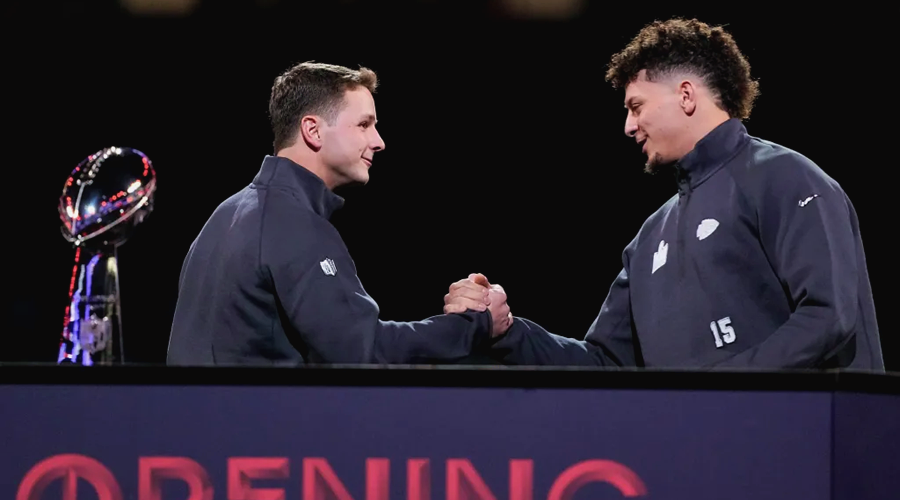
First and foremost, I think we’ll get an awesome game. We get the two best offensive play-callers of the last decade, what already is an all-time great quarterback in Patrick Mahomes trying to further cement his legacy and another McCaffrey trying to win a championship under the coaching of a Shanahan. Christian is part of what may be the most dangerous collection of skill-position players I’ve ever watched, orchestrated by a former last overall pick in his second season in Brock Purdy at an insanely high level, going up against a defensive coordinator in Steve Spagnuolo, who has been reaper for all-time offenses at the biggest stage.
Both of these offenses ranked top-six in terms of third-down rate during the regular season, their defenses have struggled to stop early-down runs, but both units rank top-four in explosive plays (20+ yards) allowed. So I’d expect long sustained drives on both sides and it’ll be about which defenses can disrupt that with a negative play or even create a turnover at some point. However, while I would trust Mahomes and company more at overcoming if they’re being pushed behind the sticks, the Niners have been a lot more successful at converting those drives into touchdowns once they get into scoring range, as they finished atop the league (67.2%) compared to 17th for the Chiefs (54.1%) in red-zone TD percentage.
While the sample size isn’t big enough for me to make a huge deal about the fact that Mahomes is 3-and-0 in his career against the 49ers, I do want to bring up how exceptional he’s become at managing games and doing what’s necessary to win at this stage of his career. That term “game manager” is often used (in a more derogative sense) to describe Purdy on the other side, who has actually put the ball in harm’s way a couple more times, but has also proven that he can be clutch at the end of contests. Pat hasn’t had a single turnover-worthy play on 114 postseason dropbacks, as he’s now playing with a Chiefs D they can sort of play through once they have the lead. And then there’s that third phase of the game. Kansas City has the upper hand in special teams DVOA (ranking sixth compared to 25th for the Niners), not only are they willing to call up trick plays on offense but also Dave Toub on special teams. I watched this man ask his Pro Bowl punter to throw – and complete – a deep out route on a fake back in week 16 against the Raiders. This team does not tense up or shy away from pulling stuff out of their bag in the biggest moments. And they have a kicker who’s been far more reliable in the clutch.
 Kansas City Chiefs 24 – 21 San Francisco 49ers
Game MVP: Isiah Pacheco
I picked the 49ers when I threw out my preview of this matchup four years ago. This season, I favored the Bills and Ravens during their last two playoff games. I just don’t believe I have the mental capacity to bet against Mahomes, Andy Reid and the Chiefs anymore. Based on the powers of these teams on different sides of the league, San Francisco has been a much better all-around operation throughout the entire seasin, but this is the best defense Kansas City has fielded to complement Pat during his tenure and after all the issues this offense has had throughout the year, they’ve just vanished in the postseason (even as we add context of who they’ve faced). Even more so, the “other” guys are actually making plays – see MVS hauling in highly challenging grabs after struggling with routine catches in the regular season. Plus, I’ve never seen Reid be more content with running into advantageous looks (hence, my MVP pick). This should be a great battle and you can absolutely make a case for why the Niners should be favored – as they have been according to Vegas all along – based on the tape and the numbers. Yet, at the risk of over-simplifying after this insanely detailed preview, I’m taking the better quarterback, what currently is the slightly better defense and the group that has been able to finish the job in the past.
 Halil's Real Footballtalk
Pingback: My NFL top 100 players of 2024: – Lifestyle . . . Defiant
Pingback: My NFL top 100 players of 2024: | Halil's Real Footballtalk